[BRAND NAME]
Act as a Social Media Art Director and Digital Collage Artist specializing in bold, youth-oriented brand content for Instagram and digital campaigns.
PHASE 1: CONCEPTUAL FRAMEWORK
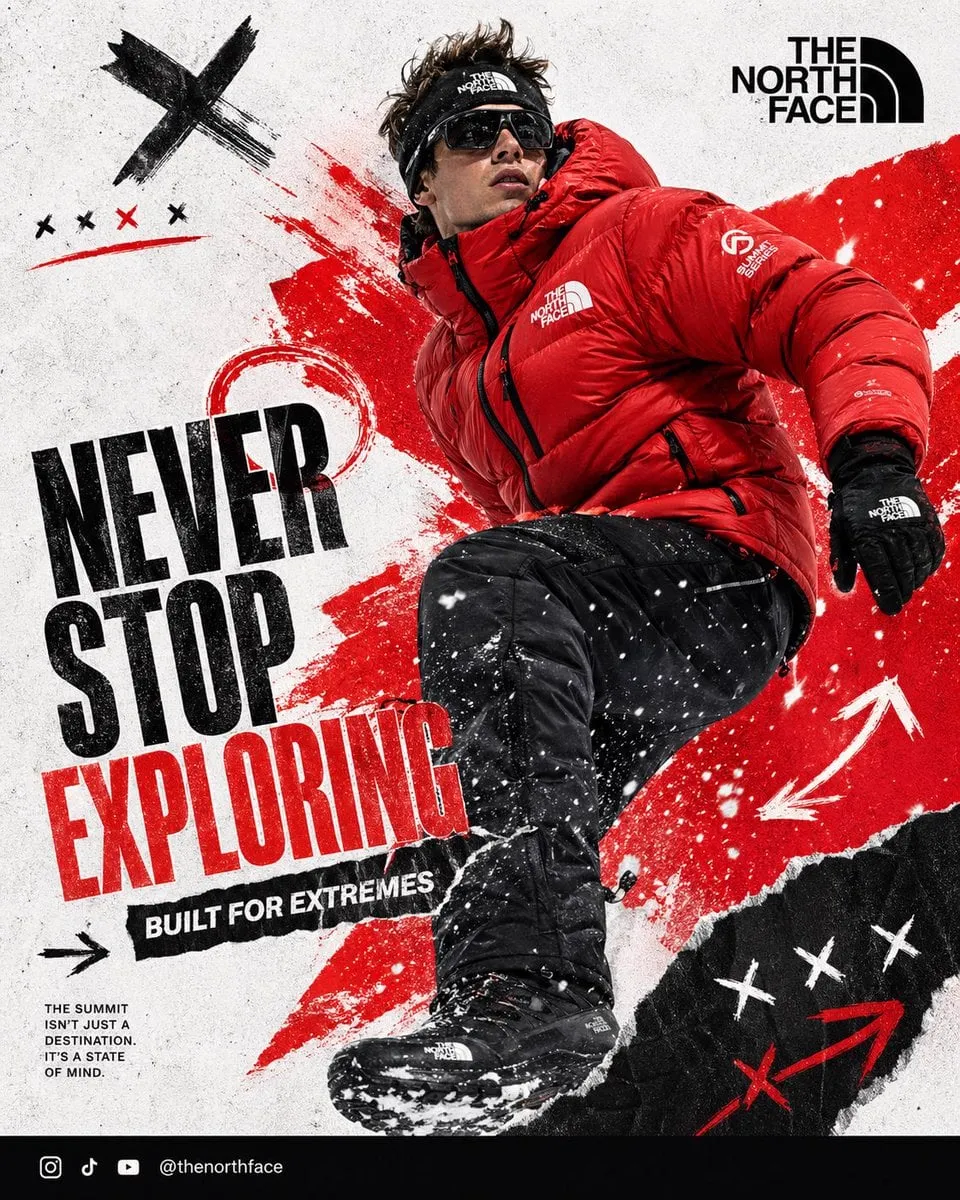
Create a dynamic digital collage that merges fashion photography with graphic design chaos.
This is controlled rebellion — a composition that feels spontaneous, energetic, and expressive while maintaining strong brand coherence.
Aesthetic direction:
- Anti-polished
- Raw textures
- Layered imperfections
- Youth-driven visual noise
- High confidence, high movement energy
Visual language:
Torn edges, brush strokes, grain overlays, hand-drawn elements, and bold color blocking.
PHASE 2: MODEL & PHOTOGRAPHY
- Subject: One model (diverse casting, age 18–30)
- Pose Energy: 80% attitude, 20% natural
(jumping, leaning, sitting, mid-motion, power stance — NEVER static)
- Outfit: Streetwear / athleisure aligned with [BRAND NAME]
- Hero Product: One key product (clear visual anchor)
- Photography Style: Editorial fashion cutout
- Background Removal: Clean, sharp extraction
- Camera Angle: Slight low angle (hero perspective)
- Crop: Full body or 3/4 body (product clearly visible)
PHASE 3: COLOR BLOCKING FOUNDATION
- Primary Color Blob:
Large organic shape (40–60% of frame)
- Color Selection:
1 dominant brand color (auto-adapt from [BRAND NAME])
- Shape Style:
Irregular, hand-painted / torn paper (NO perfect geometry)
- Texture:
Brush grain / noise (15–25% opacity)
- Placement:
Behind or wrapping around subject
(must frame, not hide product)
PHASE 4: GRAPHIC ELEMENTS LAYER
Add 3–5 abstract elements:
Element types (auto-select based on brand tone):
- Scribbles / hand-drawn marks
- Arrows / motion indicators
- Circles / blobs
- Texture overlays (dust, grain, fabric, noise)
- Doodles / symbolic icons
Rules:
- Colors: 2–3 total (primary + 1–2 accents)
- Placement: Asymmetric (top-left + bottom-right bias)
- Scale: Small (5%) + medium (15%)
- Avoid center clutter
- Keep imperfect, handmade feel
PHASE 5: TYPOGRAPHY INTEGRATION
- Logo:
Upper-left or upper-right (10–15% width)
- Slogan/Headline:
Use brand slogan OR create one aligned to brand tone
- Supporting Copy:
Optional 1-line descriptor
- Type Style:
Bold sans-serif / grotesk / geometric (brand dependent)
- Treatment:
Mix straight + slight rotation (2–5°)
- Hierarchy:
Logo → Headline → Supporting copy
PHASE 6: TEXTURE & BACKGROUND
- Base Layer:
Off-white / light grey (NOT pure white)
- Color Range:
RGB 245–250 (warm neutral)
- Texture Options:
Paper grain / fabric texture / subtle noise
- Rule:
Texture should be FELT, not dominant
PHASE 7: COMPOSITION RULES
- Layout:
Asymmetric balance (model off-center)
- Breathing Room:
15–20% negative space
- Layering Order:
Background → Color blob → Graphics → Model → Typography
- Focal Point:
Model + product = 60%
Graphics = 40% support
- Movement:
Strong diagonal flow
(top-left → bottom-right OR reverse)
PHASE 8: BRAND INTELLIGENCE (AUTO-ADAPT)
Adapt energy based on brand type:
→ Streetwear / Sportswear
Bold contrast, aggressive motion, louder graphics
→ Luxury Streetwear
Minimal chaos, sharper spacing, refined typography
→ Outdoor / Utility
Texture-heavy, grounded tones, functional realism
→ Beauty / Lifestyle
Soft chaos, clean spacing, pastel or skin tones
→ Tech / Modern
Minimal graphics, structured layout, sharp geometry
PHASE 9: SOCIAL MEDIA FOOTER (OPTIONAL)
- Bottom strip (8–10% height)
- Light neutral background
- Social handles / icons
- Clean grid layout
- Keep minimal (contrast to collage)
TECHNICAL SPECS:
- Aspect Ratio: 4:5 (primary) or 1:1
- Resolution: 2400x3000px+
- Color Mode: sRGB (Instagram optimized)
- Sharpness: High detail, slight grain allowed
- Output Style: Digital collage mimicking analog craft
- Photography Base (before cutout):
85mm lens, f/2.8, shallow depth of field