

A practical guide to using AI for long-form YouTube videos and Shorts: format decisions, scripting, visual prompts, packaging, metrics, and common mistakes.
Long-form video and Shorts do not reward the same instincts. A twelve-minute explainer lives or dies on structure, pacing and payoff; a twenty-second vertical clip lives or dies in its first frame and a half. Treating them as the same content at different lengths is the most common reason a channel with genuinely good ideas stalls out.
This guide is about using AI as a production partner across both formats without letting it flatten your voice: where to hand off work, where to keep control, how to prompt visuals differently for each, and how to decide which format a given idea deserves.
Start with the format decision, not the tool
Most creators open a generator first and decide what to make second. Reverse that order. The format decision is cheap and fast; the production decision is expensive and slow. Four questions settle it in under a minute.
- Does the idea need sequence? If the value only appears once the viewer understands step three, it belongs in long-form. If the value is a single image, reveal or reaction, it belongs in a Short.
- Is there search demand? People search for how to fix a specific problem, not for a mood. Search-driven ideas belong in long-form because discovery compounds over months. Feed-driven ideas belong in Shorts because distribution is immediate and perishable.
- Can the claim survive compression? Say the idea out loud in fifteen seconds. If it still lands, a Short will carry it. If it collapses into a slogan, the idea needs room.
- Do you have assets? Long-form needs enough visual material to hold attention for minutes. Shorts need one strong image you can afford to build or generate.
A fast way to apply this: write the idea as one sentence, then write the sentence you would use as the Short's hook. If the hook contains the entire value of the idea, make the Short. If the hook only teases something the viewer must stay for, make the long video and cut the Short from it afterwards.
| Signal | Long-form wins | Shorts win |
|---|---|---|
| Discovery model | Search and suggested | Feed and repeats |
| Shelf life | Months | Days |
| Production load | High and front-loaded | Low per unit, high frequency |
| Best for | Teaching, comparison, story | Hooks, reveals, style, personality |
Long-form: where AI actually saves time
Long-form production has three expensive phases: research, scripting, and visual assembly. AI helps in all three, but at different depths, and getting the depth wrong is where channels start sounding generic.
Research compression, not research replacement
Give a model your sources and ask it to produce a contradiction map rather than a summary: which claims disagree, which numbers are older than they look, and which points are commonly repeated but rarely evidenced. A summary tells you what you already read. A contradiction map tells you where your video can add something.
A useful prompt shape is: here are four sources on this topic; list the three points where they conflict, note which of those conflicts would matter to a beginner, and flag anything that sounds like received wisdom with no clear origin. That output becomes your outline skeleton.
The script pass that keeps your voice
Never let a model write the final narration from a blank page. Write a messy draft yourself — bullet points, half sentences, the joke you want to make — then ask the model to do narrow jobs:
- Tighten a section to a target duration without changing the claims.
- Rewrite a paragraph for spoken rhythm so it reads naturally aloud.
- Generate three alternative openings for a section that currently starts flat.
- Find the two places where the argument repeats itself.
Narrow jobs preserve voice. Broad jobs erase it. If a rewritten paragraph no longer contains any phrase you would actually say, discard it and keep your own line.
Shot lists and visual continuity
Once the narration is locked, convert it into a shot list with columns for timecode, purpose, visual description, and motion note. Purpose is the column most people skip and it matters most: a shot either illustrates, contrasts, transitions, or holds. If you cannot label a shot's purpose, it is filler and the edit will feel long even when the runtime is short.
Visual continuity in long-form is harder than in Shorts because the viewer has time to notice inconsistency. Pick three anchor decisions before generating anything — palette temperature, lens feel, and how much camera movement you allow — and reuse them for the whole video. Rebuilding those decisions shot by shot produces a video that feels assembled from different projects.
Shorts: engineering the first two seconds
A Short has roughly two seconds to earn the next ten. That is not a creative opinion, it is a production constraint, and it changes what the AI should be used for.
Build a hook ladder before you generate a single frame
Write five hooks for the same idea and rank them by how much information they withhold while still promising something specific. Weak hooks describe the topic. Strong hooks create an unresolved image or question.
- Weak: a tip about lighting a scene at night.
- Stronger: three light sources ruined this shot, here is the fourth setup that fixed it.
- Strongest for a Short: the shot looked flat until I removed a light.
The third version works because the resolution is visual and arrives fast. Generate your first frame to match the hook, not to match the topic.
Loop endings and payoff placement
Shorts that get replayed usually close the loop back to the opening image. Two structures do this reliably:
- Callback loop — the last frame visually rhymes with the first, so the replay feels intentional.
- Withheld payoff — the answer appears at second sixteen, not second twenty-two, leaving a beat for the loop to breathe.
When you generate a Short with an AI [AI video generator], plan the first and last frames as a pair before generating the middle. It is far easier to prompt towards a matching pair than to find one in a pile of clips afterwards.
Vertical composition is not a crop
A horizontal shot cropped to vertical loses its context on both sides. Compose for the tall frame instead: subject centred or slightly low, headroom minimised, and all text inside the middle band where interface elements will not cover it. If you are generating from a text prompt, state the framing explicitly — close, centred, shallow depth of field, negative space at the top — rather than assuming the model will default to it.
Prompting visuals differently for each format
Prompt structure should follow the format's job. Long-form visuals support an argument across time; Short visuals deliver a single impression.
For long-form, prompt for restraint
Long-form benefits from calm, legible imagery that does not compete with narration. Aim for slow movement, wide or medium framing, and consistent lighting. Overly dramatic generated shots work for three seconds and then become exhausting across four minutes.
A workable long-form prompt pattern: subject and action, environment, lens and framing, lighting direction, pace of motion, and a constraint such as no text, no fast cuts, no lens flares. The constraint clause does more work than most people expect.
For Shorts, prompt for one decisive moment
Short prompts should describe a moment rather than a scene: the instant something breaks, opens, turns, or lights up. Specify the camera behaviour in one clause and keep the rest of the prompt focused on the subject. Multiple competing ideas inside one prompt usually produce a muddled clip that needs three attempts to become usable.
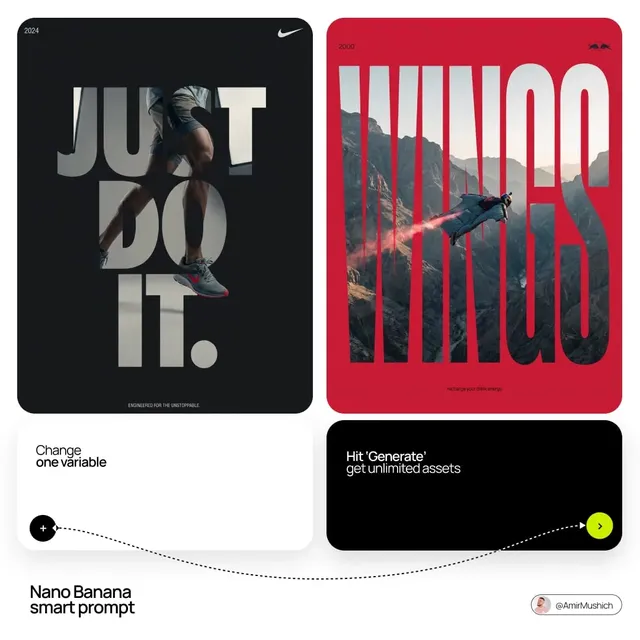
If you are iterating, keep a small library of prompts that worked and vary one variable at a time — motion first, then lighting, then framing. Changing everything at once makes it impossible to learn what the model responded to. A [prompt library] built from your own successes beats generic prompt collections because it encodes your visual taste.
Consistency across a series
Series consistency comes from repetition, not from luck. Keep a short style block — palette, lens, motion rules, grain or cleanliness — and paste it into every prompt in the series. Then change only the subject line. This is the single highest-leverage habit for anyone publishing more than one video a week.
Packaging: titles, thumbnails, and the first frame
Packaging is where most of the reach is decided, and it is also where AI output is easiest to misuse.
Titles: generate wide, judge narrow
Ask for twenty title candidates rather than three. Volume exposes patterns: you will quickly see which ones rely on the same verb, the same number, or the same vague promise. Then judge them against three criteria — is the promise specific, is it different from what already ranks for the topic, and would a viewer who does not know you still understand it?
A title that only works for your existing audience is a retention title, not a discovery title. Both are useful; know which one you are writing.
Thumbnails that survive a small screen
Reduce every thumbnail candidate to phone size before deciding. If the subject is not identifiable at that size, the concept is too complicated regardless of how good it looks full width. Three practical rules:
- One subject, one emotion, one focal point.
- Text under four words, or no text at all.
- Contrast between subject and background matters more than detail inside the subject.
Generating thumbnail variants with an [AI image generator] is useful for exploring compositions, but the final choice should be made at the size the audience will actually see it.
Test, but do not over-test
Testing thumbnails is valuable when you have enough traffic for the result to mean anything, and misleading when you do not. A practical threshold: if a video will not get at least a few thousand impressions in its first two weeks, spend the testing time on the next video instead. When you do test, change one element at a time and give each variant enough exposure to separate signal from noise.
What to measure, and when to ignore the numbers
The two formats need different scorecards, and mixing them produces bad decisions.
For long-form, watch average view duration against total length rather than percentage alone, plus the shape of the retention curve — the first thirty seconds, the midpoint dip, and the final minute. A dip at a specific timestamp is a production note for the next video. For Shorts, watch the ratio of viewers who stay past the first three seconds and how often the clip is replayed; both tell you whether the hook and the loop are doing their jobs.
Ignore subscriber counts as a per-video signal. They move too slowly to guide a decision and too noisily to reward one. Ignore single-video spikes in either direction until you see the same pattern three times.
A useful habit: after every ten videos, write one paragraph describing what the data said about your hooks, your pacing, and your packaging. That paragraph is the only performance review that matters.
Scaling a series without flattening it
Volume is the main reason creators reach for AI, and it is also where channels lose their identity. Two guardrails help.
First, separate the reusable layer from the disposable layer. Reusable: style blocks, shot-list templates, title formulas, intro structures, thumbnail layouts. Disposable: the specific script, the specific hook, the specific joke. Automate the reusable layer aggressively and never automate the disposable layer.
Second, keep one human decision per video that a model cannot make for you — the angle, the disagreement, the thing you personally find interesting. That decision is what makes the video yours. Start from a proven [video template] for structure if you need speed, but replace the opinion with your own before publishing.
For creators running both formats, the efficient pattern is to produce long-form first and derive Shorts from it: pull the strongest ninety seconds, re-hook the opening, and re-generate the first and last frames to match vertically. One research effort, two distribution surfaces.
Mistakes that quietly cost reach
- Making a Short out of a long video's introduction. Intros set up context; Shorts need payoff. Cut from the middle instead.
- Letting the model choose the angle. A generated outline will always land on the safest version of a topic, and the safest version is already published.
- Ignoring the first frame. For Shorts, the first frame is the thumbnail, the hook, and the promise at once.
- Over-producing long-form. Fast cuts and dramatic generated shots tire viewers when the narration is doing the work.
- Chasing every format at once. A channel publishing four mediocre Shorts a week and no long-form has no reason for anyone to return.
- Never revisiting the style block. Visual consistency decays slowly and invisibly until the channel looks like a compilation.
FAQ
Can AI write my whole script?
It can produce a script, but the result tends to be structurally correct and emotionally flat. Use it for compression, restructuring and alternative openings, and keep the argument and the specific examples yours.
Is it better to make a long video and cut Shorts from it, or make Shorts first?
Cut from long-form when your ideas need explanation. Go Shorts-first when your strength is visual style or personality. Shooting or generating Shorts first and expanding the best performer into long-form is also viable, but only when the Short already proved the hook works.
How many visual variants should I generate per shot?
Three to five is usually enough to see whether the prompt is right. If none of them are close, the prompt is the problem, not the model — change one variable and try again rather than generating twenty more.
Do Shorts and long videos need separate visual identities?
They can share a palette and lens feel, and that helps recognition. What should differ is pacing and framing, because the formats are consumed in completely different postures.
How do I keep a consistent look across many generated clips?
Write a style block once, save it, and paste it into every prompt. Change only the subject and action lines between clips.
Does posting more often actually help?
Consistency helps when quality holds. Frequency without a distinct angle mostly produces a larger catalogue of forgettable videos, which is harder to recover from than a slow start.
Build the next one with Orelon
Orelon is an AI video generator built for cinematic ideas in motion — the kind of imagery that supports a long-form argument without competing with it, and the kind that earns a Short its second ten seconds. Start on the [Orelon homepage] to see how the workflow fits together, or go straight into generating a first frame and a matching last frame for your next Short.