

Plan, shoot, and generate cinematic outdoor gear tests with AI video: shot lists, prompt recipes, lighting fixes, editing structure, and review integrity.
A premium fly rod and reel combo is one of the hardest products to review on camera. The performance story lives in details most viewers never see: how the blank loads on a 40-foot cast, how the drag engages under a running fish, how the cork feels after four hours of wet hands. A tabletop photo shoot cannot carry that. Neither can a shaky phone clip with wind hammering the microphone.
That gap is where cinematic outdoor product testing earns its place. The goal is not to make gear look expensive. It is to make performance visible — to put the viewer inside the cast, the drift, and the retrieve so they can judge the product with their eyes instead of trusting a star rating.
This guide walks through a practical workflow that blends real field footage with AI-generated shots, built for creators who want a review that looks like a short film without hiring a crew.
Why Outdoor Gear Reviews Belong in Motion
Static images flatten everything that matters about outdoor equipment. A rod becomes a tapered line. A reel becomes a circle. The qualities that separate a $200 combo from a $900 combo — recovery speed, swing weight, drag smoothness, corrosion resistance — are all behaviors, and behaviors need time to be seen.
Motion also solves a credibility problem. Anglers are unusually good at spotting staged footage. They know what a bent rod looks like under real load and what a decorative bend looks like when someone simply holds the tip down. The more honest motion you show, the more trust the review earns.
Cinematic treatment adds a second layer: it directs attention. A wide establishing shot tells the viewer where the test happens. A tight insert on the reel seat tells them what to inspect. A slow-motion sequence on the line leaving the water tells them what to feel. That is not decoration — it is editorial structure.
Start With the Test, Not the Camera
Most weak gear reviews begin with a camera and hope a story appears. Strong ones begin with three claims the creator intends to prove, and every shot either supports a claim or gets cut.
Define three proof points
Write them down before you pack anything. For a rod and reel combo, defensible proof points might be:
- Load and accuracy under distance. Proven by a sequence of casts at increasing range, filmed from a fixed side angle so the bend is comparable frame to frame.
- Drag consistency under pressure. Proven by a close-up of the spool and a tension gauge, with audio of the drag paying out.
- Comfort and control over a long session. Proven by hands, grips, and posture captured late in the day rather than at the golden-hour start.
Three is the right number. Five claims dilute a three-minute video; two make it feel like an ad.
Build a shot list that survives weather
A field shot list needs a wet-weather backup for every exterior setup. Group shots by location and light, not by script order:
- Dawn bank sequence: wide establishing, angler silhouette, first cast, line loop, water release.
- Boat sequence: rod holder mount, drift perspective, reel handle turn, net moment.
- Detail block: reel seat threads, guide feet, cork grain, drag knob markings.
- Evidence block: tension gauge, timing app, same-frame comparison of two rods.
If rain kills the dawn block, you still have the detail and evidence blocks indoors. Plan for a 60/40 split between field and controlled setups so a single bad forecast does not end the shoot.
The Hybrid Workflow: Real Footage Plus Generated Shots
AI video is at its best when it fills gaps your camera cannot reach, not when it replaces the product. The mixed approach below keeps the review truthful and the visuals cinematic.
What to capture for real
Always capture these physically, because viewers will scrutinize them:
- The product itself, in hand, from multiple angles.
- The performance moment that proves your claim.
- Any measurement, gauge, or comparison.
- The environment that establishes place.
These are the credibility anchors. No generated shot should ever be asked to prove a factual claim.
Where generation earns its keep
Generated footage shines in the connective tissue:
- Transitions between locations or times of day.
- Conceptual inserts such as a slow drifting underwater view of a fly or a stylized cross-section of a reel drag stack.
- B-roll underlay for voiceover sections describing materials, manufacturing, or technique.
- Title and section openers where a striking visual sets tone before real footage resumes.
A useful rule: generated shots can dramatize a claim you already proved with real footage. They cannot be the proof itself.
Keeping continuity between real and generated
Continuity is what prevents the hybrid look from feeling stitched together. Lock four variables across both sources:
- Focal length feel. Pick two — one wide, one long — and match the compression in generated shots.
- Color temperature. Note the white balance of your field footage in kelvin and prompt for the same.
- Motion speed. Match camera drift and subject movement; a languid generated dolly cut against handheld shake reads as fake.
- Grain and contrast. A subtle unified grade in the edit does more for cohesion than any prompt tweak.
Use the AI image generator to build and lock a consistent look frame before you animate anything. A still that already has the right light and lens character makes the motion step far more predictable.
Prompting Water, Wind, and Line
Nothing exposes a weak prompt faster than moving water. Vague descriptions produce soup. Specific camera language produces control.
Prompt anatomy for outdoor shots
A reliable structure for this genre:
Subject + physical behavior + camera position + lens + light + atmosphere + pacing.
Example, a distance cast:
A fly rod loading deeply on a forward cast over a gravel riverbank, line forming a tight loop against a pale overcast sky, camera locked at a low side profile 3 meters away, 35mm equivalent, soft diffuse daylight, cool gray-green palette, slow deliberate motion, light spray from the line.
Example, a drag close-up:
Macro view of a machined reel spool rotating slowly as line pays out, shallow depth of field, 90mm macro feel, warm rim light from the left, water droplets beading on anodized metal, steady controlled motion, no camera shake.
Example, an underwater insert:
Submerged view of a small streamer fly drifting in green-gold water, particles suspended in the current, gentle lateral camera drift, 50mm equivalent, filtered afternoon light from above, muted teal and amber palette.
The prompt library is a good place to study how constraint density changes output; the difference between a serviceable shot and a great one is usually two more specific details, not two more adjectives.
Iterate one variable at a time
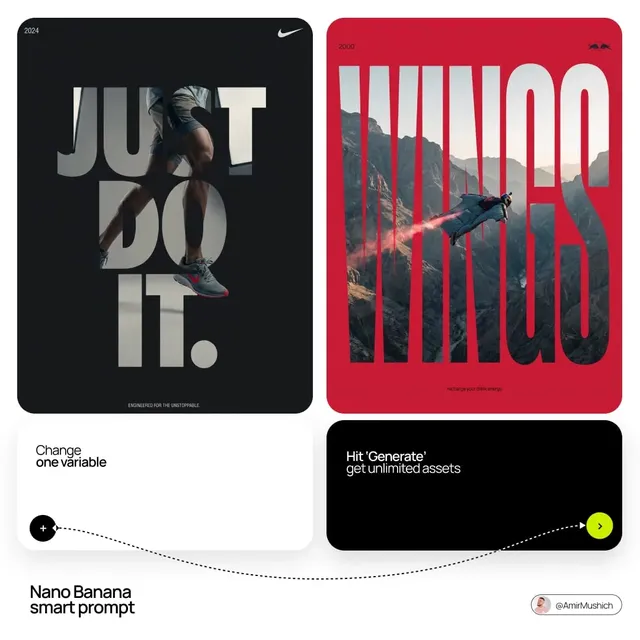
When a generation misses, change a single element — camera height, time of day, or motion speed. Creators who rewrite entire prompts each attempt lose track of what worked. Keep a short log of prompts that produced usable shots; outdoor scenes are reusable across future videos about technique, gear categories, or trip planning.
Lighting: Making Overcast Work for You
Outdoor shoots rarely get the light they want. Overcast is actually a gift for product work: soft, even, and free of the harsh contrast that blows out metal highlights. The tradeoff is flatness, which you fix with direction and separation.
Practical moves:
- Add a rim. A small reflector or a single handheld light behind the product separates it from a gray background.
- Shoot details in shade with a bounce. Direct sun on anodized aluminum creates uncontrollable hot spots.
- Embrace blue hour for mood, not evidence. Beautiful atmosphere, terrible for showing true color.
- Shoot a gray card. Two seconds of a color reference saves an hour of grading, especially when you are matching generated shots to real ones.
If weather turns genuinely bad, that is content. Wind, rain, and spray are part of the honest story of outdoor gear — as long as your microphone is protected and your lens is wiped.
Lens Language for Gear and Water
Three visual modes carry most outdoor product reviews, and each does a different job.
Macro for build quality. Threads, welds, cork grain, guide wraps. Tight, slow, deliberate. These shots answer the question "is it well made?" in two seconds.
Long lens for compression and isolation. A 100mm-plus feel flattens the background and makes the angler and the water feel intimate. This is the mode that makes a river look cinematic rather than documentary.
Wide for scale. Use sparingly. One or two frames that show how small the angler is against the landscape, then return to tighter coverage.
Slow motion deserves its own note. High frame rate is not a substitute for a clear action. Decide what the viewer should notice — the line leaving the water, the reel handle turning, the net dipping — and frame so that element is unmistakable. Sixty percent of outdoor slo-mo fails because the interesting action happens at the edge of frame.
Editing: The Three-Minute Gear Review Structure
A review that respects the viewer's time follows a predictable arc with unexpected images.
0:00–0:15 — The claim. Open on the most striking real shot you have and state the verdict's core in one sentence.
0:15–0:45 — The setting. Establish where and under what conditions the test happened. Generated atmosphere shots belong here.
0:45–1:45 — Proof point one and two. Real footage, on-screen measurements, tight detail inserts. Cut every three to five seconds during the technical sections.
1:45–2:20 — Proof point three and the friction. Show the compromise. Every product has one, and naming it is what makes the praise believable.
2:20–2:50 — Who it is for. Specific buyer profiles, not adjectives.
2:50–3:00 — Close. A final image that echoes the opening frame.
Keep generated B-roll underneath voiceover rather than in silence. A viewer will forgive a stylized shot when a human voice is explaining something concrete over it, and will forgive almost nothing when the shot is asked to stand alone as evidence.
When you need a fast starting point for section openers or title cards, the video templates can save setup time, and the AI video generator is where the actual scene work happens.
Review Integrity in an AI-Assisted Workflow
AI has made it easy to imply things that were never tested. That is a short-term gain and a long-term reputation problem. A few discipline rules keep the review honest:
- Never generate a shot of the product performing a claim you did not verify in the field.
- If a scene is synthetic, let it read as stylized — atmosphere, concept, or transition — not as documentation.
- Do not generate catch footage and present it as your catch.
- Keep the real measurement on screen long enough to read.
Audiences accept stylization readily. What they punish is being deceived about performance. Separate the two clearly and the AI work becomes a production value rather than a liability.
Kit, Files, and Field Hygiene
Small operational habits prevent most post-production pain:
- Name clips by shot, not by camera.
cast_side_35mm_take3beatsGH010432. - Back up twice before you leave the water. One card failure ends a shoot day you cannot repeat.
- Record room tone and water ambience for 60 seconds at each location; it makes generated cutaways blend audibly.
- Log prompts and settings in a running document so a look you built once can be reproduced next month.
- Shoot vertical coverage on the same setup if short-form distribution matters; recomposing later crops the frame badly.
Five Mistakes That Sink Outdoor Product Videos
- Proving nothing. Beautiful footage that never states a claim leaves the viewer with mood and no information.
- Generating the evidence. Using synthetic shots for the performance moment destroys trust the instant someone notices.
- Ignoring audio. Wind noise and bad water ambience undo more cinematic work than any visual mistake.
- Over-cutting the detail block. Macro shots are persuasive when they linger; three-second flashes read as hiding something.
- Inconsistent look between sources. Mixed color temperature and grain is the fastest way to look like two different videos spliced together.
FAQ
Can an AI-assisted review still be considered legitimate? Yes, if the evidence shots are real and the synthetic shots are clearly atmospheric or conceptual. The dividing line is simple: verified performance must come from the field, not from a model.
How much generated footage should a gear review include? A practical ceiling is 20 to 30 percent of total runtime, concentrated in transitions, atmosphere, and voiceover underlay. Above that, viewers start questioning what else is synthetic.
What if the weather ruins the shoot day? Shoot the detail and evidence blocks indoors, then use generated atmosphere and transition shots to bridge locations. Do not fake the performance moment; reschedule it.
Do I need a dedicated camera for the real footage? A modern phone with a locked exposure and a wind-protected microphone is enough for most gear reviews. Priority order is stability, audio, then sensor size.
How do I keep generated shots consistent across a series? Save a look bible: two focal lengths, a kelvin value, a contrast note, and three reference stills. Reuse it for every episode so the series reads as one channel rather than unrelated videos.
Is slow motion always the right choice for action? No. Use it only where the eye needs help seeing a specific event. Constant slow motion flattens pacing and makes a three-minute review feel long.
Make the Test Visible
A great outdoor product review does something a spec sheet cannot: it lets the viewer feel the cast, hear the drag, and see the compromise. Real footage supplies the truth. Generated footage supplies the atmosphere, the transitions, and the visual confidence that used to require a full crew.
Start with your three proof points, capture the evidence honestly, then build the cinematic layer around it. You can explore the whole workflow in the Orelon blog, or go straight to the AI video generator and turn your next field test into a film worth watching.