

Learn how to break down celebrity scenes like a film analyst, then rebuild those cinematic techniques with AI video tools in a repeatable workflow.
A celebrity walking out of a hotel side door can generate a thousand clips in an hour, and almost all of them get described the same way: seen out. The interesting part is not the sighting. It is the grammar underneath it — the choice of lens, the height of the camera, the half-second of hesitation before the door opens, the way a paparazzo's flash turns a person into a silhouette. Scene analysis is the practice of naming those choices out loud, and it is the difference between commentary that feels like gossip and commentary that feels like film criticism.
This guide is about doing that work properly: how to read a celebrity frame, how to translate what you find into a shot list, and how to rebuild those techniques with an AI video generator so your breakdown has visuals instead of stock filler. It is written for entertainment journalists, video essayists, and creators who want their analysis to look as sharp as it sounds.
What scene analysis actually means in entertainment coverage
Most celebrity coverage stops at description. Scene analysis goes one layer down and asks: what decision produced this image? A wide shot of a star crossing a parking lot with four meters of empty asphalt on either side is not neutral — it is a composition choice that produces isolation. A tight crop that cuts off the top of the head is not sloppy — it is a choice that produces pressure.
The analytical habit to build is simple. For every clip you intend to discuss, write down three things before you write a single sentence of commentary:
- The frame — where the subject sits inside the rectangle, and what else is in it.
- The optics — how deep the space reads, what is sharp, what is soft.
- The light — where it comes from, how hard it is, what it does to skin and fabric.
Those three notes will carry 80% of your analysis. Everything else — performance, context, public reaction — hangs off them.
A useful test: mute the clip. If you can still describe the emotional temperature of the scene without audio, the cinematography is doing work. If muting it makes the clip incomprehensible, you are analyzing a performance, not a scene, and you should say so.
Composition first: what the frame says before anyone speaks
Composition is the cheapest technique to analyze and the easiest to demonstrate, which makes it a strong opening beat for any video essay. Viewers recognize it instantly because they feel it without knowing why.
Power positions, headroom, and negative space
Ask three questions of any still:
- Where is the eyeline? A subject looking slightly off-axis with room in front of their face reads as forward motion. The same subject pushed to the edge of frame with empty space behind them reads as trapped or watched.
- How much headroom is there? Generous headroom above a seated interviewee implies status and calm. Almost none implies confinement, urgency, or intimacy.
- What is in the negative space? A blurred logo, a window, a second person's shoulder. Empty space is never empty; it is either context or comment.
When you rebuild a shot for your video, you can make the argument visually rather than verbally. Show the same subject in two framings, thirty seconds apart, and let the audience feel the shift.
Aspect ratio as editorial voice
Aspect ratio is the most underrated analytical tool in entertainment coverage. A vertical crop, the native shape of red-carpet phone footage, tightens the frame and pushes bodies together — it is inherently more intimate and more claustrophobic than 16:9. An anamorphic widescreen frame gives you peripheral space, which reads as distance and control.
Practical exercise for your essay: take one verbal description of a sighting and render it twice, once in 9:16 and once in 2.39:1. The first version will feel like surveillance footage. The second will feel like a movie about being watched. That contrast is a thesis statement you can show in four seconds instead of explaining for four minutes.
Depth of field and focus pulls in interview setups
Interview footage is where amateur analysis usually falls apart, because people talk about what was said and ignore the optics. Watch the background instead.
Shallow depth of field — the subject sharp, the room dissolving into soft shapes — is a status move. It removes the world and leaves the face. Deep focus, where the subject and the background are both readable, says the opposite: this person is situated in a place, and the place matters. A press-junket setup with a deep-focus hotel suite behind the actor is telling you they are on a promotional circuit. The same actor in front of a shallow, featureless gradient is telling you they are being presented as an icon.
Focus pulls are a narrative device hiding in plain sight. A rack from the interviewer's shoulder to the subject's eyes assigns attention. A rack from the subject to something behind them — a doorway, a monitor, a publicist — punctures the interview and turns it into a scene.
To reproduce this convincingly with AI, describe the optics explicitly rather than hoping the model guesses. Instead of cinematic portrait, write 85mm equivalent, f/1.8 look, background falls off into soft amber bokeh, sharp focus on the near eye, no focus breathing. Specificity is what makes generated footage usable as an illustration rather than a distraction.
Lighting design as persona engineering
Lighting is the technique that most directly manufactures persona, and it is the one audiences respond to most strongly without being able to explain why. Three broad recipes cover most celebrity imagery you will ever analyze.
| Recipe | How it looks | What it implies |
|---|---|---|
| Hard key, minimal fill | Sharp shadow edges, bright specular highlights | Glamour, control, old-Hollywood confidence |
| Soft top light, no fill | Even skin, dark eye sockets, gentle falloff | Seriousness, fatigue, intimacy, confession |
| Mixed ambient + flash | Uneven color, blown highlights, black background | Candor, chaos, the street, the unposed moment |
Reading the direction of the source
Look for the catchlight in the eye — it tells you where the light is. A catchlight at twelve o'clock means top light, which flattens the face and hollows the eyes: this is a person lit to look tired or thoughtful. A catchlight at ten o'clock with a hard shadow falling to the right means a single side source: this is a person lit to look sculpted and deliberate.
When you rebuild these looks for your essay, keep the recipe in the prompt and the mood out of it. Single hard source from camera left, deep falloff, no fill, warm 3200K key will produce a readable result. Dramatic moody lighting will produce whatever the model feels like that day, and your illustration will contradict your narration.
Translating an analysis into an AI shot list
Once you have three to five observations, stop writing and start listing shots. A breakdown video works best when each analytical claim has one visual that proves it, and that means a shot list of eight to twelve short clips rather than one long generated sequence.
A shot list row should contain: the claim it supports, the framing, the optics, the light, the motion, and the duration. Everything you generate flows from that row, and everything you cut either serves a row or gets deleted.
The five-line prompt
Long prompts drift. A tight structure holds. Use five lines and keep them consistent across your whole project:
Subject: [who/what, wardrobe, expression, eyeline]
Space:   [location, depth layers, what is in the background]
Optics:  [focal length feel, depth of field, aspect ratio]
Light:   [source direction, hardness, color temperature, fill level]
Motion:  [camera move or subject move, speed, start and end frame]
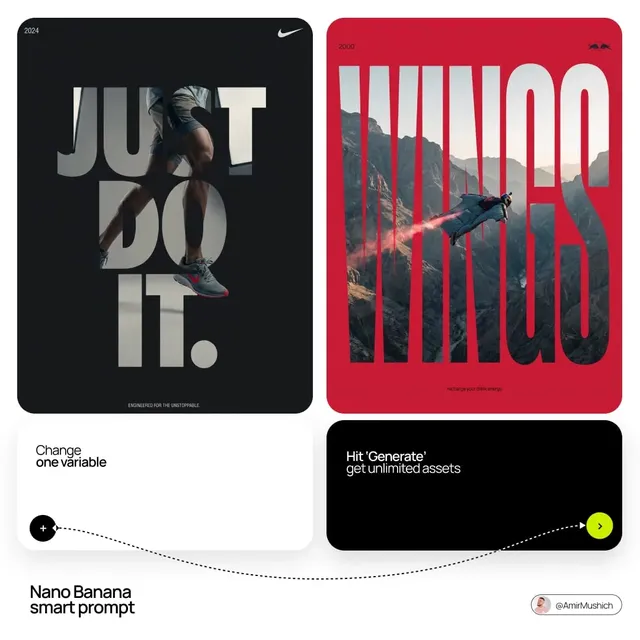
That structure gives you reproducibility. Change one line and you have a controlled comparison — which is exactly what an analytical video needs. Two shots that differ only in the Light line become a visual argument about persona. Two shots that differ only in Optics become an argument about intimacy.
You can start from a still and animate it when you need precise framing; generate from text when you need coverage. The AI image generator is useful for locking a composition before you commit to motion, and the AI video generator handles the animated version of the same idea.
Consistency across a sequence
Nothing destroys credibility faster than a breakdown where the "same" celebrity looks like four different people. Consistency is a production problem, not a creative one, and it has three levers.
Reference discipline. Keep one canonical reference set — three angles, neutral light, known wardrobe — and reuse it in every prompt. Do not improvise new descriptors midway through a project.
Wardrobe and styling as anchors. Repeated costume details do more for perceived consistency than facial accuracy. A specific jacket color and collar shape will make viewers accept continuity even when the face drifts.
Locked optics. Choose one focal-length feel and one aspect ratio for the whole analytical section, and only break it deliberately, as a punctuation mark. Mixed optics read as error; mixed optics with a reason read as authorship.
If you want a starting scaffold rather than a blank page, the video templates give you a structural starting point you can then adapt to your own shot list.
Staging, movement, and pacing in the edit
Staging is the study of where bodies are and how they move through a space — and it is where celebrity footage is richest, because so much of it is unplanned. Watch a red carpet entrance and count the beats: arrival, pause, turn, wave, exit. That rhythm is a choreography the subject is performing for cameras they cannot see individually.
Blocking analysis translates well into three questions:
- Who moves, and who stays still? The still figure has the power in the frame.
- Who crosses whose path? A body passing in front of the subject reads as interruption.
- What is the exit direction? Moving toward the camera is confrontation; moving away is retreat; moving laterally is indifference.
Pacing lives in the edit, not the generation. Generate clips at four to six seconds and cut them shorter than feels comfortable — two to three seconds per illustration in a fast analytical section, five to six in a reflective one. Rhythm comes from varying length: a rapid run of two-second cuts followed by one held six-second shot is a complete sentence in editing grammar.
A practical rhythm pattern for a five-minute breakdown: open with a single held shot under your thesis, run eight to ten short illustrative cuts through the analysis, then hold one long shot under the conclusion. The long shot at the end is what makes the whole piece feel authored.
A repeatable production workflow
Here is the sequence that keeps a breakdown video moving without sacrificing rigor.
- Collect and log. Gather source clips and note frame, optics, and light for each. Twenty minutes maximum; do not over-research.
- Write the thesis in one sentence. If you cannot, you have observations, not an argument.
- Build the shot list. Eight to twelve rows, each tied to a claim in your script.
- Lock two references. One subject reference, one location reference, reused everywhere.
- Generate stills first. Cheaper and faster to iterate on composition before motion.
- Animate only the approved frames. Reject freely at this stage; a bad clip costs you a viewer's trust in your analysis.
- Cut to narration, not to the clips. Let the argument set the tempo and trim footage to fit.
- Do a muted pass. Watch your finished video with sound off. If the visual story does not hold, your illustrations are decorative rather than evidentiary.
Mistakes that make breakdowns feel amateur
- Generating before analyzing. Pretty clips with no claim attached are filler, and viewers feel it.
- Vague prompts. Cinematic is not a specification. Direction, hardness, focal feel, and duration are.
- Mismatched references. Continuity errors are read as carelessness, and carelessness undermines authority.
- Quoting a look without demonstrating it. If you say hard side light, show hard side light in the same breath.
- Overlong illustrations. Any clip that outlives its point is teaching the audience to skim.
- Skipping the ethical frame. Say plainly what is real footage, what is re-creation, and what is interpretation.
One editorial note worth internalizing: generated re-creations of real people should be labeled, should not put words in anyone's mouth, and should not be presented as documentary evidence. Analysis is commentary. Keep that line bright and your work stays defensible.
FAQ
Do I need professional editing software to make these videos? No. A timeline editor on any platform handles eight to twelve short clips comfortably. What matters is the shot list and the muted pass, not the software tier.
How close should a generated re-creation look to the actual person? Close enough to be recognizable as an illustration, not so close that it reads as documentation. Many creators deliberately keep a slight stylization so the audience never confuses analysis with footage.
What if the model cannot hold consistency across a sequence? Reduce variables. Cut the number of distinct shots, reuse the same reference set, lock one aspect ratio, and lean on wardrobe and lighting as continuity anchors instead of facial detail.
How many generated clips does a five-minute breakdown need? Typically eight to fourteen, with several reused under different narration. Reuse is normal and efficient; the audience is tracking your argument, not your render count.
Can I do this with interview footage I did not shoot? Analyzing publicly available material with short excerpts is common practice in criticism, but rules vary by territory and platform. Keep excerpts brief, transformative, and attributed, and add your own visuals for the explanatory sections.
Where should I start if I have never done visual analysis? Pick one still image and answer the three opening questions — frame, optics, light. Then rebuild that single image with the five-line prompt and compare. The gap between what you saw and what you specified is your first real lesson in cinematic language.
Build your next breakdown with Orelon
Scene analysis is a craft of specifics: a direction of light, a height of camera, a half-second of held stillness. Orelon is built for exactly that kind of thinking — an AI video generator for cinematic ideas in motion, where a precisely written shot becomes a precisely rendered clip. Start with a still to lock your composition, animate it once the framing holds, and keep your reference set tight across the whole sequence. When you are ready for more structures to adapt, browse the prompt library and the Orelon blog for workflows you can put to work on your next video essay.