
Learn how to write prompts for AI video generators that produce cinematic, consistent results, with structures, examples, and fixes for common failures.
Anyone who has typed a vague sentence into a text-to-video tool knows the disappointment: the clip renders, the motion is technically there, but it is not the shot you had in your head. The camera drifts somewhere you did not ask for, the light is flat where you wanted contrast, and the character's jacket changes color halfway through. Nine times out of ten the problem is not the model. It is the prompt.
A strong video prompt is not a poetic paragraph. It is a compact technical brief that tells a generative system what exists in the frame, what the camera is doing, how light behaves, and what should stay stable. This guide breaks down how to build those briefs, how to iterate on them without burning your whole afternoon, and how to adapt one prompt across different engines.
What separates a usable prompt from a lucky one
Ask a hundred people to describe a scene and you get a hundred different levels of specificity. Generative video rewards a particular kind of specificity: concrete nouns, measurable camera behavior, and explicit continuity instructions. Vague adjectives like beautiful, epic, or amazing tell the model almost nothing, because they do not map to pixels. Replace them with choices a cinematographer would actually make.
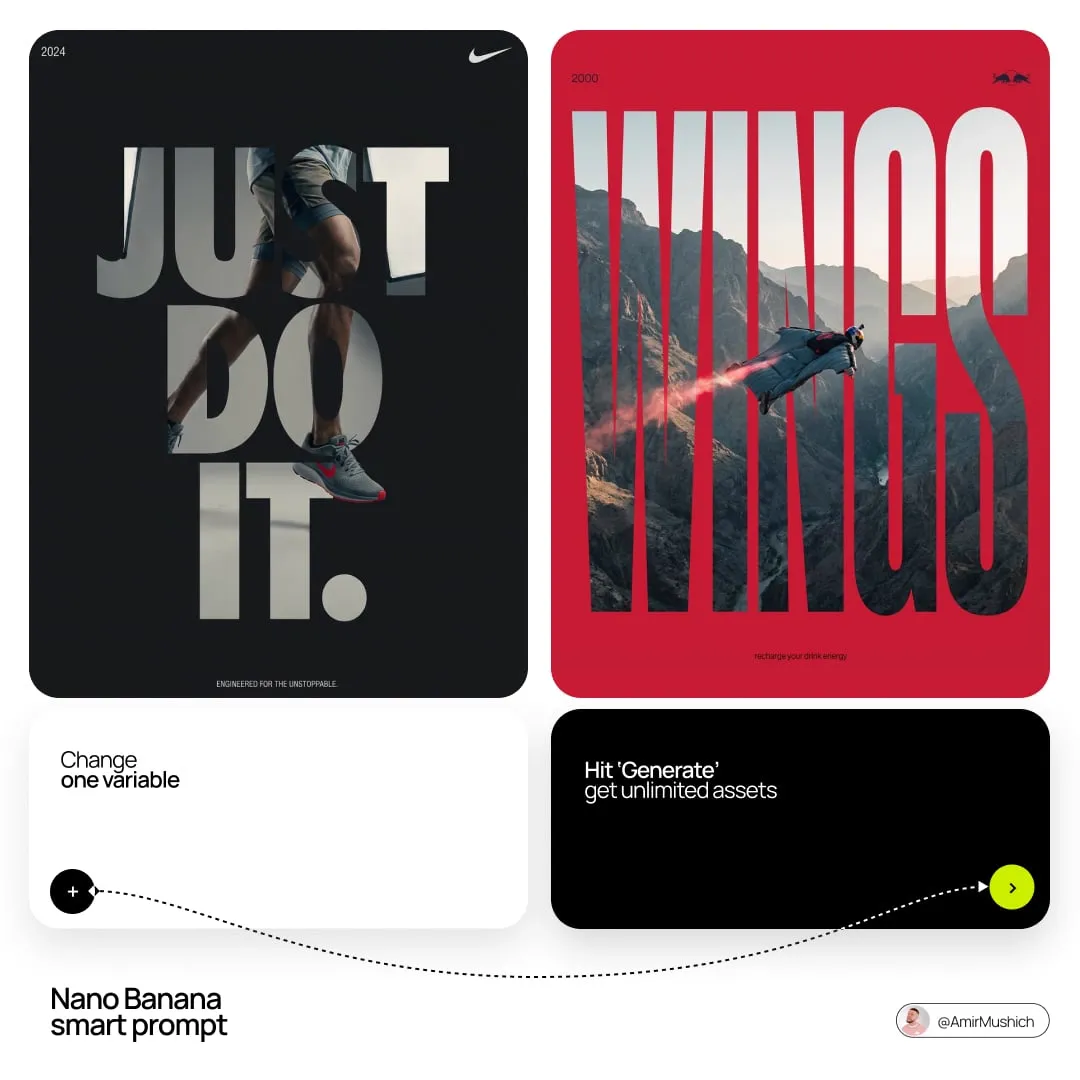
There is also a difference between a prompt that works once and a prompt you can reuse. Reusable prompts are modular. They separate the subject from the environment, the camera from the lighting, and the style from the motion. When a render fails, you can then change exactly one variable instead of rewriting everything and losing the parts that worked.
Weak: a beautiful cinematic shot of a woman walking through a city at night, epic lighting
Usable: medium shot, slow dolly-in, woman in a charcoal wool coat walking toward camera along a wet city sidewalk, neon signage reflecting in puddles, shallow depth of field, 35mm lens, cool blue key light with warm practical accents, light rain, handheld micro-shake
The second version is longer, but every extra clause is doing a job. Nothing in it is decoration.
The six building blocks of a video prompt
Think of these as slots. Fill the ones that matter for your shot and leave the rest out. A seven-slot prompt is not automatically better than a five-slot prompt; unnecessary constraints can fight each other.
1. Subject and action
Name who or what is in frame and what they are doing right now. Use present-tense, single actions rather than sequences. A model asked to show a man cooking, then eating, then leaving will usually produce mush. A model asked to show a man stirring a pot on a gas burner will produce one clean action.
2. Setting and time of day
Environment sets physics. A subway platform, a greenhouse, a desert highway, and a snow-covered forest each imply different light, particles, and sound design cues even in silent clips. Always include time of day if light matters: pre-dawn, overcast noon, golden hour, blue hour, midnight with practical lights.
3. Camera position, movement, and lens
This is the slot most writers skip, and it is the one that most changes perceived quality. Say where the camera is (eye level, low angle, aerial, over-the-shoulder), how it moves (static, slow push in, lateral tracking, crane up, orbit), and what lens character you want (wide 24mm for environmental scale, 50mm for neutral, 85mm for compression and portrait isolation, macro for texture).
4. Lighting and color
Describe the source and the mood. Hard directional key from a window with deep falloff. Soft overhead bounce with no visible shadows. Mixed color temperature with magenta neon against tungsten interiors. Specific lighting language produces dramatically more cinematic results than the word cinematic alone.
5. Motion and pacing
Video models hallucinate motion unless you constrain it. Words like drifting smoke, rippling fabric, steady pour, and static background with only subject movement tell the engine what should move and what should stay still. For slower, more deliberate clips, explicitly request slow motion or a locked-off frame.
6. Style, format, and texture
Choose a lane: documentary handheld, 16mm film grain, clean digital commercial, animation, stop-motion, archival VHS. Add aspect ratio and frame-rate feel if your tool supports it. Mixing three visual styles in one prompt usually produces none of them convincingly.
Order matters more than you think
Most text-to-video systems weight the beginning of a prompt more heavily than the end, and they parse noun phrases better than strings of adjectives. A practical ordering that works across engines:
- Shot type and camera move
- Subject and action
- Environment and time of day
- Lighting and palette
- Motion details and atmosphere
- Style, grain, and aspect ratio
If you only have one sentence, compress it into that order rather than writing a narrative. Some creators also write prompts as short labeled lines, which helps when a tool accepts longer input:
Shot: medium-wide, slow lateral truck left
Subject: cyclist in a rust-orange rain shell, pedaling through shallow floodwater
Setting: narrow European street after a storm, dusk
Light: overcast blue ambient, warm shop-window spill on wet cobbles
Motion: water spray, rippling reflections, coat fabric flapping
Style: 35mm film grain, 2.39:1, muted teal and amber grade
That structure scans fast for you and for the model. When a render misses, you can see which line failed.
Three prompts, rewritten
Product shot
Before: a cool shot of a watch on a table, luxury feel.
After: macro shot, slow 15-degree orbit around a stainless steel dive watch resting on black slate, single hard key light from camera left creating a crisp specular highlight along the bezel, deep shadow falloff, dust motes drifting through the beam, shallow depth of field, 100mm macro lens, 1:1 aspect ratio.
The rewrite specifies the object, the camera arc, the light direction, and the detail that makes the shot feel expensive: one controlled highlight rather than even illumination.
Character moment
Before: sad woman in a cafe, cinematic.
After: close-up, static camera at eye level, woman in her thirties staring at an untouched coffee, blinking slowly, condensation on the window behind her, soft north-facing window light wrapping her face, cool grey palette with a single warm lamp in the background bokeh, subtle handheld breathing, 85mm lens.
The rewrite replaces an emotion label with observable behavior. Small physical actions read as performance; the word sad usually reads as a flat expression.
Establishing landscape
Before: epic mountains at sunrise, drone shot.
After: aerial push forward over a ridge line at first light, layered mountain ranges fading into haze, low fog sitting in the valley, warm sun rim on the nearest peaks with cool shadow in the foreground, slow steady drone movement with no rotation, wide 24mm equivalent, natural color with mild contrast.
The rewrite adds atmosphere layers and an explicit statement that the camera does not rotate, which prevents the drifting, dizzying motion that plagues aerial generations.
Keeping characters and style consistent across shots
Single clips are easy. A sequence is where most AI video projects fall apart.
Lock the description, not the vibe
Write a character sheet once: age range, hair, wardrobe with fabric and color, distinguishing features, and posture. Paste the same sentences into every prompt instead of paraphrasing. Paraphrasing is exactly where the model starts inventing a new person.
Use a reference frame
Most modern pipelines support image-to-video. Generate one strong still of your subject with an AI image generator, approve it, then animate from that image. The still becomes the continuity anchor and removes most costume drift.
Change one variable per shot
In a three-shot sequence, keep lighting, palette, and character text identical and vary only the shot type and camera move. This is the video equivalent of coverage: wide, medium, close. Audiences read those variations as intentional editing rather than inconsistency.
Set the seed, then hunt
When a render is almost right, do not rewrite the prompt. Fix the seed and change one clause. That isolates variables and teaches you which words your engine actually responds to.
If you want a starting scaffold instead of a blank box, templates and a shared prompt library shorten the gap between idea and first usable render considerably.
Common mistakes and how to fix them
Stacking contradictions. A prompt that asks for a locked-off camera and dynamic energy, or soft diffused light and hard shadows, will average into something dull. Pick one intention per slot.
Writing a story instead of a shot. If your prompt contains the word then, it is probably two prompts. Split it.
Overloading with style tokens. Four aesthetic references produce porridge. One visual lane plus one grade note is plenty.
Ignoring negative behavior. If your engine supports negative prompts, use them for artifacts you keep seeing: extra fingers, warped text, jitter, duplicating faces, watermark-like smears.
Forgetting aspect ratio and duration. Vertical social clips and widescreen film sequences behave differently. Request the ratio explicitly and match your prompt length to the clip length; a prompt describing twenty seconds of action inside a five-second render will produce rushed motion.
Never reviewing at speed. Watch a render three times: once for subject fidelity, once for camera behavior, once for artifacts. Diagnosing which of the three failed is faster than a full rewrite.
Adapting one prompt across different engines
Prompting is not fully portable. Each system has its own vocabulary bias, default motion energy, and tolerance for length.
- Strong cinematic defaults: shorter prompts with clear camera language often outperform long ones. Trim atmosphere clauses first.
- Character-focused engines: keep the subject description long and detailed, and keep camera notes brief.
- Fast, stylized engines: respond well to palette words and motion verbs, less well to technical lens language.
- Image-to-video workflows: the still carries most of the visual load, so reduce your prompt to motion, camera, and atmosphere instructions.
A useful habit is to maintain a stripped core prompt of about fifteen words, then expand per engine. If you are comparing platforms before committing, a side-by-side view of AI video generator alternatives makes the trade-offs visible.
A practical workflow from idea to final clip
- Write the shot in one sentence. No adjectives. Subject, action, place.
- Add camera and light. This is where most of the perceived quality comes from.
- Build the prompt in the six-block order and keep it under about 60 words for the first pass.
- Render two variants, not ten. Change one variable, usually camera or light.
- Freeze what works. Save the successful prompt text with its seed and settings.
- Move to image-to-video once you like the frame and the motion concept.
- Assemble and grade. Small exposure, contrast, and grain corrections in an editor unify clips generated at different times.
- Keep a prompt log. Two lines per render: what you changed and what happened. After a week this log is worth more than any tips list.
If you want to skip the blank-page phase entirely, the AI video generator lets you start from a structured brief, and reusable video templates give you camera and lighting language you can adapt to your own subject.
Prompt debugging checklist
When a clip fails, work through these in order before rewriting:
- Is the subject doing exactly one thing?
- Is there a single camera instruction, not three?
- Is the light described by source and direction?
- Are the atmosphere words physically plausible in this scene?
- Is the style lane singular?
- Does the prompt length match the clip length?
- Did the previous version work better? If so, what changed?
Most weak renders are solved by the first two questions.
FAQ
How long should a video prompt be?
For most text-to-video engines, 30 to 60 words is the sweet spot: enough to constrain the frame, short enough that no clause is ignored. Push beyond 90 words and later details often get dropped anyway. Image-to-video prompts can be shorter, since the still already carries composition.
Do camera terms like dolly and truck actually work?
Yes, and they are among the highest-leverage words you can use. Engines respond to consistent camera vocabulary even when they do not execute it perfectly. If a term repeatedly fails, test a plainer equivalent such as slow push forward instead of dolly in.
Why do my characters keep changing clothes between shots?
Because each generation starts from scratch unless you anchor it. Reuse identical character text, use a reference still, and avoid rephrasing your own description in later prompts. Consistency is a copy-paste discipline more than a prompting trick.
Should I include negative prompts?
Use them narrowly. Two or three terms targeting artifacts you actually see will help. Ten negative terms usually degrade composition because the model spends capacity avoiding instead of building.
What about sound and dialogue?
Write spoken lines as short, separate utterances without competing action, and keep physical motion minimal while someone speaks. If your engine generates audio, describe ambience separately from dialogue so the mix does not fight itself.
How many renders should I expect per finished shot?
Three to eight is realistic when you are learning an engine, dropping to two or three once you have a reusable prompt. Track which slot you changed each time and the number falls fast.
Can I reuse prompts across projects?
Yes, and you should. Store prompts by shot type: hero product orbit, dialogue close-up, aerial establishing, atmospheric insert. A personal library of twenty proven prompts covers most short-form and brand work you will be asked to do.
Start with a better brief, not a better sentence
The difference between mediocre and cinematic AI video is rarely the tool. It is whether the prompt reads like a director's note or a wish. Name the subject, choose the camera, control the light, lock what must not change, and iterate one variable at a time. Do that consistently and your hit rate climbs faster than any model upgrade can help you.
When you are ready to put it into practice, bring your next idea to Orelon and turn a tight shot description into motion with a workflow built for cinematic results.