

Plan, prompt, and polish AI animation videos with shot lists, style bibles, consistency systems, sound design, and a repeatable production workflow.
Animation was once the most expensive way to tell a small story. Thirty seconds of movement meant character rigs, keyframes, a render farm, and a revision process that punished every change of mind. Today a writer can describe a shot in plain language and watch a moving version of it within minutes. The cost of trying something has collapsed, which means the value has moved to judgement: what to show, in what order, for how long, and why.
That shift sounds like good news for everyone and is really good news for planners. Fast generation rewards people who arrive with a script, a shot list, and a style system already decided. It punishes anyone who opens a tool and hopes the first output is the final one. The model supplies motion; you supply intent. Everything below is about building that intent cheaply and holding on to it across a whole sequence.
Why animated video became the default format for explaining things
Live action has always had two hard limits when the subject is abstract. First, a camera cannot film a process happening inside a machine, a change spread across ten years, or a concept with no physical form. Second, live action is fragile: weather, locations, permits, schedules, and people who look different on the second shoot day. Animation sidesteps both. A rectangle can become a server rack, a supply chain, a memory, or a queue of tasks, and it will still look the same when you return to it three weeks later.
What changed recently is the production curve. Ten years ago, adding one shot to an animated explainer meant hours of work. Adding one shot now means typing a sentence and waiting a minute or two. When the marginal cost of a shot drops that far, the constraint moves from capacity to structure. You can generate ninety seconds of footage in an afternoon, and ninety seconds of footage is useless without a reason for each second.
What actually improved
Text-to-video and image-to-video generation matured to the point where a written description reliably produces camera movement, parallax, drifting particles, crowds, water, smoke, fabric, and light that behaves plausibly. Reference frames and seed values gave creators a way to keep a subject recognisable between shots. Native aspect ratios removed the old habit of generating widescreen and cropping into a vertical frame, which never composed correctly.
What did not change
Pacing, framing, and the decision to leave something out are still editorial. A model can hand you ten versions of a sunrise. Only you know whether the sunrise should land after the second line of narration or after the fourth. That judgement is the part of the craft that no amount of generation speed replaces, and it is the part worth practising deliberately.
What generative video handles well, and what it should never be asked to do
The most useful skill in this workflow is knowing which shot belongs to which method. Generated footage is spectacular in some categories and quietly wrong in others, and the difference is not obvious until you are in the edit.
The camera is the performer
Generative models are at their best when the camera carries the moment. Establish the subject in an environment, then ask for movement: a slow push toward a desk, an orbit around a product, a crane up over a city, a tracking shot along a coastline, a handheld follow through a corridor. Shots where the emotional content comes from light, space, and motion rather than from a face tend to come back usable on the first or second attempt.
This is why animated explainers lean heavily on metaphor shots. Documents flowing into a single ordered stream. A tangled knot smoothing into a straight line. A wall of noise resolving into a waveform. These are camera-and-environment shots with no performance requirement, and models handle them beautifully.
The text problem
Anything that must be read literally should never be generated. Signs, labels, dashboards, chart values, product names, statistics, dates, and legal lines come back as pseudo-letters that look almost correct and never are. Viewers notice instantly, even if they cannot say what is wrong. Build all readable text as an overlay in your editor, or capture real interface footage and composite it into the frame.
The same applies to logos and brand marks. Generate the environment, then place the real asset on top.
The performance problem
Complex acting is still the weakest area. Precise lip sync, two characters touching, a hand picking up a specific object on cue, or an expression changing at an exact beat will drift. The workaround is structural rather than technical: split the beat into shorter shots. Generate the approach, the reaction, and the object separately, then cut between them. Editing hides far more problems than prompting fixes, and it hides them faster.
Pre-production: the three documents that decide your final quality
Generative projects fail in pre-production far more often than they fail in generation. Three lightweight documents prevent almost all of it.
Narration before pictures
Write the spoken lines first and read them aloud with a timer. A comfortable explainer pace runs about 140 to 160 words per minute, so a 45-second piece holds roughly 100 to 120 words of narration. That single number constrains your entire shot list and prevents the classic mistake of generating ninety seconds of footage for a thirty-second script.
The narration also gives you rhythm. Each sentence has a shape, and each shot exists to support one of those shapes. When you can point at a line and say which shot serves it, your edit will be fast and your sequence will feel intentional.
The shot list as a working contract
A shot list is not bureaucracy; it is the document that keeps a long generative project coherent. One row per shot, with columns for shot number, duration in seconds, one-line visual description, camera movement, on-screen text or overlay notes, and the narration line it supports.
Working numbers help. A thirty-second piece usually needs eight to twelve shots. A sixty-second piece needs fifteen to twenty-two. Two to five seconds per shot is the usable range; anything longer needs a justification such as a slow reveal, a long tracking move, or a musical beat you deliberately want to hold.
The style bible
Pick five to seven reference frames before you generate any motion, and refine them until the look is right. A still AI image generator is usually the fastest way to explore palette, contrast, and rendering style without spending time on movement.
Then write down what makes the frames work, in language you can reuse: palette, contrast curve, lens feel, film grain, direction of key light, animation style. Cel-shaded, stop-motion, painterly two-dimensional, and photoreal cinematic each demand different prompt language and tolerate very different amounts of motion. Photoreal shots fall apart under fast movement; stylised shots can absorb much more.
Fix aspect ratio and resolution at this stage too. Vertical social cuts and widescreen frames compose differently, and the composition you get from a native vertical generation is not something you can crop into later.
Prompting for motion instead of for stills
A prompt that describes a picture produces a photograph with a slight wobble. A prompt that describes a camera and an action produces animation. The difference is almost entirely about verbs.
Five slots that make a prompt work
Build every prompt from the same five slots, in the same order:
- Subject: who or what, with one or two identifying details
- Action: what changes during the shot, described in behavioural terms
- Camera: movement, height, and lens character
- Environment and light: location, weather, time of day, direction of the key light
- Style: palette, texture, grain, rendering reference
A complete example: a lone cyclist in a yellow rain jacket, pedalling steadily away from the camera, slow dolly forward at wheel height, wet coastal road at dawn with mist and low sun, muted cinematic palette with fine grain. Every clause does a job. The action defines movement, the camera defines perspective, the environment defines the light, and the style keeps the shot in family with its neighbours.
Save the style slot as reusable text and paste it into every prompt in the project. Consistency is cheapest when it comes from repeated language rather than from repeated correction.
Camera vocabulary worth memorising
A small, precise vocabulary buys a surprising amount of control: slow dolly in, dolly out, tracking shot, orbit around the subject, crane up, tilt down, handheld follow, whip pan, rack focus from foreground to background, drone push across a landscape, locked-off static shot with subtle ambient motion. Naming the movement explicitly produces far more controlled results than writing cinematic vibe and hoping the model agrees with you.
Say what must not move
Describe the stable elements of the frame as well as the moving ones. The building stays fixed while clouds drift across it prevents a scene from breathing in ways that read as a rendering fault. If a shot must hold a composition, a product, or a face, say so and keep the camera nearly still for the first and last half-second.
Behaviour beats emotion
A man is angry renders as a generic face. A man clenches his jaw and turns away from the camera renders as a shot. Emotion is an interpretation; behaviour is visible. Apply the same rule to joy, doubt, relief, and concentration, and your clips will suddenly contain acting.
Consistency systems that survive a long sequence
Consistency is the clearest divider between amateur and professional-looking AI animation. It is rarely solved by a better model; it is solved by better notes.
Canonical character blocks
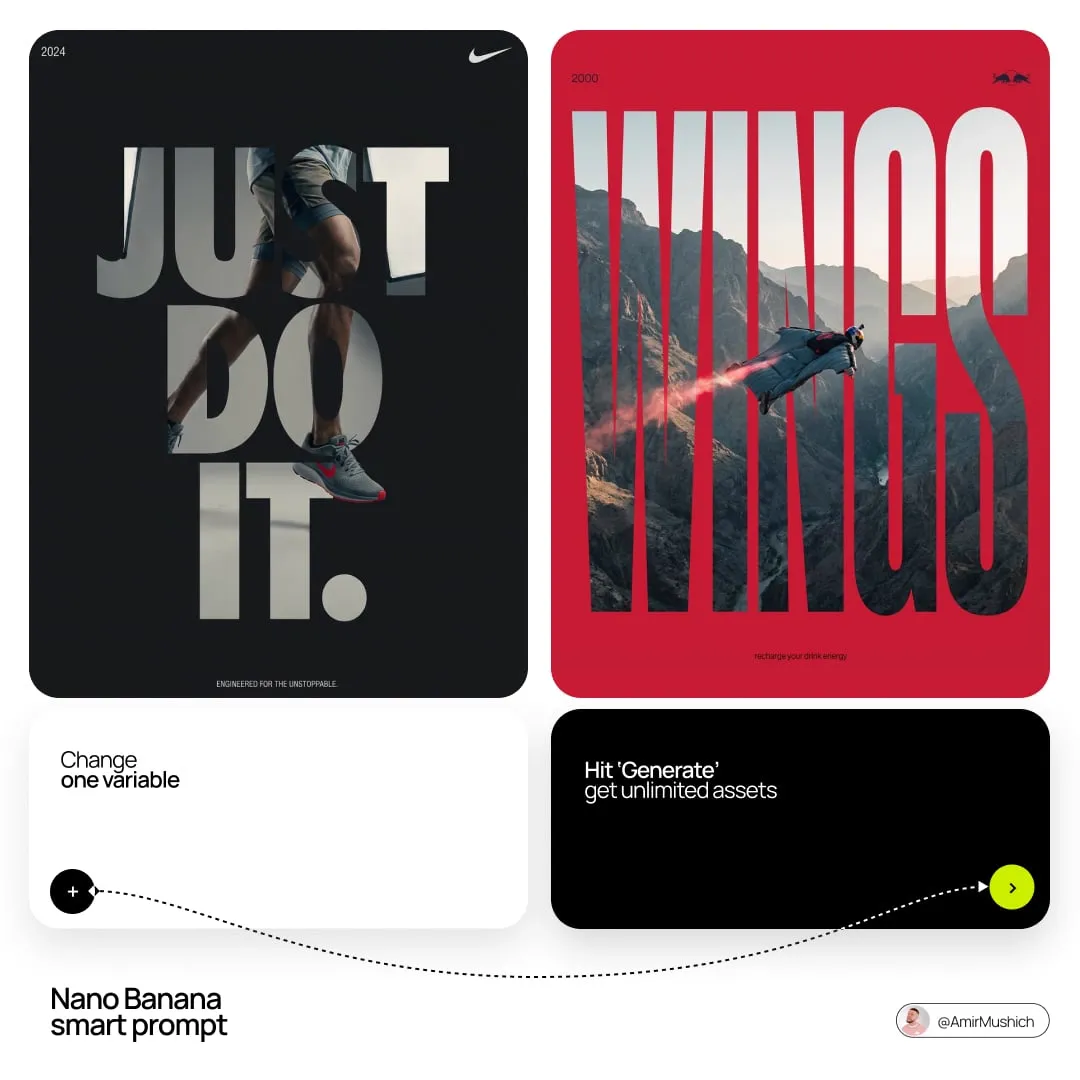
Keep one canonical description per character, covering age, build, hair, clothing, colours, and one distinguishing feature, and paste it verbatim into every prompt where that character appears. When your tool accepts reference frames, feed the same frame each time. When you want a small variation on an existing shot, reuse the same seed value and change exactly one variable so you know what caused the difference.
Scene continuity notes
List wardrobe, hair, props, time of day, and direction of travel for every shot in a scene. If a character moves left to right in shot four, they should not move right to left in shot five unless the cut justifies a reversal. These notes are tiny and they prevent the disorientation viewers feel but cannot name.
One light direction, one palette, per scene
Choose a single key light direction and a single palette for each scene, then repeat both. Shots that drift from cool morning to warm sunset inside one conversation read as stock footage assembled by an algorithm, because that is effectively what happened.
A worked example: a 45-second animated explainer
The brief: a software feature that helps teams organise documents. Narration runs 110 words. Target: eleven shots, four of them under two seconds each.
Shots one to four: establish and create tension
Shot one, three seconds: a slow push toward a desk buried in paper under warm lamp light. Shot two, two seconds: close-up of a hand lifting a stack that slips sideways. Shot three, two seconds: overhead of scattered folders drifting out of frame. Shot four, two seconds: cut to a screen glowing with an empty search field.
Shots five to eight: introduce the mechanism
Shots five and six are motion graphics rather than generation, because they show interface elements and readable text. Shot seven, three seconds: a generative shot of documents flowing into a single ordered stream, a metaphor a model handles beautifully. Shot eight, two seconds: a calm desk with one small stack and a satisfied hand movement.
Shots nine to eleven: resolve and sign off
Shot nine, three seconds: pull back through a window to an evening skyline. Shot ten, two seconds: a product frame composited from a real screenshot. Shot eleven, two seconds: an end card with one line of text and a subtle ambient move.
What to change on the next pass
Two lessons repeat in almost every project of this shape. First, shots five and six should have been planned as graphics from the beginning instead of generated and rescued in the edit. Second, shot nine was written as five seconds and worked better at three. Long shots rarely improve a cut; they usually just delay the next idea.
Choosing a tool: criteria that survive a deadline
Demo reels are a poor basis for a decision because they show the best output from an unknown number of attempts. Compare tools on the criteria that affect a real project.
Control surface
Can you specify camera movement, duration, and reference images? Can you lock a seed? Can you choose aspect ratio natively rather than cropping afterwards? Control is what turns a lucky output into a repeatable one. If you plan to produce a series rather than a single clip, control matters more than peak quality on one hero shot.
Iteration speed
How quickly can you test three variants of one shot, watch them in sequence, and regenerate only the weak ones? A tool that is twenty percent better per shot but five times slower to iterate will cost more time overall. Measure iteration speed on your own project, not on someone else's benchmark.
Export and handoff
Check resolutions, frame rates, and whether files open cleanly in your editor without transcoding surprises. Vertical and widescreen support should be native. If you are publishing to several platforms, verify the exports early rather than discovering a mismatch on delivery day.
The three-shot test
Run the same three-shot test through any two tools before committing to a long project: one atmospheric establishing shot, one shot that sits next to motion graphics and must feel clean, and one shot that depends on a character reference. If you are weighing platforms, the alternatives overview explains how different tools behave under those exact conditions. Starting from a video template is also a legitimate shortcut for a first project, because the structure is already solved and you only supply the content.
Assembly, sound, and the finishing pass
Silent AI animation reads as a test render no matter how good the footage is. Sound is not decoration; it is what convinces an audience that the motion was intentional.
Build sound in three layers. Ambience sits under everything and glues shots together even when they were generated on different days. A music bed gives the piece a shape. One or two designed accents land on cuts and make the edit feel decided rather than assembled.
Cut to the music rather than to the length the model returned. Trim clips; never stretch them. Vary shot length deliberately: two seconds, two seconds, four seconds, one second, three seconds holds attention far better than eight identical three-second shots. When a shot feels wrong, the fix is usually that it is too long, not that it needs better generation.
Finish with a gentle grade. A slight contrast curve and a shared colour treatment unify footage generated weeks apart. Add captions for accessibility, and add them as real text rather than letting a model render them into the frame. If you are generating a large batch at once, queue the shots by scene so your exports arrive in edit order.
Mistakes that make AI animation look cheap
Most of the things that make generated animation look inexpensive are planning failures wearing technical clothing. The common ones:
- Generating long shots instead of cutting. Long clips drift and expose artefacts.
- Mixing five visual styles inside one scene because each prompt was written fresh.
- Leaving sound until the end, which is why the sequence feels like a slideshow.
- Letting the model render text instead of adding real overlays.
- Cropping a widescreen generation into a vertical frame and destroying the composition.
- Treating the first output as final instead of as a rough cut.
- Writing prompts full of abstract mood words with no camera, action, or light.
- Forgetting continuity notes and reversing screen direction between consecutive shots.
- Using the same shot length throughout because it was easier than deciding.
Every item on that list is fixable in an afternoon, and none of them require a different model.
A quick format decision guide
Different formats need different structures. Knowing which one you are making prevents wasted generation.
- Product explainer, 30 to 45 seconds: eight to twelve shots, one real product frame captured rather than generated, narration-led.
- Educational explainer, 60 to 90 seconds: narration written first, generative shots for metaphors, motion graphics for every fact and figure.
- Cinematic teaser, 20 to 30 seconds: five to seven longer shots, heavy sound design, single title card at the end.
- Social vertical cut, 15 seconds: six to eight fast shots, on-screen text throughout, a strong hook in the first frame.
- Series episode, 3 to 5 minutes: one style bible, canonical character blocks, and a continuity sheet shared across every episode.
FAQ
Do I need animation experience to produce these videos? No, but editing instincts matter more than drawing skill. Knowing when to cut, how to pace a sequence, and when a shot is unnecessary is worth more than technical animation knowledge. A shot list and a rough storyboard get you most of the way.
How long should each generated shot be? Two to five seconds for most projects. Shorter shots hide artefacts, keep energy up, and reduce the chance that movement drifts partway through a clip. Anything past five seconds needs a deliberate reason.
Why do my shots look inconsistent when I reuse the same prompt? Generation is probabilistic, so identical prompts can return different results. Lock a seed, reuse the same reference frame, keep the style block unchanged, and cut more often. Consistency is partly editorial, and the edit will do more for you than another round of prompting.
Can AI handle a talking character? Short bursts of simple mouth movement can work. Precise lip sync is better handled by dedicated tools, or avoided entirely by cutting to reaction shots, hands, and environment instead of holding on a speaking face.
Is this quality good enough for client work? For explainers, social pieces, ads, and concept development, yes, provided you handle text, product accuracy, and sound with conventional methods. Show a rough cut early and set expectations about what generation does well and where you will use traditional assets.
How do I keep a series looking unified over several weeks? Keep the style bible, canonical character blocks, and continuity sheet in one shared document. Regenerate reference frames whenever a project restarts so the look does not drift between sessions.
How much footage should I generate for a one-minute piece? Roughly twice what you plan to use. Generate alternatives for the two or three shots you are least confident about, then throw the extras away without guilt.
What is the fastest way to improve my results? Shorten your shots, fix the style block, and add sound. Those three changes improve perceived quality more than any prompt rewrite.
Turn your first shot list into motion with Orelon
The tools are ready; the workflow is what makes the difference. Write the narration, build the style bible, generate short shots with a consistent style block, cut for rhythm, and finish with sound before you judge the result. Open the AI video generator to turn your shot list into motion, borrow structure and phrasing from the prompt library, and keep the Orelon blog nearby for the next round of techniques. Your first finished animation is a weekend away, and the second one takes an afternoon.