
Compare AI ad video makers, learn prompt structure, shot planning, and review loops to produce cinematic campaign spots faster.
Most ad teams do not lose campaigns to weak ideas. They lose them to slow production. A concept that feels sharp on Monday looks tired by the time a shoot is booked, edited, and approved, and the channel that needed six variations ends up with one. AI ad video makers exist to close that gap: they turn a written idea into moving footage in minutes, which changes how many concepts you can test and how fast you can respond to what the audience actually does.
That speed has a catch. Generated footage is only as good as the plan behind it. Teams that treat an AI video tool like a slot machine get glossy noise. Teams that treat it like a camera with a very literal operator get campaign work. This guide covers the second approach: briefs, prompt structure, shot planning, platform adaptation, review loops, and the decision criteria that tell you which workflow fits your team.
What an AI ad video maker actually does
An AI ad video maker is not a single tool. It is a small production pipeline compressed into software, and knowing the stages tells you where to invest effort and where to let automation run.
Direction. You translate a marketing goal into something visual: a message, an audience, a mood, a length, and a platform. This stage is still human work. The tool cannot know that your audience distrusts polished studio lighting, or that your brand never shows people smiling directly at the lens.
Generation. Text-to-video turns a written prompt into a clip. Image-to-video animates a still frame you control, which is usually the fastest route to a consistent look. Video-to-video restyles or extends existing footage.
Finishing. Cuts, captions, music, voice, color, and graphics. Most generated footage becomes a finished ad here, not inside the generator.
Delivery. One idea becomes vertical, square, and horizontal versions with safe zones respected, plus short cutdowns for channels with tighter attention spans.
Where generation is strong, and where it struggles
Generation is excellent at atmosphere: a rain-slicked street at night, a product rotating in studio light, a slow push through a kitchen at dawn, abstract transitions between scenes, and establishing shots that would otherwise need a location permit.
It struggles with precision. Hands interacting with small objects, legible text inside the frame, complex choreography, exact packaging details, and identity continuity across many shots all need careful prompting, a reference image, or a human editor. Plan around those limits instead of fighting them every time.
What separates a usable ad video maker from a demo
Any tool can produce one impressive clip. Campaign work demands repeatability. When you evaluate options, judge them on five things.
Camera and motion control
Ad footage lives or dies on movement. You want to specify a slow dolly in, a handheld follow, a locked-off tripod shot, a crane reveal, or a drone-style descent, and get something close to it. A tool that only offers a single generic cinematic setting will fight you on every shot.
Subject and product consistency
If your spot has four shots of the same product on the same surface, the surface, lighting direction, and label orientation must match. Reference images, seed control, and image-to-video workflows solve this. Pure text prompts, used alone, rarely do.
Real ad formats
Vertical, square, horizontal. Multiple durations. The ability to output a clean plate without burned-in elements so you can add typography later in an editor.
Controllable duration and pacing
A four-second clip and a ten-second clip serve different purposes. You want short punchy pieces for a hook and longer ones for a product story, without the longer ones turning into slow motion by default.
Predictable iteration
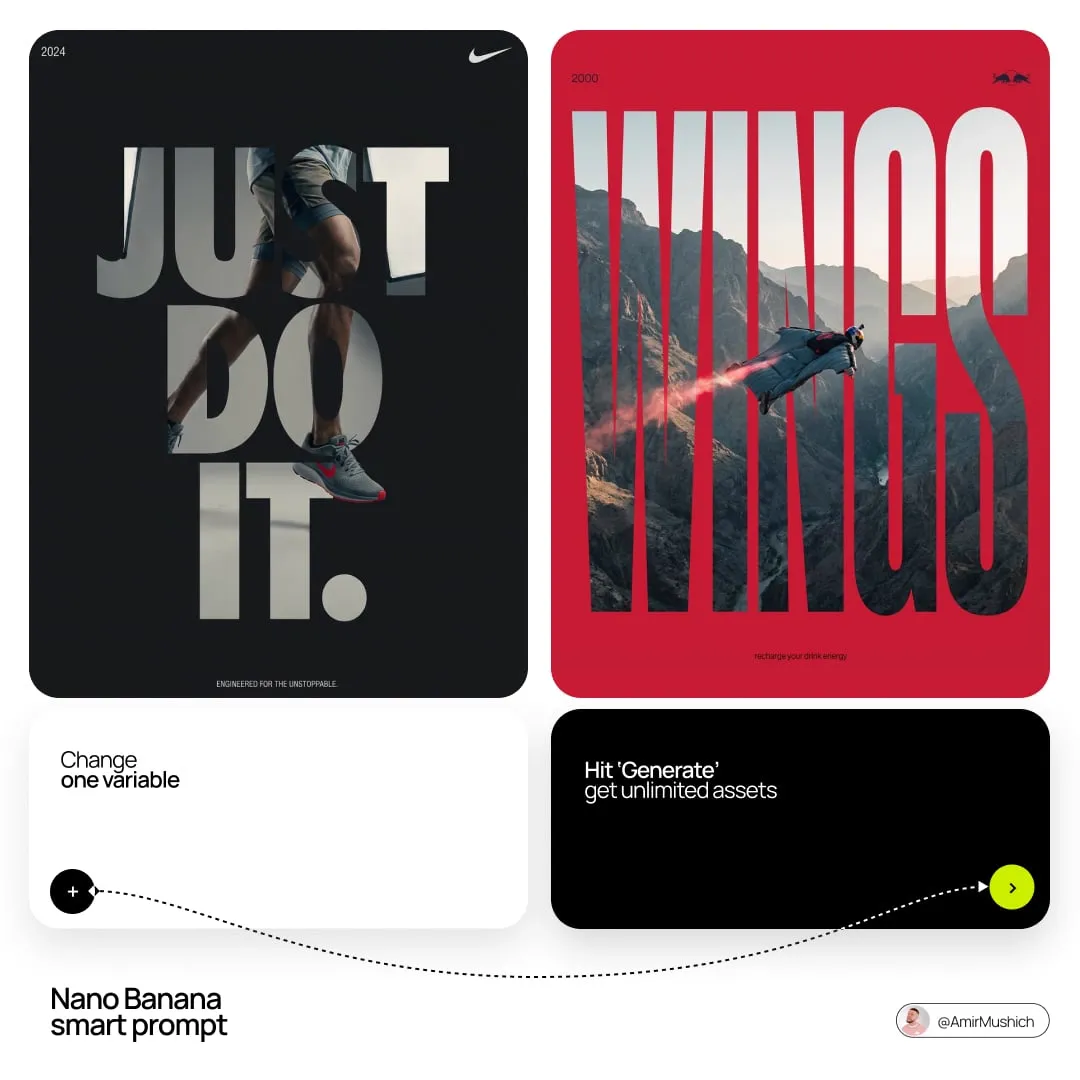
The real test is the third attempt. Can you change one variable, such as the light, the wardrobe, or the camera height, without losing everything else? If every regeneration is a fresh lottery, your timeline will collapse.
Tools like the Orelon AI video generator are built around this workflow: a prompt or reference frame goes in, a controllable shot comes out, and then you loop quickly until the take is right.
Writing a brief the model can follow
A creative brief written for humans is too abstract for a video model. Words like premium, warm, and approachable mean nothing to a generator. Your job is to translate brand language into visual language.
The five-line brief
Write five lines before you touch a prompt box.
- Goal: what the viewer should do after watching.
- Audience and context: where they see this and what they are doing at that moment.
- Single message: one sentence, not three.
- Visual world: three adjectives plus two reference images.
- Constraints: duration, aspect ratio, forbidden imagery, mandatory product shots.
Example: a fifteen-second spot for a coffee subscription
Goal: start a free trial. Audience: people scrolling on a phone during a commute. Message: fresh coffee, no thinking required.
Visual world: warm morning light, ceramic textures, slow steam, no clichéd office scenes, no exaggerated smiles.
Constraints: 9:16, fifteen seconds, product bag visible in shot four, no text rendered by the model.
From those five lines you can already derive a shot list, and every prompt you write inherits the same visual grammar.
Turning brand rules into prompt rules
Keep a short list of permanent prompt fragments: soft directional window light from camera left, matte ceramic surfaces, no logos in frame, shallow depth of field. Paste them into every prompt. This is how you get a campaign that looks like one campaign instead of six unrelated clips stitched together.
Prompt structure for ad shots
The six slots
A reliable ad prompt has six parts, in order:
- Subject: who or what, described concretely.
- Action: what happens in this clip, one beat only.
- Camera: lens, height, and movement.
- Light: direction, quality, time of day.
- Motion: how fast things move, including the camera.
- Mood and grade: color temperature, contrast, film reference.
Example: "A ceramic mug on a wooden counter, steam rising slowly, 50mm lens at counter height, slow dolly in, soft morning window light from the left, gentle motion, warm low-contrast grade, shallow depth of field."
Keep one beat per clip
New users pack three actions into a single prompt: pour, sip, walk away. The model splits its attention and produces mush. Generate three clips and cut them. Editing three clean beats is faster than repairing one confused take.
Use images to lock the look
If you need a specific product silhouette or a specific room, generate or upload a still and animate it. Look development in the Orelon AI image generator costs seconds and saves entire regenerations. Once the frame is right, the animation prompt only has to describe motion.
Negative direction matters
State what you do not want: no on-screen text, no additional people, no fast zoom, no lens flare. Models respond to absence instructions when they are specific. Vague negatives, like no bad quality, do nothing at all.
Shot planning: the storyboard is the schedule
The six-shot skeleton for a fifteen-second ad
- Hook (0-2s): one visually arresting image. No context needed yet.
- Context (2-5s): where we are and who this is for.
- Product (5-8s): the item, clearly, in good light.
- Benefit (8-11s): the product doing its job.
- Proof (11-13s): a detail that suggests quality, such as texture, craft, a hand, or a finish.
- Close (13-15s): product with room for a logo and a line of type.
Six shots, fifteen seconds. Each shot gets its own prompt, its own seed or reference frame, and its own approval.
Why storyboards save time in AI workflows
Storyboarding feels like overhead when generation is fast, but it prevents the most expensive failure mode: discovering at the edit that you are missing the one shot that explains the product. Sketch the six frames, even as rough thumbnails, and generate in edit order rather than in the order you feel inspired.
Cut rhythm
Ad edits cut on motion or on beat. When you generate, think about where each clip starts and ends. A clip that begins mid-movement cuts more smoothly than one that starts from stillness. Ask for continuous forward motion when you know the clip will sit in the middle of a sequence.
Aspect ratios, safe zones, and versioning
One idea, several cuts
Almost every campaign needs a vertical cut for social, a square cut for feed placements, and a horizontal cut for web and streaming. Do not simply crop. Reframe instead: vertical favors faces, hands, and close product texture, while horizontal favors environment and movement.
Generate the hero shots in a wide or square framing, then generate tight, vertical-specific shots for the vertical edit. Mixing both is usually better than reframing one master take.
Safe zones and captions
Assume a platform interface will cover the bottom and top edges of a vertical video. Keep faces and product in the central band. Add captions in editing rather than asking the model to render text, and keep them inside the safe area with generous margins.
Version hygiene
Name files with the campaign, shot number, version, and aspect ratio, for example a coffee subscription shot three at version four in vertical. Two weeks later, when someone asks which take was approved, the filename answers the question.
Finishing: making generated footage feel like a campaign
Sound does more work than the visuals
Most perceived quality in ad video comes from sound: a clean voice, a music bed with a clear downbeat, and small foley details that make generated motion feel physical. Add a subtle whoosh on a transition, a pour sound under a pouring shot, a soft click on a product reveal. Without audio, even excellent generated footage reads as a tech demo.
Matching shots to each other
Generated clips arrive with their own color and grain. In the edit, apply one grade across the whole timeline, then add a single grain layer over everything. This is the fastest way to make six separately generated shots look like one shoot.
Also check motion direction. If shot two moves right and shot three moves left, the cut feels like a mistake. Sequence shots so camera movement flows in a consistent direction.
Fix in the edit or regenerate?
Regenerate when the problem is structural: wrong framing, wrong subject, wrong light direction, a broken hand. Fix in the edit when the problem is cosmetic: slightly off color, a distracting element you can crop, a clip that needs to be faster, a take that is perfect except for the last few frames.
Regenerating a good shot to fix a small flaw wastes the take. Trimming a structurally wrong shot wastes the edit. Decide which category the problem belongs to before you click generate again.
Review loops that keep velocity
Approve in passes, not in conversation
Review against the brief, not against taste. Pass one: does the shot communicate the message? Pass two: does it match the visual world? Pass three: is the technical quality acceptable? Three pass-or-fail questions produce faster decisions than open discussion.
Keep a decision log
One line per shot: what changed, why, and who decided. This prevents the circular review where a shot gets fixed, unfixed, and fixed again. It also makes the next campaign faster, because you can see which prompt patterns actually worked.
Set a take limit
Decide in advance how many generations a shot is allowed, usually three to five. If a shot exceeds the limit, the problem is the brief, not the model. Rewrite the prompt from the brief instead of nudging individual words.
Mistakes that quietly kill AI ad campaigns
- Treating the first output as the concept. Generation is a sketching tool. The concept should exist before you open the tool.
- Prompting in brand adjectives. Premium and authentic are instructions to a human, not to a model. Translate them into light, lens, and material words.
- Ignoring continuity. Different light direction in consecutive shots reads as amateur immediately, even to viewers who cannot name why.
- Asking the model to render typography. Generate clean plates and add text in editing.
- Generating in the wrong aspect ratio and cropping later. You lose composition and resolution.
- Building a fifteen-second ad from one long clip. It will feel slow. Cut from multiple short clips instead.
- Skipping sound. Silent review inflates approval and deflates performance.
- No version naming. Chaos at the two-week mark, every time.
- Chasing realism when stylization would be stronger. A clearly stylized spot often outperforms a fake-real one, because it avoids the uncanny middle ground.
- Never testing hooks. The first two seconds decide most of the outcome. Generate three alternative hooks for every spot and test them.
Choosing a workflow: decision criteria
If you are a solo creator: optimize for speed and reuse. Build a small library of prompt fragments and reference frames. Generate in batches, cut in a simple editor, and ship versions weekly. Batch generation also lets you compare takes while the concept is still fresh in your head.
If you are a small marketing team: optimize for consistency. One person owns the visual grammar and approves every shot against it. Standardize aspect ratios, durations, and naming. Use templates for repeatable formats such as product reveals and testimonial overlays. The Orelon templates library is a reasonable starting point for recurring structures.
If you are an agency or production partner: optimize for control and handoff. Document the prompt set, seed values, and reference frames per shot so a different artist can reproduce the look. Budget time for look development before the first client review, because approving a look is much cheaper than approving twenty finished shots.
Across all three, the deciding question is the same: can you change one variable at a time and predict the result? If yes, almost any competent tool will work. If no, no tool will save the timeline.
FAQ
Do AI-generated ad videos perform as well as filmed ones?
They perform on the same curve. A clear message, a strong hook, and good sound drive results. Generated footage removes production cost, not creative requirements. Where generated video wins is volume: you can test five hooks instead of one.
How long should an AI-generated ad be?
Match the placement. Six seconds for bumper-style placements, fifteen for social feeds, thirty for web pre-roll and streaming. Cut from the same shot library so all versions stay consistent.
Can I keep a consistent product across many shots?
Yes, with reference frames. Generate or photograph the product once in the target lighting, then animate from that frame for each shot. Text-only prompts drift over a sequence.
Do I need video editing skills?
Basic ones. You need to trim, sequence, add captions, and mix audio. That is a weekend of practice, not a career.
What about music and voice?
Use licensed music and a real or high-quality synthetic voice. Sound is the fastest quality upgrade available to an AI-driven production.
How many generations should one shot take?
Three to five. If you are past that, the brief is the problem, not the prompt wording.
Is this usable for regulated industries?
Only with review. Generated footage can invent details, packaging, or implied claims. Route final cuts through whatever compliance process your category requires.
How do I keep a campaign from looking generic?
Constrain the light and the lens, not just the subject. Two teams can prompt the same subject and get identical results. Specifying counter height, a 50mm lens, hard afternoon light through blinds, and handheld movement produces a look. Lenses and light are where distinctiveness lives.
More prompt patterns and shot breakdowns are collected on the Orelon blog.
Bring your next campaign to motion faster
The bottleneck in ad video was never the idea. It was everything between the idea and the first view. Write a five-line brief, sketch six shots, keep your camera and light language fixed, generate in batches, and finish with sound and a single grade.
Start with one spot and one platform. Build the prompt fragments that match your brand, save the reference frames that work, and let each campaign inherit the previous one's visual grammar. When you are ready to put an idea in motion, Orelon turns your brief into cinematic footage you can cut, version, and ship.