

Plan, generate, and polish vertical Shorts with an AI-first editing workflow: hooks, framing, captions, sound design, and export checks.
Most people who search for the best editing software for YouTube Shorts are asking a question that will not solve their problem. Software rarely decides whether a Short performs. The workflow does. Two creators can open the same app and get wildly different results, because one of them has a repeatable pipeline and the other improvises every upload.
This guide is about building that pipeline. It covers how vertical video breaks the habits of long-form editing, which layers a Shorts stack actually needs, a five-stage process you can run in under an hour, where AI genuinely accelerates the work, and where human judgment still beats any model. There are decision criteria, prompt patterns, a worked example, a pre-publish checklist, and an FAQ at the end.
Why Shorts Break Long-Form Editing Habits
Long-form editing rewards patience. You can hold a shot for eight seconds, let a scene breathe, and trust that a viewer who reached minute three will stay for minute four. Shorts punish that instinct within the first frame.
Four structural differences create most of the friction.
The hook window is tiny. A viewer decides in roughly one second and commits or leaves within three. If your opening frame is a logo animation or a slow fade from black, the decision has already been made without you. Every vertical clip should open on the most interesting image you own.
The frame is crop-hostile. A 16:9 shot with two people near opposite edges becomes unusable the moment you center-crop to 9:16. Vertical framing is not a delivery setting you apply at export. It is a shooting and generation decision you make before the camera or the model runs.
Sound carries the edit. Many viewers start with sound off, then turn it on if the visuals earn it. Captions, on-screen text, and rhythmic cutting do the work that dialogue performs in long-form. An edit that only works with audio is half an edit.
The loop is part of the story. Shorts reward rewatches, so the last frame has a job: connect back to the first frame and make a second viewing feel natural rather than accidental. Ending on a hard goodbye frame wastes the strongest retention lever the format offers.
If your instincts were built for landscape storytelling, expect to rebuild them. The compensation is speed. Once the vertical pipeline is set, Shorts become the fastest content you will ever produce.
The Four Layers of a Shorts Editing Stack
Before comparing apps, understand that "editing software" is only one of four layers. Most creators try to buy one tool that covers everything and end up with something mediocre at all four.
Layer one: generation and capture. This is where footage comes from — a camera, a screen recording, or a generative platform that turns text and images into clips. Generation is strongest for establishing shots, atmosphere, abstract backgrounds, and concept visuals that would otherwise require a shoot.
Layer two: assembly. The timeline where clips are trimmed, ordered, and paced. This is the layer people usually mean when they say "editing software."
Layer three: captions and audio. Transcription, caption styling, music beds, and mixing. Often bolted on as an afterthought, yet it is the layer viewers notice most on a phone with the sound off.
Layer four: assets and reuse. Templates, presets, intro rhythms, and a library of clips that worked. This layer is invisible and it is the one that decides whether you can sustain a daily posting schedule without burning out.
A workable stack uses two or three tools across these layers. A stack that uses five tools, each covering twenty percent of the job, produces export problems, version confusion, and lost afternoons.
A Repeatable Five-Stage Workflow
Treat every Short as a pipeline with five named stages. Naming them is the difference between a habit and a scramble.
Stage 1: Write the hook as one sentence
Before anything else, write the promise in a single sentence. Not "a video about coffee brewing," but "why your pour-over tastes sour even when the beans are good." That sentence dictates your first frame, your first caption line, your cover image, and your title.
Spend two minutes writing five variations, then choose the one with the most specific payoff. Specificity is what separates a hook from a topic.
Stage 2: Build a shot list before opening any tool
List four to eight shots. For each one, note the framing (wide, medium, close), the movement (static, push, handheld), and whether it will be filmed or generated. This list doubles as your shooting script and your generation queue.
One rule makes a measurable difference: every Short needs at least one visually surprising shot, and it should land around the two-thirds mark, exactly where attention typically sags.
Stage 3: Generate the shots you cannot practically film
This is where AI changes the economics of short-form. Text-to-video and image-to-video tools produce establishing shots, textures, and concept visuals that previously required a location, a permit, or a budget line. An AI video generator covers motion and atmosphere well; a paired AI image generator is useful when you want to lock a composition first and animate it second.
Keep generated clips short — three to six seconds each. Short generated clips cut together more cleanly, give you more control over pacing, and hide the small continuity drifts that longer generations tend to accumulate.
Stage 4: Assemble to rhythm, then cut harder
Lay the clips on the timeline and cut ruthlessly. A first pass at a 45-second Short routinely starts at 70 seconds of raw material. Match cuts to the beat, remove pauses, and trim the first frame of every generated clip, since synthetic footage often begins with a soft or drifting frame before the motion settles.
Cut for change, not just for tempo. Two consecutive medium shots of the same subject, even perfectly timed, feel monotonous. Alternating wide, close, and graphic inserts makes the same rhythm feel intentional.
Stage 5: Captions, sound, export
Add music, then duck it under any voice track so speech stays intelligible on phone speakers. Generate captions, then edit them by hand — transcription tools mishear product names, numbers, and jargon constantly, and one wrong name costs more trust than a delayed post.
Export at a high bitrate, then watch the file on an actual phone, vertically, once with sound and once without. Only then upload.
Where AI Helps Most — and Where Judgment Still Wins
AI is strongest at three jobs in a Shorts pipeline. First, producing b-roll and atmosphere you could not practically film. Second, generating variations quickly enough to A/B test a hook instead of guessing. Third, handling mechanical work: transcription, silence removal, scene detection, and rough assembly.
Each of those saves minutes on every single video, and minutes are where compounding happens. Saving eight minutes per Short across twenty Shorts is more than two and a half hours — a meaningful chunk of a production week.
Where AI is weaker is judgment. It will not tell you that your hook is boring, that your caption timing feels rushed, or that the story is one shot too long. It also struggles with continuity across a sequence: a jacket changes color, a room layout shifts, a prop moves between shots. For anything narrative, keep a human on sequencing and continuity and let the models handle the frames.
The practical split is simple. Automate the mechanical, generate the impossible, and keep human decisions on the hook, the order of shots, and the final trim.
Decision Criteria for Choosing Editing Software
Feature lists are marketing. Ask these questions instead, and answer them with a stopwatch rather than a spec sheet.
| Criterion | What good looks like | Why it matters |
|---|---|---|
| Native vertical export | 1080x1920 available without nesting sequences | Nested sequences multiply mistakes |
| Edit-to-preview latency | Under a few seconds for a caption change | Slow feedback kills experimentation |
| Reusable structure | Templates, caption presets, saved export settings | Consistency reads as professionalism |
| Transcript editing | Edit the text, cut the video | Fastest way to remove filler words |
| Asset portability | Source clips remain downloadable | Avoids lock-in as your channel grows |
| Mixed sourcing | Handles filmed and generated clips in one timeline | Real channels almost always mix both |
Two more questions that rarely appear on comparison pages. How fast can you publish three Shorts in a row, from idea to file? And how does the tool behave when you are tired at 11 p.m. — because most Shorts get edited late.
If you are comparing generative platforms specifically, structured side-by-side breakdowns are more useful than feature pages; AI video generator alternatives laid out against each other is a better starting point than a sales demo.
Mistakes to avoid when choosing
Stacking five tools that each do a fraction of the job. Choosing an editor that needs a full render to preview a caption change. Buying on the strength of one dramatic demo, which was curated by someone who already knows the tool's sweet spot. And locking your source footage into a system you cannot export from at full quality.
Prompting for Vertical Frames Without Wasting Generations
Generated footage is only as good as the direction behind it. Treat prompts like shot notes for a camera operator who has never seen your channel.
A prompt skeleton that works
Subject + action + camera + lens feel + lighting direction + environment + mood + framing.
Example: "Barista pouring milk into a ceramic cup, slow spiral, static close-up, shallow depth of field, warm window light from the left, quiet cafe background, calm premium mood, subject centered in a vertical frame."
Three habits improve output quality consistently.
Specify camera movement explicitly. "Slow push in" or "locked-off static" removes ambiguity. Vague prompts produce drifting, unstable motion that you cannot fix in the edit.
Describe light, not only subject. Light direction and quality do more for perceived production value than any other single line in a prompt. "Warm window light from the left" changes a clip more than three extra adjectives about the subject.
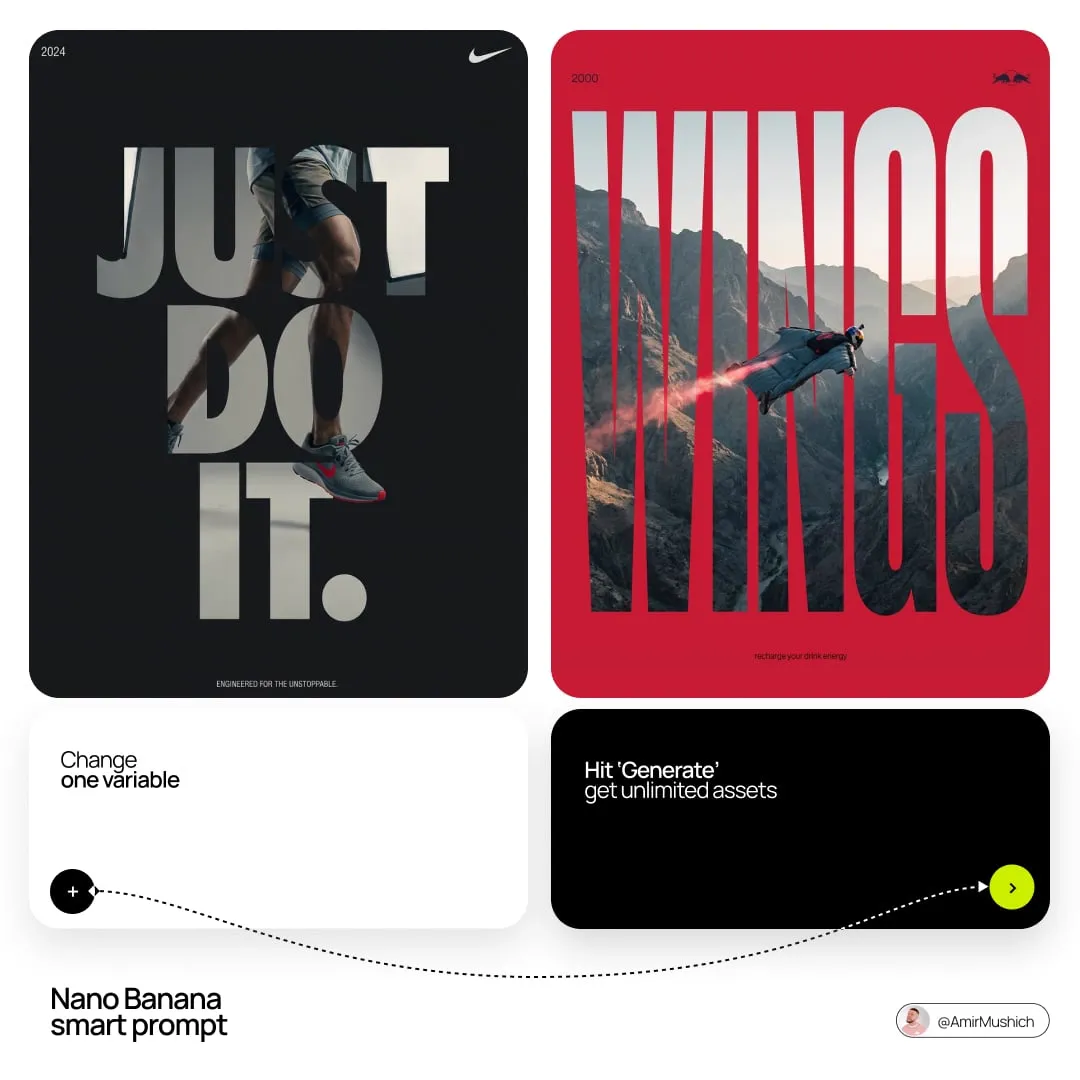
Change one variable per iteration. If a clip is close but the framing is wrong, change only the framing. Adjusting everything at once teaches you nothing and burns time.
Keep a private file of prompts that worked. A personal prompt library is worth more than any generic list because it encodes your channel's specific look — your lighting, your palette, your camera habits.
Common prompting mistakes
Cramming three distinct actions into one prompt and hoping for a coherent result; split it into two clips instead. Forgetting to request vertical framing, which yields wide compositions that cannot be cropped without destroying the subject. And asking a model to render readable text inside footage — generate a clean plate and add the text during the edit, where you can control size, position, and timing.
Editing for Retention: Pacing, Captions, and Loops
Retention is a rhythm problem. Viewers leave at flat moments, not at imperfect ones. A slightly soft shot that moves is safer than a sharp shot that lingers.
Front-load the payoff. Move the most interesting visual into the first two seconds, even if chronologically it belongs later. You can always reference it again near the end, and the early reveal buys you the seconds you need.
Cut on the beat, but change the shot type. Cutting every half-second between two identical framings is exhausting rather than energetic. Alternate scale and angle so each cut feels like progress.
Treat captions as design. Captions are not subtitles bolted on at the end. Their position, weight, and timing are part of the visual language. Keep text inside the safe middle band of the frame, clear of interface elements that cover the lower and right edges, and check readability at thumbnail size before you commit.
Build sound in three layers. A music bed, a foreground element (voice or diegetic sound), and a punctuation layer of whooshes, clicks, and transitions. The third layer is what makes an edit feel professional, and it is the one beginners skip.
End with a loop, not a farewell. A final frame that rhymes with the opening shot encourages a rewatch, and rewatches are among the strongest signals short-form feeds can register.
Templates shorten this work considerably. Starting from a video template with the correct ratio, caption placement, and pacing markers removes setup entirely and lets you spend your energy on content decisions instead of configuration.
Worked Example: A 45-Second Product Short
Here is the same pipeline applied to a small brand short, beat by beat.
| Time | Beat | Source |
|---|---|---|
| 0.0–1.5s | Hook: extreme close-up of the product in use, bold caption | Filmed |
| 1.5–5s | Problem statement, fast cuts of the frustration | Mixed |
| 5–15s | Three solution shots, one per feature | Generated b-roll plus product footage |
| 15–30s | Demonstration with captions and numbered steps | Filmed |
| 30–40s | Result shot, wider frame, music opens up | Filmed |
| 40–45s | Loop back to the hook frame, single call to action | Reused opening shot |
Two details matter in this structure. First, generated footage sits in the middle, where it carries energy rather than credibility — anything the viewer must believe, such as the product itself, stays as real footage. Second, the closing loop reuses an asset you already own, so it adds production value at zero cost.
Pre-publish checklist
- First frame readable at thumbnail size, with no cropped text
- Hook resolved within three seconds
- Captions reviewed manually for names, numbers, and jargon
- Text inside the safe middle band, clear of interface overlays
- Audio normalized, music ducked under voice
- One surprising shot at roughly the two-thirds mark
- Export checked on a real phone, vertical, with and without sound
- Title and first caption line both restating the promise of the hook
Run this every time for the first twenty Shorts. After that it becomes automatic, and the checklist shrinks to the two or three items you personally keep forgetting.
FAQ
Do I need professional editing software to make Shorts? No. Shorts reward speed and iteration far more than technical polish. A lightweight editor with reliable captions and vertical export beats a heavy suite you open twice a week, because consistency is what builds a channel.
How long should a Short be? Long enough to deliver the payoff, short enough that nothing drags. Many strong Shorts land between 20 and 45 seconds, but you should test durations against your own retention instead of assuming a target. Watch where viewers drop off and cut that beat.
Is AI-generated footage acceptable on Shorts? Yes, and it is common. Viewers respond to whether a clip is interesting, not to how it was produced. Keep generated clips short, use them where they add visual energy, and reserve real footage for anything the viewer needs to believe.
How do I keep a consistent look across many Shorts? Fix three things and change them rarely: caption font and position, color treatment, and your opening rhythm. Consistency reads as professionalism even when individual clips differ wildly in subject.
What is the fastest way to improve retention? Cut your first two seconds down to a single compelling image, then remove one shot from the middle. Most retention problems are pacing problems wearing a costume.
Should I edit in a browser or on desktop? Browser tools win on accessibility and collaboration, especially when your source material is mostly generated clips. Desktop tools win on control with large local files. Pick based on where your footage lives, not on which interface looks nicer.
How many Shots should I generate before editing? Generate roughly double the clips you think you need, then cut to half. Generation is cheap compared with editing time, and having alternates for your two weakest shots is what makes the final cut feel deliberate.
Build Your Shorts Engine With Orelon
Shorts are won by repetition, and repetition requires a pipeline rather than bursts of inspiration. Orelon is built for cinematic ideas in motion: describe the shot, generate the clip in a vertical-friendly format, and assemble it into a story that holds attention from the first frame to the loop.
Start on the Orelon homepage, write your first three hooks as single sentences, and generate the b-roll for each one before you open an editor. Do that consistently for two weeks and a 45-second Short stops being a project. It becomes a habit — and habits are what compound.