

A practical guide to AI editing features for short-form vertical video: auto captions, beat-synced cuts, smart reframing, generative b-roll, and a workflow.
Vertical video is the default frame for an enormous share of daily viewing, and the software used to produce it has quietly changed shape. Editing once meant trimming clips and stacking effects on a horizontal timeline. Today the consequential decisions happen earlier: generating a shot that was never filmed, reframing it for a tall frame, transcribing speech automatically, and snapping cuts to a beat grid. This guide unpacks the AI editing features that genuinely change the finished clip, shows where each one helps and where it quietly hurts, and lays out a production workflow you can repeat several times a week without burning out.
What "AI editing" actually means inside a short-form tool
The phrase covers at least four different capability layers. Vendors blur them together, but they fail in different ways and need different review habits.
Layer one: generation — footage that was never shot
Generative models turn a text prompt or a still frame into motion. For short-form work this matters most for inserts: an abstract macro shot, an establishing view, a transition that cannot be filmed without a budget. The trade-off is continuity. A single generated shot can look gorgeous while matching nothing around it — different lens character, different color temperature, different speed of movement. That mismatch is the most common reason AI-assisted footage reads as cheap rather than cinematic.
Layer two: assistive editing — removing labor, not adding style
These features create nothing new. They delete work: finding silent gaps in a talking-head recording, splitting clips on detected beats, trimming on speech pauses, removing filler words, matching loudness between takes, flagging shaky segments. They are dull to demo and enormously useful in practice, because they compress a two-hour session into twenty minutes.
Layer three: enhancement — rescuing imperfect footage
Upscaling, denoising, stabilization, relighting, background removal, object cleanup. If you shoot on a phone in mixed light, this is usually the layer with the biggest visible return per minute invested. A believable lift on a dimly lit speaker does more for perceived production value than any transition.
Layer four: the language layer — captions, translation, dubbing
Automatic speech recognition plus styled text gives you captions accurate enough to publish. Add translation or voice conversion and one recording can ship in several languages. For creators building an audience across regions, this layer changes distribution strategy rather than just turnaround time.
Why vertical short-form punishes long-form editing habits
Long-form editing assumes a wide frame, a long timeline, and a viewer who has already committed. Vertical short-form assumes a tall frame, a thirty-second window, and a viewer whose thumb is already moving.
The hook is structural
On a horizontal timeline you can afford a slow build. In vertical, the first second and a half does most of the work. Editors who come from long-form tend to cut their openings last. Short-form rewards designing the opening shot first and building backward from it.
Captions are part of the composition
A large share of viewing happens with sound off, so burned-in text functions as the primary dialogue channel. That changes framing decisions: you need headroom for two lines of type, and you need contrast management so white text survives bright footage.
Rhythm outranks narrative logic
Cuts land on musical beats more often than on story beats. That is a signal-processing problem more than a taste problem, which is exactly why automation handles it well — and also why automation can make your edit feel mechanical if you never override it.
The features that reliably change the finished clip
Feature checklists are long. These are the ones that show up in the final result.
Auto captions and kinetic typography
Accurate transcription is table stakes. What separates tools is presentation: word-level timing so you can highlight one word at a time, line breaking that avoids orphan words, presets that scale with the frame instead of sitting at a fixed pixel size, and a fast way to correct names and jargon. Legibility rules exist for a reason — high contrast, generous size, and safe margins that stay clear of platform interface elements.
Beat detection and music-synced cutting
Beat detection analyzes the waveform for onsets and tempo, then offers markers you can snap clips to. Used with restraint it makes a flat montage feel intentional. Used everywhere it produces a metronome: every cut on every kick drum, which reads as robotic within seconds. The better habit is to use detected beats for your fastest sequence and ignore them during dialogue.
Smart reframing and subject tracking
Shoot horizontal, deliver vertical — or the reverse. AI reframing tracks a subject and repositions the crop automatically, saving a great deal of manual keyframing. Test two situations before you trust it: two people in one frame, and fast lateral motion. Manual correction on a handful of clips is normal and quick.
Cleanup, background replacement, and relighting
Object removal has moved from a specialist task to a one-click operation. Background replacement without a green screen is now good enough for product demos and explainers, though hair edges and fast hand movement still expose weaknesses. Relighting is the quiet hero in this group. A believable lift on a dim subject can carry an entire clip.
Generative inserts and scene extension
Generated b-roll fills the gap where stock footage looks generic and shooting is impractical. Scene extension — continuing an existing clip or widening the canvas — buys the extra two seconds you need to land a beat without re-editing the whole sequence.
Dialogue cleanup and auto-ducking
Music that fights narration is the most common audio error in short-form. Ducking lowers the music under speech, and loudness normalization prevents jarring jumps between clips. With one denoise pass on phone audio, a home recording can sound deliberate.
A repeatable workflow from hook to posted clip
The order matters more than the tool. This sequence works for generated footage, shot footage, or a mix of both.
Step 1 — Write the hook as a shot, not a sentence
Instead of "today I want to explain," write the visual: a hand dropping a card into a slot, a chart line spiking, a product rotating into frame. Once the opening shot exists on paper, the rest of the clip becomes its explanation.
Step 2 — Storyboard six to ten beats
Sketch frames and write one line of intent per frame: what the viewer should understand or feel. This is where cheap generative sketches pay off — produce rough visuals with an AI image generator and develop only the frames that carry the idea.
Step 3 — Generate or shoot the base footage
For generated segments, be explicit about camera behavior. For shot segments, over-record: two angles, a clean audio take, and a few seconds of silent room tone for edit seams. Generating connective footage — the establishing shot, the abstract insert — with an AI video generator is often faster than hunting stock libraries for something that is merely acceptable.
Step 4 — Assemble dialogue first, music second, visuals third
Lay the voice track down, then the music bed, then cut visuals so dialogue edits and beat markers align where possible. If your tool offers a template library, treat templates as pacing skeletons rather than final looks. Templates are scaffolding, not style.
Step 5 — Captions, loudness, and motion polish
Burn in captions, then check them on a phone at arm's length. Normalize loudness to a consistent target, duck the music, and add motion only where it directs attention: a slow push on the key line, a small scale change on the punchline.
Step 6 — Export variants and test one variable
Produce two or three openings for the same body and test them. This is where AI-assisted workflows compound. If a variant costs five minutes instead of an hour, the experiment actually happens.
A worked example: thirty seconds for a product feature
Suppose you are demonstrating a new app feature in a single vertical clip.
- 0:00–0:02 — Generated macro shot: fingers tapping a screen, shallow depth of field, slight push-in. Caption states the claim.
- 0:02–0:07 — Screen recording of the real feature, cropped to vertical, with a highlight box on the changed element.
- 0:07–0:12 — Talking head, reframed automatically, captions burned in.
- 0:12–0:18 — Generated insert showing the outcome metaphorically: a stack of items collapsing into one.
- 0:18–0:25 — Second screen recording, slower pace, voice-over.
- 0:25–0:30 — Return to the talking head, one-line close, end card with the next action.
Three generated shots, one shoot, one screen capture. Total production time is well under an hour, and the piece reads as deliberate because the pacing was planned rather than improvised on the timeline.
Prompt patterns that keep generated shots consistent
Most disappointing generations come from vague input rather than weak models. A structure that works reliably:
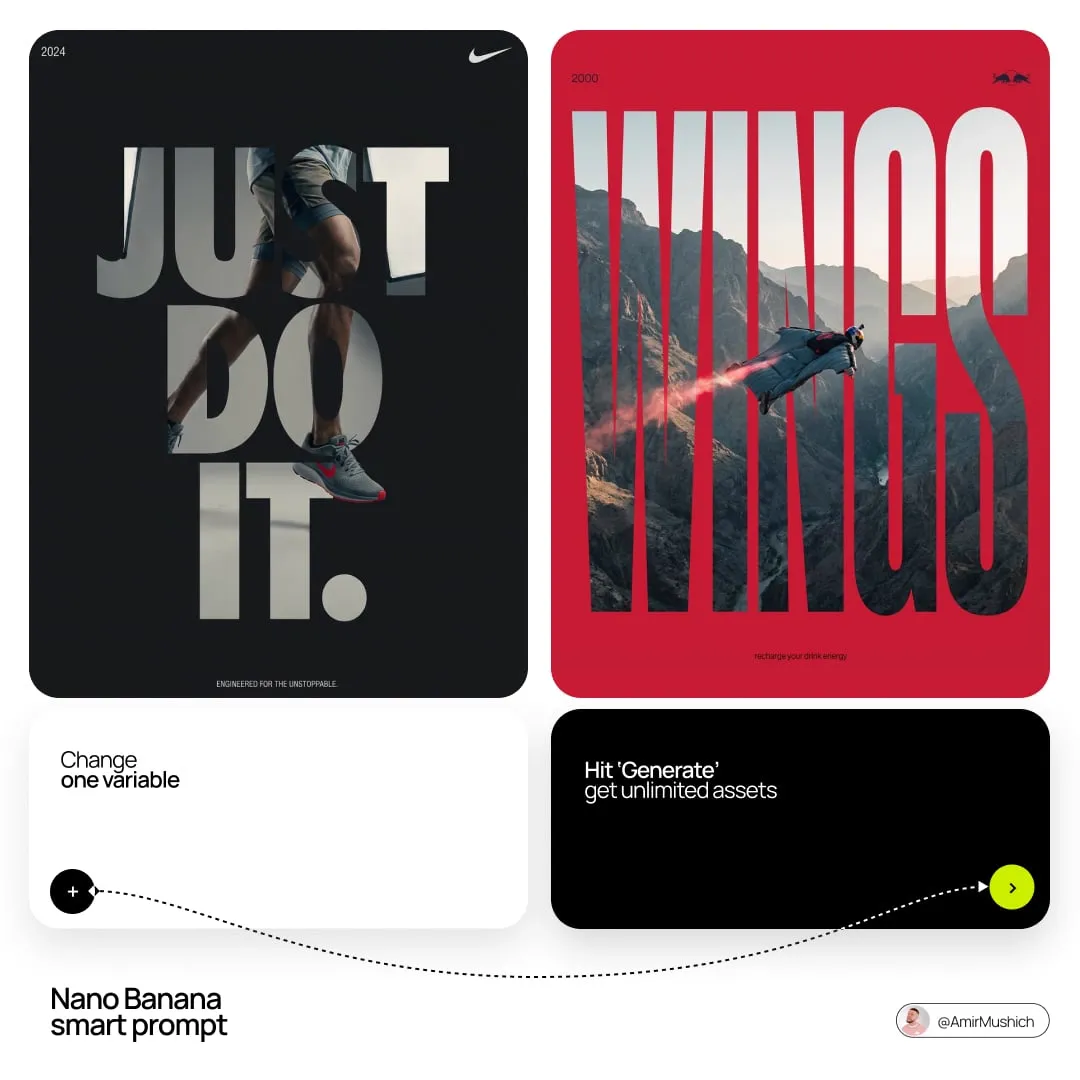
Subject + action + camera move + lens + light + mood.
For example: "ceramic coffee cup on a stone counter, steam rising, slow push-in, 50mm, soft morning window light, calm and warm." For the next shot, change only the subject and the mood and keep everything else identical — that is how visual continuity survives between separately generated clips. Save your best skeletons in a prompt library so you refine instead of starting from nothing each time.
Two habits matter more than any phrasing trick: state the camera move explicitly, and keep shots short. Models produce more believable motion in two to four seconds than in ten.
How to choose software: the criteria that matter
Feature matrices are nearly useless for comparison, because almost every tool claims every capability on the list. Compare on these instead.
- Vertical-native output. The tool should think in 9:16 by default, not treat vertical as a crop preset bolted onto a wide canvas.
- Caption accuracy in your language and accent. Test it on your own recording, not a polished demo clip.
- Continuity controls. Ways to lock style, subject, and lighting across generated shots.
- Editability after automation. When the automatic cut is wrong, can you fix it in one click or must you rebuild the sequence?
- Handoff. Can you export a project file or layered composition, or are you locked to one timeline forever?
- Predictable cost. Understand what triggers variable usage before you build a weekly publishing schedule on top of it.
- Latency. Generation speed decides whether the tool survives a daily cadence.
- Collaboration. Comments, version history, and shared assets start mattering the moment more than one person touches the edit.
If you are comparing generative options specifically, side-by-side breakdowns such as Orelon vs Runway reveal more than a raw matrix, because they show where each tool's defaults push your output.
Mistakes that make AI-assisted edits feel automated
Cutting on every beat. Rhythm without restraint becomes noise. Let some beats pass untouched.
Caption bars covering the subject's mouth. Captions belong below the eyeline or above the chin, never across the feature the viewer is reading.
Mixing shots with different color temperatures. Grade everything to a shared baseline, or generate every clip with a common style reference.
Cutting fast immediately. The opening shot benefits from being longer than instinct suggests. Viewers need a moment to orient before pace can accelerate.
Generic b-roll. A floating laptop and a handshake communicate nothing. Generate something specific to the claim being made.
Treating audio as a finishing step. Audio problems are structural. Fix the narration before you fall in love with the cut.
Ending without a next step. A final frame with no direction wastes the attention you earned.
Automating before you understand the format. If you cannot edit a thirty-second clip by hand, automation will only help you produce weak clips faster.
What to measure after you post
Two signals tell you more than raw view counts.
Retention shape, not retention average
A clip that holds 80 percent for ten seconds and then collapses has a weak middle. Find the drop-off second and look at what happens there — usually a shot that repeats information or a caption that arrives late.
Caption read-through and rewatches
If rewatching is high but completion is low, the opening promised something the middle did not deliver. If completion is high but sharing is low, the payoff was clear but not remarkable.
Compare variants against one variable at a time: same body, different opening; same opening, different pacing. Change two things at once and you learn nothing.
FAQ
Can AI editing replace an editor entirely?
For templated formats, close to it. For anything with character, comic timing, or a specific point of view, no. The realistic division of labor is that AI removes assembly work and leaves judgment to you.
Do captions really improve performance?
They improve comprehension in sound-off environments, which is where a substantial share of viewing happens. Treat them as the default, then differentiate with styling.
How do I stop generated shots from looking inconsistent?
Lock a reference: same lens language, same lighting description, same color words in every prompt. Then grade all clips together at the end so small differences disappear.
Is vertical only for phones?
It is optimized for phones, but vertical shows up on desktop feeds, in stores, and in presentations. Design for the small screen and it holds up larger.
How long should a clip be?
Long enough to deliver exactly one idea. For most formats that lands between twenty and forty seconds. Two ideas usually mean two clips.
Do I need an expensive machine?
Less than you used to. Much of the heavy processing happens server-side, so a laptop with a stable connection and a display you trust for color is enough for most short-form work.
What is the single biggest quality lever?
Audio. Clean narration, consistent loudness, and music that stays out of the way will outperform any visual upgrade.
Where Orelon fits
Orelon is built for cinematic ideas in motion: you describe the shot, choose a look, and generate vertical-ready footage without a studio or a shoot day. The workflow above maps onto it directly — sketch frames, generate connective shots, reframe and caption, then assemble on a rhythm rather than by feel. Start with the AI video generator, borrow pacing structure from the template collection, and keep a prompt library so your best shots are repeatable instead of accidental. When your workflow outgrows a single clip a week, the Orelon blog has deeper breakdowns on pacing, continuity, and short-form structure.