

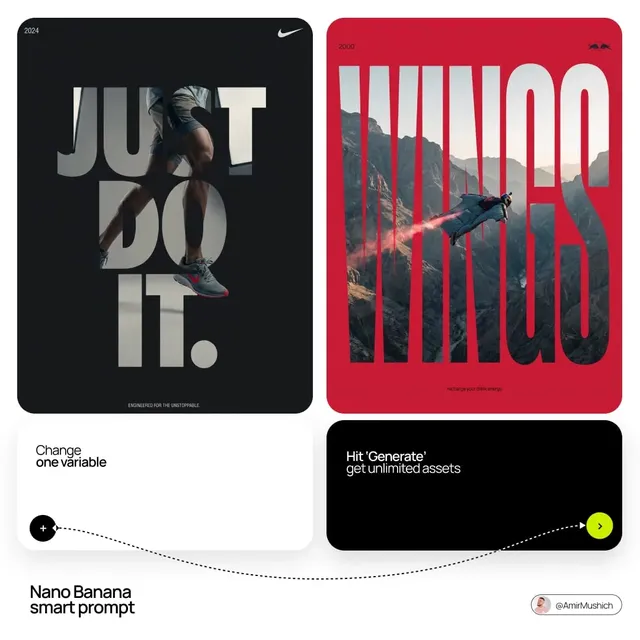
Turn scattered ideas into a repeatable marketing video series: series promise, idea inputs, prompt skeletons, continuity rules, scoring, and cross-platform cuts.
A single marketing video earns one spike of attention and then expires. A series earns a habit. The gap between the two is rarely budget, equipment, or editing skill — it is whether the idea engine behind the publishing calendar can refill itself without a weekly panic.
Most teams stall in the same place. They can describe the feeling they want — sharp, fast, a little unexpected — but they cannot convert that feeling into a format that survives ten episodes, one rebrand, and a change of editor. What is missing is structure: a promise that constrains ideas, a set of inputs that generates premises on demand, a prompt skeleton that renders predictably, and a scoring pass that kills weak concepts before they consume a production day.
This guide walks through that system end to end. Where a concrete tool helps, the workflow points at Orelon's AI video generator, but the method is renderer-agnostic. Any team that can write a clear prompt and maintain a shared document can run it.
Start With a Series Promise, Not a Brainstorm
Write the promise as one sentence with three slots: "Every episode, [protagonist] faces [category of problem] in [world]."
Weak: "We make videos about productivity." Nothing in that sentence constrains an episode, so every idea sounds equally plausible and equally forgettable.
Strong: "Every episode, a night-shift designer fixes one broken handoff inside a fictional studio." The strong version names a cast member, a bounded category of problem, and a world with a visual identity. It also gives you a reason to reject things that are not a matter of taste. When someone proposes "five tips for better meetings," the promise — not the loudest voice in the room — decides.
Then define the variable. Pick a recurring protagonist: a person, a product hero shot, a mascot, an animated object. Change exactly one thing per episode — the problem, the location, or the stakes. Change everything and the audience cannot recognize the series; change nothing and there is no reason to watch episode two.
Finally, define the frame: a three-to-five-second cold open, a recurring visual signature (a specific transition, a color flash, an object entering frame), and an identical end card. The frame is what makes a series legible in a crowded feed at thumbnail size. The middle is where variation lives.
One test before you commit: if episode three could belong to a different brand with a different product, you have built a playlist, not a series.
Five Inputs That Keep the Idea Bank Full
Brainstorming from a blank page produces generic ideas slowly. Generating from structured inputs produces specific ideas quickly. Five inputs do most of the work.
Customer questions. Pull recent support threads, search queries, and the comments under your existing posts. Group them into themes. Each theme becomes a season; each specific question becomes an episode. This input never runs dry, and it is naturally aligned with what people already search for.
Sales objections. The five objections that most often stall a deal are the five most useful episodes you will make, because they arrive with built-in tension. Tension is the hardest ingredient to fake in short-form video, and objections hand it to you for free.
Lifecycle moments. Onboarding, the first week, the first integration, the first failure, the first renewal. Each moment carries a different emotional register, which gives you tonal variety without changing the format.
Borrowed formats. Do not chase trends; borrow structures. The tutorial, the teardown, the before-and-after, the mock interview, the field test, the time-lapse rebuild. A format supplies shape without supplying content — exactly the ratio you want during ideation, when content is the thing you are trying to produce.
Product observation. What people actually do inside the product produces the most specific storylines. "The three settings nobody touches" beats "ten productivity hacks" every time, because one is an observation and the other is a category.
The multiplier is combining two inputs per episode. "Objection: too expensive" plus "format: field test" produces a concrete premise in one line. "Support theme: setup confusion" plus "format: time-lapse rebuild" produces another. Two inputs, one sentence, a shootable concept.
Retention Mechanics That Make Episode Two Inevitable
Three levers explain most of the difference between a series people finish and a series people scroll past. All three are controllable in an AI-assisted workflow.
Pattern interruption with a purpose
Visual rhythm becomes predictable fast, and predictable means invisible. Plan deliberate breaks: a palette flip, a hard cut to a tighter lens, a sudden change in motion speed. In short-form, aim for a disruption roughly every five to eight seconds; in longer tutorials, every twenty to thirty.
The qualifier matters. An interruption that reveals new information feels smart; an interruption that only jolts feels cheap. If a cut does not add a fact, a location, or a shift in stakes, delete it. This is the discipline that separates a crafted series from a slot machine.
Episodic payoff
Serialized storytelling can end on a cliffhanger. Marketing series usually should not, because a viewer who leaves unresolved rarely returns. The working rule is one question resolved and one question planted: each episode answers something completely, then opens a small loop for the next. An episode that resolves everything gives no reason to come back; an episode that resolves nothing feels like a trailer.
Visible co-creation
Reading a comment on camera, running a poll that decides next week's location, opening with "you asked" — these convert passive viewers into participants and hand you free ideation. The only requirement is that the suggestion visibly changes the finished video. If the audience cannot see their input in the output, the loop reads as performance and stops working.
Run a Two-Hour Session That Ends With a Ranked Season
This session needs no facilitator and produces both an idea bank and a season outline.
The sequence
Write the promise. One sentence, three slots. Ten minutes.
Dump thirty premises in twenty minutes. No filtering, no discussion, no ranking. Use the five inputs as prompts whenever the page goes quiet. Quantity is the only goal; quality is handled later.
Sort into three seasons of ten. Group by emotional register rather than by product feature, so each season has a distinct mood and the series does not blur into one undifferentiated feed.
Reduce each premise to one line. Protagonist, obstacle, payoff. If a premise needs two sentences, the episode is trying to do too much and should be split.
Score the top candidates. Use the criteria below. Anything that scores poorly on specificity goes back in the bank regardless of how much anyone likes the wording.
Produce the pilot, not the season. One episode, start to finish, captions included. The pilot reveals whether the character holds up in motion, whether the look survives a different lighting setup, and whether the format is actually watchable. Committing to ten episodes before one exists is the most expensive mistake in this entire workflow.
Score concepts before you render
With thirty candidates and time for four, intuition is a poor filter. Score each premise from one to five on five weighted criteria and let the arithmetic start the argument.
| Criterion | What it measures | Weight |
|---|---|---|
| Specificity | Is it about one concrete situation? | 30% |
| Visual interest | Can it be told with little talking? | 25% |
| Series fit | Does it use the established frame and cast? | 20% |
| Demand | Does the audience already ask this? | 15% |
| Production risk | How many difficult shots does it need? | 10% |
Treat 3.5 as the floor and 4.5 as "produce this first." The number matters less than the conversation it forces: production risk gets discussed before the storyboard is locked, instead of after a shot has failed six times.
Turn a Premise Into a Prompt That Renders Cleanly
Disappointing AI footage is usually a writing problem wearing a model problem's clothes. Vague prompts produce vague shots, and retrying does not fix a prompt that never said what the camera was doing.
The seven-slot skeleton
Write every prompt against the same seven slots in the same order. Structural consistency produces output consistency, which is what a series needs more than individual brilliance.
- Subject — who or what, with two distinguishing details.
- Action — one verb, present tense, one motion.
- Environment — location plus one atmospheric detail.
- Camera — framing and movement: locked-off wide, slow push-in, handheld follow.
- Light — direction and quality: hard side light, soft overcast, practical neon.
- Palette and texture — three colors and one material or grain reference.
- Duration and pacing — how long the shot holds and whether anything enters or exits.
One premise, three readings
Premise: "A founder tests a competitor's product in a garage." Three prompts from the same skeleton, three entirely different emotional results.
- Locked-off medium shot, subject holds a device and frowns, garage at dusk, single hanging bulb, warm amber and cold blue, slight film grain, five seconds.
- Slow handheld push-in, subject turns the device over, garage at dusk, light spilling from an open door, teal and orange, six seconds.
- Extreme close-up on hands, device clicks open, garage bench, hard side light with dust in the beam, neutral palette, three seconds.
Same idea, same cast, same world — different tension. This is where a shared prompt library pays for itself: reusable skeletons remove the blank-page cost from every episode after the first.
Motion discipline
Be explicit and conservative. One camera move per shot. One subject motion per shot. If a beat needs a reveal, generate it as two shots and cut between them rather than asking for a compound move. Compound requests are the most common cause of mushy motion, and mushy motion is the fastest way to make a series look synthetic.
A second discipline: write the hook shot last but generate it first. If the hook does not work, the episode does not work, and you want that verdict before you have spent hours on the middle.
Lock Cast, Palette, and Props Across Episodes
Continuity is the hardest part of AI series production and the most worth systematizing, because drift is cumulative. Episode four's jacket is a different green, episode seven's lighting is a different temperature, and by episode nine the series no longer looks like itself.
Build a character block — a fixed paragraph describing age range, build, hair, wardrobe with specific colors, and one signature accessory — and paste it verbatim into every prompt. Do not paraphrase between episodes; paraphrasing is exactly how a character changes appearance. Keep the block in a shared document alongside the palette rules so a new editor cannot invent a new version.
Palette and lens rules should be rules, not adjectives. Two dominant colors plus one accent. One lens family: a wide for exteriors, a normal lens for dialogue. One grain or texture treatment. "Moody and cinematic" survives no handoff; "teal shadow, warm practical, 35mm grain" survives every handoff.
Generate reference stills with an AI image generator before animating anything. Stills are cheap and fast to iterate; animated retries are neither. A front view, a three-quarter view, a profile, and one expression set is enough for most series work.
Before publishing, run a six-point check: character block unchanged, palette locked, lens family consistent, recurring prop present, end card identical, caption styling identical. Ninety seconds of checking prevents the slow visual drift that makes a series feel accidental.
One Episode, Six Deliverables
Plan the adaptation before generating, because some shots only work in one aspect ratio. A vertical cut cropped from a wide composition loses the composition entirely.
- Vertical short-form: regenerate the two strongest beats in 9:16 with tighter framing.
- Square feed version: usually the vertical master with more headroom; regenerate if text sits in frame.
- Long-form cut: assemble the season into a single tutorial with chapter breaks.
- Stills: pull three frames per episode for carousels, email headers, and blog art.
- Captions and transcript: burned-in captions for social, plus a written transcript for the blog and for viewers who cannot hear the audio.
- Audio-first version: the transcript plus short narration becomes a newsletter section or podcast segment.
Build a template for each output so adaptation becomes assembly rather than redesign. Starting from video templates removes a whole class of decisions from every episode, and it keeps the wrapper consistent even when a different person assembles the cut.
One planning note: decide the aspect ratio of each beat before you render it, not after. The cost of regenerating a single 9:16 hook is small. The cost of rebuilding an episode because the payoff only works in a wide frame is a lost week.
Weekly Cadence, Realistic Volume, and Common Mistakes
A cadence that survives a real job
Monday: pick two premises, score them, write one-line scripts. Tuesday: generate reference stills, lock the character block and palette. Wednesday: generate shots in order of narrative importance, hook first. Thursday: assemble, caption, run the six-point check. Friday: export every variant, publish one, schedule the rest.
Two episodes per week is realistic with a fixed frame and a full idea bank. Four is possible only when cast and look are fully locked. Ten is a content factory, and content factories usually trade quality for volume until the audience leaves.
Mistakes that break the rhythm
- Reinventing the wrapper every episode. Curiosity comes from the story, not from a new format each week.
- Overloading the prompt. Three ideas in one shot produces none of them.
- Skipping the pilot. Still the most common failure in the entire workflow.
- No open loop. Fully self-resolving episodes give nobody a reason to return.
- Ignoring captions. A large share of feed viewing happens muted; unreadable text is invisible text.
- No series name. An unnamed series cannot be searched, linked, or remembered.
- Empty idea bank. Running out of premises mid-season is the usual cause of quality decay.
- Unchecked drift. Continuity reviewed only at the end of a season costs a full re-render.
FAQ
How many episodes before a series finds traction?
Six to eight published consistently. Below that, the audience is still learning the format. Judge on completion rate and returning-viewer share rather than first-month view totals, which are dominated by novelty and promotion.
Can one person realistically run a series?
Yes, if the frame is fixed and the idea bank is full. The bottleneck is decision-making, not generation. Lock the character block, the palette, and the templates once, and the weekly work becomes writing and assembly.
How long should each episode be?
Fifteen to forty-five seconds for short-form; three to six minutes for tutorials. Long enough to deliver one payoff, short enough that no shot overstays. If an episode seems to need two payoffs, it is two episodes.
What do I do when the character drifts?
Paste the description block verbatim instead of rewriting it, and regenerate from reference stills rather than from memory. Drift almost always comes from re-describing the character in fresh language each time.
Do AI-generated episodes hurt brand perception?
Only when the look is inconsistent or the claims are vague. A fixed palette, a consistent cast, and specific, useful answers read as produced. Audiences forgive synthetic visuals far more readily than they forgive a series that wastes their time.
Series or one strong hero video?
If the topic holds more than five distinct audience questions, it is a series. If it holds one, make the hero video and skip the overhead.
Should every episode be scripted before generation?
Script the payoff, not every frame. Know what the episode proves and how it ends, then let the shot list carry the rest. Scripting every beat in detail is slower than generating two options and choosing the better one.
Make the Pilot This Week
Write the promise, dump thirty premises, score the top five, and produce a single episode — one character, one palette, one payoff. Generate it in Orelon, keep the character block and palette rules in a shared document, and build the next nine from the bank you already filled. If you want a starting point for the look, browse the Orelon blog for structure ideas before you open a blank prompt.
Cinematic ideas in motion start with one shot you can actually finish. Everything else in the series is repetition with variation.