

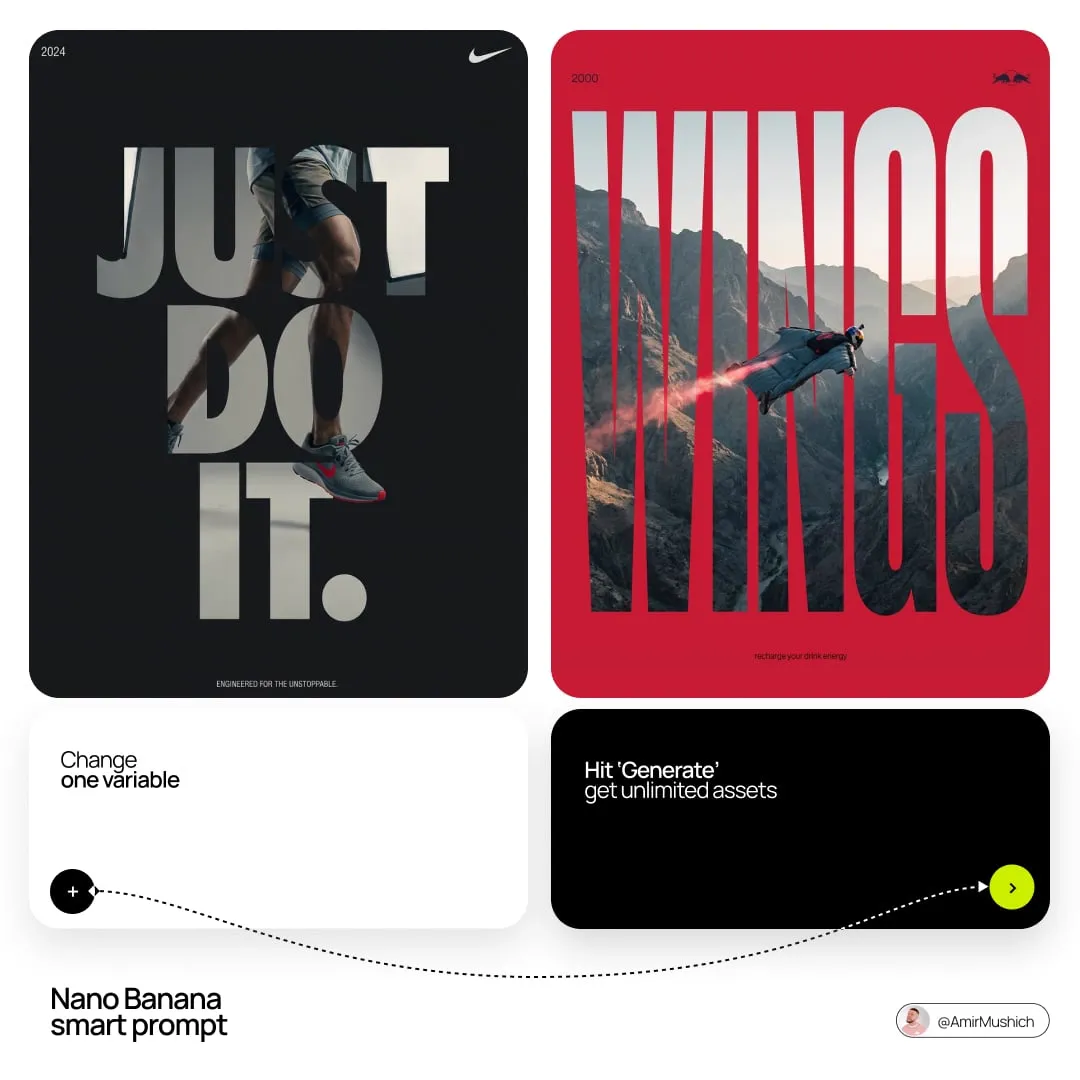
Cut the true cost of short-form video with a practical AI workflow: planning, prompt structure, shot consistency, editing, and QA that scales.
Every short-form video has two price tags. One is visible: the shoot day, the editor's hours, the music license, the afternoon lost to a single revision. The other is invisible: how many attempts it took to land on an idea that actually held attention past the second second. Most budget conversations obsess over the first tag and ignore the second — which is why teams often feel like they are spending more while shipping less.
This guide is about the second tag. Not platform economics as an abstract topic, but the practical arithmetic of making short-form video: what actually drives cost, where an AI video workflow compresses the curve, where it does not, and how to run a repeatable pipeline that produces finished videos instead of folders of half-ideas.
The Three Cost Layers Behind Every Short-Form Video
When people say a video is "expensive," they usually mean one of three very different things. Separating them is the first step toward controlling them.
Layer 1: Production cost
This is the obvious one — people, gear, locations, talent, studio time, editing, sound, captions, thumbnails, versioning. It scales linearly with the number of finished videos, and it is the layer most spreadsheets track correctly.
Layer 2: Iteration cost
This is where budgets quietly die. Iteration cost is every reshoot, every re-edit, every "let's try a different opening," every test of a new hook on the same footage. It is not a line item because it hides inside salaries. But if a two-person team spends nine hours reworking a twenty-second clip, that clip cost far more than its runtime suggests.
Layer 3: Attention cost
Short-form platforms are competitive auctions for a few seconds of human focus. A video that gets produced cheaply but never earns watch time has an infinite cost per useful view, because the output did no work. Attention cost rewards clarity, pacing, and a hook that resolves a real curiosity gap — not production polish.
The leverage in AI-assisted production is almost entirely in Layer 2. Generation is fast and cheap enough that trying five openings, three endings, and two visual styles becomes normal rather than extravagant. That changes what a finished video costs, because it changes how many safe bets you can afford to discard.
Why AI Shifts the Cost Curve — and Where It Doesn't
A common mistake is assuming AI makes "video" cheap. It does not. It makes variation cheap.
Traditional pipelines are optimized to avoid variation: you storyboard carefully, shoot once, and edit defensively because another shoot day is painful. AI-assisted pipelines are optimized to explore variation: you generate a batch of candidate shots, throw away 70 percent, and keep the ones with the right energy.
What AI does not fix:
- Strategy. If nobody knows who the video is for or what it should make them do, no amount of generation speed helps.
- Taste. Choosing between two decent options is still a human skill.
- Sound. Weak audio destroys retention faster than weak visuals.
- Distribution logic. Format, aspect ratio, length, and posting cadence still matter more than render quality.
What AI does fix: shot availability, visual consistency across a series, and the cost of re-doing a scene because a client changed one line of dialogue. That is where the practical savings live.
A Neutral AI Video Workflow, From Brief to Publish
The workflow below is tool-agnostic. It works whether you are generating fully synthetic footage, animating stills, or mixing AI shots with phone footage. Start with whatever generator you prefer — an AI video generator built for cinematic output is a reasonable default — and keep the pipeline the same as you swap tools.
Step 1: Brief and beat sheet (30–60 minutes)
Write one sentence per beat: hook, context, turn, payoff, close. Five beats for a 20-second video, eight to twelve for a 60-second one. If a beat cannot be summarized in a sentence, it is not a beat yet — it is a wish.
Add two constraints that will save you hours later: total runtime, and the single image you want a viewer to remember. That image becomes your visual anchor and dictates the rest of the shot list.
Step 2: Look development with stills (45–90 minutes)
Generate still frames before generating motion. Stills are faster to evaluate, easier to compare side by side, and cheaper to iterate. Build a small board of five to eight images that establish palette, lighting direction, lens character, and wardrobe.
An AI image generator is useful here precisely because it is cheap to be wrong. Reject aggressively. Settle on one look, then write it down as a reusable block of text you will paste into every video prompt — that block becomes your series style guide.
Step 3: Shot list and prompt structure (60 minutes)
Convert beats into shots. Each shot gets: subject, action, camera behavior, environment, lighting, and duration. Then write prompts in that same order so they stay auditable. A consistent order means that when something looks wrong, you know which clause to change.
Step 4: Generation and continuity (1–4 hours)
Generate in batches of four to six variations per shot. Keep the takes that read clearly at thumbnail size. Continuity is the hard part of any series, and it is where most AI workflows break down: faces drift, jackets change color, lighting flips between shots.
Practical countermeasures:
- Reuse the same reference images across a sequence rather than describing characters from scratch.
- Lock one prompt block for lighting and palette, and change only action and camera clauses between shots.
- When a new take works, save it as the new reference for the next shot in that sequence.
- Accept that minor drift is often invisible in motion and on a phone screen. Do not burn an hour fixing a detail nobody will see.
Step 5: Assembly, sound, and captions (1–3 hours)
Edit for rhythm first, prettiness second. Cut two frames early rather than two frames late — short-form pacing tolerates abrupt cuts and punishes hesitation. Add a sound bed, then design two or three intentional sound moments: a whoosh on a transition, a thud on a reveal, a beat of silence before the payoff.
Captions are not decoration; a large share of viewers watch muted. Burn them in, keep them to two lines, and keep them out of the lower-right corner where platform UI lives.
Step 6: QA and publishing (20–30 minutes)
Run the same checklist every time: first frame legibility, muted comprehension, caption sync, audio peak, safe margins per aspect ratio, export codec, filename convention. A checklist sounds bureaucratic until it saves you from posting a vertical video with a horizontal crop and black bars.
Prompt Structure That Survives Iteration
Prompts fail most often because they are written as prose. Written as a structured block, they become editable parameters. A reliable order:
- Subject — who or what, with one or two defining details.
- Action — one clear verb per shot. Two verbs produce mush.
- Camera — shot size, angle, and movement (slow push in, handheld follow, locked-off wide).
- Environment — location, time of day, weather, background activity.
- Lighting — source, direction, quality (soft window light from camera left, hard rim from behind).
- Look — lens, film stock feel, grain, contrast, palette.
- Duration and pace — how long, and whether the motion is calm or urgent.
- Exclusions — what you do not want: text overlays, extra limbs, jump cuts, warped hands.
If you want a starting point instead of a blank page, browse a prompt library and reverse-engineer the structure rather than copying the words. The structure transfers; the specific words rarely do.
One more habit that pays off: version your prompts like code. Prompt v3 with a note about what changed beats five text files named "final" and "final2."
Cost Per Published Video: The Metric That Actually Matters
Stop tracking cost per generated clip. It rewards volume over usefulness. Track cost per published video that met a minimum performance bar.
A simple model for a small team:
| Stage | Traditional | AI-assisted |
|---|---|---|
| Concept and script | 3 h | 2 h |
| Visual development | 4 h (moodboard, scout) | 1.5 h (stills) |
| Capture | 16 h (travel, setup, shoot) | 3 h (generation batches) |
| Editing and sound | 6 h | 3 h |
| Revisions | 4 h | 1.5 h |
| Total per video | 33 h | 11 h |
Those numbers are illustrative, not promises — but the shape of the difference is real, and it comes mostly from revisions. The AI-assisted column is faster because re-doing a shot takes minutes instead of a scheduling negotiation.
The second-order effect matters more than the first. At 33 hours per video, a team ships roughly one and a half videos a month. At 11 hours, it ships four or five — and gets five times as many chances to find a hook that works. That is the actual return: not cheaper clips, but more experiments per quarter.
Decision Criteria: When to Use AI, When to Shoot
AI generation is not the right answer for everything. Use these tests.
Generate when: the environment is impossible, expensive, or dangerous; you need many variations quickly; the content is conceptual or stylized; you are producing a series that needs a consistent fictional look; or you need a placeholder edit to validate a script before committing real budget.
Shoot when: the value is a real person's face, voice, or credibility; you need precise product detail or packaging text; the subject is a live event; you need unedited authenticity; or legal and disclosure requirements make synthetic footage complicated.
Mix when: you need a real presenter against a generated world, a generated establishing shot before phone footage, or b-roll that would otherwise require travel. Hybrid pipelines are the most common professional outcome, and they are usually invisible to viewers.
If you are comparing specific generators on shot quality, motion realism, or pricing structure, a side-by-side breakdown such as this Runway comparison is a faster route than testing blind.
Five Mistakes That Quietly Raise Your Costs
1. Generating before deciding. Endless takes feel productive and produce nothing. Lock the beat sheet first.
2. Chasing perfection in a single take. In short-form, a shot exists for two or three seconds. Optimize for clarity at speed, not for a frame you would print.
3. Ignoring audio until the end. If the voiceover runs 24 seconds and your cut is 19, you will re-edit everything. Record or generate the voice first when narration carries the story.
4. No reusable style block. Teams that retype their look from memory re-litigate the same decisions every video and end up with a series that looks like five different channels.
5. Publishing without a hypothesis. A video with no stated goal cannot be evaluated, which means the loop never closes and the next video starts from zero. Write one sentence: "This should make viewers [action] because [reason]."
A 30-Day Pilot Plan for Small Teams
Week 1 — Build the spine. Choose one format, one runtime, and one visual anchor. Produce three videos with the same structure so you can compare hooks fairly.
Week 2 — Templatize. Turn your working prompt block into a saved template, and standardize exports with a video template so assembly time drops. Track hours per stage for every video.
Week 3 — Test hooks. Keep the body identical and change only the first two seconds across five variants. This is the single highest-leverage experiment in short-form, and it is only affordable when generation is cheap.
Week 4 — Prune and formalize. Kill the two stages that consumed the most time for the least quality gain. Write the surviving pipeline into a one-page checklist anyone on the team can follow.
By day 30 you should know your true hours per published video, your best-performing hook pattern, and the one part of the process you should never automate because it carries your taste.
FAQ
Do I need video editing experience to run an AI video workflow?
You need editing instincts more than editing software skills. Deciding what to cut, when to cut, and what to leave out is the job; the software is learnable in a weekend. Start with a simple timeline editor and focus your attention on pacing.
How do I keep characters consistent across multiple videos?
Build a reference set and reuse it. Define the character once with a small group of images and one written description, then reference those artifacts in every prompt rather than re-describing the person. Consistency is a memory problem, not a generation problem.
Is AI-generated footage acceptable on major short-form platforms?
Generally yes, provided you follow each platform's disclosure rules and do not misrepresent real people or events. Check current policy pages before publishing anything that could be mistaken for documentary evidence.
How long should a short-form video be?
As short as the idea allows. Test 15, 25, and 40 seconds with the same concept if you want a data-backed answer for your audience. Runtime is a variable, not a rule.
What is the biggest hidden cost in AI video production?
Review time. Because generating is fast, teams generate far more than they can evaluate, and the bottleneck shifts from creation to selection. Cap your batches and set a decision deadline per shot.
Make the Next Video the Cheap One
Cost discipline in short-form is not about spending less on each clip. It is about shortening the distance between an idea and a publishable video, then using the time you saved to test more ideas. That is a workflow problem before it is a tooling problem — but the right tool makes the workflow feel effortless.
Orelon is an AI video generator built for cinematic ideas in motion: you bring the beat sheet and the visual anchor, and it handles the generation, variation, and iteration that used to consume your week. Start with a single shot, or explore the Orelon blog for workflow breakdowns that go deeper into prompts, consistency, and pacing. Your first publishable clip is closer than your last budget meeting suggested.