

A practical AI workflow for short video memes on Instagram: hooks, prompts, sound design, safe areas, posting signals, and common mistakes.
Short video memes are the smallest unit of internet communication that still works. Seven seconds, one caption, one sound — and a stranger on the other side of the world laughs, forwards the clip to three friends, and keeps scrolling. On Instagram, that tiny format is still one of the fastest ways to reach people who have never heard of you, because Reels are matched to interests rather than follower counts.
The catch is production. A meme looks effortless, but behind it sits a chain of small decisions: find the trend, write the joke, get footage, cut it, add sound, caption it, export it in the right aspect ratio. One weak link and the punchline dies. That is where an AI video generator earns its place — not as a substitute for taste, but as a way to compress the mechanical middle of the workflow so you can spend your time on the joke itself.
Why Short Video Memes Still Win Attention on Instagram
Three structural reasons keep the format at the top of the feed, and none of them are about luck.
Zero learning curve. Viewers already know the grammar. There is no setup, no context, and no patience required before the laugh. A two-beat joke lands inside four seconds, which is roughly the same window a viewer needs to decide whether to keep watching anything else. Formats that require explanation compete against formats that do not — and the ones that do not usually win.
Sendability. Instagram weighs sends and shares heavily in ranking. A good meme is built to be forwarded to one specific person: the coworker who does exactly that thing, the friend who always replies late, the person in your group chat who is never ready on time. That single directed share is worth more than a hundred passive likes, because it pulls a new viewer into the app and starts a conversation the platform can measure.
Replay value. A tight loop gets watched two or three times. Repeat views signal quality, and a short clip can pick up three views in the time a long video picks up one. Length is not a virtue here; density is.
There is a fourth factor creators consistently underestimate: sound-off viewing. A large share of scrolling happens muted, so your clip has to work as a silent visual first and a video second. If the joke only lands with audio, you have cut your potential audience roughly in half. Design the visuals as if sound were a bonus, then use audio to amplify a joke that already reads on a muted screen.
The Anatomy of a Meme That Actually Travels
The hook lives in the first 400 milliseconds
Skip the establishing shot. Start in the middle of the action, on the reaction face, or on the moment just before something goes wrong. A simple test: pause on frame one. Is it already funny, intriguing, or confusing in a way that makes you want to unpause? If frame one reads as a neutral still — a room, a desk, an empty street — re-cut it. You are not losing story by starting late; you are buying attention.
Relatability beats cleverness
The memes that travel describe a feeling the viewer has already had: waiting for a reply that never comes, pretending to work while a meeting runs long, the specific dread of a group chat with forty unread messages. Clever wordplay is a bonus. Recognition is the product. If you find yourself explaining why the joke is funny, the joke is not doing the work.
Visual grammar: faces, contrast, motion
Faces read faster than objects. Contrast pulls the eye to the right spot within a fraction of a second. Motion gives a scene a reason to be video rather than a still image. If a clip has none of those three, it is a picture with extra steps — and it will lose to an actual picture, which loads instantly and can be read in half a second.
Sound is an emotional shortcut
A familiar audio cue does emotional work in a fraction of a second: the record scratch, the beat drop, the sudden silence before a punchline. Sync that cue to the turn, not to the start of the clip. Editors who cut sound first and picture second tend to land timing more reliably, because they are cutting to a rhythm instead of hoping the rhythm appears.
The trend window is short
Formats rise, peak, and fade within weeks, sometimes days. Being early beats being polished. Being late is worth nothing, no matter how good the edit is. When you spot a structure that is clearly accelerating, your goal is a usable post within 48 hours — not a perfect one within two weeks. Speed is a creative choice, not a compromise.
Where AI Genuinely Helps — and Where It Does Not
AI is very good at producing footage you cannot shoot: an impossible location, a surreal transformation, an animal doing something absurd with perfect lighting. It is bad at being funny on its own. Treat the model as a camera and a compositor, not as a comedian. The joke is always your job.
Scenes you could never shoot
Text-to-video is best for setups and cutaways. "A cat in a business suit walks into a glass door" is a prompt, not a joke — but it is a usable first beat if your caption supplies the punchline. The value is that the shot exists at all: no location, no actor, no permit, no tripod.
Animating a single punchline frame
When one frame carries the joke, generate or create the image, then animate subtle motion — a slow push-in, a blink, a small camera drift. Motion keeps the frame alive in a scrolling feed without changing the image the joke depends on. This is often the highest-value use of AI in meme production, because the joke stays exactly as you designed it.
Composite gags and image editing
Swapping a face, inserting a sign, removing an object from a background: these are faster in an image editor than in a video timeline. Build the asset first, then animate it. Trying to do composite work inside video generation usually produces a mushy result that looks wrong at exactly the moment the viewer is looking closest.
Audio tools and the voice question
Use synthetic audio for scratch voiceover and timing, then decide whether your own voice is better. A synthetic voice works when the joke is about the voice itself — deadpan delivery, a robot, an announcement. When humor depends on emphasis, breath, and hesitation, record it yourself. Nobody has ever forwarded a clip because the text-to-speech was convincing.
| Task | What the tool does | What you still own |
|---|---|---|
| Ideation | Suggests angles, formats, prompts | Picking the version your audience recognizes |
| Footage | Generates clips from text or stills | Choosing the take that lands |
| Sound | Suggests cues and pacing | Timing the punchline to the frame |
| Caption | Drafts options | Writing the line that makes it work |
| Publishing | Exports vertical files | Deciding when to post and what to change next |
A Repeatable Seven-Step Workflow
This is the loop that works when you post several times a week. It is deliberately unglamorous.
Step 1: Trend scan in ten minutes
Look for formats repeating across accounts, not single viral posts. You are hunting for a structure: a two-beat setup, a specific camera move, a caption formula, a recurring sound. Save three references. If you cannot describe the format in one sentence, it is not a format yet — it is just a clip you liked.
Step 2: Write a beat sheet, not a script
For a 7–12 second meme you need three beats: setup, turn, punchline. Write them as one line each. If the turn and the punchline are the same beat, you have a GIF, not a meme. If the setup takes more than two seconds to understand, cut it and start later.
Step 3: Generate clips with a locked style
Generate three to five variations of each beat rather than one perfect clip. Keep the visual style consistent across beats — same lens feel, same color temperature, same contrast — so the cut feels like one scene instead of a compilation. Browse video templates if you would rather start from a structure than a blank prompt.
Step 4: Build the sound layer before the picture lock
Lay the audio bed first. Drop the punchline on the beat, and add a half-second of silence before it if the joke needs air. Silence is the most underused tool in short-form editing: it creates a tiny gap where the viewer's brain finishes the thought, and that moment of participation is what makes a joke feel personal.
Step 5: Assemble and trim to the loop
Cut the first frame as late as possible and the last frame as early as possible. Watch the clip three times in a row. If it feels satisfying on the third loop, it is tight. If it drags on the second, trim 300 milliseconds and watch again. Most first cuts are 20% too long.
Step 6: Caption and cover
Burn in the text the joke depends on, then write a caption that adds a second layer instead of explaining the first. Choose a cover frame that reads clearly as a thumbnail — a face, an object, or a short phrase.
Step 7: Export for vertical and post on schedule
1080×1920, 9:16, 30 or 60 fps depending on motion intensity. Keep captions inside the safe area, clear of the interface overlays at the bottom and the top corners. Post, then leave the file alone for an hour and watch what happens.
Prompt Patterns That Produce Usable Clips
A workable structure: subject + action + camera + lighting + duration + mood, followed by what you do not want in the shot. The negative list matters more than most people expect, because ambiguity is what produces warped faces and drifting backgrounds.
- Medium shot of a bored office worker slowly sliding down in a chair, static camera, flat fluorescent lighting, 4 seconds, deadpan comedy, no text on screen
- Close-up of a dog staring directly into the lens while a hand enters frame with a treat, slow push-in, warm window light, 3 seconds, suspenseful
- Wide shot of an empty kitchen at night, one light flickering, subtle handheld drift, 5 seconds, uneasy, no people
- Overhead shot of two coffee cups on a desk, one slowly tipping, locked camera, soft daylight, 3 seconds, calm before disaster
Three failure modes to watch for. First, clips too busy to caption — if there is no empty space in the frame, your text has nowhere to live. Second, faces that morph mid-shot, which is the fastest way to look artificial. Third, generated motion that contradicts your beat sheet, such as a camera that pushes in when the joke needed stillness.
Regenerate rather than repair. With generated footage, a new take is almost always faster than a fix, and the discarded takes sometimes contain a better joke than the one you planned. The prompt library shows how much specificity each sentence should carry, which helps when you want the same look across a series.
Format, Captions, and Safe Areas
Use 9:16 at 1080×1920 and keep the important elements centered. The app interface covers the bottom edge and parts of the top corners, so captions sitting in those zones get hidden or clipped. Burn the joke into the frame and use the caption field for context, a nudge to send the post to a friend, and a small number of specific hashtags.
Subtitle everything, but write the subtitles as a second joke rather than a transcript. If your character says "I am fine," the subtitle can read "I am fine (I am not fine)." That layered text is where a large share of the shareability in text-on-screen memes comes from — the words on screen are doing comedy, not accessibility duty.
Keep text large enough to read on a small phone at arm's length, and keep contrast high. Thin light fonts over busy backgrounds fail at exactly the small sizes where most people watch. If in doubt, add a soft dark plate behind the text.
Cover frames deserve their own pass. The cover is what people see in a grid, a profile preview, or a direct message, and it decides whether the clip gets its first watch. A neutral wide shot is a wasted cover; a face mid-reaction is not.
Posting Rhythm, Hashtags, and the First-Hour Signal
Treat the first 60 minutes as a test, not a launch. Post when your audience is awake and idle: mid-evening local time is a safe default, lunch breaks work for work-humor accounts, and late night works for niche communities that are already online then.
Keep hashtags to three to five specific ones. A wall of generic tags does not help distribution and makes the post look automated. Specific beats broad: a tag for the exact joke format will connect you to people already watching that format.
Then watch four numbers, in this order.
- Sends per reach. The strongest early indicator for memes. If people forward it, the ranking system notices.
- Average watch time. Tells you whether the middle holds after the hook.
- Replays. Tells you whether the ending rewards a second look.
- Profile visits. Tells you whether the clip made someone curious about who made it.
If sends are strong but watch time is weak, your hook is doing its job and the middle is sagging — trim the middle. If watch time is strong and sends are flat, the joke is pleasant but not shareable — sharpen the ending so it lands on something a specific person would send to a specific friend. Diagnosis matters more than volume: five posts with one deliberate change each will teach you more than fifty random uploads.
How to Judge Results Without Fooling Yourself
Never judge a meme by likes. Likes are a lagging, low-signal metric that mostly measures how many people were already watching you. Judge by three questions instead: did new people see it, did they stay, and did they forward it?
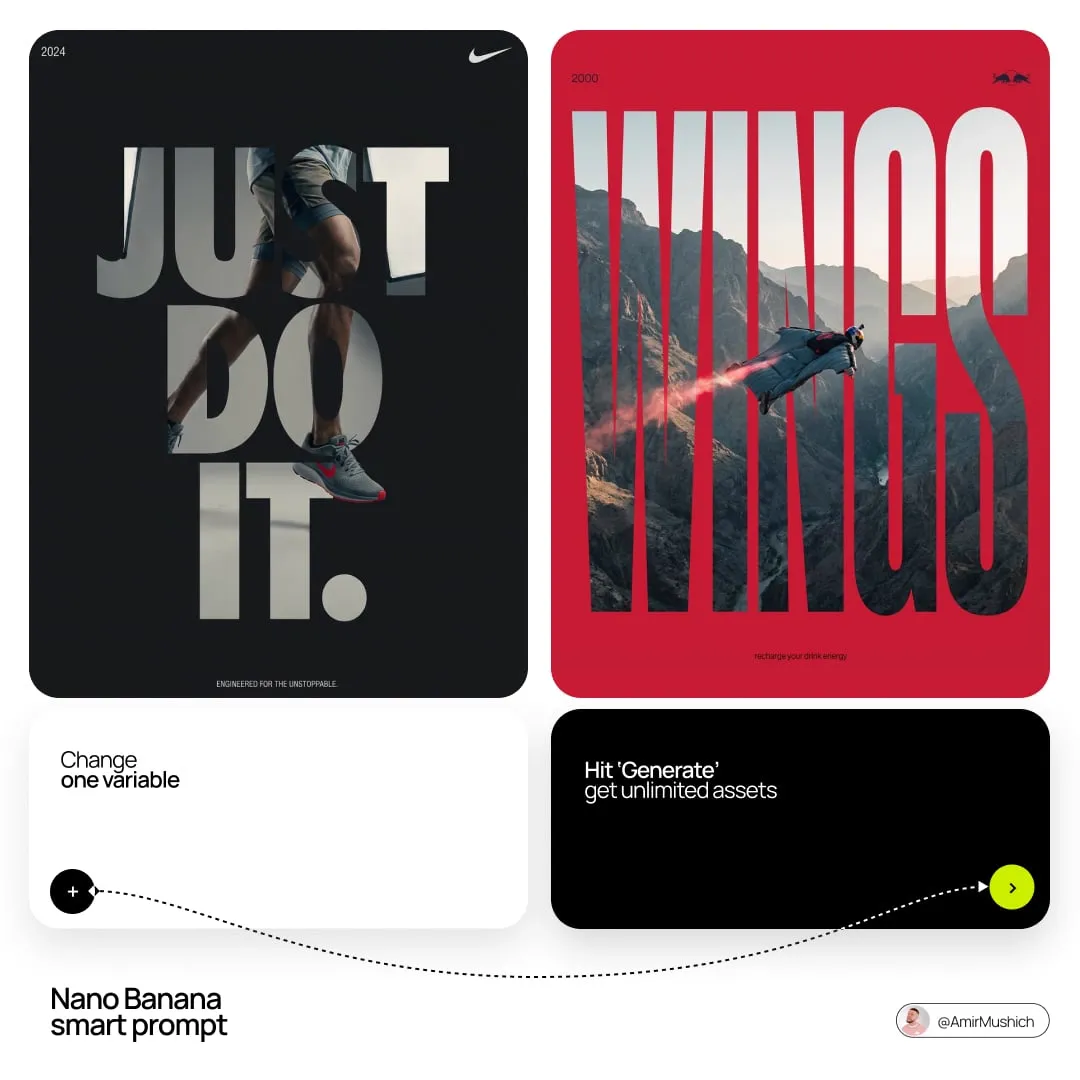
Keep a simple log with six columns: format, hook type, sound, posting time, sends, watch time. After ten posts you will see patterns — a specific caption style, a specific opening frame, a specific length. Double down on whichever variable correlates with sends, and change only one variable per post. Changing three things at once teaches you nothing because you cannot tell which change mattered.
Also resist the urge to delete underperformers. A post with low reach but high sends among the people who did see it is a signal, not a failure. That format might simply need a better hook, or a different posting window. Delete only what you would be embarrassed to have a new follower find.
Seven Mistakes That Flatten Reach
- Explaining the joke in the caption instead of adding to it.
- Long intros. Anything before the first second is a scroll tax you pay in views.
- Unreadable text at small sizes and low contrast.
- Chasing a dead trend because you already spent time making the clip.
- Inconsistent style across beats, which reads as a compilation rather than a scene.
- Ignoring audio, or using a track so loud the dialogue disappears.
- Posting once. Memes work in series — same format, new twist, three posts, then evaluate.
FAQ
How long should an Instagram video meme be?
Seven to twelve seconds covers most formats. Under five seconds you often cannot fit a setup plus a punchline; over fifteen seconds you need a strong narrative reason, or drop-off punishes you long before the ending.
Can I post the same meme to other vertical platforms?
Yes, with adjustments. Re-export without watermarks, rewrite the caption, and re-check which sound is currently working in each app. The joke travels; the packaging does not. A caption that reads as ironic on one platform can read as sincere on another, which changes the meaning entirely.
Do AI-generated clips look obviously artificial?
Sometimes, and that is often fine — audiences accept surreal or clearly stylized visuals when the joke lands. What breaks the illusion is inconsistency: mismatched lighting, warped faces, or jittery motion between cuts. Lock your style, keep shots short, and regenerate anything that looks wrong rather than trying to smooth it in the edit.
How many posts before I know a format works?
Give a format three attempts. If sends stay flat across three posts that use the same structure with different jokes, the format is wrong for your audience, not the joke. Move on quickly; the calendar is the scarcest resource you have.
Is a real voice always better than a synthetic one?
Not always. A synthetic voice is itself a punchline when the joke is about deadpan delivery, a public announcement, or a robot. When humor depends on timing, emphasis, and hesitation, record it yourself — those qualities are what make a line sound like a person rather than a product.
What should I do if a post performs unusually well?
Post the next variation within 48 hours while the format is still fresh in the feed, and pin a comment that invites people to send the clip to a friend. Momentum is easier to extend than to start, and the audience you just found will not wait a week for the sequel.
How do I keep a series from feeling repetitive?
Change one variable per post: the setting, the character, the caption formula, or the sound. The structure stays recognizable, which is what makes it a format, while the specific detail stays new, which is what makes it worth watching a second time.
Make Your Next Meme With Orelon
Orelon is an AI video generator for cinematic ideas in motion. Start with a three-line beat sheet, generate your clips in one locked style, cut the sound first, and keep the whole thing under twelve seconds. When you want a faster start, open the AI video generator or browse the Orelon blog for more short-form workflows and prompt structures. The formats change every few weeks; a process you can repeat in an afternoon does not have to.