

How AI shapes short-form video discovery, trend detection, and platform safety, plus a practical production workflow for creators generating micro-content.
Short-form video is not a compressed version of long-form. It runs on different physics: a three-second audition, a swipe-decision economy, and a distribution layer that reads viewing behavior far more closely than it reads follower counts. That last shift is the one that changed everything. Recommendation systems replaced the front page, and the front page used to be a human decision.
For anyone making micro-content, the practical question is no longer simply how do I get discovered. It is how do I build clips that a recommendation system can read correctly and a person will actually stop for. This guide covers both sides: how short-video platforms interpret your footage, how to use that knowledge when you generate and edit with AI, and how to stay on the right side of the safety systems that screen every upload.
Why Micro-Content Rewrites the Rules of Video
The economics of short-form are brutal and clarifying at once. A viewer gives you roughly one second to justify the next four. If the first frame is a logo animation, a slow fade, or a talking head clearing their throat, the clip is over before it started. That constraint pushes every production decision earlier in the process: the hook is no longer an editing problem, it is a writing problem.
The three-second contract
Think of every clip as a contract signed in the first three seconds. You promise a specific payoff — a reveal, a contradiction, a useful trick, an emotional spike — and the viewer agrees to stay long enough to collect it. Break the promise and retention collapses; the platform notices, and distribution narrows.
What this means for AI-assisted creators
The advantage of generative video is not that it removes craft. It is that it lets you test craft faster. Instead of producing one polished clip per idea, you can produce five hook variants of the same idea and let retention data pick the winner. That is the real leverage: volume of tested concepts, not volume of published clips.
How Recommendation Systems Actually Read Your Clip
Every platform runs a variation of the same loop: observe behavior, rank candidates, expose a small test audience, measure, then decide whether to widen distribution. Understanding that loop tells you which production habits matter.
Behavioral signals that outweigh likes
The strongest signals are almost always watch time and completion, rewatches, shares to direct messages, saves, and comments that contain more than three words. Weak signals include passive likes and follows acquired from a single viral moment. A useful mental model: a share is a viewer spending their own social capital on your clip. That is a far more expensive action than a tap, and systems weight expensive actions more heavily.
Collaborative filtering in plain terms
Collaborative filtering is the idea that people with similar past behavior will probably enjoy similar future content. You do not need the underlying math to use it. Practically, it means your test audience is assembled from behavioral neighbors — viewers who watched things that resemble your clip. If your video is stylistically ambiguous, the system guesses wrong and shows it to the wrong neighbors. Clear visual grammar and a consistent niche help the system place you correctly.
Why the first hours are a test environment
Most micro-content gets a small exposure window before any broad push. Two consequences follow. First, publish when your core audience is awake, not when your queue happens to be empty. Second, treat the first hours as a read-only experiment: do not delete and repost impulsively, because a fresh upload restarts the test from zero with no accumulated signal.
Build a Trend Radar Instead of Chasing Trends
Chasing a trend after it peaks is the most common way creators waste production time. By the time a sound or format is everywhere, the audience is already tired of it. What you want is the narrow window where a format is rising but not yet saturated.
Three buckets, checked weekly
Sort every format you observe into one of three lists: saturated, rising, and dormant. Saturated formats are everywhere and yield diminishing returns. Rising formats show accelerating usage but still look slightly unfamiliar. Dormant formats are older structures that could be revived with a new visual treatment. Review the lists once a week, not once a day — daily checks produce anxiety and imitation, weekly checks produce pattern recognition.
Turning trend data into a shot list
A trend is only useful once it is translated into production instructions. Take a rising format and decompose it into four components: hook structure, pacing curve, audio role, and visual signature. Keep the hook structure and pacing curve, replace the visual signature with something you can generate consistently. That is how a format becomes yours rather than a copy.
Watch for the anomaly, not the average
Platform-level anomaly detection looks for sudden deviations from baseline behavior. Creators can apply the same logic: when one clip in a batch overperforms by a wide margin, do not just celebrate it. Isolate the variable. Was it the hook, the caption, the thumbnail frame, the publish time, or the subject? Repeat that variable deliberately in the next batch to confirm the effect before scaling it.
A Prompt-to-Publish Workflow for Short-Form AI Video
This is where most AI video workflows fall apart: people generate a beautiful clip first and only afterwards ask what it was for. Reverse the order.
Step 1 — write the hook as a sentence, not a scene
Before opening any generator, write one sentence that a viewer would repeat out loud. Something like: the cheapest way to make a product shot look expensive is a single hard light source. If you cannot write that sentence, no amount of generation quality will save the clip.
Step 2 — storyboard in three beats
Micro-content rarely supports more than three beats: hook, development, payoff. Write each beat as a single line with a camera instruction attached — for example, extreme close-up on hands, then wide reveal, then slow push-in. This storyboard becomes your prompt scaffold.
Step 3 — generate variations, not a hero clip
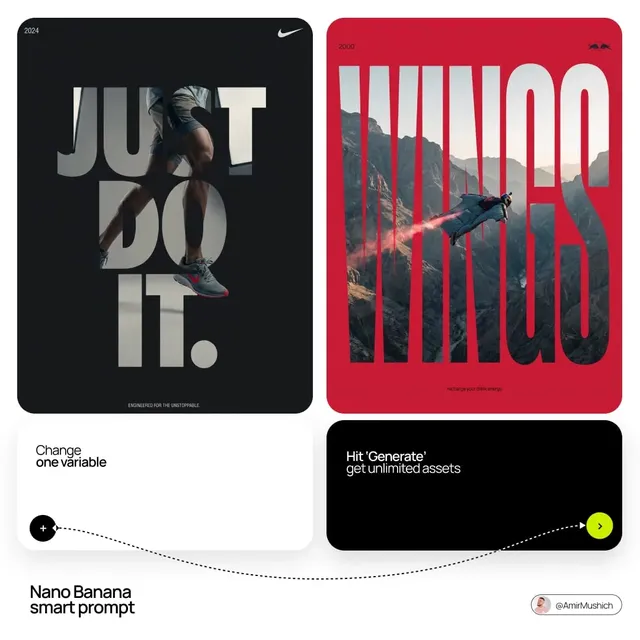
Use a consistent prompt template with one deliberate variable changed per run: camera angle, lighting, color palette, or motion direction. The AI video generator is best used as a variation engine in this phase. Keep a written log of what changed between generations, otherwise you will find a winner and have no idea how to reproduce it.
Step 4 — build reusable prompt scaffolds
Save the prompts that reliably produce usable footage. A small, well-maintained set of scaffolds beats a huge folder of one-offs. If you want a starting point rather than a blank prompt field, the prompt library is a faster route than guessing at phrasing, and reusable video templates help when you need a consistent visual frame across a series.
Step 5 — finish in the edit, not the generator
The generator produces raw material. Retention is won in the edit: trim the first frame until motion is already happening, cut dead air aggressively, add captions because a large share of viewing happens muted, and place your payoff before the halfway mark unless the clip is genuinely short enough to earn a late reveal.
Reading Your Own Analytics Like a Distribution Engineer
Most creators look at total views. That number is an outcome, not a diagnostic. The useful metrics are the ones that predict what the system will do next.
| Signal | What it tells you | Typical fix |
|---|---|---|
| Steep drop in the first 2 seconds | Hook mismatch or slow opening | Start mid-motion, cut the intro entirely |
| Steady drop at 40-60 percent | Payoff arrives too late | Move the reveal earlier or split into two clips |
| High completion, low shares | Pleasant but not useful or surprising | Add a concrete takeaway or a mild contradiction |
| High rewatch, low follow-through | Clip works, profile does not | Align the next three posts with the winning clip |
| Strong comments, weak saves | Interesting, not practical | Make the advice actionable and repeatable |
Diagnose the curve, not the total
A retention curve is a story about attention. Flatten the early cliff and you gain more than any caption rewrite will deliver. If a clip holds 90 percent for fifteen seconds and then collapses, the problem is structural, not algorithmic.
Separate discovery from loyalty
Discovery content brings strangers. Loyalty content converts them. Mixing the two into a single feed with no intention is why many accounts have spiky view counts and flat follower growth. Decide what each upload is for before you produce it.
Safety, Moderation, and Synthetic Media Disclosure
Every large platform screens uploads automatically before and after publication. Creators who understand what those systems look for spend less time appealing takedowns and more time publishing.
What automated filtering actually flags
Filtering systems are trained on classes of risk: nudity and sexual content, graphic violence, regulated goods, harassment, and misleading claims. They are imperfect, which is why borderline content — a medical demonstration, a stunt, a costume resembling a weapon — gets caught even when it is innocent. Two habits reduce false positives: avoid gratuitous skin-tone areas in framing even in fitness or fashion contexts, and keep implied violence off-screen rather than stylized in-frame.
Synthetic media and disclosure
As generative tools improve, platforms increasingly expect synthetic footage to be labeled as such. Labeling is not a penalty; it protects you. The bigger risk is generated footage that plausibly depicts a real, identifiable person saying something they never said. Do not generate likenesses of real people without consent, and do not build scenes that could be mistaken for documentary evidence of a real event.
Proactive abuse prevention in your own workflow
If you collaborate or run an account with comments open, treat moderation as part of production. Set keyword filters, require comment review on high-traffic posts, and keep a short blocklist for recurring spam patterns. Smaller accounts are targeted more often than creators expect, precisely because moderation is assumed to be a large-team problem.
A pre-publish checklist
Run four questions before every upload: Is anyone identifiable without consent? Could a frame be misread out of context? Does the caption promise something the clip does not deliver? Is there any claim I cannot support? Four questions, thirty seconds, far cheaper than a strike.
Common Mistakes That Quietly Cap Reach
Most underperformance is not mysterious. It is a small set of repeatable errors.
- Generating before writing. Beautiful footage with no hook is a screensaver.
- Publishing one version of an idea. You cannot learn from a sample size of one.
- Inconsistent visual grammar. If the system cannot categorize you, it shows you to the wrong audience.
- Late payoffs. Micro-content rewards early delivery, not suspense.
- Ignoring audio-off viewing. If your clip does not work muted, it does not work.
- Chasing saturated formats. You are competing with thousands of near-identical clips.
- Deleting and reposting. It resets the test and destroys accumulated signal.
- Treating one outlier as a strategy. Confirm the effect before you rebuild your whole channel around it.
Choosing Tools Without Getting Distracted
Tool choice matters less than workflow discipline, but a few criteria genuinely change output speed. Look for controllable camera and motion parameters rather than a single generate button, because variation testing depends on reproducibility. Check whether you can maintain a consistent style across a series — series consistency is what lets a recommendation system cluster your content correctly. Prefer tools that output clean, readily editable files over tools that produce finished clips you cannot adjust. If you are weighing platforms, a comparison of AI video generator alternatives is more useful than a feature list, because the differences that matter are workflow differences, not specifications.
FAQ
How long should a short-form AI video be?
Length should follow the idea, not a fixed rule. Most micro-content works between eight and thirty seconds. If the payoff lands at twelve seconds, an eighteen-second clip is filler. Cut to the payoff.
Do AI-generated clips get suppressed by platforms?
Synthetic footage is not automatically penalized, but undisclosed synthetic footage depicting real events or real people is a genuine risk. Label generated content where the platform offers the option, and avoid anything that could be mistaken for documentary evidence.
How many variations should I test per idea?
Three to five is usually enough to find a signal without burning a week. Change one variable at a time — hook framing, opening line, pacing — so the result tells you something you can reuse.
What matters more, the hook or the visual quality?
The hook decides whether the visual quality is ever seen. Once the hook holds, quality determines whether the viewer stays for the payoff and shares it. Fix the order: hook first, polish second.
How often should I check trends?
Once a week is enough for pattern recognition. Daily checking produces imitation rather than insight, and by the time a format appears in a daily feed, it is often already saturated.
Can I reuse the same prompt across a series?
Yes, and you probably should. Consistent prompts are how you build a recognizable visual signature. Vary one element per episode — subject, location, or camera move — and keep the rest stable.
What is the fastest way to improve retention?
Trim the opening. In most retention reviews, the first two seconds are the single largest loss point. Cut everything before the motion starts and re-measure.
Put Cinematic Ideas in Motion With Orelon
Short-form rewards creators who write before they generate, test before they scale, and treat safety as part of the craft rather than an afterthought. Orelon is built for that loop: an AI video generator for cinematic ideas in motion, designed so you can produce hook variations, hold a consistent visual style across a series, and get footage that behaves in the edit. Start on the Orelon homepage to see how the workflow fits together, then generate your first three hook variants of the same idea and let the retention curve tell you which one deserves the series.