
Turn stills, product shots, and sketches into cinematic short videos: shot planning, prompt design, consistency tricks, and a repeatable workflow.
Every short video that holds attention for twenty seconds started as one frame somebody decided to keep. A photograph, a product still, a sketch on paper, a mood-board screenshot — that single image is often all the raw material you need to generate motion today. Models can take what you already own and give it camera movement, atmosphere, parallax, and rhythm that reads as deliberate instead of accidental.
This guide is about that specific craft: building short videos from picture-based content with AI. It covers what “picture-based” really means inside a production pipeline, how to pick a tool without drowning in feature lists, a repeatable workflow you can run in an afternoon, prompting patterns that survive across a sequence, and the mistakes that turn a promising clip into a slideshow.
Why stills became the fastest route into motion
Short-form platforms reward the first two seconds. A viewer decides whether to keep watching before your idea has time to explain itself, which means the opening frame carries disproportionate weight. When that frame is a still you control, you already own the hardest part of the composition.
Three shifts make picture-based generation practical right now:
- Image generation got cheap and fast. Producing a striking still takes moments, so the bottleneck moved from “can I make this shot?” to “can I make it move?”
- Video models learned to respect the source frame. Earlier image-to-video output warped faces and melted hands. Current models preserve identity and surface texture much better, which makes real photography, packaging shots, and illustration viable inputs.
- Editing got shorter. A twenty-second vertical clip is easier to finish than a three-minute film, so a handful of well-animated stills can genuinely complete a piece.
The practical consequence is that photography, design, and video now converge in the same folder. A brand with a product archive can produce motion assets without booking another shoot. A storyteller with a box of old family pictures can build a sequence. An illustrator can walk a static character through a living scene without learning a 3D suite.
What “picture-based” means in a real pipeline
The phrase gets used loosely, so it helps to separate four approaches. They consume different inputs and produce different results, and mixing them up is the source of most disappointing first attempts.
Single-image animation
You supply one still and a motion description. The model invents depth, adds camera movement, and animates subtle elements: hair, smoke, water, fabric, reflections. This is the fastest path and the best fit for portraits, landscapes, and hero product shots. It is also the most fragile, because the model has no idea what exists outside the frame. Push a dramatic camera move and the edges will reveal invented detail.
Keyframe pairs
You define a starting image and an ending image, and the model fills the motion between them. This is the closest thing to directing: you decide where a shot begins and where it lands, and the system handles the in-between. It is ideal for reveals, transformations, wardrobe changes, and match cuts where an object should end up in a specific place.
Multi-image fusion
You supply several images — different angles, different moments, a character plus a background — and the model blends them into one coherent sequence. This is where consistency tooling earns its keep. If your reference set shares lighting direction and color temperature, the output holds together. If it does not, you get a cut that feels stitched rather than shot.
Hybrid image and text pipelines
Most real projects mix methods. You generate a base still in an AI image generator, animate it, then use text instructions to adjust motion, grade, or add atmosphere. Treating images and prompts as interchangeable levers rather than rival tools is what separates a smooth pipeline from a frustrating one.
Six criteria that actually predict tool fit
Feature lists are noisy, and marketing pages all claim the same things. These six criteria decide whether a tool fits your work.
- Fidelity to the source image. Does the output still look like your photo after eight seconds, or has it drifted into a generic render? Test with a detailed face and a textured surface such as brushed metal.
- Motion control granularity. Can you specify camera movement separately from subject movement? Can you reduce intensity without the clip freezing entirely?
- Consistency mechanisms. Reference images, character anchoring, style presets, seed reuse. Without at least two of these, every clip becomes an island.
- Instruction adherence. Write a prompt with three specific requests and count how many appear in the result. Two out of three is workable; one out of three is a warning sign.
- Format flexibility. Vertical, square, and widescreen output from the same source saves hours of reframing later.
- Iteration speed. A tool that returns a usable clip in ninety seconds beats one that returns a beautiful clip in twelve minutes when you need twenty clips before lunch.
A useful comparison exercise: take the same three stills — a portrait, a product, a wide landscape — and run identical prompts through two or three tools. Score each against the criteria above. Side-by-side breakdowns such as Orelon vs Runway help frame the tradeoffs, but your own test set is the only benchmark that predicts your results.
Watch for these tool-selection traps
- Choosing on output resolution alone. A crisp 4K render of the wrong movement is worse than a clean 1080p clip that cuts well.
- Ignoring export codecs. If your editor struggles with the file, the tool is not saving you time.
- Testing only with easy images. A clean landscape animates beautifully almost everywhere. Test with hands, faces, and text.
- Committing to one model. Different systems handle different subjects better, and a two-tool stack is often more efficient than one compromise.
Prepare your image library before you animate
Every hour spent regenerating traces back to an unprepared source image. Ten minutes of housekeeping here saves far more on the other end.
- Crop to your target aspect ratio. If you animate a square photo and then crop to vertical, you cut away motion you already created.
- Match exposure and white balance across the whole set. Sequences feel unified when the light agrees.
- Upscale anything below roughly 1080 pixels on the short side. Soft inputs produce soft, wobbly motion.
- Remove watermarks, logos, and stray text you do not want animated. The model will happily make them breathe.
- Keep one clean master per subject. Derive crops from that master instead of editing copies in five directions.
Build a reference set, not just a folder
A reference set is the small, curated group of images that defines how a subject should look: front view, three-quarter view, a detail shot, and a color swatch if you have one. When you generate, you feed from that set rather than from whatever file happens to be nearby. It is the single highest-leverage habit in picture-based video work, because it removes guesswork from every later step.
Write the shot list before you generate anything
The most common failure mode is not ugly output. It is beautiful clips that cannot be edited together because they share no rhythm. A shot list prevents that.
Write one line per shot: what we see, what moves, how long it lasts, and what the viewer learns.
- “Close-up of a ceramic mug, steam curls upward, slow push in, three seconds — establishes warmth.”
- “Wide shot of the workshop door, camera drifts right, four seconds — establishes place.”
- “Hands place the mug on a desk, near-static frame with slight handheld sway, two seconds — payoff.”
Then sanity-check the list:
- Is there a visual change every two to four seconds?
- Do motion directions alternate, or does every clip push in?
- Does the final shot land on the idea, or trail off?
- Could a viewer understand the story with sound off?
If you are building a series rather than a one-off, define a visual bible alongside the shot list: two reference images, a color palette, a lens preference, and a rule about camera height. Starting from a video template keeps framing and pacing decisions consistent so you can concentrate on content.
Prompting stills into motion
An image-to-video prompt describes change, not appearance. The picture already establishes what exists; your instruction explains what happens next.
A structure that holds up across models: subject action + camera move + speed + atmosphere + duration.
Examples:
- “Steam curls upward, slow dolly in, gentle pace, warm morning light, three seconds.”
- “Fabric ripples in wind, static camera with slight handheld sway, medium pace, overcast daylight.”
- “Crowd walks past, lateral tracking left to right, steady pace, neon reflections on wet pavement.”
- “Dust motes drift, camera slowly tilts down, very slow, single shaft of window light, four seconds.”
Three habits improve results noticeably.
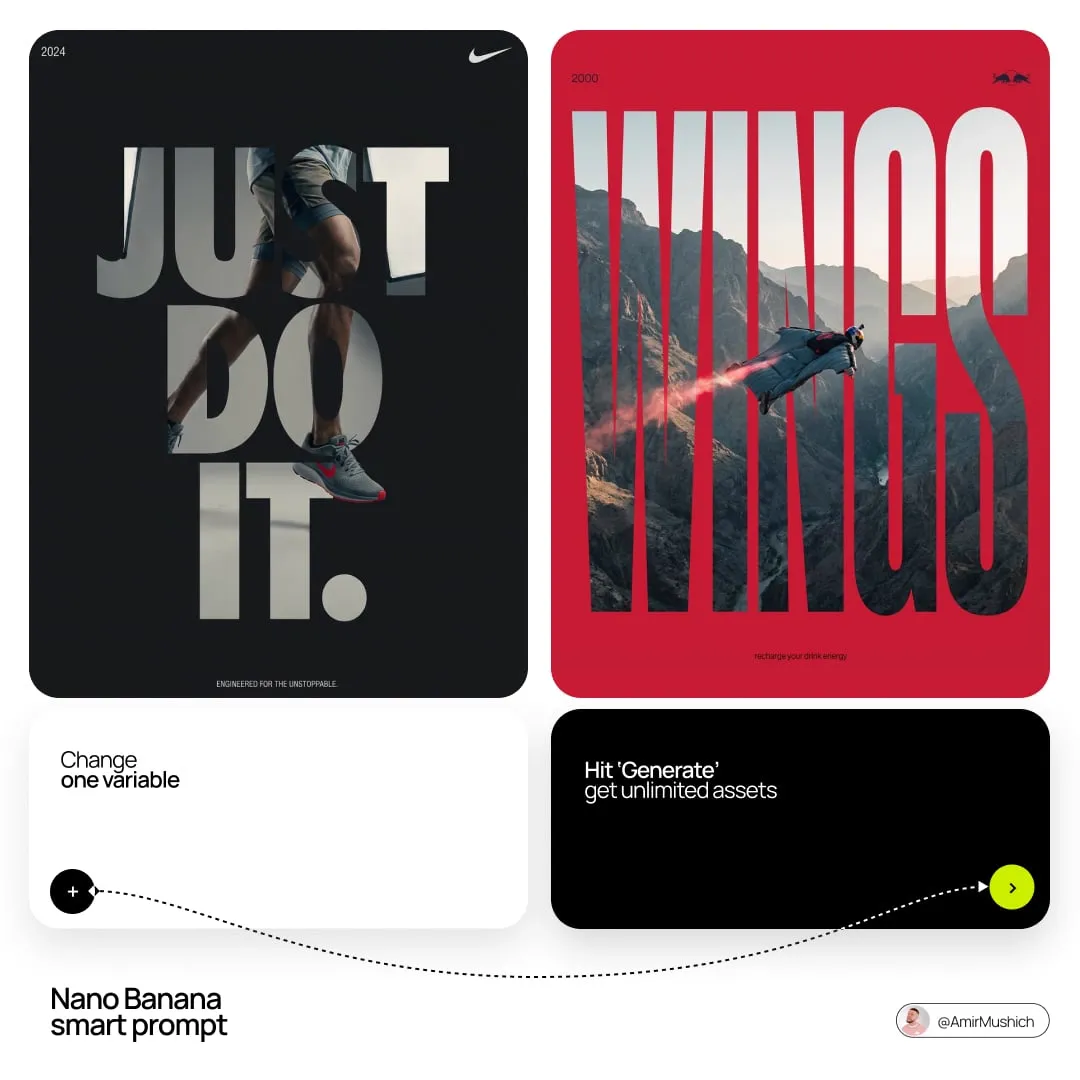
Change one variable at a time. When a clip fails, do not rewrite everything. Adjust the camera move, regenerate, compare. You learn which instruction caused the problem.
Say less. Competing instructions split the model’s attention. Five clear words beat a paragraph of adjectives, especially when two of those adjectives contradict each other.
Use exclusions sparingly. “No text, no extra limbs” helps. A page of negatives often introduces the very artifacts you are trying to avoid, because the model still has to parse those words.
Save what works. A personal library of prompts and their successful settings turns luck into a system, and a shared prompt library is a good starting point when you are learning which phrasing a model responds to.
Consistency across a sequence
Consistency is where picture-based projects live or die. If your lead character’s jacket changes shade between shot three and shot four, the audience feels it even if they cannot name it.
Practical anchors:
- Lock wardrobe, location, and time of day in writing before generating a single frame.
- Reuse the same reference portrait in every generation so identity carries across clips.
- Reuse seeds where the tool exposes them. A consistent seed plus a consistent reference keeps style drift small.
- Generate the whole sequence before refining any single shot. Fixing color across a finished set is easier than chasing a moving target.
- Finish with a grading pass. One look applied to every clip unifies footage that came from different prompts and different days.
When the sequence drifts anyway
Drift is normal, not a failure. Common causes and their fixes:
- Lighting inconsistency. Too many source images with different light directions. Reduce to one lighting setup and rebuild the set.
- Scale shifts. Characters appear larger or smaller between shots. Fix with a consistent camera height and framing rule.
- Color temperature creep. One clip runs warmer than the rest. Correct it in the grading pass using a shared reference frame.
- Motion fatigue. Every clip moves at the same speed, so the sequence feels mechanical. Alternate energetic and near-static shots.
Pacing, aspect ratio, and sound
Short video is a rhythm problem before it is a visual problem.
Aspect ratio first. Vertical 9:16 is the default for short-form feeds; square suits in-feed posts; widescreen still works for embedded video, landing pages, and presentations. Decide before you generate, because reframing afterwards crops away the motion you created.
Beat map. For a twenty-second piece, a workable shape is: two seconds hook, five seconds setup, eight seconds development, three seconds payoff, two seconds call to action. Hold each shot only as long as it introduces new information.
Motion hierarchy. Not every shot should move the same way. Alternate slow pushes with near-static frames so the energetic shots land harder. If everything moves, nothing feels like it moves.
Sound carries pacing. Music with a clear pulse hands you natural cut points and makes three-second shots feel deliberate rather than choppy. Add audio early, because it changes how long a shot feels and will reshape your edit decisions.
You can also let motion solve an edit problem. If two shots will not cut together cleanly, animate a transition between them — a wipe caused by a passing object, a whip pan, a light change — and the seam disappears. That is often faster than hunting for a different take.
Common mistakes and their fixes
| Mistake | Why it happens | Fix |
|---|---|---|
| Melting faces | Heavy camera motion on a close portrait | Reduce move speed, keep the subject near center |
| Slideshow feel | Every shot has identical length and motion | Vary durations and motion intensity |
| Style drift | No shared reference or seed | Anchor each character with one reference image |
| Cropped subjects | Aspect ratio chosen too late | Set the ratio before generating |
| Overwritten prompts | Competing or contradictory instructions | Cut to one action and one camera move |
| Flat, gray output | No finishing pass | Apply a single grade across all clips |
| Jarring cuts | Cutting on stillness | Cut mid-movement so the seam hides |
| Wasted generations | Testing with hard images last | Test faces, hands, and text first |
Add one more habit that is easy to skip: review every clip frame by frame before you commit it. Scrub slowly. Artifacts that vanish at full playback speed reappear immediately when a viewer pauses, and viewers pause more often than creators assume.
FAQ
Can I make a short video from a single photo?
Yes. One still plus a motion instruction is enough for a three-to-five-second clip. For anything longer, generate several beats from the same source image with different camera moves and cut between them.
How long should each generated clip be?
Three to five seconds. Short clips drift less, cut more cleanly, and give you more editorial freedom when the music or script changes.
Do I need editing experience?
Basic trimming and sequencing skills are enough. The real editorial decisions are shot order, shot duration, and where a cut lands relative to movement.
What kinds of input images work best?
Sharp, well-lit images with clear separation between foreground, middle ground, and background. Depth cues in the source help the model build convincing parallax.
Can I keep the same character across many clips?
Often, if you reuse one reference image, keep wardrobe and lighting notes consistent, and apply a single finishing grade. Expect some drift and plan a correction pass rather than assuming perfection.
Is picture-based AI video good enough for client work?
For social, advertising, and explainer content, yes, provided you review every clip frame by frame and fix artifacts before delivery. For broadcast or large-screen work, expect a longer review and upscaling stage.
How many clips do I need for a thirty-second video?
Roughly eight to twelve, depending on how long you hold each shot. Fewer, longer clips feel calmer; more, shorter clips feel energetic. Match the count to the tone you want, not to a formula.
What should I do when a generation fails repeatedly?
Change the source image before changing the prompt. Most stubborn failures come from ambiguous or low-detail inputs rather than wording, and a cleaner still usually resolves what a rewritten sentence cannot.
Bring your pictures to life with Orelon
Picture-based video creation rewards people who plan shots, prepare images, and iterate in small steps. You do not need a camera crew or a render farm. You need a clear shot list, a consistent reference set, and a tool that respects the images you bring.
Orelon is an AI video generator built for cinematic ideas in motion: bring your stills, describe the movement, and shape the result shot by shot. Start from the Orelon homepage or jump straight into the AI video generator and animate your first image today.