

Why the six-second loop still shapes short-form video, and how to turn its craft — cold opens, sound-first edits, tight beats — into an AI video workflow.
Vine shut down in 2017, yet the vertical feed you scrolled this morning is still written in its grammar. The cold open. The punchline that lands before the thumb moves. Sound that carries more story than the picture does. The remix chain where one idea mutates through a hundred creators in a week. None of that started with the platforms that replaced it — they inherited it, industrialised it, and in some ways flattened it.
That inheritance is worth studying if you make short video now, and it is unexpectedly practical if you generate video with AI. Short-form is not long-form with the middle removed. It is a different craft with different physics: attention decays in fractions of a second, audio does more narrative work than the frame, and a single image has to behave like a title card.
This guide separates what genuinely made the six-second loop work from what was an accident of a dead platform, then turns the useful parts into a workflow you can run today with an AI video generator.
The format that outlived its platform
The original constraints were severe: six seconds, no in-app editing at first, autoplay, sound on, portrait orientation, then a looping playback. Most product teams read those as limitations. Creators read them as a spec, and the audience learned to read the result.
Three things happened because of that spec:
- Rewatch became structural. A loop that returns to its own first frame invites a second viewing. The second viewing is where the joke lands, where the detail gets noticed, where the creator earns a follow.
- A shared vocabulary formed. A certain camera angle, a certain type of cut, a certain deadpan delivery all became shorthand. You could build an entire sketch on a reference the audience already owned.
- Distribution rewarded watching, not production value. A phone, a lamp, and a good premise could outperform a crew. That flattened the cost of entry and put the pressure on writing.
When the platform died, the vocabulary survived. The vertical frame, the loop, the sound-first edit, the fast cut rhythm — all of it moved into the platforms that followed and then into advertising, music, and eventually into AI generation. If you prompt a model today for "a satisfying short loop," you are prompting for a form that was already old by the time the tools existed.
Six seconds as a writing discipline
The most transferable lesson is not about duration. It is about compression as a method. A six-second piece forces you to answer three questions before you touch a camera or a prompt: what is the setup, what is the turn, and what is the button.
Setup, turn, button
Setup is the world you establish in under a second — a person, a place, an expectation. The turn is the moment the expectation breaks. The button is the last beat that frames the break, usually the shortest part of the whole piece.
A useful exercise: describe your video in exactly three sentences. If the third sentence is "and then it continues," you do not have a button. If the second sentence is "and then it also happens," you have a list, not a turn.
This structure scales. A five-second loop uses it. A thirty-second product film uses it. A sixty-second brand piece uses it three or four times in sequence. What changes is the ratio, not the anatomy.
The first frame is a contract
In a feed, frame one is a promise and a filter at the same time. It says: this is the kind of thing you are about to watch. Viewers decide in well under a second whether that promise matches their interest, and the decision is mostly visual — framing, colour, the presence of a face, the suggestion of motion.
For generated video this has a hard implication: do not spend your best idea on frame twelve. If your clip opens on an empty establishing shot with the action arriving at second three, the loop physics work against you. Open on the tension. Open mid-gesture, mid-sentence, mid-motion.
Sound carries the joke
Sound-on autoplay changed what a short video had to be. A punchline delivered as text requires reading; a punchline delivered as a sound effect requires no attention at all. Creators learned to write for the ear first and the eye second — a habit that still separates competent short-form from forgettable short-form.
Practically: decide the audio spine before you generate anything. Is it a music bed with a beat drop on the turn? A single diegetic sound that reveals the gag? A voice line that ends the loop? Once that is fixed, the visuals have a job description instead of a mood board.
Loops, remixes, and iteration culture
The remix chain was the platform's real engine. Someone built a premise, someone else inverted it, a third person applied it to an unexpected subject, and within days the format was a genre. Nobody owned it. Everybody improved it.
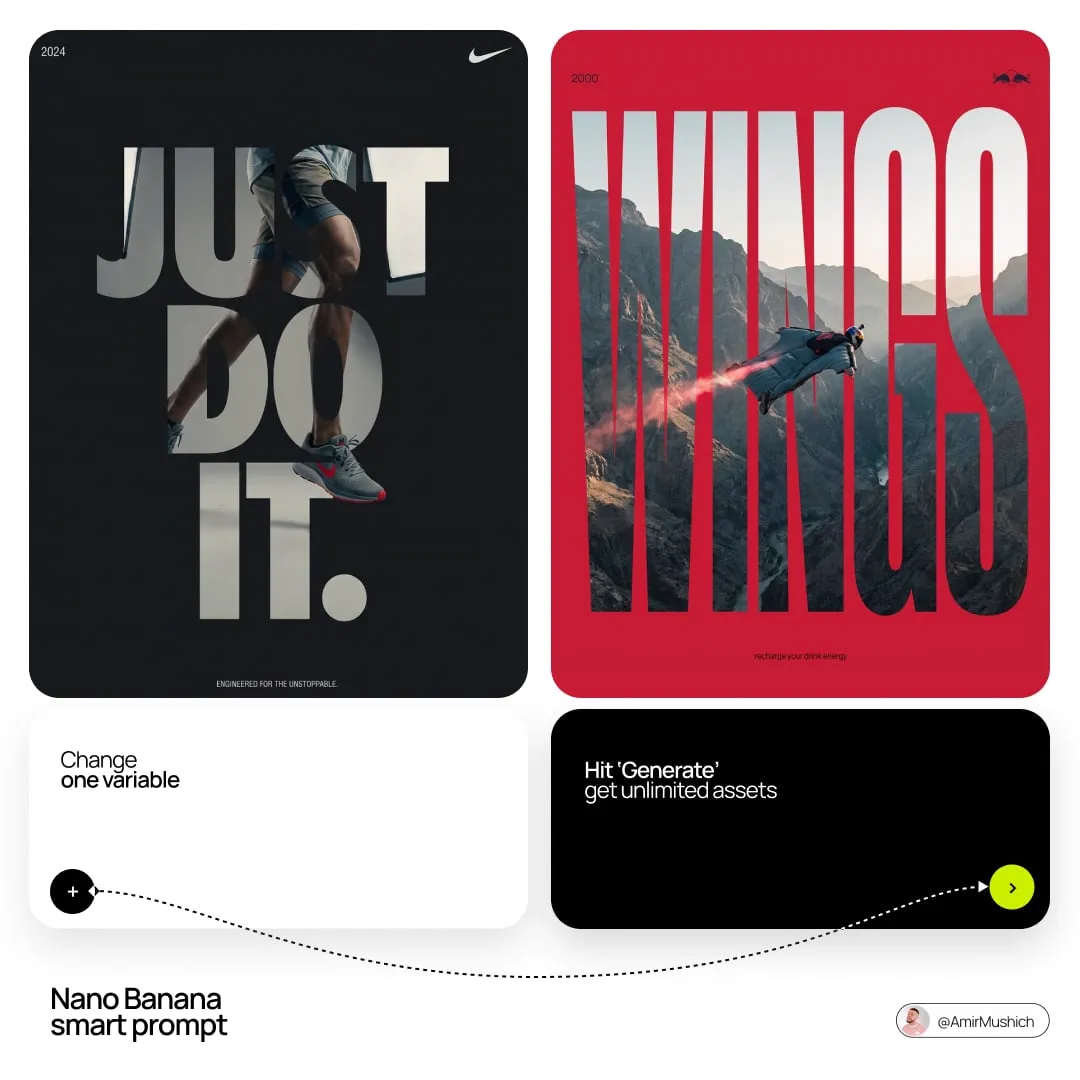
That is the same mechanic that now drives trends on every short-video platform, and it is the mechanic AI generation is best at accelerating — with one caveat. Remixing is not copying. The valuable version of a remix changes one variable while holding the rest steady, so the audience can feel the difference precisely. Change the setting, keep the timing. Change the timing, keep the framing. Change the framing, keep the sound.
When you iterate with generated clips, adopt the same rule. Hold your prompt's structure and change a single element between passes: lens, time of day, wardrobe, pacing. You will learn more from ten controlled variations than from ten unrelated ideas, and you will end up with a set that actually cuts together.
What the technical layer got right
The cultural story gets the attention, but the engineering choices were just as influential — and they map directly onto how modern generation tools should be used.
Mobile-first encoding. Clips were small, fast to load, and forgiving of poor connections. That pressure produced a house style: high contrast, strong central subject, uncluttered backgrounds, motion that reads at low resolution. Those are still the right defaults for a feed, and they are also the right defaults for a generation prompt, because models reward clarity over complexity.
Autoplay with sound. Autoplay removed the decision to watch. Sound removed the decision to pay attention. The consequence was that the first half-second had to be legible without context, which is why so much of the era's best work starts mid-action.
Algorithmic discovery over social graph. Distribution stopped depending on who followed you and started depending on how the first few hundred viewers behaved. That shifted creative incentives toward hooks, rewatches, and shareable moments — the three metrics that still dominate short-form planning.
Iteration speed over polish. Because publishing was cheap, creators shipped rough versions, watched what survived, and refined. This trial-and-error loop is exactly what AI video unlocks at a new scale: you can produce six variations of a shot before lunch and treat them as tests rather than deliverables.
From loop to story: when short-form wants to be cinematic
The loop era proved that brevity can be a style. What it did not prove is that brevity is the only style. Modern short-form increasingly wants cinematic intent — a sense of place, a deliberate colour story, camera movement that means something — compressed into a runtime that never allows a slow scene.
The way to reconcile the two is to think in beats rather than scenes. A scene needs setup, development, and resolution. A beat needs one change. A thirty-second cinematic short might hold five or six beats, each one a small visual or emotional shift, and the film reads as continuous because the camera language is consistent even when the content moves fast.
Two practical rules follow:
- Fix the visual grammar, vary the content. One lens family, one colour palette, one movement style. The audience should recognise the world instantly in every shot, so the cuts feel intentional rather than assembled.
- Earn one slow moment. A held frame, a pull-out, a pause in the sound — used once, it reads as confidence. Used five times in twenty seconds, it reads as padding.
This is where AI generation becomes genuinely interesting. The hard part of cinematic short-form used to be access: locations, crews, weather, gear. With a consistent prompt structure and a reference image, you can hold a visual world steady across a dozen shots without leaving your desk — and spend your remaining effort on the part that actually differentiates the piece, which is the beat structure.
A working AI short-form workflow
The following process is designed for a fifteen- to forty-second vertical piece and assumes you already have a premise. It borrows the loop era's discipline and applies it to generation.
1. Beat sheet before prompts
Write the beats as one line each, with the audio cue attached: "Beat 1 — hand enters frame, vinyl crackle." Do not open a tool until the beat sheet has a turn and a button. If you cannot write the button in one line, the idea is not ready, and no model will rescue it.
2. Shot list and continuity sheet
Translate each beat into one or two shots. For every shot, note: subject, action, camera, light, and how it connects to the previous shot. Add a continuity note listing what must not change — hair, jacket, wall colour, time of day. This document is what keeps generated clips from looking like they came from different films.
3. Set the visual grammar once
Choose a lens feel, a palette, a movement style, and a grain level. Write them into a reusable prompt prefix. You can browse the prompt library for phrasing patterns and adapt them rather than starting from a blank field. Starting from video templates is also a legitimate shortcut when the format matters more than the concept.
4. Generate in passes, not in order
Generate the button shot first. It is the hardest and the most important; if it does not work, the rest of the piece is wasted effort. Then generate the turn, then the setup. For each shot, produce three to six variations with a single variable changed, and select on a clear criterion rather than a feeling: does it cut cleanly with its neighbour, and does it hold at thumbnail size?
5. Assemble for the loop, not the timeline
Edit the ending against the beginning. If the last frame can plausibly flow into the first, the piece invites a rewatch, and a rewatch is worth more than a slightly better shot. Trim every frame that does not advance a beat — including beautiful ones.
6. Sound last, but decide sound first
Lay the audio spine, then build texture: room tone, a single impact on the turn, a music cut that lands on the button. Do not let music carry the whole piece; the ear needs contrast to stay interested in under thirty seconds.
Prompt patterns worth stealing from the loop era
Most weak AI video prompts describe a subject. Strong ones describe a shot and a change. The following patterns encode the old craft:
- Mid-action open. "Close on hands already in motion, camera at chest height, shallow depth of field, single window light, subject enters frame left to right, no establishing shot."
- Single-variable remix. Keep the prompt identical except one term — "dusk" to "overcast noon" — and generate both. Compare, do not average.
- Loop-ready ending. "Final frame mirrors the opening framing with the subject slightly displaced, so the clip can repeat without a visible cut."
- Readable at small size. "High contrast, centred subject, uncluttered background, minimal fine detail, motion legible at low resolution."
- Sound-first shot. "Silent action designed for a single off-screen sound cue: subject reacts half a beat before the viewer understands why."
Notice that none of these prompts ask for "cinematic quality." That phrase is a mood, not an instruction. Specificity about camera, light, action, and edit logic is what produces control — the same principle that made a six-second clip feel authored rather than accidental.
Where short-form breaks: mistakes and decision criteria
A few failure modes recur often enough to check for before you publish.
The delayed hook. The premise arrives at second three. Fix: cut the first two seconds and start where the tension already exists.
Inconsistent world. Every shot looks like a different production. Fix: one prompt prefix, one reference image, one continuity sheet.
Beat inflation. Six beats crammed into eight seconds, so nothing registers. Fix: fewer beats, longer holds, one clear turn.
Music doing all the work. The visuals sit still while the track carries emotion. Fix: give every beat a visual change and let audio accent rather than substitute.
Ending on a fade. Nothing to loop back to. Fix: design the last frame as a mirror of the first.
On the build-or-generate question, use these criteria:
- Generate when you need a location, a scale, or a visual idea that is impractical, expensive, or weather-dependent — and when you can describe the shot precisely.
- Shoot when performance, timing, and human reaction are the point. Comedy almost always falls here; a real pause is hard to synthesise.
- Hybrid when you need a real face in a world you cannot afford to build. Generate the world, shoot the face, cut them together with matching light direction and grain.
If you are comparing tools before committing, the alternatives overview is a faster starting point than a dozen separate trials.
FAQ
Does short-form still need six-second thinking? The duration is irrelevant; the compression is not. Every format rewards a clear setup, a turn, and a button. Longer pieces simply stack those units and need continuity between them.
Why do so many AI-generated shorts feel flat? Usually because the prompt describes a subject rather than a shot, and because the beat sheet is missing. A model can generate a beautiful image of a person in a room; only you can decide what changes between second one and second four.
How many variations should I generate per shot? Three to six with a single variable changed is a good working range. More than that and you stop evaluating and start browsing, which is a different activity with a worse outcome.
How do I keep a character consistent across shots? Fix a reference image, write the wardrobe and hair into the prompt prefix, and keep lighting direction stable. Consistency is a documentation problem more than a model problem.
What runtime should I target? Match the platform's natural loop length rather than a fixed number: fifteen to thirty seconds for narrative pieces, shorter for gags, longer only when each beat earns its place.
Is a loop always better than an ending? No. A loop is a tool for rewatch and for comedy. A resolved ending is a tool for emotion and for brand work. Choose deliberately, and design the final frame accordingly.
Start with a beat, not a camera
The lesson worth carrying out of the loop era is not nostalgia for a dead app. It is that constraint produces authorship. Six seconds forced creators to know exactly what changed and exactly when.
You have more room now, and better tools, but the discipline still pays. Write the beat sheet. Fix the visual grammar. Generate the button shot first. Design the last frame so it opens the first.
Orelon is built for that kind of work — cinematic ideas in motion, generated and iterated shot by shot. Take a premise you already have, break it into three beats, and generate the first pass today. If you need more craft notes on pacing, prompting, and visual continuity, the Orelon blog goes deeper.