

Compare how short-form feed dynamics and AI video generation fit together, with a practical workflow, prompt patterns, decision criteria, and fixes.
Short-form platforms and AI video tools are usually discussed as rivals competing for the same attention. That framing is expensive. One system is a distribution engine: it decides who sees a clip and for how long. The other is a production engine: it decides how quickly an idea becomes moving pixels. You do not choose between them. You connect one to the other.
What follows is a practical comparison of both systems: what each one optimizes, where they pull in opposite directions, and how to build a workflow that satisfies both. No predictions about which side wins, because the two never actually compete on the same axis.
If your generated clips look impressive in a folder and flat in a feed, the model is rarely the problem. The mismatch is between how the footage was designed and how the feed consumes it.
Two engines with completely different objectives
A feed is a sorting machine. Every time it serves a post, it collects signals: did the viewer stop, finish, rewatch, share, or scroll on? Its entire purpose is maximizing time spent inside the app, and it will promote whatever accomplishes that, whether the footage was filmed, animated, or synthesized.
A generative video tool is a rendering machine. It has no opinion about your niche, your posting cadence, or your audience. It cares about one thing: how faithfully and how plausibly a described intention becomes motion.
What the distribution side rewards
- Completion in the first three seconds
- Loop behavior, the rewatch signal that costs nothing to earn
- Shares per view, which almost always means surprise or emotion
- Sound-on viewing, since most feeds default to audio
- Freshness and volume, because recency is a ranking input
What the production side rewards
- Prompt adherence, including what you explicitly excluded
- Character, wardrobe, and object consistency between shots
- Directional camera control rather than random drift
- Usable clip duration before coherence collapses
- Iteration speed, so a bad take costs minutes instead of a shoot day
Why the comparison is a category error
Comparing these two is like comparing a printing press to a newsstand. The press determines what can exist; the newsstand determines who encounters it. Ask instead: which constraint is blocking me right now? If you have footage and no reach, work on hooks and pacing. If you have ideas and no footage, work on generation.
How a scroll-first feed rewrites your creative brief
The moment you decide to publish vertically, the feed gets a vote in creative decisions you would otherwise make alone. Ignoring that vote is the most common reason technically strong AI clips underperform: they were conceived as short films and released as posts.
The first second and a half is a contract
Treat the opening beat as a promise you must keep. A hand entering frame, a light snapping on, a character turning to camera mid-sentence, a door opening onto something unexpected. You can generate that beat deliberately instead of hunting for it in an edit. Design the hook as a shot, not as a caption.
Vertical framing is a composition system, not a crop
Cropping a landscape render to a vertical frame destroys the composition you paid for in generation time. Faces should sit in the upper third, action should read clearly at arm's length, and text overlays need safe margins so interface elements never cover them. A slow wide establishing shot that works in landscape is often dead weight in vertical, because the viewer already sees the subject.
Plan sound before the last render
Most vertical viewing happens with audio on, so pacing decisions are really tempo decisions. Pick the track first. A 120 BPM bed gives you a cut roughly every two seconds, which is a comfortable generation target and an easy rhythm to storyboard against. Build three layers: music, ambience, and one or two foreground effects. Let at least one cut land exactly on a beat.
What AI generation genuinely adds, and where it breaks
Strip away the marketing and there are three real advantages and one persistent limitation.
Idea to animatic in an afternoon
A six-shot concept used to require a location, a performer, and cooperating daylight. Now it requires a described premise and forty minutes of iteration. The practical consequence is that testing becomes cheap, and cheap testing changes which ideas are worth pursuing. You can try a visual style on Tuesday and abandon it on Wednesday without writing off a shoot.
Consistency across a series
Series grow because they are recognizable. With a written style block — lighting, palette, lens character, grain, era — repeated in every prompt, you can hold a look across dozens of clips. Doing the same thing with handheld footage means fighting weather, wardrobe, and scheduling.
Shots that used to require a budget
Vertical drone descents through cloud layers, macro work inside a water droplet, period street scenes, zero-gravity interiors. These were once reserved for funded productions. Now they are prompt lines, provided you keep them short.
The limitation you cannot prompt away
Long-duration continuity and precise physical interaction remain unreliable. Hands meet objects imperfectly, crowds drift, and reflections disagree with the scene. The fix is not a longer prompt. It is editorial: generate short, cut fast, and never ask one clip to hold more than three or four seconds of scrutiny. Editing is where AI footage becomes believable, which is why the AI video generator works best when you treat each shot as a building block rather than a finished scene.
A repeatable workflow: premise to published clip
This sequence works for a feed post, a client deliverable, or a brand channel. Adjust volume, not order.
Step 1: Write the one-line premise
One sentence, subject plus tension. A street magician performs a trick that visibly breaks physics. If the sentence is vague, prompting will not rescue it. Vague premises produce vague footage, and vague footage cannot be edited into clarity.
Step 2: Storyboard six beats
For a thirty-second clip: hook, context, escalation, twist, payoff, loop-back. Assign each beat a shot size — wide, medium, close, insert — and a duration in seconds. This storyboard becomes your generation queue, and your queue determines how many renders you need before you start.
Step 3: Generate in shot-sized units
Render four to six seconds per shot rather than twenty. Shorter generations hold coherence better and leave trimming room. Use text-to-video for original shots and image-to-video when you need a specific composition or a returning character. Building the reference still first with the AI image generator is the difference between a character who reappears and three unrelated people in similar coats.
Step 4: Select ruthlessly
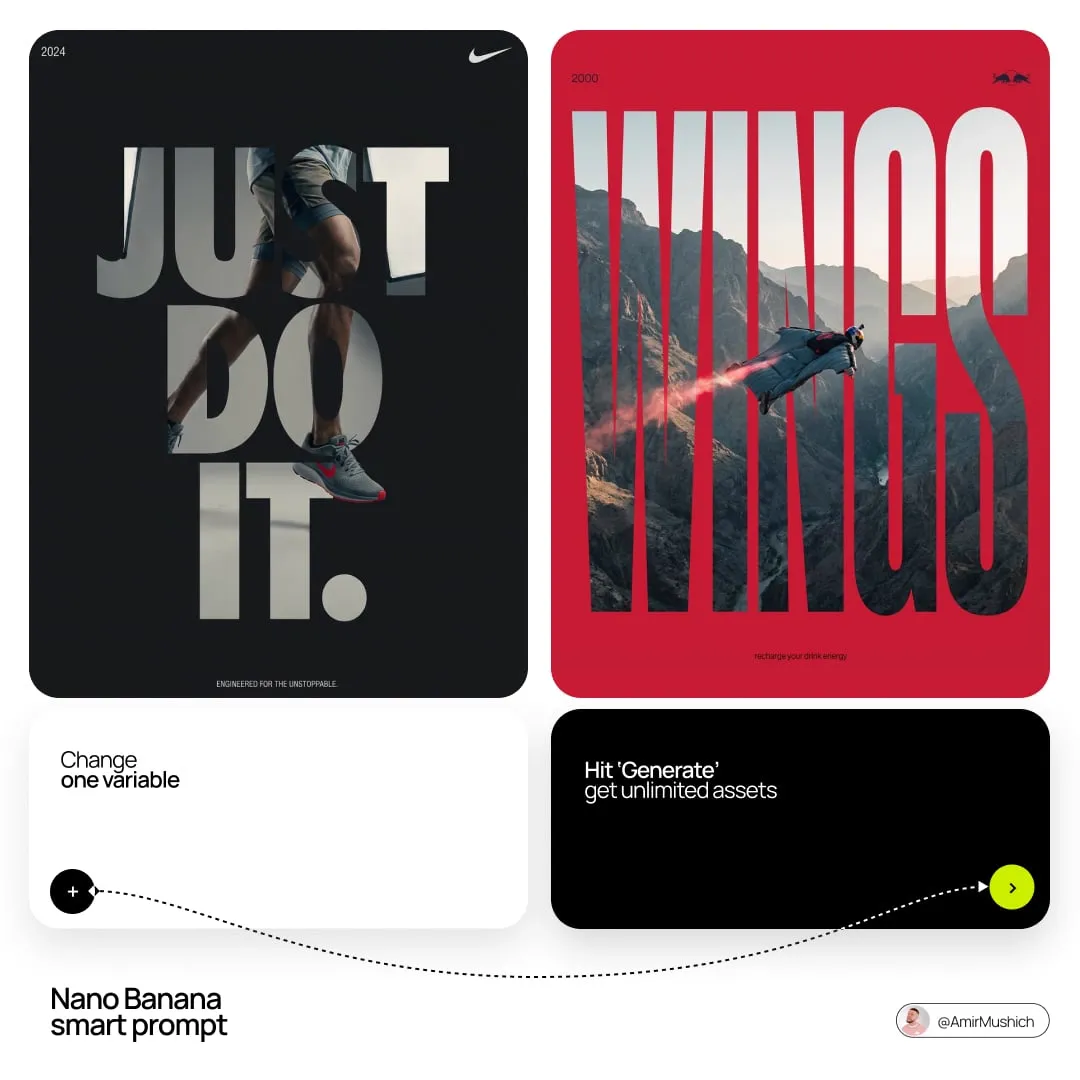
Three takes per shot, keep one. If two of three fail the same way, the prompt is the problem, not the random seed. Change one variable — camera, light, or action — and rerun.
Step 5: Cut to music, then finish the sound
Lay the music bed first, place shots on the beat, then add footsteps, cloth movement, doors, and room tone. Silence plus motion reads as a demo render. A single well-placed sound effect can carry more perceived production value than a higher-resolution export.
Prompt patterns for vertical, hook-first shots
Most weak prompts are missing structure, not adjectives. Build each one from six slots.
- Subject: who or what, with one defining detail
- Action: a single present-tense verb phrase
- Camera: shot size plus movement, such as a low-angle tracking shot with a slow push in
- Light: source and quality, such as hard side light through blinds
- Look: lens character, palette, and texture
- Constraint: what to avoid, such as no text overlays, no warped faces
A working example for a vertical hook: close-up of flour-dusted hands folding dough, fast push in, hard window light from the left, shallow depth of field, warm amber palette, slight grain, no camera shake.
Then vary one slot per take. This is how you learn which element is failing and how you build a personal library of starting points over time. A curated prompt library removes blank-page friction on days when you need to ship rather than experiment.
For recurring formats, save the style block as a reusable string and prepend it to every prompt. Add a separate character block — hair, wardrobe, age, palette — for anyone who returns. Reusability is what turns a one-off experiment into a recognizable series, and recognizable series are what a feed rewards over time.
Plan the loop as well. If the final frame can plausibly flow into the first, you earn a rewatch for free, and rewatches are among the strongest distribution signals available to a small account.
Choosing your toolchain: decision criteria
Tool choice matters less than workflow, but the differences are real and they compound. Evaluate against your actual constraints rather than a feature list.
- Shot length and coherence: how long can one generation stay stable?
- Motion control: can you direct the camera, or is movement random?
- Image-to-video fidelity: do your reference stills survive the animation?
- Native aspect ratios: vertical support, or crop-only?
- Iteration speed: how fast is the second, third, and fourth take?
- Style range: realism, animation, and stylized looks in one tool or several?
- Editing fit: frame rate, codec, and how cleanly output drops into your timeline
Matching tools to jobs
Use one engine for stylized animation and another for photoreal product shots if that is where each performs. Creators who insist on a single generator for every brief end up negotiating with the model instead of directing it. If you want to see how different engines behave on the same brief before committing, a comparison page such as AI video generator alternatives is faster than running five parallel experiments.
Templates as a pacing shortcut
A video template encodes a rhythm you already trust, so a new clip inherits pacing instead of reinventing it. Pacing is the most underrated variable in AI video. Most disappointing clips are rendered correctly and timed badly.
Post-production habits that hide the seams
Generation is roughly half the work. These habits cover the other half, and they are where small channels outproduce bigger ones.
Trim earlier than feels comfortable
Cut two frames before you think the shot ends. Generated motion tends to drift in the tail of a clip, and removing the last half second hides a lot of morphing. Keep cuts on beats and never let a shot outlive its idea.
Grade everything with one look
Apply a single grade across all shots: a shared contrast curve, one temperature, a light touch of grain. A consistent grade makes separately generated shots feel like one film. This step does more for perceived quality than upgrading to a more expensive engine.
Captions in the upper middle
Keep captions short, high-contrast, and clear of the bottom interface zone. Many viewers watch silently in public, so captions are not optional for any clip that carries information.
Run the first-frame test
Export your opening frame as a still and look at it alone. If it is not interesting as a photograph, it will not stop a scroll. Fix the composition, not the caption.
Mistakes that flatten reach, and the metrics that catch them
- Chasing a trend after its peak. Fast generation helps, but not enough to reverse a declining format.
- Building for the ranking system instead of a person. Clips engineered only for completion feel hollow and do not build a returning audience.
- Rendering twenty seconds and cutting nothing. Long generated shots expose every inconsistency.
- Ignoring the loop. A hard ending throws away the cheapest rewatch signal you have.
- Reusing one style block indefinitely. Recognizability is good; stagnation is not. Refresh the look every few weeks.
- Skipping the sound pass. Silent generated clips read as tests, not content.
- Never finishing a full concept end to end. Ten published clips teach more than one perfect render.
Track a small set of signals weekly rather than refreshing a view counter hourly.
- Three-second retention, the clearest indicator that the hook works
- Completion and rewatch, which tell you whether pacing and payoff land
- Shares per thousand views, the strongest predictor of reach beyond your followers
- Production time per clip, your real competitive advantage
- Reuse rate, meaning how many assets from a session actually got published
If production time stays flat while quality rises, the workflow is compounding. If time rises along with quality, you are hand-crafting too early in the process. Generate fast, then polish, not the reverse.
FAQ
Can generated video perform well on a vertical feed?
Yes, when the clip is built for the format: vertical, hook-first, captioned, cut to sound. Feeds do not distinguish synthesized footage from filmed footage. Viewers respond to clarity, pacing, and payoff, and those are editorial qualities you control regardless of how the pixels were made.
How many shots do I need for thirty seconds?
Six to ten shots for a fast, rhythmic edit; four to six if the piece is slower and atmospheric. Decide beat lengths before generating so you know your total shot count in advance and do not render material you will never use.
Should I generate vertical or landscape?
Generate natively in the ratio you publish. Cropping landscape to vertical ruins composition and often cuts the subject at the frame edge. If you genuinely need both, generate twice and keep the two edits separate.
How do I keep the same character across clips?
Build a reference still first, then use image-to-video for every shot featuring that character. Add a fixed description block to each prompt and expect a small amount of drift. Control the remainder with consistent grading and costume details rather than retrying endlessly.
Do I still need an editor?
You need editing judgment, which may be you. Selection, trimming, sound, and grading are where generated footage becomes watchable. Skip them and the result looks like a test render no matter how strong the model is.
Is prompting worth learning deeply?
Worth it, but not as a separate discipline. Prompting is writing under specific constraints. Six slots and disciplined one-variable iteration will beat memorizing hundreds of phrases, because iteration teaches you what the engine actually responds to.
How do I avoid producing the same clip as everyone else?
Own a premise, not a preset. Style blocks create consistency; premises create differentiation. Combine a specific character, a specific place, and one physical impossibility, then let the pacing do the rest.
Turn your next idea into motion
Orelon is an AI video generator for cinematic ideas in motion: describe the shot, direct the camera, and cut a finished sequence the same afternoon. Start from a concept and go straight to creating a video, or browse the Orelon blog for workflow breakdowns, prompt patterns, and practical comparisons.
Bring the premise. The pipeline handles the rest.