
Learn how AI art generators and video makers fit into a real production workflow, from prompt to storyboard, shot continuity, and the final edit.
Making one striking AI image takes seconds. Making a forty-second film that holds together — the same character, the same light, the same world across every cut — takes a shot list, a reference library, and a weekend. That gap between one frame and a finished sequence is where most creators stall, and closing it is what this guide is about.
The tools stopped being the bottleneck some time ago. Workflow is the bottleneck now. What follows is a practical production process: how still generation and motion generation divide the labor, how to prompt like a director rather than a spell-caster, how to hold continuity across dozens of shots, how to choose between platforms without drowning in feature lists, and how to avoid the small mistakes that quietly eat entire afternoons.
Why the Production Order Flipped
Traditional production front-loads risk. You write, you seek approvals, you scout, you shoot, and only in the edit do you discover whether the idea actually works. That order exists because shooting is expensive and slow; nearly every safeguard in filmmaking is a response to that cost. When generation is fast and inexpensive, the rational order changes: explore visually first, commit to shots only after you have seen the world.
Three practical consequences follow.
Look development and storyboarding collapse into one step. You no longer draw a storyboard and then art-direct a set to match it. You generate actual frames, throw most of them away, and keep the handful that carry the idea forward.
Iteration becomes the primary creative act. Direction shifts from protecting a plan to running a tight loop: generate, compare, refine, lock. The shorter that loop, the stronger the film, because every pass through it teaches you something concrete about the material.
One person can now hold an entire visual universe in their head, because they generated every frame of it. That coherence is a genuine advantage small teams hold over large ones, and it is worth protecting deliberately rather than leaving to luck.
None of this removes craft. It relocates craft from logistics to judgment, which is a far more interesting place for it to live.
Stills and Motion Are Two Different Jobs
The most common structural mistake is treating still generation and motion generation as the same task at different frame rates. They are different disciplines with different failure modes and different vocabularies.
Stills are visual development
Stills are where you decide what the world looks like: character design, costume, palette, set dressing, lens character, time of day. Because a still is fast and inexpensive relative to motion, you can explore fifty variations of a face before committing to animating one. Use Create Image at this stage and treat the output as reference art rather than as deliverable footage.
What to lock before you animate anything:
- A character sheet: three angles, two expressions, one full-body frame.
- A location sheet: wide, medium, and one detail insert.
- A palette reference: three to five frames that define color temperature and contrast.
- A texture reference: grain, halation, or clean digital, decided now rather than during the final grade.
Motion is shot production
Motion is where you solve timing: how long a shot holds, how the camera moves, what changes inside the frame and when. Generate motion from a strong still rather than from text alone whenever possible. Image-to-video hands the model a fixed composition to protect and removes most of the randomness that makes text-only generation feel like pulling the lever on a machine. Create Video works best when you feed it locked look-development frames.
An approximate division of labor looks like this:
| Stage | Primary tool | Output | Quality signal |
|---|---|---|---|
| Concept | Chat models, notes | Beat sheet | A clear emotional turn |
| Look | Image generator | Character and location sheets | Consistency across variations |
| Shot design | Image generator | Storyboard frames | Readable blocking |
| Motion | Video generator | Shots | Stable geometry, clean motion |
| Finish | Editor, audio tools, grade | Sequence | Rhythm and continuity |
A Repeatable End-to-End Workflow
This loop works for shorts, spots, social cutdowns, and episodic content alike. The proportions change with the project; the order rarely does.
Beat sheet before pixels
Write the sequence in eight to twelve beats, one sentence each. If a beat does not change something — a relationship, a location, a decision — cut it. Generated footage is inexpensive per shot but expensive per redo, and a fuzzy story guarantees redoes.
Look development
Generate stills for each beat until you can describe the film's look in a single sentence: cold dawn blue with handheld intimacy; high-contrast night neon with slow dolly moves. Once you can say it out loud, you can repeat it, and repetition is what makes a sequence feel authored instead of assembled.
Shot list and prompt sheet
Convert beats into shots. For each shot, record the subject and action, the camera angle and movement, the lens feeling, the lighting, the intended duration, and the approved reference frame. This sheet is the most valuable artifact in the entire process, because it turns a creative intention into something a later pass — or a collaborator joining the project — can reproduce.
Motion passes
Generate two to four takes per shot, not one. Judge them on three things only: does the subject hold, does the camera behave, and does the motion serve the beat. Reject early and without sentiment. A shot that needs heavy repair is almost always cheaper to regenerate from a better reference than to patch in an editor.
Assembly
Cut for rhythm before you cut for coverage. A sequence of individually beautiful shots with no acceleration still feels flat. Layer sound early; even a rough ambient bed changes which cuts read as intentional and which read as accidents.
Finish pass
Stabilize, trim, grade, and check consistency of grain, contrast, and color across shots. Small texture differences between generated shots are the fastest way to break the illusion that a single camera captured the whole scene.
Where the effort should actually go
For a sixty-second narrative short, a workable effort split looks roughly like this: writing and beat sheet, 10 percent; look development and locked references, 25 percent; shot list and prompt sheet, 10 percent; motion generation and selection, 35 percent; assembly, sound, and finish, 20 percent. Most beginners invert this, spending nearly everything on motion generation and almost nothing on references. The result is a pile of attractive shots that refuse to cut together. Spend your attention where continuity is decided, not where the newest feature lives.
Prompting That Changes the Frame
Prompting is direction, not incantation. The most useful prompts describe decisions a cinematographer would make on set.
Camera and lens language
Specify framing and movement separately. A medium close-up on a slow push is one choice; a wide with a handheld drift is a different one. Naming a lens character — wide anamorphic, natural 50mm, long-lens compression — shapes depth far more reliably than naming a decade or an aesthetic label.
Light direction and color temperature
Light direction matters more than light quantity. Backlit haze, a single window source, overcast soft top light: each creates a different emotional register at identical brightness. Pair the light with a palette and a texture, then keep those two constant across the entire film. This is how unrelated shots begin to feel like one movie.
Motion verbs instead of adjectives
Describe what happens: she turns, the door closes, the camera drifts left past the pillar. Vague emotional adjectives produce vague motion because the model has nothing physical to simulate. Concrete physical actions produce readable shots.
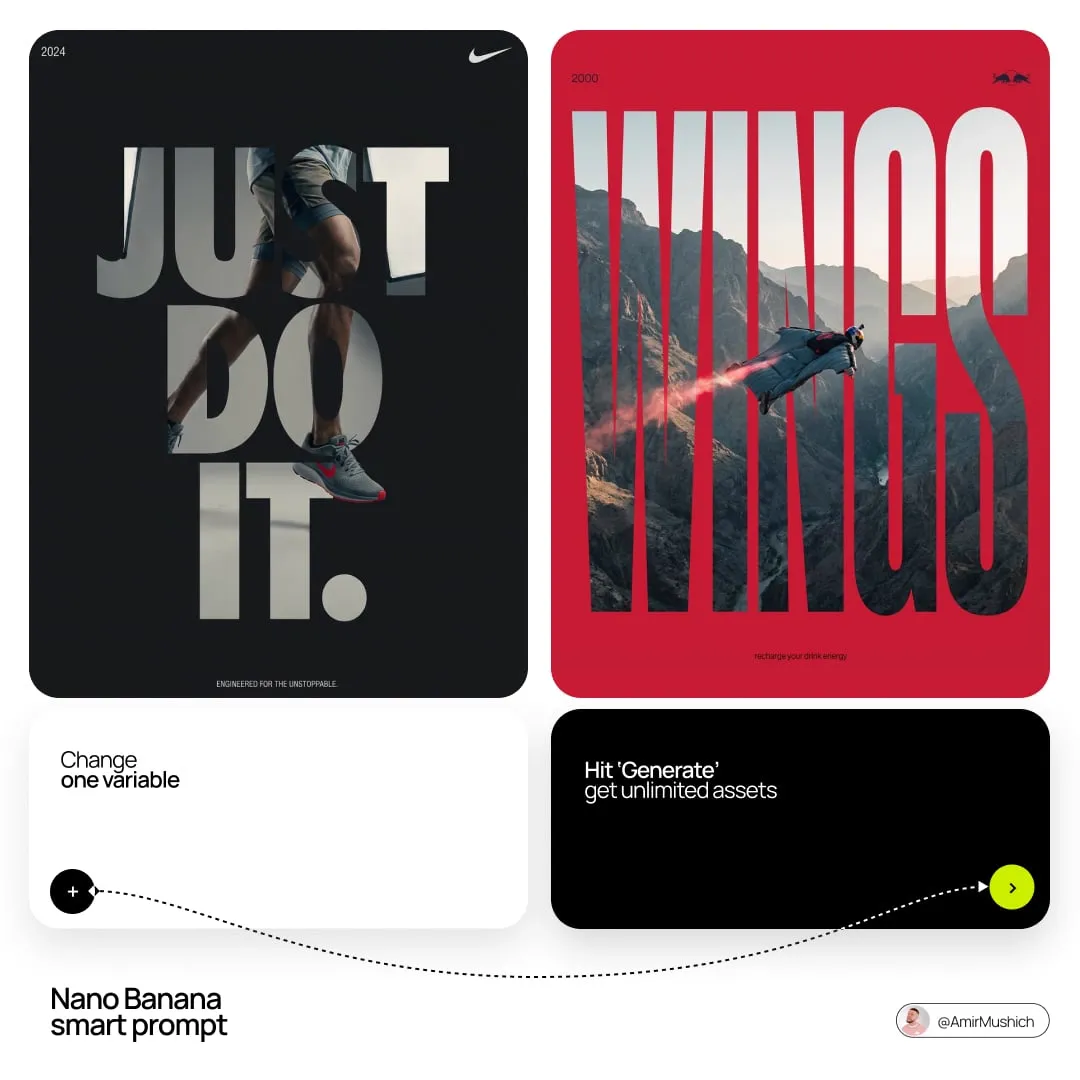
Change one variable at a time
When a shot fails, change one thing — movement, framing, or light — and regenerate. Changing everything at once teaches you nothing and burns time. Keep a short log of what changed and what improved; within a project or two it becomes your personal prompt grammar. That log is also the fastest way to hand a project to someone else without losing the look you built.
Continuity Is the Real Difficulty
Sharp individual shots are common. Sequences that hold together are rare, and continuity is almost always the reason.
Characters
Lock a character sheet and reuse the same reference frames for every appearance. Describe the character the same way in every prompt, with the same attributes in the same order. Consistency comes from repetition, not from eloquence.
Locations and props
Treat a location like a set you must return to: same key light, same time of day, same foreground object. Props are continuity anchors. A mug, a scarf, a scratched table tells the audience they are still inside the same world even when the camera has moved across town.
Screen direction
Pick a direction of travel and stay with it. If a character moves left to right in one shot, keep them moving left to right across the cut unless the story demands a reversal. Generation tools do not enforce this for you, and audiences feel it immediately even when they cannot name what is wrong.
A style bible
Keep one document with your locked character frames, palette, texture notes, lens choices, and preferred prompt phrasing. Paste it into every session. It takes twenty minutes to write and saves hours of drift across a long project.
Choosing Tools Without Drowning in Feature Lists
Feature lists are not useful decision tools, because every platform claims everything. These criteria are.
- Control over motion. Can you specify direction, speed, and amplitude, or only suggest a feeling?
- Image-to-video fidelity. Does the first frame stay recognizable, or does the model reimagine your carefully built composition?
- Duration per take. Short clips are fine if you can extend or chain them cleanly.
- Aspect ratio coverage. Vertical for social, widescreen for narrative, square for some client work.
- Consistency support. Reference images, character locking, or style transfer.
- Iteration cost. How expensive is a rejected take, and how fast does a replacement arrive?
- Export friendliness. Resolution, frame rate, codec, and whether shots drop cleanly into an editor.
Use Templates when you want a proven structure, and Prompts when you want to study phrasing that already works instead of guessing at it. When you are deciding between platforms for a specific job, the Alternatives pages make side-by-side comparison faster than trial and error.
Two Short Projects, Start to Finish
Abstract criteria only become useful when you apply them, so here are two compact examples that show how the same loop scales differently.
A twenty-second product spot
Start with one sentence of intent: a hand cream that feels like a quiet morning ritual. The beat sheet has four beats — waking, reaching, applying, breathing out. Look development produces a character sheet for a pair of hands, a location sheet for a sunlit bathroom, and a palette reference of warm neutrals. The shot list holds six shots: two insert shots, two mids, one wide, one final close-up. Motion passes generate three takes per shot, and four of the eighteen survive. Assembly cuts to a slow acoustic track, and the finish pass matches grain across all six shots. Total effort: an afternoon, most of it spent on references rather than renders.
A ninety-second explainer with a narrator
Here the constraint is information, not mood. The beat sheet maps a problem, a failed attempt, a discovery, and a result. Look development produces a stylized world rather than a realistic one — flat color, hard shadows, consistent geometry — because stylization hides small inconsistencies between shots far better than photorealism does. The narrator's lines dictate shot lengths, so shots are generated at eight seconds and trimmed down. Continuity risk moves from skin tones to illustration style, which means one locked palette and one locked line-weight reference. Assembly and finish take the largest share of effort here, roughly a third, because timing to a script is unforgiving.
Common Mistakes and Their Fixes
- Generating video from text only. Fix: lock a still first, then animate from it.
- One take per shot. Fix: generate three, choose one, delete the rest.
- Inconsistent character description. Fix: a written character block, pasted verbatim every time.
- Chasing a shot that almost works. Fix: regenerate from a better reference frame instead of patching.
- Ignoring sound until the end. Fix: rough ambience during assembly so you cut to rhythm.
- Mixing texture across shots. Fix: a single finish pass with matched grain and grade.
- Overlong shots. Fix: cut two seconds from every clip, then review. Generated footage almost always wants to be shorter.
- Letting music dictate structure. Fix: cut picture first, then let the track support your rhythm rather than define it.
- Redesigning the look mid-project. Fix: freeze the style bible and only revise it between projects, never during one.
FAQ
Do I need to know how to draw? No. You need to describe an image precisely. Cinematography vocabulary — framing, lens, light direction — helps far more than drawing skill, because it maps directly onto decisions the model can act on.
How long should each generated shot be? Three to six seconds covers most narrative needs. Longer shots are harder to keep stable and usually lose tension, while shorter shots give you more freedom in the edit.
Can the same character survive across many shots? Yes, with discipline: a locked character sheet, identical descriptive phrasing, and reference-based generation. Expect the first appearance of a new character to take longer than the fifth.
Image-to-video or text-to-video? Image-to-video whenever composition matters, which is nearly always. Text-to-video is useful for texture plates, background motion, and pure experimentation where nothing needs to match.
How do I stop shots from looking like different films? Fix three variables across the whole project: palette, texture, and lens character. Then match them once more in the final grade, because compression and export settings can shift them slightly.
What is the fastest way to improve? Rebuild one sequence you already admire. Write down its shot list, then reproduce it with your own references. Imitation against a deadline teaches faster than any tutorial.
Start With One Beat
Pick a single beat — one action, one location, one feeling. Generate the still until it is exactly right, then animate it, generate three takes, and cut them against a piece of music. That is the entire workflow in miniature, and it repeats all the way up to a full film.
Orelon is built for this loop: an AI video generator for cinematic ideas in motion, with image and video generation in one place so look development and shot production stop living in separate tabs. Start on the Orelon homepage or go straight to Create Video and put one beat in motion today. When you are planning a longer project, the Pricing page lays out the options, and the Blog has more workflows worth borrowing from.