
A practical guide to TikTok alternatives for creators: build a repeatable AI video workflow with hooks, shot lists, prompting tips, and troubleshooting FAQs.
Creators looking for a TikTok replacement usually discover the same uncomfortable fact about three weeks in: changing the destination did not make the work any faster. The account is new, the feed is different, and the folder of half-finished drafts is exactly as large as it was before. That is not a platform problem. It is a production problem wearing a platform costume.
This guide takes the production route first. Instead of ranking destinations you have already heard of, it walks through a repeatable short-form pipeline built around an AI video generator, so the clips you make can travel to whatever surface comes next. The goal is modest and testable: take one idea from a sentence to a published vertical clip in an afternoon, then do it again next week without rebuilding your process from zero.
Why the hunt for one best TikTok alternative stalls
Three forces break most migrations, and none of them have anything to do with which app you pick.
The first is that audience habits do not travel. People who found you through a recommendation feed rarely follow you to a different surface, even when the content is identical. You are not relocating a community. You are starting a new one with a head start on craft, which is a meaningfully different job.
The second is that format instincts lock in. If everything you have published is 21 seconds long and cut to a trending sound, your reflexes are tuned to a feed you no longer control. The same clip gets skipped on a search-driven surface because nobody searches for a sound. It gets skipped in a subscriber context because it assumes familiarity the viewer does not have.
The third force is the one people underestimate. The production bottleneck stays exactly where it was. A different app does not make editing faster. It does not generate footage, does not fix pacing, and does not write an opening line. If your slow step is capturing or commissioning visuals, moving destinations changes nothing about your week.
That is why a tool-first mindset outperforms a platform-first mindset. When a credible 20-second clip takes ninety minutes instead of three days, testing three surfaces in a month becomes cheap. Committing to one for a year stops feeling like the only safe option.
Two separate decisions hide inside every migration
Most creators treat a switch as one decision. It is really two, and conflating them is what produces the frustration.
The destination decision
Destination is about where a clip is discovered. Interest feeds push content at cold viewers who did not ask for it. Subscriber surfaces deliver to people who already opted in. Search indexes reward intent, where the title and the first three seconds carry most of the weight. Community surfaces reward usefulness and participation more than polish.
Each rewards different pacing and different metadata. An 18-second clip engineered for a fast vertical feed often underperforms as a standalone post, because the entry behavior is inverted: one audience scrolls past by default, the other opened the app expecting a specific payoff.
The production decision
Production is about how footage comes into existence. Your realistic options are: shoot it yourself, license stock, commission an editor or animator, or generate it. This is the decision you control end to end, and it compounds across every surface you publish to, which is why it deserves to be optimized first.
Why keeping them apart matters
When destination and production stay separate in your planning, a platform change becomes a routing problem instead of a crisis. You build one pipeline, export two or three cuts, and point them at different places. Every clip becomes reusable, re-cuttable, and archived in a form you own. That structural advantage is something a simple app swap never delivers, no matter how good the app is.
What generative video actually changed
Generative video did not replace filmmaking. It inserted a layer between an idea and a finished shot. Text-to-video, image-to-video, and motion-controlled generation now cover a large share of what used to require a camera, a location, a model, and a lighting setup.
The practical consequence for short-form creators is a shift in what counts as scarce. Footage is no longer scarce. Attention is. Time-to-first-draft is. Clarity of idea is. When footage becomes abundant, the creators who pull ahead are the ones who can decide quickly what a clip is about, then iterate on execution without paying for each attempt in days.
There is a catch worth stating plainly: generation makes it trivially easy to produce attractive footage with nothing to say. Beautiful, meaningless clips are the default output of lazy prompting. Your advantage is not access to generation, because everyone has that now. It is taste, structure, and speed of revision.
A seven-step workflow that holds up week after week
The following sequence is deliberately boring. That is the point. Boring processes survive busy weeks.
Step 1: Write the hook as one sentence before generating anything
Not a topic. A specific opening image or line. 'A cracked glass heart shatters in slow motion as the beat drops' is a hook. 'A video about relationships' is not. If you cannot compress the opening into a single sentence, generation will only produce attractive vagueness, because the model is filling a hole you left open.
Write the sentence, then read it aloud. If it takes more than four seconds to say, it is probably two hooks stapled together. Split them and build two clips.
Step 2: Convert the hook into a shot list, not a script
Short-form rarely needs dialogue. It needs coverage. List four to eight shots with duration, subject, action, and camera movement. A 20-second clip is usually five shots of three to four seconds each, plus a one-second title card. Keep the document to a single page so it stays a tool instead of quietly becoming a project.
A useful habit is to write the shot list in a spreadsheet with one row per shot and columns for duration, camera, subject, and the one detail that must be visible. That last column is what stops you from generating generic footage that technically matches the description.
Step 3: Generate keyframes as stills first
Before animating anything, generate the opening frame of each shot as an image. Stills are fast to compare, cheap to discard, and easy to redirect. Use an AI image generator to explore framing, wardrobe, palette, and light direction, then pick the two or three frames genuinely worth animating.
This single habit saves more time than anything else in the pipeline, because it separates composition decisions from motion decisions. When a shot looks wrong, you know whether the problem is the frame or the movement.
Step 4: Animate only the shots that earn motion
Not every shot needs movement. Generate motion for the shots that carry the idea: the reveal, the transformation, the punch-in, the match cut. Use the AI video generator for those and hold static frames on everything else.
Mixing motion and stillness reads as intentional. All-motion reads as noise, and noise is the fastest way to make an edit feel machine-made.
Step 5: Assemble, sound, and caption
Cut in whichever editor you already know. Add music, one sound effect placed exactly on the hook, and burned-in captions for the large share of viewers watching muted. Captions are also the cheapest place to add a second hook: the first line can restate the promise the visuals only imply.
Caption legibility is a craft detail, not a checkbox. Two lines maximum, high contrast, and positioned above the lower interface overlay so nothing important is hidden.
Step 6: Export two cuts and read completion first
Produce a 12-second cut and a 25-second cut from the same assets. Publish both. Compare completion rate first, shares second, saves third. Completion tells you whether the hook held. Shares tell you whether the idea landed hard enough to pass along. Likes mostly measure how the viewer felt about you rather than about the clip.
Step 7: Archive the winner as a reusable pattern
Every clip that performs should leave a document behind: the hook sentence, the prompt that generated the hero shot, the duration band, and the caption style. Keep that in a prompt library so next week starts from a tested template rather than a blank page. This is how a series becomes recognizable instead of merely frequent.
Format constraints that actually change results
Vertical short-form is a constrained format, and constraints are useful because they make decisions faster.
Work at 9:16 and 1080x1920. Keep the top and bottom 15 percent clear of essential text so interface overlays never cover your punchline or the second line of your caption. Assume the first 1.5 seconds decide everything, which is roughly one shot. That single constraint reshapes a shot list more than any aesthetic preference.
Durations cluster into three useful bands: 7 to 15 seconds for a single beat or reveal, 16 to 35 seconds for a mini-story with one turn, and 45 to 90 seconds for a tutorial or breakdown. Pick a band and stay in it for a month. Consistency teaches the feed what your clips are, and it teaches you where your ideas reliably break.
Sound matters more than resolution. A clean cut on the beat with a slightly soft image outperforms crisp footage with sloppy timing every time. Export at a high bitrate, then check compression on a phone screen, because that is the only screen that counts. A clip that looks sharp on your monitor and mushy in a feed is a clip you wasted.
Prompting for vertical video: camera language beats adjectives
Describe the shot, not the mood
'Dreamy, cinematic, beautiful' gives a model almost nothing to anchor on. 'Low-angle dolly-in on a glass of iced coffee, condensation on the glass, warm rim light, shallow depth of field' supplies a camera position, a subject, a light direction, and a lens behavior. The second version is reproducible. The first is a lottery ticket.
A prompt skeleton you can reuse
A reliable structure runs: camera movement, subject and action, lighting, lens or depth cue, aspect ratio note. Two or three motion terms per shot is plenty. Stacking six movements confuses the model and produces drift, that uncanny slide where objects melt between frames.
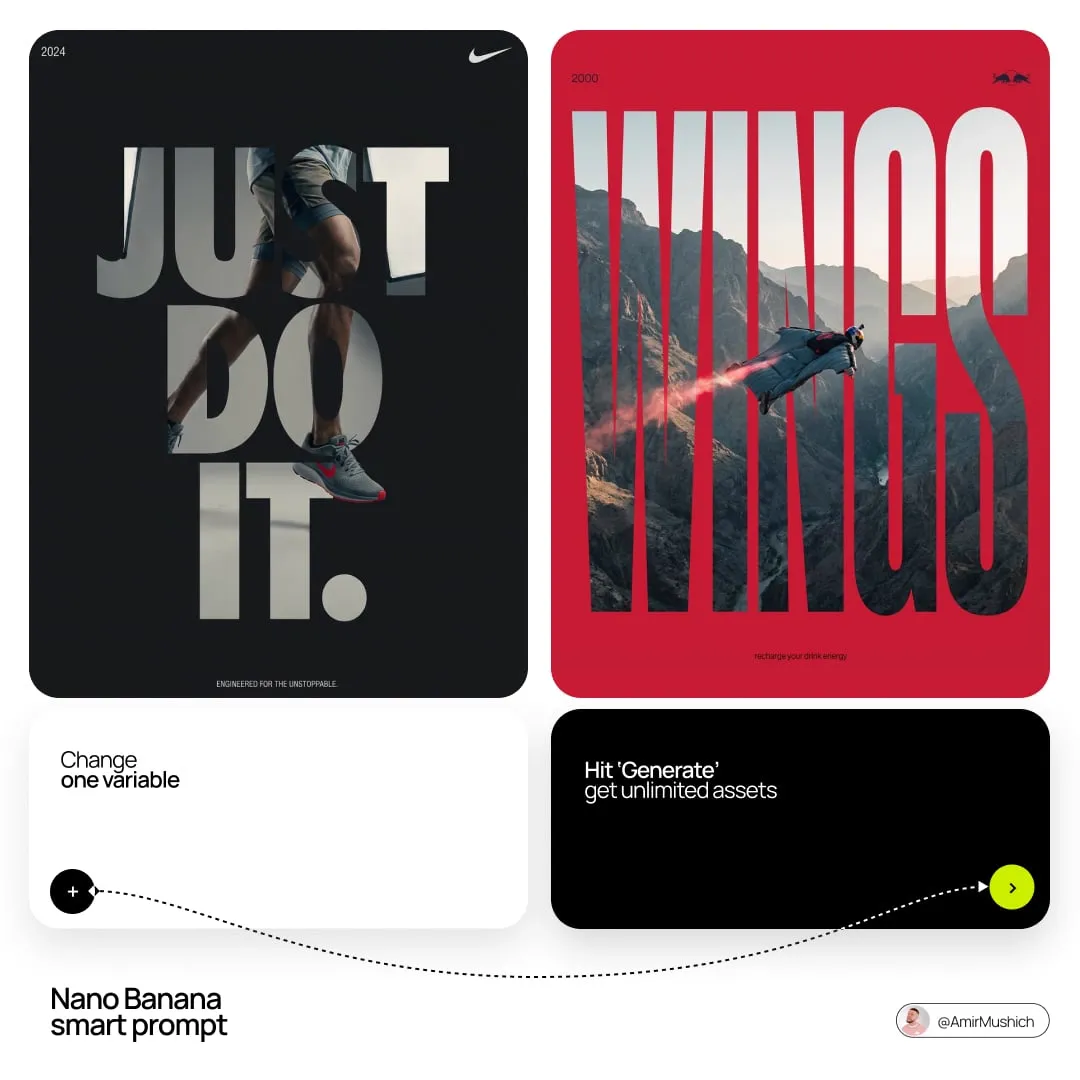
Save your winners as templates so a good result can be re-run with one variable changed: same lighting, different product; same camera move, different subject. That is exactly what a video templates library is for, and it is why pattern reuse beats prompt cleverness over a month of publishing.
Prompt habits that quietly cost you an afternoon
Asking for readable text inside generated footage, describing more than one hero action per shot, and changing three variables at once. Change one thing per iteration, or you learn nothing about what caused the improvement.
How to choose a generation tool without chasing hype
Five questions separate a tool that fits your week from one that merely produces an impressive demo.
How cheap is iteration? The tool you use for exploration should be the one where a failed attempt costs seconds. Measure how fast you can produce a variant, not just how good the best output looks.
How much control do you need over the first frame? If brand accuracy or product fidelity matters, image-to-video from your own keyframe beats text-to-video. If speed matters more than precision, a strong text prompt wins. Many creators run both in the same session: stills first, motion second.
Does the output survive an edit? Check resolution, frame rate, watermarking, and export formats. A clip you cannot trim and re-time freely is a clip you cannot reuse across surfaces.
Does it fit your cadence? A tool that produces one gorgeous shot in twenty minutes is useless if you publish daily. Match the tool to your publishing rhythm, then compare options side by side using an AI video generator alternatives overview rather than a single review written by someone with different constraints.
Can you reproduce last month's look? Saved prompts and consistent settings matter more than a feature list. If you cannot recreate a result, you do not have a style. You have luck.
A simple comparison exercise: generate the same three shots, the same hook, at the same duration in two tools, then time how long it takes to get a usable take. That number predicts your output volume far better than any specification sheet.
A worked example: a 25-second product teaser
Suppose you are promoting a ceramic pour-over dripper. Hook: 'It shatters.' Open on a slow-motion crack spreading across a cheap mug, then cut to the good one holding under heat.
Shots: a macro of the crack, 2 seconds, static with a slight push; a hand pouring water, 4 seconds, low-angle tracking; steam rising, 3 seconds, static macro; the dripper on a shelf in warm light, 4 seconds, slow dolly; a title card, 2 seconds. Generate three stills per shot, animate the crack, the pour, and the dolly, and hold the rest as static frames. Cut on the beat when the crack lands, and caption it 'the cheap one cracked / this one did not.'
Total production time lands around ninety minutes once your prompt patterns are saved. The same assets then yield a 12-second cut for a fast feed, a 25-second cut for a story-driven surface, and a square crop for a search-driven surface. One afternoon of work, three placements, no reshoot.
Publishing one idea across several surfaces
Once production is fast, distribution becomes inexpensive experimentation. Take a single clip and route it three ways: a vertical cut with a hard hook in the first second for a fast feed, a slightly longer version for a subscriber context where you can afford two extra seconds of setup, and a title-forward crop for search surfaces where the wording carries more weight than the opening frame.
Track one metric per surface. Completion for feeds, click-through for subscriber contexts, watch time for search. Comparing the same clip across surfaces teaches you something a single-platform creator never learns: whether a piece failed because the idea was weak or because the surface did not suit it. That distinction is worth more than any dashboard.
Mistakes that make generated short-form feel generated
The tell is rarely image quality. It is pacing. Clips that hold a shot for six seconds when the feed expects a change every 1.5 seconds feel slow. Clips that cut every half second feel frantic. Match the beat, then vary it deliberately at the turn.
The second tell is uniform lighting across every shot. Real footage varies because conditions change. Vary the time of day, the light direction, and the lens between shots, even within a single video, and the piece reads as shot rather than assembled.
The third tell is a missing point of view. Decide what the clip argues, whether that is a claim, a comparison, or a warning, and let the visuals serve the argument. A clip with a thesis is memorable. A clip with only aesthetics is interchangeable.
The fourth tell is over-explaining. Cutting a two-second title card that says what the viewer already understood drains momentum. Trust the image, then add text only where the image is genuinely ambiguous.
A fifth, quieter tell is inconsistent series identity. If your lens feel, lighting direction, and caption style change every week, viewers cannot recognize your clips in a crowded feed even when they like them. Fix those three things and let everything else vary.
Frequently asked questions
Do I have to leave a platform to use AI video?
No. Most creators run generation as a production layer and keep publishing wherever their audience already is. The tool changes how footage is made, not where it goes.
How long does it take to get good at prompting for video?
Expect ten to twenty generations before patterns click, and roughly a month of regular practice before you can predict output reliably. Save every prompt that produced a usable shot. That archive is the real skill transfer.
Can AI video replace filming entirely?
For abstract, product, food, landscape, and explainer content, often yes. For sustained talking-head trust content, no. Audiences still read faces, and generation is not yet convincing across a full monologue.
What is the single highest-leverage improvement I can make?
Generating keyframes as stills before animating. It separates composition from motion and cuts wasted generations dramatically. If you adopt one habit from this guide, adopt that one.
How do I keep quality consistent across a series?
Fix three things and let everything else vary: lens feel, lighting direction, and caption style. Consistency comes from repeated constraints, not repeated prompts.
Is it worth generating at higher resolution than I publish?
Yes, when you can afford the time. Downscaling hides artifacts and gives you cropping room for different aspect ratios later. Generating only at publish size locks you into one placement.
What should I do when a generation almost works?
Change one variable and re-run. If two attempts fail the same way, rewrite the prompt skeleton rather than nudging adjectives. Repeated failure usually means the shot description is structurally ambiguous.
How many clips should I publish before judging a new surface?
Ten to fifteen, spread across at least two weeks, using a consistent duration band. Fewer than that and you are measuring luck rather than fit.
Start with one clip this week
The best replacement for any platform is a process you can run without waiting for permission. Pick one idea, write the hook as a single sentence, generate five stills, animate two, cut a 15-second vertical clip, and publish it. Then repeat next week with exactly one variable changed so you can tell what moved the result.
When you are ready to build the pipeline for real, start in the Orelon AI video generator, browse video templates for a faster first draft, and keep an eye on the Orelon blog for workflow breakdowns that go deeper than prompt lists. Destinations will keep shifting. A production process that fits in an afternoon is the part you get to keep.