

A practical guide to using an AI short video maker: clip structure, prompting, workflow, format decisions, and the mistakes that quietly flatten reach.
Short-form video is the cheapest attention you can win and the hardest to keep. A viewer decides in well under two seconds whether your clip deserves the next five, and no clever caption rescues footage that never moves, never lands a visual beat, or never answers the question its opening frame implied. The encouraging part is that the process behind consistently strong clips is far less mysterious than it looks. It is a system: a small set of repeatable decisions about hook, motion, pacing, and payoff, supported by tools that remove the slow parts of production.
That is where an AI short video maker changes the economics of publishing. Instead of booking a shoot for every idea, you generate the shots you need, test variants in minutes, and spend your creative energy on the parts machines still handle badly — taste, timing, and knowing which version is genuinely better.
This guide walks that system end to end: what these tools actually do, how to structure a clip, a workflow you can run several times a week, prompt patterns that cut wasted attempts, how to choose a tool without locking yourself in, and the mistakes that quietly flatten reach.
Why Short-Form Video Is a Production Problem, Not a Talent Problem
Almost everyone who publishes short video has had one clip outperform everything else by an order of magnitude. The instinct is to treat it as lightning striking. In practice, that clip usually worked because of identifiable choices: a strong opening frame, a single clear idea, a rhythm that matched the platform, and a loop that made rewatching effortless.
Treat those choices as a checklist rather than a vibe and your output stops being random. The operators who publish daily without burning out rarely have more talent than everyone else. They have a narrower scope. One clip, one job, one visual idea, one call to action.
Three constraints worth accepting
- Attention is borrowed, not given. Your clip competes with everything else in the feed, including the clip directly above it that the viewer already half-watched.
- Production speed compounds. A clip you can finish in forty minutes lets you test five hooks for the same idea. Five tested hooks beat one polished guess.
- Consistency beats novelty. A recognisable visual style makes your clips identifiable mid-scroll, which is worth more than a new aesthetic every week.
What changes when generation gets fast
The old bottleneck was shooting. The new bottleneck is deciding. When you can generate a ten-second scene in a couple of attempts, the scarce resource becomes your ability to judge whether the scene earns its place. That is a skill, and it improves fastest when you produce a high volume of small, low-stakes tests instead of one big production.
What a Short Video Maker Actually Does
A modern short video maker is not a single button that outputs a viral clip. It is a pipeline of capabilities, and knowing which one you are using prevents most disappointment.
Text-to-video
You describe a scene and the model produces footage. This is the most flexible mode and the least predictable. Write for camera behaviour, not just subject matter: "slow push-in, shallow depth of field, neon reflected in wet asphalt" reads better than "cyberpunk city." A short prompt with specific camera language beats a long prompt full of adjectives.
Image-to-video
You start from a still — generated, photographed, or pulled from a brand asset library — and animate it. This is the workhorse mode for product clips, character consistency, and any series where the same subject has to appear across many clips. Lock the look once in a still, then animate variations. You can build those base frames with an AI image generator and move them straight into motion.
Video-to-video and style transfer
You bring existing footage and restyle, extend, or relight it. Useful for repurposing a long interview into vertical cuts, or giving stock footage a consistent grade across a series. If you already have a library of filmed material, this mode often delivers the fastest visible improvement per minute spent.
Where editing still matters
Generation rarely produces a finished clip. Trimming to the frame, choosing the exact opening second, adding captions, and mixing sound are still human jobs — and they are where most of the perceived quality comes from. A mediocre generation with a perfect first second beats a beautiful generation with a slow start. If you only have time to improve one thing after generating, improve the first second.
The Four Load-Bearing Parts of a Clip That Holds Attention
Every short clip, whether forty seconds or eight, has four load-bearing parts. Weakness in any one of them caps the ceiling.
The first second
Assume no sound, no context, and half a second of patience. The opening frame should contain either motion, a face, an unusual object, or an unresolved tension. A static wide shot of a room is not a hook.
Test your opening by pausing on frame one. If it looks like a still that could belong to any other video on the platform, rebuild the idea rather than the footage.
The mid-clip engine
Between the hook and the payoff, something must keep changing: camera angle, location, scale, subject, or information. Short-form feeds punish sustained sameness. If your clip needs a long explanation, break it into visible beats — three images that each carry one idea will hold better than one image held for twelve seconds.
The payoff
Viewers forgive a lot if the ending delivers. The payoff can be a punchline, a transformation reveal, an answer, or a satisfying loop back to the opening frame. What it cannot be is a trailing sentence that restates what you already said.
The loop
If your last frame resembles your first, the clip restarts without friction and the platform counts another view. Loops are not a trick; they are a courtesy to the viewer who is still deciding whether they are done.
A Repeatable Workflow: From Idea to Published Clip
This is a workflow you can run in an afternoon and repeat three or four times a week without exhausting yourself.
Define one job per clip
Write a single sentence: "This clip makes a first-time viewer understand that our tool turns a script into a storyboard." If you cannot write the sentence, you do not yet have a clip. The sentence also becomes your test later: if a viewer cannot restate that idea after watching once, the clip failed regardless of how good it looked.
Write a shot list, not a script
Short video is visual first. List five to seven shots with a verb in each: "hand enters frame," "camera tilts up," "screen fills with the result." Dialogue or voiceover is added later, and often not at all.
Generate in short beats
Generate three to five second segments rather than one long take. Short segments are easier to re-roll, easier to trim, and easier to reorder when your structure changes — which it will. Start from a template if you want a proven structure to fill in; video templates are useful scaffolding, not a cage.
Choose the cut, then the sound
Assemble a rough sequence, then throw away the weakest shot. Your first assembly is almost always one beat too long. Then add sound: a single track, subtle foley, and captions burned in. Sound decisions are faster when the picture is already locked, because you stop guessing what the edit will feel like.
Publish, then read the data
The first hour of performance tells you more than the previous week of guessing. Note which clip you expected to win and which one actually did. Over a month, the gap between those two answers shrinks — that is your taste calibrating.
Quality checklist before you publish
- Does frame one contain motion, a face, or a question?
- Is there exactly one idea being communicated?
- Does anything change visually every two to three seconds?
- Do captions stay inside the safe area on the smallest screen you own?
- Would you watch the last two seconds again on purpose?
Prompt Patterns That Cut Down Retries
Most frustration with generated video comes from prompts that describe content but not cinematography. The model does not know what "moody" means to you. It knows lens, light, movement, and pace.
The four-part prompt
- Subject and action — who or what, doing what, in the first three seconds.
- Camera — shot size, angle, and movement: "medium close-up, slight handheld drift, slow push in."
- Light and texture — "overcast daylight, soft shadows, light film grain."
- Continuity anchors — the details that must stay identical across shots: wardrobe, colour palette, time of day, location.
Example: "Medium close-up of a barista pouring milk, slow push in, warm morning light from the left, light film grain, same apron and counter as the previous shot."
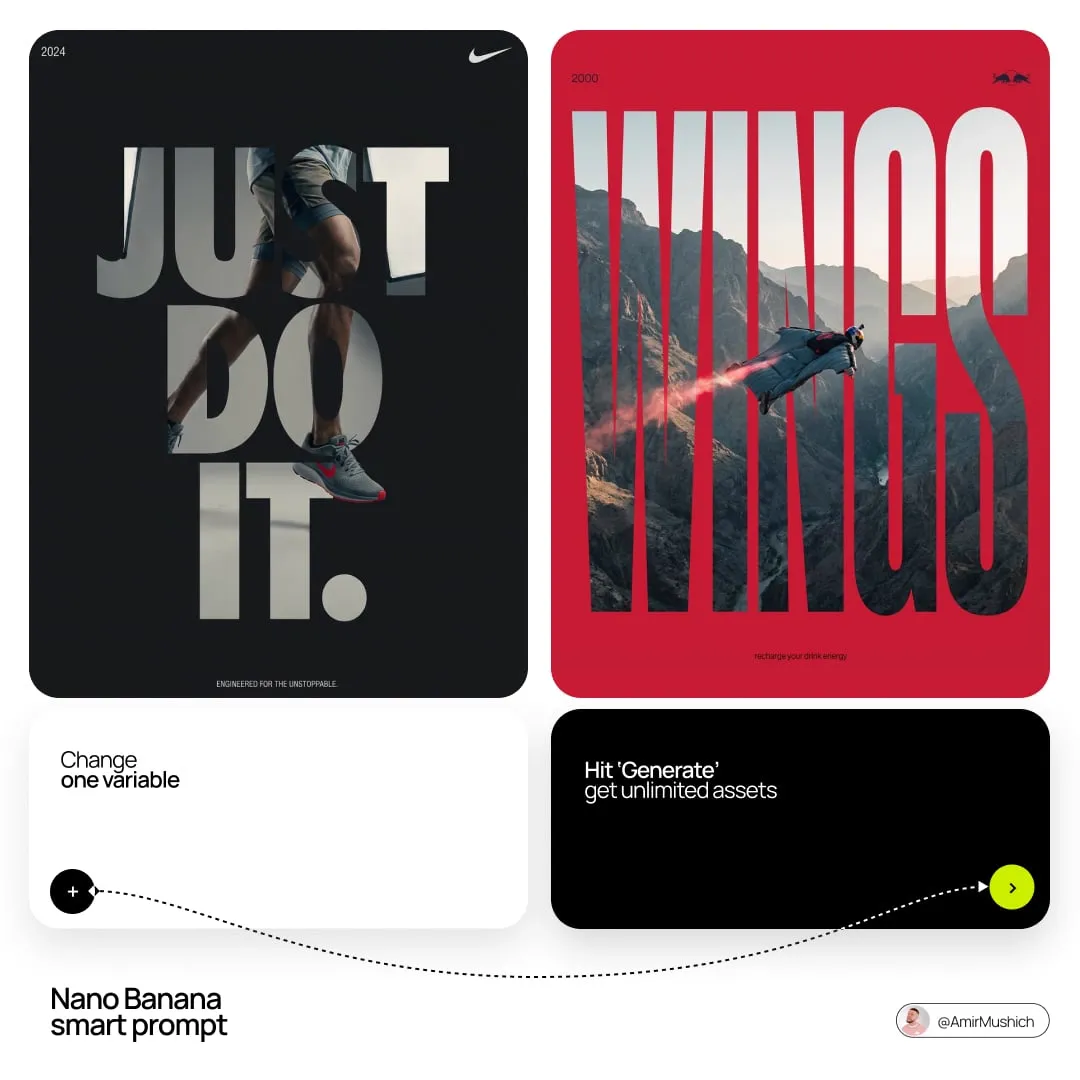
Change one variable at a time
If you change camera movement, lighting, and subject simultaneously, a good result teaches you nothing and a bad one tells you nothing either. Keep a running list of prompts that worked — a personal prompt library that grows is worth more than any generic cheat sheet, because it encodes your own visual taste.
Handle unwanted repetition explicitly
When a model keeps adding the same unwanted element — text overlays, extra limbs, a busy background — state the exclusion plainly and simplify the scene. Repetition of an unwanted detail is usually a sign the description is overloaded, not that the model is broken. Remove one clause and try again before rewriting the whole prompt.
Write for continuity, not for beauty
The shots that make a clip feel professional are the ones that match each other. Decide your palette, your lens feel, and your light direction before you generate anything, then repeat those phrases in every prompt. A series held together by three consistent phrases looks more expensive than a series of individually gorgeous but mismatched shots.
Format Decisions: Ratio, Length, and Captions
These are not creative choices so much as distribution choices, and getting them wrong wastes good footage.
| Decision | Practical default | When to break it |
|---|---|---|
| Aspect ratio | 9:16 vertical for feeds, 1:1 for mixed placements | 16:9 when the clip will live on a website or in a presentation |
| Length | 15–35 seconds for a single idea | Longer only when the payoff genuinely requires build-up |
| Captions | Always on, high contrast, bottom third | Never off for sound-optional platforms |
| Hook placement | First 0.5–1 second | Never a logo intro first |
Captions deserve their own note. They are not only an accessibility measure; they are how most viewers experience your clip the first time. Keep them to two lines, avoid covering faces, and check them on a small phone screen rather than your editing monitor. Caption timing also matters more than caption style: a caption that appears a beat after the words were spoken feels broken, even when the text is perfect.
Choosing a Tool Without Getting Locked In
Feature lists converge quickly, so compare on the things that actually affect your week.
Decision criteria that matter
- Iteration cost. How fast and how cheaply can you produce a second and third variant of the same shot? This matters more than peak quality.
- Style control. Can you hold a consistent look across a series, or does every generation drift?
- Input flexibility. Does it accept a still, a storyboard, or a reference clip — or only text?
- Resolution and length ceilings. Enough for your target platform at export, with headroom to crop.
- Usage terms. Confirm ownership and commercial usage for the plan you are on before you build a campaign on top of it.
- Export workflow. If you cannot get clean files into your editor, everything upstream is wasted.
It also helps to keep one capable general tool rather than five specialised ones. A single AI video generator you know intimately will outperform a rotating stack you never learn. If you are weighing options, comparison pages are a faster starting point than free trials you never finish — see how Orelon stacks up in an Orelon vs Runway breakdown, or browse alternatives to popular AI video tools when you want a wider view.
Common Mistakes That Flatten Otherwise Good Clips
Starting with a logo. Brand recognition is earned after attention, not before it.
Overloading the clip. Two ideas in twenty seconds means neither lands. Split them into two clips and publish both.
Ignoring the audio mix. A track that is too loud relative to voice, or voice with no bed at all, reads as amateur within two seconds.
Reusing one generation across a whole series. Repetition can build recognition, but identical footage in four consecutive posts reads as laziness. Vary the shot while holding the style.
Chasing trends that do not fit. A trending audio under footage that has nothing to do with it creates dissonance the viewer feels even if they cannot name it.
Never reviewing performance. Publishing without looking at retention data is the single most expensive habit in short-form video.
Generating before deciding. Sitting down and "making something" produces technically fine clips with no reason to exist. The one-sentence job comes first.
Polishing the wrong shot. Time spent perfecting shot four, when shot one is what decides whether anyone sees shot four, is time misplaced.
From One Good Clip to a Repeatable Series
A single successful clip is a data point. A series is an asset. The difference is whether you can reproduce the result without guessing.
Batch by stage, not by clip
Generate for six clips in one sitting, then edit all six, then caption all six. Switching between tasks is what makes short-form production feel exhausting. Grouping similar work cuts the ramp-up cost of every stage.
Build a visual signature
Choose two or three elements you repeat in every clip: a transition, a colour, a framing habit, a caption style. Viewers do not consciously catalogue these, but they recognise them, and recognition is what turns a scrolling viewer into a follower.
Repurpose deliberately
One ten-shot session can become a vertical feed clip, a square placement, and a short explainer on your website. Design the shots with that in mind — leave space at the top and bottom of frame so vertical and widescreen crops both survive.
Know when to stop testing
Two or three variants of a clip is enough to learn something. Beyond that you are optimising a single post rather than improving your process. Save the experiments for the structure, not the pixels.
FAQ
How long should a short video be?
Long enough to deliver the payoff and no longer. For a single visual idea, that is usually 15–35 seconds. If you need more than about a minute, consider whether you are actually making two clips.
Can AI-generated clips perform as well as filmed footage?
They can, provided the hook and pacing are strong. Audiences respond to clarity and entertainment, not to how the footage was produced. Where generated footage struggles is fine human performance — subtle expressions and unscripted interaction — so design around that rather than fighting it.
Do I still need an editor?
You need editing, whether or not you have an editor. Trimming, captioning, sound, and sequencing decide the final quality. Many creators do this themselves in a basic editor, and that is usually faster than learning three new tools.
How many variants should I test?
Two or three versions of the same clip — different hooks or opening frames — is enough to learn something useful. More than that and you are optimising a single post instead of improving your process.
What makes a clip loop well?
An ending frame that visually or rhythmically rhymes with the opening. If the viewer cannot tell where the clip starts, the replay happens automatically.
Is vertical the only format worth making?
It is the default, not the rule. Vertical for feeds, square for mixed placements, widescreen when the clip lives on a site or in a deck. Make the decision once per project and stay consistent.
How do I keep a consistent character across many clips?
Lock the character in a still image first, then animate from that frame every time. Describing the same person in text repeatedly produces drift; starting from the same reference produces consistency.
Turn Your Next Idea Into Motion
The clips that perform are rarely the most complicated ones. They are the ones with a clear idea, a strong first frame, visible movement, and an ending that earns the replay. Once that structure becomes a habit, a short video maker stops being a novelty and becomes the fastest path between an idea and something a stranger will actually watch to the end.
Start with one clip this week. Write the single sentence it needs to deliver, generate five or six short beats, cut the weakest one, and publish. Then do it again before you judge the results. Consistency is what turns a tool into a channel.
Start creating with Orelon and put your next idea in motion. Bring one sentence, leave with a clip — and a process you can run again next week.