
Learn how to set, replace, and design short video thumbnails for YouTube Shorts, TikTok, and Reels, plus an AI workflow for covers that get tapped.
You can generate the most cinematic thirty seconds of your life and still lose the scroll, because the still image that represents it was chosen by an algorithm the moment you tapped publish. Covers are no longer a YouTube-only concern: TikTok, Instagram Reels, and YouTube Shorts all surface one frozen frame in profile grids, search results, channel pages, and share previews. That frame is your thumbnail, even when the app calls it a cover.
Changing it is usually a two-tap job. Changing it well, so that it reads at 120 pixels wide, survives three different crops, and looks like it belongs to the rest of your feed, is the part most creators skip. This guide walks through the platform mechanics, the safe areas that matter, and an AI-assisted workflow for producing cover frames that look deliberate rather than accidental.
Why the cover frame decides whether anyone watches
Distribution on short-form platforms is not one feed. It is six or seven small surfaces stitched together, and most of them reuse the same still image. Your cover appears in the uploader profile grid, in search results, on the video page before playback begins, in share previews when someone sends a link, in playlist or collection views, and in the notification panel when a follower gets pinged.
A weak cover therefore does not cost you one impression. It costs you every impression outside the main swipe feed, and those surfaces are exactly where intent lives. Someone searching for a recipe, a workout, or a product demo is already interested. They are comparing you against nine other results, and that comparison happens at thumbnail size, on a phone, often while walking.
There is also a retention effect that is easy to underestimate. A cover sets an expectation. If it promises a bold visual moment and the video opens with fifteen seconds of setup, viewers leave faster. If it is a blurry mid-blink frame from a talking-head shot, viewers arrive with low expectations and give you less room to earn their attention.
Consistency compounds on top of all of that. A profile grid with a recognizable visual system, meaning the same type treatment, color temperature, and crop logic, reads as a body of work instead of a folder of accidents. That is the difference between someone scrolling past your video and someone tapping your profile to see what else you have.
The three thumbnail systems you are actually dealing with
Every short-form platform gives you one of three levels of control, and knowing which one you are in tells you how much the video itself has to do the work.
Automatic selection. The platform samples frames and picks one, usually based on motion, brightness, or face detection. You get no say at upload time. If a platform will not let you choose, then your video has to contain at least one frame that is genuinely thumbnail-worthy, which is a script and staging decision, not a publishing decision.
Frame selection. You scrub a timeline, choose a frame, sometimes drag it to a better position, and occasionally add text on top. TikTok and Instagram Reels both live here, and YouTube Shorts on mobile does too. This is the most common situation: you are not designing an image, you are choosing among the images your video already contains.
Custom upload. You supply a separate image file with its own aspect ratio and file-size limits. YouTube Studio allows this for standard uploads and, with some limits, for Shorts. Instagram Reels allows uploading a cover from your camera roll in the publishing flow for many accounts. This is where real design happens, because you can build the cover frame outside the video entirely.
The practical takeaway: even if you only ever select a frame, generate or stage at least one deliberate composition inside your video, so that frame selection becomes a choice between good options instead of damage control.
YouTube Shorts: uploading and replacing a thumbnail
Where the thumbnail shows up
In the swipe feed, Shorts behave differently from standard videos: the video plays immediately and the thumbnail is mostly invisible. But the same Short uses its thumbnail everywhere else, including the Shorts shelf on your channel page, search results, subscription surfaces, and any embed. If you never pick a frame, YouTube chooses one, and there is no guarantee it picked the moment you wanted.
How to set or replace it
During upload in the mobile app, you can pick a frame from the timeline and, on many app versions, upload a custom image. After publishing, open YouTube Studio, select the Short, go to the details panel, and use the thumbnail section to upload a replacement. On desktop, YouTube's custom thumbnail help page documents the file requirements: 1280x720 is the recommended resolution, 16:9 is the intended ratio, and the file should stay under roughly 2 MB as JPG, PNG, or GIF.
Two practical notes. First, replacement is not always instant in every surface, because caches refresh on different schedules, so give it a few hours before concluding the change failed. Second, replacing a thumbnail does not reset view counts and does not re-trigger distribution in any meaningful way. It simply changes what future viewers see.
What works at the Shorts crop
Because Shorts thumbnails often render as a small vertical tile, treat the middle square of your frame as the real canvas. Keep the subject centered, keep text in the upper or lower third but inside that center square, and avoid relying on detail near the edges, which is the first thing a crop throws away.
TikTok: covers, text, and the search angle
TikTok's cover workflow happens on the final publishing screen, before the post goes live, and it is the one platform where cover text is a first-class feature.
Choosing a cover during upload
Tap the cover control, scrub through the timeline, and pick a frame. If nothing looks usable, that is a signal about your shoot rather than your editing: you need a beat in the video where you hold still, look at the camera, or present an object clearly. Vertical videos with constant motion and camera shake produce covers that look like smudges.
Adding cover text
TikTok lets you place a short text overlay on the chosen frame, and that text carries into several surfaces where the cover appears. Use it for the promise, not the description: five words maximum, high contrast, positioned where the interface will not cover it. TikTok stacks controls along the bottom and right edge of the player, so push text up and toward the left.
Changing it after publishing
Capabilities here change often and vary by account and region. Some creators can edit a published post's cover from the post menu; others cannot, and the only path is to delete and re-upload, which costs the accumulated engagement. Check your own menu before publishing, and if covers are locked after posting for your account, treat cover choice as a pre-publish decision with no undo.
Instagram Reels: covers and the profile grid
Reels covers are the most visually consequential of the three, because Instagram still treats the profile grid as a portfolio. A messy grid makes an account look disorganized even when individual videos are strong.
Setting a cover at publish
In the Reels publishing flow, the cover control lets you scrub to a frame. For many accounts, an option also appears to upload an image from your gallery, which is the single best way to get a designed cover onto a Reel. If that option is missing on your build, generate a strong frame inside the video instead and choose it from the timeline.
Editing a cover after publishing
Instagram has supported editing a published Reel's cover for a long time now: open the Reel, use the three-dot menu, choose edit, and change the cover there. This is your safety net when you notice a bad frame a day late. It also means you can publish quickly and refine covers in a batch afterward, which is a legitimate workflow for creators posting daily.
Keeping the grid coherent
The grid crops covers toward a squarer shape than the full 9:16 video, which means anything composed for the entire vertical frame gets trimmed on the sides and top. Design for the crop: single subject, centered, generous margins, and a consistent type or color accent so twenty tiles read as one system.
Dimensions, safe areas, and design rules that travel
| Surface | Best upload | Notes |
|---|---|---|
| YouTube standard thumbnail | 1280x720, 16:9, under 2 MB | JPG, PNG, or GIF |
| YouTube Shorts tile | center square of a 1080x1920 frame | assume aggressive cropping |
| TikTok cover | frame from the video, plus short overlay text | interface covers the bottom-right |
| Instagram Reel cover | 1080x1920 upload, judged as a square-ish tile | keep one subject centered |
| Cross-platform master file | 1080x1920 still, safe area 1080x1080 | crop outward from the square |
Three design rules survive every platform. First, one subject: two faces, a logo, and a headline in a 120-pixel tile becomes noise. Second, contrast that survives a small screen and a dimmed phone, because dark subjects on dark backgrounds disappear. Third, type large enough to read at a glance and short enough to finish in one eye movement.
An AI-assisted thumbnail workflow for short-form
The reason covers look improvised is almost always ordering. Creators shoot, edit, publish, and then think about the cover. Flip the order and use generation to make the cover frame a designed asset from the start.
Write the cover promise before you generate video
Before any footage or generation, write one sentence: the single thing a viewer should understand from the still image alone. A dessert close-up. A fitness silhouette mid-rep. A product held at eye level. That sentence becomes your prompt, your shot list, and your cover concept at once.
Generate the keyframe at 9:16
Use the Orelon AI image generator to produce a portrait-orientation hero image: one subject, clean background, directional light, and room in the middle of the frame for a short headline. Generate four to six variations rather than one, because judging a cover is comparative work.
Judge variants small
Shrink candidates to roughly 120 pixels wide, or look at them on a phone at arm's length. Most cover problems are invisible at full size and obvious at tile size. Reject anything where the subject is not instantly identifiable.
Reuse the keyframe as the opening frame
Feed the winning still into the Orelon AI video generator as the first frame or reference, so the video opens on the same composition you chose as a cover. Now frame selection inside the timeline is a bonus rather than a gamble, and the custom upload is a designed image instead of a screenshot. If you want a consistent identity across a series, start from a template and hold the type and color accents fixed while the subject changes.
Test, log, and repeat
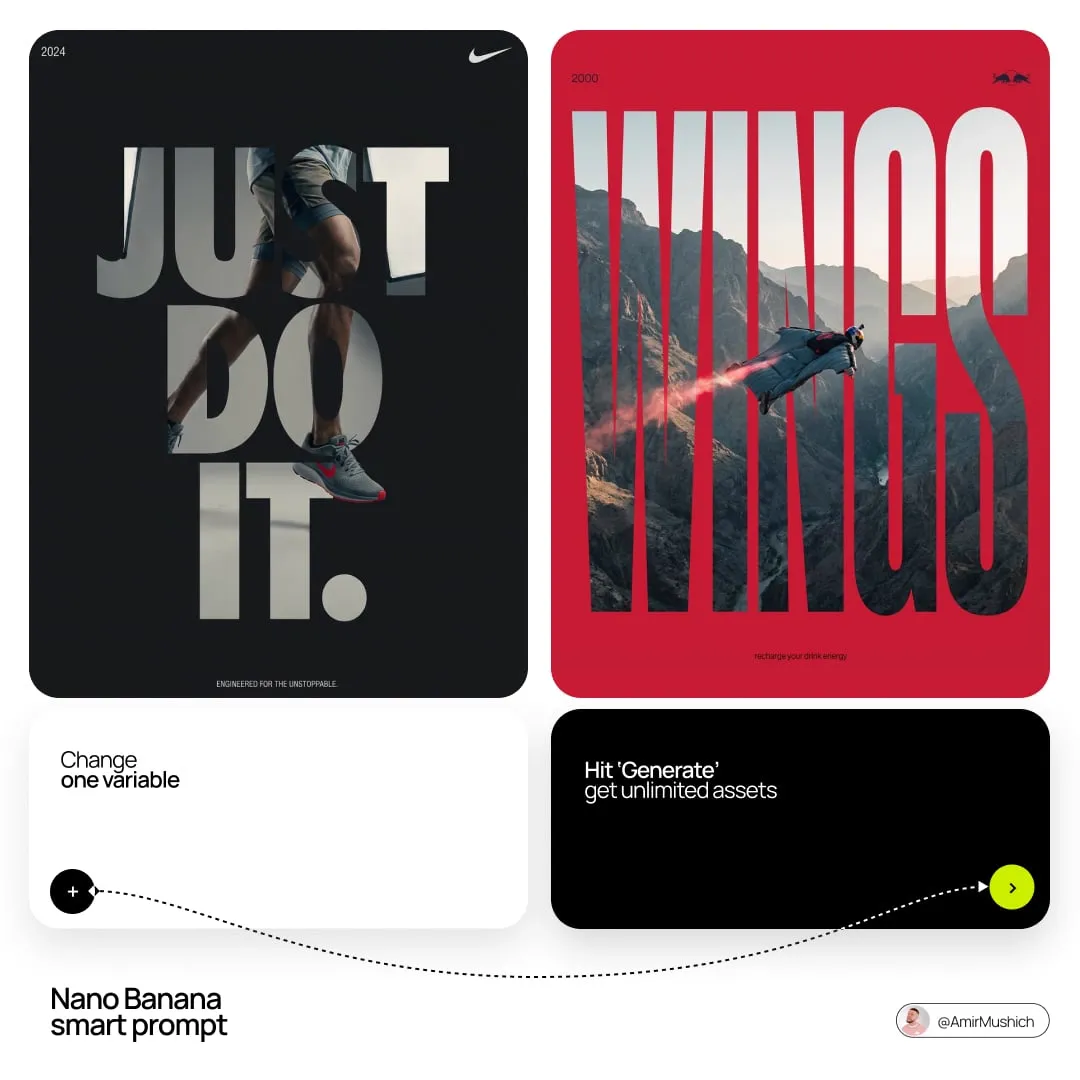
Change one variable at a time, such as subject framing, headline wording, or color temperature, and keep a simple log of what you published. On platforms that offer thumbnail testing for longer videos, use it. On short-form, compare view-through and swipe-away patterns across a week of posts rather than a single video, because day-to-day noise is brutal.
Mistakes that quietly kill click-through
- Choosing a cover from a blurry transition instead of a held, composed moment.
- Placing the headline where the platform interface sits, so buttons and captions cover it.
- Using tiny type that looked fine on a laptop and is unreadable on a phone.
- Letting every tile use a different color world, so the profile grid looks random.
- Designing only for the full 9:16 frame and ignoring the square crop.
- Forgetting that search results and embeds also use the cover, and optimizing for the feed alone.
FAQ
Can I change a thumbnail or cover after publishing?
Yes on YouTube and Instagram, in most cases, through Studio or the Reel edit menu. TikTok is less predictable: some accounts can edit a published cover while others cannot, so verify before you publish rather than after.
Why has my new thumbnail not appeared everywhere yet?
Different surfaces refresh on different schedules. Search results and embeds can lag well behind the video page, so allow a few hours before assuming the upload failed.
Do thumbnails even matter for Shorts, since the feed autoplays?
They matter for everything around the feed: search, channel pages, embeds, and share previews. They also matter to you, because a strong cover frame usually means a stronger opening shot.
What image size should I upload?
1280x720 for a 16:9 custom thumbnail, and a 1080x1920 vertical still for Reel or TikTok covers, with the essential content inside a 1080x1080 center square. Keep files well under the platform limit and avoid heavy compression artifacts.
Should I add text to my cover?
One short phrase, yes, if it sharpens the promise. If the text repeats the caption or needs more than five words to make sense, drop it and let the image do the work.
How do I keep a consistent grid without making every cover identical?
Fix three things, meaning typeface, color accent, and subject placement, and vary the subject and background. Consistency comes from the system, not from repetition.
Bring the cover frame into the idea
The creators whose covers consistently work are not luckier with their frames. They simply decide what the still image is before they decide what the video is. That decision takes five minutes at the start and saves an hour of second-guessing after publishing.
Generate a portrait-orientation hero image first, judge it at tile size, then build the video from it with the Orelon AI video generator. One composition, three surfaces, no scramble at publish time. If you want to see how other creators structure their prompts and shot lists, the Orelon blog is a good place to pick up patterns you can adapt to your own channel.