
Build a repeatable AI video workflow for short-form content: trend research, hooks, retention editing, cross-platform cuts, and engagement loops.
Every creator has one video that outperformed everything else by a factor of ten. The instinct is to call it luck. Look closer and that video almost always sat at the end of a repeatable chain: a trend spotted early, a hook written with intent, footage that looked better than the feed average, an edit that survived the first three seconds, and a distribution plan that gave the idea more than one chance to be seen. Orelon is built for the middle of that chain — an AI video generator for cinematic ideas in motion — but no tool carries a weak workflow. This guide covers the entire system, from research to retention editing to the engagement loop that turns viewers into a returning audience.
The goal is not to post more. It is to make every post a deliberate test, so that the third video teaches you something the first one could not.
Why Virality Is a Workflow Problem, Not a Luck Problem
Short-form feeds are ranking machines. They show your video to a small test audience, measure how that audience behaves, and then decide whether to widen the circle, hold it steady, or stop it. That means reach is not a single decision made by an editor at a platform. It is the accumulated result of thousands of micro-decisions made by viewers in the first few seconds.
Once you accept that framing, three things follow.
First, distribution quality is dictated by retention quality. A video that holds 60 percent of viewers past the five-second mark will almost always beat a video with a stronger topic but a weaker opening.
Second, shareability compounds. A share puts your video in front of a new audience with implicit social proof attached, which is why shares and saves predict reach far better than likes do.
Third, systems beat sprints. Twenty videos produced inside a documented workflow will outperform a hundred random uploads, because each one inherits the learnings of the last. Random posting produces random data, and random data cannot be optimized.
The practical implication: stop treating each video as a finished artwork and start treating it as a versioned experiment with a hypothesis. "A cold-open visual anomaly will beat a talking-head intro for this topic" is a hypothesis. Ambitious, testable, and it takes one afternoon to answer.
The Metrics That Actually Predict Reach
Before touching a timeline, decide what you will measure. Most creators track the wrong numbers and then make decisions based on noise.
Retention and average watch time
Retention curves tell you where viewers leave. A cliff in the first two seconds means the hook failed. A gradual slope means pacing is soft. A spike near the end usually means the payoff landed and people rewatched. The timestamp of the biggest drop is the single most actionable piece of data in short-form video.
Shares and saves
These are the strongest signals because they cost the viewer something — social capital or a small act of commitment. High save rates often point to utility content: tutorials, checklists, before-and-after transformations. High share rates point to identity content: something the viewer wants to be seen agreeing with.
Replays and loop rate
A video that ends where it began invites a second watch without the viewer consciously deciding to rewatch. Loops are cheap retention, and they are usually an editing decision, not a scripting one.
Comment quality
Volume matters less than whether comments are conversations or reactions. Ten comments that ask follow-up questions are worth more than a hundred fire emojis, because questions create a roadmap for your next three videos.
Follower count, meanwhile, is a lagging indicator. It describes what already happened. Watch time describes what is happening.
Step 1: Trend Research That Feeds a Pipeline
Trend chasing fails when it is reactive. A trend that has already saturated your niche is not a trend, it is a crowded room. Research should start earlier and end with a decision, not a folder of screenshots.
Build a trend log with five columns: format, audio or sound, topic angle, velocity, and saturation. Velocity is how fast the format is spreading in your niche over the last 48 hours. Saturation is how many similar videos already exist. The sweet spot is high velocity with low saturation — usually within the first day or two of a format appearing.
Sort everything into three buckets:
- Fast trends (24–72 hours). Native sounds, meme formats, reaction templates. Post immediately or skip entirely.
- Medium trends (1–3 weeks). Editing styles, narrative structures, storytelling devices. Enough time to produce something polished.
- Evergreen angles (all year). Questions your audience asks repeatedly. These become the backbone of your backlog.
The most underrated research source is the comment section of your own niche, sorted by newest. Questions there are unfiltered demand. Pair that with autocomplete suggestions in the platform search bar, and you have a live list of topics people are actively hunting for.
A caution about automation: trend scoring tools are useful for spotting velocity, but they cannot tell you whether a format fits your visual identity. Verify anything a tool surfaces by scrolling the feed yourself for five minutes. If you cannot find three examples in your niche, the trend has not arrived for you yet.
Step 2: Ideation and Hook Writing With AI Assistance
Most weak short-form videos fail at the sentence level. The topic is fine, the footage is fine, but there is no promise made in the first two seconds, so there is nothing to stay for.
A useful discipline is the one-sentence rule: if you cannot state the video's promise in a single sentence of fewer than fifteen words, you do not have a video, you have a subject. "How to light a night scene with one lamp" is a video. "Lighting" is a subject.
From there, generate hooks in batches. Ask for twenty variations across five structural patterns, then choose three and read them aloud:
- Curiosity gap — state an outcome and withhold the mechanism.
- Contrarian — challenge a belief your audience holds.
- Visual anomaly — lead with an image that does not belong, then explain it.
- Stakes — name the cost of not knowing.
- Direct address — call out the exact viewer you want.
A prompt library is genuinely useful here, because structured prompts produce varied hooks instead of twenty paraphrases of the same sentence.
Once the hook is written, map the retention structure. For a 30-second video, this skeleton is hard to beat:
- 0–2s: hook, visual first, no logo, no intro
- 2–5s: context in one line, no throat clearing
- 5–20s: payoff delivered in three escalating beats
- 20–27s: the twist, exception, or the detail that makes it credible
- 27–30s: loop back to the opening image or ask one specific question
Write for the ear, not the eye. Around two and a half words per second is a comfortable pace. If a draft reads faster than that, the visuals will be fighting the voiceover.
Step 3: Producing Footage That Looks Cinematic
Production is where AI video generation has changed the economics most dramatically. Shots that once required a crew, a location fee, and a day of scheduling can now be generated in minutes — provided you direct them properly.
Think in shot lists, not clips. A 30-second video typically wants 10 to 16 cuts, and each cut needs a purpose: establish, demonstrate, react, transition, or reveal. Write the shot list before you open any tool, and keep each shot's subject description consistent so the sequence feels like one world rather than a collage.
A cinematographic prompt has five useful components:
- Subject and action — who or what, doing exactly what
- Camera — lens length, height, and movement (slow push in, low angle, handheld drift)
- Lighting — time of day, motivation, contrast ratio
- Environment — location, weather, texture, background depth
- Format — aspect ratio, film grain, color treatment
Generate three to five variations per shot and keep them in a numbered folder. When you get a strong take, note the exact phrasing you used. That phrasing becomes reusable vocabulary for your next video and part of your visual identity.
Use the AI video generator for establishing shots, abstract transitions, environments you cannot physically access, and stylized B-roll. Use the AI image generator for storyboard frames and cover images. Shoot yourself for anything that depends on trust: product handling, face-to-camera claims, testimonials, and anything where authenticity is the point.
Frame vertically from the start. Compose in 9:16 with the subject slightly above center, keep critical text out of the bottom quarter where platform UI sits, and leave headroom for captions. If you plan to repurpose into square or landscape crops later, keep the subject within a safe center band.
Step 4: Editing for Retention
The edit is where most of the retention is won or lost, and the rules are less about taste than about rhythm.
Cut on motion, every 1.5 to 2.5 seconds. Not because fast is inherently better, but because a static frame without new information is an invitation to scroll. If a shot must hold longer, add movement inside it — a push, a rack focus, an element entering frame.
Caption everything, large and high contrast. Two to four words per line, positioned in the upper-middle or just below center. Most viewers start muted, so the captions are your first audio track.
Fix the first frame. No fade-ins, no dead air, no animation logo. The first frame should already contain the most interesting image in the video.
Design the ending to loop. Trim the last few frames so the final image cuts back to the opener cleanly. A loop is a rewatch, and a rewatch is retention.
Keep one color treatment. A single consistent grade across the whole video reads as professional; three different looks read as a compilation.
Export settings that avoid platform recompression damage: 1080×1920, 30 or 60 frames per second depending on source, high bitrate, and H.264. Upload the cleanest file you can — compression artifacts on gradients and slow pans are the fastest way to look amateur.
Step 5: Cross-Platform Adaptation Without Losing the Idea
Cross-posting is not the same as cross-platform publishing. Each feed rewards different signals, so the same idea needs a different entry point on each surface.
- TikTok rewards native texture: on-screen text, sounds, and trend-adjacent formats. Keep the edit slightly rough.
- Reels reward visual polish and cover-image discipline. Choose a cover frame that reads at thumbnail size.
- Shorts reward search and titles. Front-load the keyword in the title, and treat the description as metadata rather than an afterthought.
Practical rules that save time without flattening the work: export one master, then create per-platform variants of the first two seconds, the caption, and the cover frame. Never cross-post with a visible watermark, because every feed deprioritizes it. And for feed-based placements, crop to 4:5 or 1:1 rather than letting the platform squeeze a vertical video into a letterboxed box.
If you are producing a series, the video templates approach is worth adopting: a fixed structure with variable content. A recognizable format increases completion rate because viewers know what they are getting, and it lowers your production cost per video at the same time.
Step 6: Publishing Rhythm, Testing, and Analytics
Consistency here means cadence, not frequency for its own sake. Three to five posts per week per platform is a workable range for a small team, batch-produced on one or two production days. Batching protects your creative energy and makes the comparison between videos fair, since production conditions stay similar.
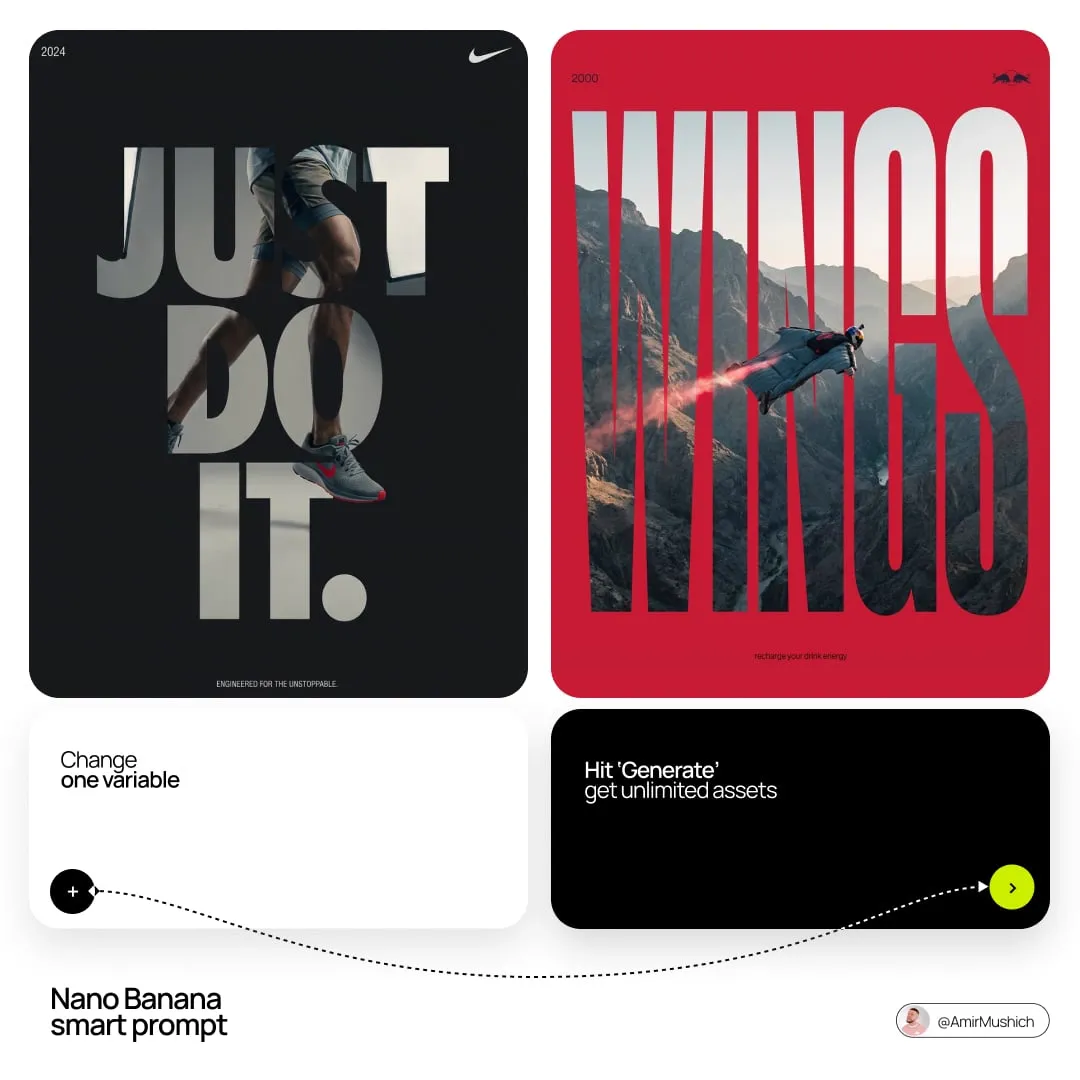
Change one variable per test. Hook type, opening frame, video length, caption style, sound choice. If you change four things at once and performance moves, you learn nothing.
A simple testing calendar keeps this honest: date, hypothesis, variable changed, result, next action. Six weeks of disciplined single-variable tests will teach you more about your audience than a year of intuition.
Reading the retention curve honestly
Open analytics and go straight to the curve. Note the timestamp of the steepest drop, then find that exact moment in your edit. Nine times out of ten you will find a slow line delivery, an unnecessary context sentence, or a visual that repeats information. Fix it in the next video and watch whether the curve flattens. This is the fastest feedback loop available in short-form content.
Designing an engagement loop
Reach gets you a viewer. A loop gets you a relationship. The loop has three moving parts: a response, a reason to return, and a role for the audience.
Respond to the ten best comments with video replies rather than text. Pin a comment that opens a question the next video answers. Turn recurring questions into a numbered series so viewers can binge. And give your audience something to do — vote on the next topic, submit a clip, answer a challenge. People return to places where they are expected, not just watched.
For a broader view of how these pieces connect, the Orelon blog collects workflow breakdowns that go deeper on individual steps.
Common Mistakes That Kill Otherwise Good Reels
- Chasing every trend. You end up with no visual identity, which means no reason to follow.
- AI footage with no narrative job. Beautiful shots that do not advance a promise feel like a showreel, not a story.
- Long intros. Every second before the hook is a second spent losing the audience.
- Ignoring the muted viewer. If the video only works with sound, most of your reach is invisible.
- Measuring likes. Likes are cheap. Shares, saves, and watch time are not.
- Posting once and moving on. A strong video deserves a second and third distribution attempt with a different hook.
- Never reading comments. Your audience writes your content calendar for free, and most creators never open the file.
FAQ
How many videos should I post per week to grow?
Three to five well-tested posts per platform beats fourteen careless ones, because each post needs enough observation time to produce usable data. If you can only sustain two per week, keep them single-variable tests rather than random experiments.
Does AI-generated footage hurt reach?
Feeds do not penalize AI footage as a category; they penalize content that viewers skip. Generated B-roll, environments, and transitions perform well when they serve the story. What underperforms is generic AI imagery with no narrative purpose or visible continuity between shots.
What is a good retention benchmark for a 30-second video?
Rather than chasing an absolute number, watch your own curve over time. If fewer than half of viewers reach the five-second mark, the hook is the problem. If the curve is flat until the final third and then drops, the payoff is the problem.
Should I post the same video on every platform?
Post the same idea, not the same file. Change the opening two seconds, the caption, and the cover frame per platform, and remove any visible watermark before uploading. That small amount of adaptation is usually worth more than a full re-edit.
How do I know when a trend is worth joining?
Two conditions: you can find at least three examples in your niche, and you can add a specific angle rather than repeating the format. If you only satisfy the first, you are adding noise. If you only satisfy the second, you are early, which is fine — just expect slower initial traction.
How long should a short-form video be?
As long as it stays interesting, and not one second longer. A dense 22-second video with 90 percent retention beats a padded 45-second video with 40 percent retention on almost every metric that matters.
Start Building Your Workflow in Orelon
The difference between creators who grow and creators who plateau is rarely talent. It is whether they have a system that turns observation into shots, shots into a tested edit, and an edit into a loop that brings people back.
Start with one video this week. Write a single-sentence promise, build a shot list, and generate the footage that would be too expensive or too slow to shoot — then cut it for retention and publish it as a hypothesis you intend to learn from. Open Orelon to generate your first cinematic sequence, and keep your workflow notes close by, because the second video is where the compounding begins.