
Compare AI video generators with short-form platform tools, learn prompt and editing workflows, and build a repeatable pipeline for cinematic clips.
Short-form video is the hardest test a generative model can face. You get three to sixty seconds to hold a viewer who is one thumb-flick away from leaving, and every weakness in a generated clip — a melting hand, a camera move that stutters, a face that changes between shots — shows up immediately at that scale. That pressure is exactly why short-form has become the proving ground for AI video, and why creators keep asking the same practical question: should I generate clips with a dedicated AI video tool, or lean on the editing and effects tooling built into the platform where I publish?
There is no single winner. There are trade-offs, and the right answer depends on whether you are optimizing for control, speed, consistency, or reach. This guide walks through how the modern AI video stack actually fits together, what to compare when you evaluate tools, and how to build a short-form pipeline that still works on your twentieth video, not just your first.
Why short-form became the proving ground for AI generation
Long-form video forgives. A viewer watching a ten-minute piece will tolerate a soft shot or an odd transition because they are already invested. Short-form does not forgive. The first two seconds decide everything, and the format rewards density: one idea, one visual hook, one clear payoff.
That constraint pushes generative video in a specific direction. Instead of asking a model for a coherent narrative, you ask it for a single striking moment — a drone push over a rain-slicked street, a slow-motion splash lit from behind, a character turning to camera under neon. These are exactly the kinds of shots where diffusion-based video models shine, because they are visually complex but narratively simple.
The second reason short-form matters is volume. A creator publishing daily needs 30 to 90 clips a month. That volume turns every inefficiency into a real cost: slow renders, inconsistent style between shots, awkward aspect ratios that need reframing. Tools are not judged on their best output. They are judged on their average output across a month of production.
The three layers of a modern AI video stack
Most confusion about "AI video tools" comes from mixing three different things into one comparison. Separate them and the decisions get much clearer.
Layer one: the generative model
This is the engine that turns a prompt, an image, or a reference clip into moving pixels. Capability here is measured in motion realism, temporal consistency, camera control, and how well the model respects a complex prompt. This layer is where quality differences are most visible and where the field moves fastest.
Layer two: the distribution platform
The platform decides format, length limits, aspect ratio, captions, audio behavior, and how your clip gets recommended to strangers. Platform-native creation tools are optimized for compliance with those rules — they produce something publishable and correctly sized with almost no friction.
Layer three: the creator workflow
The workflow is everything between the idea and the published post: prompt libraries, reference images, batch generation, editing, sound design, captioning, scheduling, and review. This is the layer you actually own, and it is where most of your quality advantage lives.
A tool can be excellent at layer one and useless at layer three. Conversely, a modest model inside a disciplined workflow will outperform a great model used randomly.
What actually matters when you compare AI video tools
Feature lists are mostly noise. Six criteria do the real work.
Shot control and camera language
Ask whether you can direct the camera rather than hope for it. Vocabulary like dolly in, crane up, handheld follow, whip pan, and rack focus should produce predictable results. If the model only understands "cinematic," you will spend your day rerolling instead of directing.
Character and scene consistency
For series content, consistency beats novelty. Look for reference-image conditioning, character locking, and style presets that carry across shots. A model that produces one gorgeous clip but cannot repeat the same face in shot two is a demo tool, not a production tool.
Duration, resolution, and aspect ratio
Most short-form work needs vertical 9:16, but you will also want 1:1 for some placements and 16:9 for a longer cut. Native aspect ratio support saves a generation pass. Clip length matters differently: some models do best at 5 seconds, others hold coherence closer to 10. Plan your edit around the model's sweet spot rather than fighting it.
Iteration speed and the cost of failure
The real metric is time from prompt to acceptable clip. If each attempt takes four minutes and you need six attempts, that is nearly half an hour per shot. Fast, cheap iteration changes your creative behavior — you experiment more, and experiments are where the good shots come from.
Motion physics and artifacts
Watch hands, feet, reflections, and anything with a countable structure. Also watch the camera itself: does a pan stay straight, or does the whole frame warp? Test with the same three prompts across tools so you compare like with like.
Audio and lip-sync behavior
If your format needs dialogue or a presenter, lip-sync fidelity and ambient audio generation move from nice-to-have to blocking issue. If your format is voiceover-driven, you can ignore it entirely and save yourself a lot of over-engineering.
Where platform-native tools win — and where they don't
Native creation tools inside a distribution platform are genuinely good at three things: correct formatting, zero export friction, and instant feedback loops through platform analytics. If your goal is to publish consistently with minimal overhead, starting inside the platform is rational.
They are weaker at authorship. You are working inside someone else's template, with limited control over camera, lighting, and continuity. Native tools also tend to be optimized for trends, which means your output looks like everyone else's output.
The practical split most successful creators land on: generate hero shots with a dedicated AI video generator, assemble and caption inside the platform, then use platform analytics to decide which visual style to double down on next week.
Build a short-form pipeline that survives scale
A pipeline is not a tool. It is a repeatable sequence that produces a publishable clip even on a low-energy Tuesday.
Step 1: Define the format before the model
Write down the fixed elements: aspect ratio, target duration, caption style, opening hook style, music bed, and closing card. Every variable you remove is a decision you do not have to make at 11 p.m.
Step 2: Build a prompt library, not a prompt
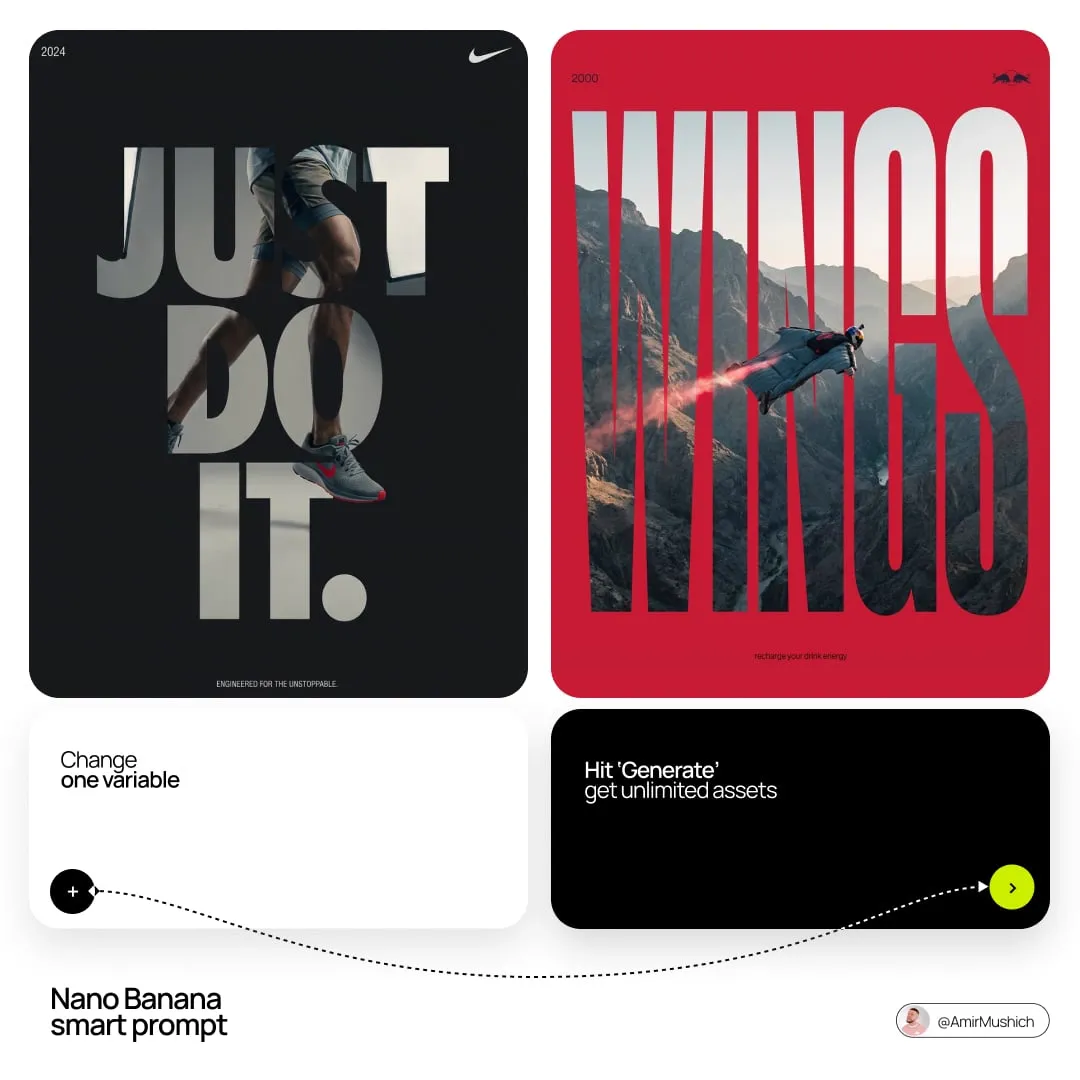
Good prompts are reusable assets. Keep a documented set with a consistent structure: subject, action, environment, lighting, lens, camera movement, and mood. For example: "A lone cyclist on a wet coastal road at dawn, low-angle tracking shot, anamorphic lens flare, cool blue palette, slow push forward." Save the winners, and organize them by visual family so a week of posts feels cohesive. A shared prompt library is one of the fastest ways to shorten the gap between idea and usable clip.
Step 3: Generate in batches, not one at a time
Batch three or four variations of each shot with small prompt changes — time of day, lens, palette. You are not looking for the perfect clip; you are looking for the best of four, which is a much easier problem. Batching also keeps your head in one creative mode instead of constantly switching contexts.
Step 4: Edit for rhythm, not for beauty
Short-form editing is about timing. Cut on movement, place your strongest visual in the first 1.5 seconds, and let the payoff land before the viewer's attention dips. Use a template as a structural skeleton, then replace the visuals with your generated footage so the pacing is already correct.
Step 5: Publish, measure, and feed the results back
Track retention at three seconds, completion rate, and shares. Styles that retain viewers should be expanded into a series; styles that do not should be retired quickly. Over a month, this loop turns guesswork into a visual signature.
What to build in-house versus what to adapt
If you work on a team, resist the urge to build a video generation model. Unless generation is your core product, that is a multi-year distraction.
Build these: a prompt and style library, an asset naming convention, a review checklist for artifacts, an approval flow, and a version history of published clips with performance data. Adapt everything else — generation, upscaling, captioning, scheduling — from tools that already solve it.
The one exception is a thin internal layer that wires tools together: a simple form that takes a brief, selects a prompt template, calls your generator, stores the output with metadata, and pushes approved clips to a review board. That layer is cheap to build and pays for itself in consistency.
The Orelon blog covers comparable workflow patterns if you want reference architectures before you commit engineering time.
Seven mistakes that flatten AI short-form output
- Prompting with adjectives only. "Beautiful cinematic amazing" gives the model nothing to direct. Describe subject, action, camera, and light.
- Ignoring the first second. If your best visual arrives at second six, most viewers never see it.
- Mixing visual styles in one clip. Ten seconds is too short to establish two worlds. Pick one palette and commit.
- Using the model's maximum clip length. Longer generations drift. Two clean five-second shots cut together usually beat one drifting ten-second shot.
- Skipping sound design. Generated visuals feel cheap without a real audio bed. Layered ambience and a tight music edit do more for perceived quality than another generation pass.
- Never testing other models. Model strengths differ by subject: one handles human motion better, another handles landscapes and water. Keep two tools available and route shots to the right one.
- Publishing without a hook preview. Watch your clip muted on a phone at arm's length. If it does not read there, it does not read anywhere.
A worked example: a 30-second cinematic short
Say you want a moody night-city piece for a music track. Here is a pipeline that takes roughly 45 minutes end to end.
Write six shots on paper: a wide establishing skyline, a street-level tracking shot, a close-up of rain hitting a neon sign, a silhouette walking away from camera, a slow-motion splash, and a final wide pull-back. Generate four variations of each at five seconds, vertical. That is 24 clips.
Select the best six. Cut to the music on beat, placing the neon sign close-up at second two and the splash as the drop lands. Add three audio layers: rain ambience, distant traffic, and the music bed. Add captions only where the track has vocals. Export, then watch it muted on a phone before publishing.
The quality of that final piece comes from the selection step, not the generation step. Models produce options; editors produce films. If you want to see how far a single cinematic idea can be pushed, browsing Seedance examples is a useful calibration exercise for what current motion quality looks like.
FAQ
Do I need a separate AI video tool if my platform already has creation features?
Not strictly, but most creators eventually want shot-level control the platform does not expose. A reasonable path is to start native, then add a dedicated generator once you hit a specific limitation — camera moves, consistency, or aspect ratios.
How long should AI-generated short-form clips be?
Five to eight seconds per generated shot is the practical sweet spot for most models. Build 20 to 40 second pieces from four to six shots rather than trying to generate one long continuous clip.
Why does my character change appearance between shots?
Temporal consistency is a model-level constraint, not a prompt bug. Use reference-image conditioning, keep the character description identical across prompts, and avoid changing lighting between shots of the same person.
Is vertical-only a mistake?
For reach, vertical first is usually correct. Keep a 16:9 master of your strongest shots so you can repurpose them later into longer edits without regenerating.
How do I keep a series visually consistent week to week?
Fix four variables permanently: palette, lens character, camera height, and transition style. Vary only subject and location. Consistency in series content comes from constraints, not from better prompts.
Should I automate generation?
Automate batching and asset storage; keep selection and editing human. Taste is the part of the pipeline that is actually scarce, and automating it away flattens your work into the same output everyone else is publishing.
Turn your next idea into motion
Short-form rewards speed, but it rewards a visual signature even more. The creators who win with AI video are not the ones with the most tools — they are the ones with a documented prompt library, a fixed format, a fast selection step, and the discipline to cut the first second properly.
If you are ready to stop comparing and start producing, Orelon is built for cinematic ideas in motion: generate vertical hero shots with real camera direction, refine them in a repeatable workflow, and publish something that does not look like an AI demo. Start with a single 30-second piece this week, and let the retention numbers tell you which visual style deserves to become your series.