
A practical AI workflow for YouTube Shorts: hook design, vertical shot prompting, pacing, captions, quality control, and a repeatable publishing system.
Short-form video is unforgiving. A Short lives or dies in the first second, gets judged by a swipe, and is then replayed, remixed, and pushed into feeds where the audience may never learn who made it. That makes editing decisions — framing, pace, first frame, loop point, captions — do more work than the camera ever will. AI has become genuinely useful here, not because it replaces editing judgment, but because it removes the friction between an idea and a usable vertical clip: generating footage you could never shoot, turning a static shot into motion, cutting around a beat grid, and producing variants at a speed a small team cannot match.
This guide is a working method for building Shorts with AI assistance, from premise to publish. It covers what AI is good at, where it fails, how to prompt vertical cinematic shots, how to pace cuts, how to handle sound and captions, and how to run the whole thing as a series instead of a one-off upload.
Why Shorts Behaves Differently From Long-Form Video
Long-form video earns attention; short-form video survives interruption. Your clip appears mid-scroll, usually with sound off, competing against a dozen other clips in the same ten seconds. The viewer's default action is not "watch" but "keep swiping," and every element that does not immediately justify itself is a reason to leave.
That changes the job description. A long-form edit asks, "Is this section interesting?" A Shorts edit asks, "Is there any moment in the next 500 milliseconds that makes stopping feel worth it?" Framing, subject motion, and on-screen text carry more weight than narrative setup, because setup is exactly what gets swiped past.
Two metrics shape everything: how long viewers stay, and whether they loop back. Looping is the quiet advantage of short-form. A 12-second clip that loops cleanly can produce more watch time than a 40-second clip that drags at the end. That is why successful Shorts often have no ending at all — they end on the same beat they started on, so the rewatch feels seamless rather than repetitive.
The retention curve is your real editing teacher
If you publish on YouTube, open the retention graph for every upload. The shape tells you exactly where the edit failed. A cliff in the first two seconds means the hook was weak or the first frame was ambiguous. A slow bleed from second four onward means pacing was flat. A spike near the end usually means people replayed a specific moment — clip that moment and build the next Short around it. You can find retention reporting inside your channel analytics through Google's YouTube help resources.
What AI Should (and Shouldn't) Handle
AI is strongest where the work is generative, repetitive, or search-based. It is weakest where taste and timing decide the outcome. Draw the line deliberately:
- Generating missing footage. Atmospheric B-roll, establishing shots, product-in-context scenes, stylized transitions, and impossible camera moves.
- Turning stills into motion. Animating a photo, packaging shot, or illustration into a 3–5 second vertical beat.
- Producing variants. Three different openings, three color treatments, three caption styles — decided by data, not by arguing.
- Transcription and captions. Fast, accurate, and easy to style.
- Beat and silence detection. Finding the cuts that sync to music or trimming dead air before a line lands.
- Idea expansion. Turning one premise into fifteen shot descriptions you can actually film or generate.
What AI should not decide: the final hook, the order of the payoff, the brand's voice, and whether a shot is emotionally right. Those are editorial calls. A model can hand you twelve plausible openings; it cannot know that the third one sounds like your channel.
The practical rule: use AI to build a surplus of options, then edit like an editor. The bottleneck in short-form is rarely footage — it is deciding quickly and committing.
The Hook: Designing the First Two Seconds
Treat the opening as a separate deliverable. Write it, shoot it, generate it, and test it as its own asset before you build the rest of the clip.
Strong Shorts hooks generally fall into three families. Visual hooks show something unexplained: a result before the process, a strange object in frame, motion that starts mid-action. Verbal hooks open with a claim, a contradiction, or a question the viewer cannot answer alone. Text hooks place four to seven words on screen in the first frame, readable at a glance.
The strongest openings combine two. A clip that starts mid-pour with the text "this took 40 tries" needs no introduction and no face.
A few rules that survive testing:
- Never open on a logo, a title card, or a slow fade. Those are retention killers.
- Start mid-motion. Motion implies a story already in progress.
- Avoid explaining what the video is about. Show the thing instead.
- If a talking-head opening is unavoidable, cut the first word of the sentence so the clip begins mid-phrase.
A Repeatable Workflow, Step by Step
The value of a workflow is not speed on one video — it is consistency across thirty. Here is a sequence that holds up.
1. Lock the premise and the payoff
Write one sentence: "At the end, the viewer will see ___ and feel ___." If you cannot fill both blanks, you have a topic, not a Short. The payoff determines how long the clip should be and how many beats it needs.
2. Build a beat sheet, not a script
List 5–8 beats with an approximate duration for each. Most Shorts work at 8–20 seconds with 3–5 visual beats. Keep the sheet on one screen so you can see the whole arc at once.
3. Generate vertical shots from prompts
Work in 9:16 from the first generation, not as a crop afterward. Cropping horizontal footage loses composition, crops faces, and forces awkward re-framing. Use the AI video generator for motion shots and the AI image generator when you need a clean still to animate or use as an opening frame.
4. Assemble on a music or rhythm grid
Drop your shots on a timeline over a track you can cut to. Even a rough grid enforces pace and prevents the classic failure of holding a shot one second too long.
5. Add captions and on-screen text
Style captions once, then reuse the preset. Keep them in the middle band of the frame, away from the bottom UI zone and the top of the screen.
6. Quality control pass
Watch once with sound, once muted, and once at arm's length on a phone. Each pass catches different problems.
7. Export and publish with intent
The first line of your caption is a hook too. Write it before you upload, not after.
8. Read the data, then rebuild
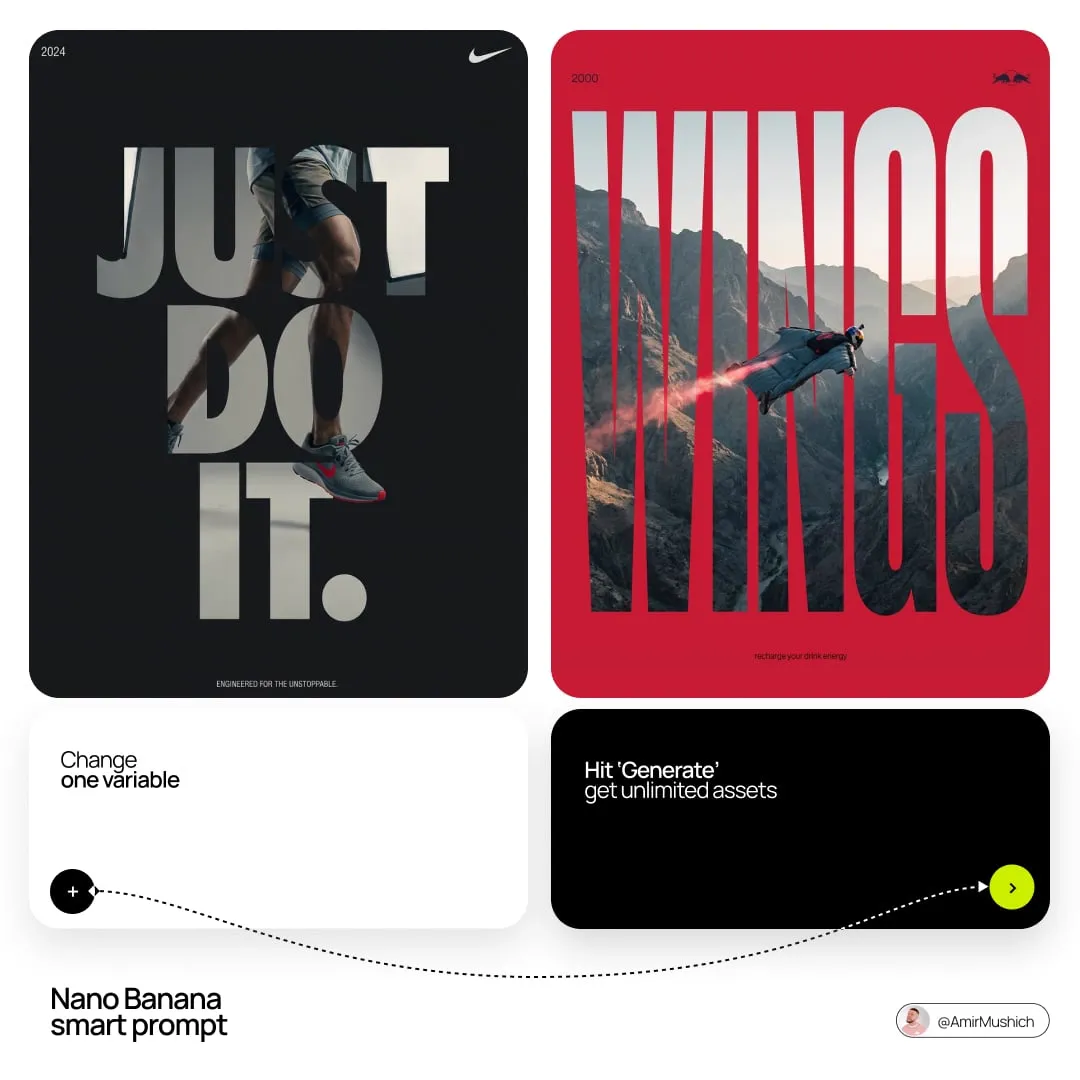
Identify the exact second where viewers left, then change only that part in the next upload. Iterating on one variable at a time is how channels find their format.
Prompting Vertical Shots That Look Cinematic
A prompt that produces a usable vertical shot contains five things: subject, action, environment, camera, and light. Add duration and pace when the model supports it.
Template: [subject with one defining detail], [single action in progress], [environment with time of day], [camera position and movement], [lighting quality], [duration or tempo]
Three examples that behave well in practice:
Close-up of a barista's hands pouring milk into a ceramic cup, steam rising, morning light through a window behind, slow vertical push-in, warm highlights, 4 seconds.
Lone figure in a raincoat walking away from camera on a wet neon street at night, reflections on asphalt, handheld follow from behind, cool blue with magenta neon accents, 6 seconds.
Overhead shot of a smartphone on a desk with notifications glowing, camera slowly rotating clockwise, soft desk lamp light, shallow depth of field, 3 seconds.
Common prompt mistakes: describing three subjects in one shot, using "cinematic" as the only style instruction, asking for contradictory camera moves (push in and pull out), and forgetting vertical framing language entirely. If a shot keeps failing, simplify to one subject and one action, then add detail back one element at a time. Reusable starting points for both images and motion live in the prompt library.
Pacing, Cuts, and the Loop Point
Short-form pacing lives between 1.5 and 2.5 seconds per shot for most content, with faster cutting at the hook and slower cutting near the payoff so the viewer can register the result. Before you refine anything else, cut the first two seconds down until the clip starts at full energy.
Cut types worth using deliberately:
- Match cut — end one shot on a shape or movement and begin the next on the same shape.
- Whip transition — a fast pan or blur hiding a scene change.
- Jump cut — removing the pause in a talking-head delivery to tighten rhythm.
- Hard cut on the beat — the cheapest, most reliable option when the music is strong.
Then design the loop. The cleanest loops return to the opening image or finish the sentence that began the clip. Avoid end cards, "follow for more" frames, and fades — they break the loop and cost you a rewatch.
Sound, Captions, and On-Screen Text
Assume the first viewing is muted. That means captions are not accessibility decoration; they are the primary script. Burn them in or use platform captions, but verify line breaks on an actual phone — auto-captions frequently break in the middle of a phrase or place words under the interface.
For music, choose the track before the edit if the rhythm matters, and after the edit if the visuals lead. Keep sound effects small and purposeful: whooshes and impacts are useful once, fatiguing six times. If you use voiceover, record after picture lock so the read matches the cut, and leave a beat of silence before the payoff line.
Text overlays should be short, high contrast, and larger than feels comfortable on a desktop monitor. Two to five words per frame is a good ceiling for vertical video.
Quality Control: Mistakes That Quietly Kill Retention
- Opening on a logo, title, or black frame.
- Holding the first shot longer than two seconds before something changes.
- Cropping horizontal footage instead of generating vertical from the start.
- Captions placed under the platform's interface elements.
- Reusing the same transition six times because it worked once.
- A payoff that arrives after the viewer already guessed it.
- Audio that clips, or music that masks the spoken line.
- Ending on a fade or a call to action that interrupts the loop.
- Inconsistent character appearance between generated shots — fix this by keeping a reference image and reusing the same character description.
- A caption that repeats the on-screen text instead of adding to it.
Run the checklist as a literal list before publishing. Most of these cost nothing to fix and cost a lot to ignore.
Choosing Your Stack Without Locking Yourself In
You need three capabilities: generation, editing, and captioning. Some tools bundle all three; some specialize. When comparing options, judge them on vertical-native output, character consistency across shots, how quickly you can iterate on a single shot, and how well the export matches your editing software.
Template-driven workflows are the fastest way to start, especially if you plan to publish frequently. Prebuilt video templates give you pacing, caption style, and framing conventions you can adapt instead of inventing. If you are weighing alternatives, comparison pages such as Orelon vs Runway help you map features to your actual production volume rather than to a feature list.
Running This as a Series, Not a One-Off
One good Short is luck; ten consistent Shorts is a format. Build a small library: five reusable opening frames, three caption presets, four music beds, and a naming convention that tells you the hook type at a glance. Batch production — write five beat sheets in one sitting, generate all shots in another, edit in a third — because switching between creative modes is where most of the wasted time lives. Keep a running document of hooks that worked and hooks that did not, with the retention number beside each.
FAQ
How long should a YouTube Short be?
Most successful Shorts land between 10 and 30 seconds, but length should follow the payoff. If the result lands at eight seconds, end at eight seconds. Padding to reach a target length is the most common reason a clip loses viewers before the end.
Can AI generate an entire Short without editing?
It can generate the shots, but pacing, hook selection, and the loop point are editorial decisions. Treat AI output as raw footage. The gap between generated clips and a finished Short is the same gap that exists between filmed footage and a finished edit.
How do I keep characters consistent across generated shots?
Use one reference image, keep the character description identical in every prompt, and change only the environment, action, and camera. If a model drifts, reduce the scene complexity rather than rewriting the character.
Should I generate in vertical or crop later?
Generate in 9:16. Cropping horizontal footage loses composition and usually cuts exactly the part of the frame that made the shot interesting.
How many versions should I produce per idea?
Two or three openings, tested against the same body. Multiple full edits multiply work without teaching you much; varying only the hook isolates the variable that matters most.
Do AI-generated Shorts perform worse with audiences?
Audiences respond to clarity and pacing, not to origin. Generated footage that supports a clear promise performs like any other footage. Generated footage used as a substitute for a premise does not.
Make the Next One Better Than the Last
Shorts rewards iteration more than production value. Build the premise, generate vertical shots, cut on the beat, caption for muted viewing, and design a loop that earns a rewatch — then read the retention curve and change one thing. That cycle, repeated weekly, beats any single tool.
Start with a single 10-second test: one hook, four generated shots, one loop point. You can generate the first shot in Orelon and keep the results on your Orelon blog reading list for workflow ideas as your series grows. Cinematic ideas in motion are only useful if they ship — so pick a premise today and publish it before the week ends.