

Balance relentless posting with real recovery: a practical system for batching, AI-assisted production, and healthier creator boundaries that last.
Every creator eventually meets the same wall. You take five days off, come back, and the numbers look like a stranger's account: reach down, replies unanswered, a soft suspicion that the platform has quietly filed you away. So you post through the holiday, through the flu, through the blank days — and the work gets flatter, the hooks get lazier, and something you loved starts to feel like a shift you cannot clock out of.
That is the real tension behind the detox-versus-engagement debate. It is not primarily a wellness argument. It is a production-design problem: how do you keep publishing while the person behind the account recovers? The useful answer is rarely "post less" or "post more." It is to separate publishing from producing, so a gap in your calendar never becomes a gap in your feed.
The real conflict is stamina, not frequency
Most creators frame the choice as engagement or health, as if the two sat on opposite ends of a seesaw. In practice, both collapse for the same reason: you are producing at the speed of publishing. When every upload is made in the same week it goes live, your output is capped by your energy on any given Tuesday. That is why a single bad week — a cold, a family emergency, a flat creative day — shows up immediately as silence.
Frequency itself is not the enemy. Plenty of creators publish daily for years without burning out, because their production runs weeks ahead of their publishing. The cost comes from the coupling: the tighter the loop between "I need a video" and "the video is due," the more your nervous system treats every post as a deadline.
A simple test tells you which side you are on. Open your last ten published pieces and ask, for each one, how many days passed between the idea and the upload. If the median is under 48 hours, you are publishing live from your nervous system. That works in bursts and fails over seasons.
The second thing worth naming: engagement is a different job from creation. Replying to comments, watching trends, and studying competitors are research and community work — legitimate, valuable, and completely incompatible with deep production if you do them in the same hours. Most detox advice fails because it asks people to quit the entire category at once instead of splitting the two jobs apart.
Why always-on posting quietly erodes craft
The velocity trap in plain numbers
Suppose you publish four short videos a week. If each one takes a script pass, a shoot or generation session, an edit, a caption, and a thumbnail, you are looking at roughly three hours per piece once context-switching is included — twelve hours weekly, before comments and messages. Now compress that into four separate days and add a trending sound with a 24-hour window. The system rewards speed over selection, so you start shipping the third-best idea instead of waiting a day for the good one.
That is how feeds fill up with competent, forgettable work. The craft problem is not a talent problem; it is a queue problem.
The authenticity tax
There is a second, subtler cost. When you post from inside the feed, your ideas begin to look like the feed. You absorb the current format, the current hook style, the current pacing, and your output converges on the median. Breaks do more than rest people — they reintroduce input that is not other creators' output: a walk, a museum, a long conversation, a bad film you cannot stop thinking about. Those are the raw materials that make a channel feel like a person instead of a trend aggregator.
This is why creators often report their best-performing piece arriving right after a week offline. Nothing mystical happened. They simply had a new reference point.
The false choice between presence and absence
The trap is believing presence means real-time. Audiences rarely care whether you answered within the hour. They care whether the next thing you publish is worth their attention. A creator who publishes reliably and replies in batches on two fixed days a week feels more present than one who is technically online eighteen hours a day and visibly running on fumes.
Design the cadence before you design the content
Cadence is a capacity decision, not a motivation decision. Set it from the number of sustainable production hours you actually have, then protect it.
A three-tier rhythm that survives real life
A rhythm that holds up in practice has three layers:
- Core cadence — the volume you can maintain for six months on a normal week, at roughly 70% of your energy. If that is two videos a week, the core is two.
- Surge capacity — one to two extra pieces per month, produced in a single longer session. This is where launches and experiments live.
- Quiet protocol — what publishes automatically when you are offline. This is your buffer, covered below.
Add a hard rule: any new format must replace an existing slot for its first month. Growth-minded creators usually break their own systems by adding rather than swapping.
The recovery block is a production block
Schedule time off the way you schedule shoots, with dates and a pre-brief. Two things must be true before you leave: the buffer covers the entire absence plus three days, and the community layer has an explicit owner or an explicit pause notice. Vague intentions ("I'll post less next week") fail because they leave the decision to the least resourced version of you.
A useful pre-break checklist:
- Buffer filled to the end of the break plus three days.
- Pinned comment or a single story frame explaining the pause and the return date.
- Comment window closed publicly, not just mentally.
- One page of notes on what you want to think about while away — otherwise the break becomes scrolling.
Build a buffer that survives a break
The buffer is the entire mechanism. Without it, every detox is a withdrawal followed by a panic sprint.
Start with the four-week stack
A four-week buffer sounds ambitious; it is mostly a scheduling trick. Pick one week per month as a production week and make the other three publishing weeks. In a production week, batch the pieces that share a look: same set, same outfit, same lighting setup, same visual style. Shoot or generate the core assets in one or two long sessions, then edit across the following days while the material is fresh.
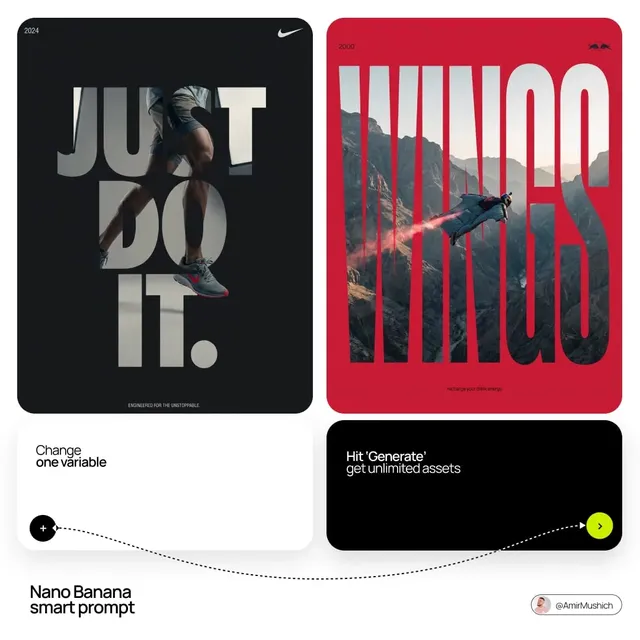
For AI-assisted work, the batch logic is even cheaper: one locked prompt template with variable subjects can yield a coherent series in a single sitting. Working from a shared prompt library keeps style consistent across that batch, which is exactly what a binge-watching audience rewards.
Reuse architecture: one session, many pieces
Before you produce anything new, map what already exists. A single long-form video usually contains four short vertical cuts, two quote cards, three still frames, and one behind-the-scenes clip. Build that map as a spreadsheet with columns for source asset, derivative, platform, and publish slot. Creators who maintain this map can fill a two-week absence without generating a single new idea.
Templates help here for a boring reason: they remove decision fatigue at the exact moment you have least of it. A starting point like Orelon's video templates narrows the first twenty minutes of a session from infinite to three options, and those twenty minutes are usually where a batch day dies.
Where AI genuinely reduces pressure — and where it doesn't
Pre-visualization: the cheapest place to be wrong
The heaviest part of production is deciding what you are making. Generating rough frames or short motion tests before committing to a shoot lets you kill weak concepts in minutes rather than on set. Image tools are most valuable in this pre-visualization stage — storyboards, lighting studies, thumbnail variants — because a rejected still costs you nothing emotionally. If you are sketching a look, the AI image generator is a drafting table, not a delivery mechanism.
Iteration without emotional cost
The emotional cost of reshooting is real: you rebook, you reset, you apologize. Generating variations instead of reshooting changes the psychology of a session. You can try the same shot three ways and choose the best one after lunch, which is closer to how editors work than how film sets traditionally work.
That said, generation is not a substitute for a point of view. If you cannot describe what the shot should feel like in one sentence, more variants will not help — they will just delay the decision.
What to keep manual
Keep these human, deliberately:
- The idea and the argument. What the piece says is your competitive advantage.
- Selection. Choosing among twenty options is taste, and taste is the asset.
- Community replies. A templated reply is worse than no reply. Batch them, but write them yourself.
- Final sound and pacing decisions. Rhythm is where audiences feel craft.
A practical division of labour: AI handles breadth (variants, formats, crops, versions), you handle depth (thesis, tone, the one moment people remember).
Two worked examples
A solo explainer channel publishing twice a week. This creator has a day job and about nine usable hours weekly. The core cadence is two four-minute explainers. One Saturday session generates every visual with a locked prompt template and records both voice tracks back to back; Sunday edits both pieces while the material is fresh. Publishing weeks cost about ninety minutes total: captions, thumbnails, scheduling. The buffer target is twenty-one days, which means a five-day absence is a non-event. One extra slot per month is reserved for a surge experiment, and it must replace a regular episode for its first month. The result is the same output with the panic removed, and a comment block confined to two evenings.
A two-person studio publishing one long-form and eight shorts a month. They discovered shorts were consuming roughly 60% of production time because each was built from scratch. Now all eight derive from the long-form shoot plus one generated B-roll batch. Editing is templated: same opening frame, same subtitle style, three transitions, two caption formats. Their buffer runs four weeks, so when one person takes a break the other can publish without opening a timeline. Their single rule: no new format in a month that includes a planned absence. Both examples share the same mechanic — the buffer, not willpower, is what makes the break safe.
A practical offline-week workflow, step by step
Here is the sequence that has held up across different channel sizes.
Ten days out. Decide the exact dates offline and write them down. Choose the pieces that will publish during the gap: two evergreen, one timely, one community-facing.
Eight days out. Lock the buffer to the end of the break plus three days. If you cannot fill it, cut the core cadence for that period rather than cancel the break. A visible, explained dip is cheaper than a silent disappearance.
Six days out. Produce the batch. One session for assets, one for edits, one for captions and thumbnails. Do not start new formats.
Four days out. Schedule everything, including the return post, which should be the strongest piece in the buffer — that is what converts returning attention into retained attention.
Two days out. Write the pause note, set the auto-reply, mute notifications for the apps you cannot avoid, and uninstall nothing. Dramatic deletions rarely last; quiet boundaries do.
During the break. One fifteen-minute check every three days, on desktop, to confirm scheduled posts went live. Then close the laptop. If you must browse, browse outside your own niche.
Return day. Publish the strong piece, reply to comments in a single forty-five-minute block, and resist the urge to explain the absence at length. Audiences move on quickly; a two-line note is plenty.
Boundaries that hold when motivation doesn't
Willpower is the weakest tool in this system, so make the environment do the work.
Set two reply windows per day, thirty minutes each, and treat them as appointments. Turn off push notifications for everything except direct messages from collaborators. Move the apps off your home screen, or log out on mobile and stay logged in only on a desktop in a shared room — friction is more reliable than discipline. Keep a do-not-open list of three accounts that reliably make you feel behind; checking them once a week is enough to stay informed.
Also decide your public promise. Something like "new videos Tuesday and Friday; replies on Wednesday and Sunday" is legible, sets expectations, and gives you permission to be absent without guilt. Creators who never state a schedule end up apologizing for every gap.
Measuring whether the balance is actually working
Track leading indicators, not just reach. Four metrics tell you more than follower count:
- Buffer depth in days. Anything under five is a warning.
- Median idea-to-publish lag. Under 48 hours means you are still publishing live.
- Output per production hour. If it falls while you feel busier, your process is leaking.
- Save and comment quality. Fewer, sharper comments usually mean the work improved even when reach dipped.
Review these monthly, not daily. Daily review is the behaviour you are trying to quit.
Common mistakes that turn a break into a setback
- Emptying the buffer to stay relevant. You trade a small dip now for a large one later.
- Doing a total blackout with no plan. The rebound is a doom-scroll, not a reset.
- Producing during the break just a little. Half-work is the most expensive kind.
- Returning with an apology instead of a strong piece. Lead with the work.
- Letting a batch session become a marathon. Four focused hours beat twelve unfocused ones; decision quality drops sharply after that.
- Automating replies. Audiences detect it instantly, and it costs more trust than the time it saves.
FAQ
How long should a detox be? Short and repeated beats long and rare. Three to five days quarterly, plus one full week twice a year, works better than a month-long absence once. The buffer requirement — break plus three days — matters more than the length.
Won't my reach drop permanently if I go quiet? Shorter gaps rarely cause lasting damage when your publishing cadence resumes cleanly. What hurts is the pattern of disappearing and returning without a strong piece. A scheduled post during your absence prevents most of the drop.
Can I stay in the comments while taking a production break? Yes, if the break is about production rather than attention. Many creators find a community-only week restorative because it returns them to conversation without the pressure to ship. The reverse — producing but avoiding comments — is the combination that feels worst.
How do I explain the pause to my audience? One sentence, the return date, and no apology. "Back on the 14th with two new episodes" is complete. Long explanations make the audience manage your feelings, which is not their job.
Does using AI generation count as time off? Only if someone else drives it. A batch session that produces a month of material is work, and that is fine — it is the work that buys the break. What does not count is spending the break tweaking prompts.
What if I have no buffer and need rest now? Reduce cadence openly for two weeks, publish one strong piece instead of five weak ones, and rebuild the buffer the week you return. A temporary, announced lower frequency costs far less than a collapse that looks like quitting.
How do I stop the break from becoming a new kind of work? Give the time a job that is not content: reading, walking, learning a skill with no output attached. Absence with a purpose stays restorative; absence with a vague intention turns into low-grade anxiety about the feed.
Making the camera work for you
A detox is not the opposite of engagement. It is the maintenance that makes sustained engagement possible. The creators who last are not the ones who never rest; they are the ones whose systems keep publishing while they do.
Orelon is built for that kind of workflow — cinematic ideas in motion, produced in batches rather than panics. Start with the AI video generator, plan a week of assets in one session, and keep a buffer between your energy and your feed. Then take the break. Your channel will survive it, and your next idea will be better for it.