

A practical workflow for adapting short stories into cinematic AI video while keeping every cut consistent, review-safe, and on brand across platforms.
Most creators discover the limits of a distribution platform the hard way. They publish something they are proud of, and a warning banner appears where the view count should be. The story was fine. The edit was fine. What tripped the review system was a four-frame shot, a caption read out of context, or a music bed that resembled something a rights holder protects.
That experience pushes people in one of two directions. They either water down the work until it means nothing, or they blame the algorithm and repeat the same mistake on the next upload. There is a third path, and it is the one professional adaptation teams take: treat moderation the way a screenwriter treats a runtime limit. Constraints are not the enemy of storytelling. Vague, unexamined constraints are.
This guide is about adapting short fiction into cinematic AI video, and about keeping that work publishable across platforms whose rules change faster than any calendar can track. It covers sourcing, shot design, prompt discipline, review-proofing, and the decision criteria that separate a series that compounds from one that keeps restarting.
Why literary adaptation keeps colliding with platform rules
Platforms are not literary journals, and their review systems were never built to evaluate nuance. Automated classifiers scan frames, audio, captions, thumbnails, and metadata at a scale no human team could match. Humans then handle the ambiguous cases, usually in seconds, usually without any of the story's context. The result is predictable: content that is subtle in the way literature is subtle gets read as content that is unclear, and unclear content resolves toward the cautious answer.
Three structural tensions show up again and again.
Compression versus nuance
Short-form video rewards a hook in the first second and a payoff inside a minute. Literary fiction often builds meaning slowly, through implication, through what a character refuses to say. Compress that into nine seconds of screen time and the implication frequently disappears, leaving behind something that looks like a threat, a crisis, or a depiction of harm. The fix is not to simplify the story. It is to decide which single idea each shot carries, and to make that idea legible in one glance.
Ambiguity versus classification
Ambiguity is exactly where automated review struggles. If your opening shot is intentionally unclear, whether that means a figure in shadow or a hand near an unopened drawer, the classifier has to guess, and guessing tends to resolve toward removal. Deliberate ambiguity belongs in your writing. On screen, it needs a visual anchor that tells a reviewer what they are looking at, even if the character does not know.
Volume versus consistency
A series needs a recognizable look across episodes. Generative tools default to variety unless you constrain them, so consistency has to be engineered: fixed subject descriptions, fixed lens language, fixed lighting. Creators who skip this step end up with ten episodes that look like ten different channels, and viewers have no reason to return.
Understanding those tensions is the difference between a channel that compounds and one that keeps restarting from zero.
What AI video actually changes for short fiction
The interesting shift is not that a model can write your story. It is that the cost of a first draft in motion has collapsed. Storyboarding, blocking, lighting tests, and iteration now happen in an afternoon rather than a production cycle. That changes how many ideas you can afford to test, and how quickly you can abandon the ones that are not working.
From page to shot list
A 900-word story might become twelve shots or three. The translation layer is a shot list that carries one visual idea per line:
- Wide: rain on an empty bus shelter, neon bleeding across wet asphalt.
- Medium: a character's hands, a torn ticket between two fingers.
- Close: eyes held a beat too long.
- Insert: the ticket slipping into a drain.
Everything else, including interiority, backstory, and theme, either becomes an image or gets cut. That sounds brutal because it is. It is also the fastest way to learn which parts of your writing were actually carrying the story and which were scaffolding.
Where current models still struggle
Consistency remains the persistent problem. Faces drift between shots, jackets change color, rooms rearrange themselves between cuts. Long dialogue scenes with multiple speakers are still fragile, and fast, physically precise action breaks down quickly. Skilled adapters design around those limits instead of fighting them: fewer characters, one or two locations, strong silhouettes, motion that reads in a single beat.
If you want a concrete sense of how far character-driven generation has come, browsing Seedance 2.5 examples is a fast way to calibrate expectations before you commit to a look for a whole series.
Vertical framing adds its own constraints. A narrow frame leaves little room for wide establishing shots, so the environment has to be communicated through detail: a reflection, a doorway, a strip of streetlight on a wall. Sound carries the rest, which is why an opening texture such as rain, a distant train, or a quiet room tone does more for a short adaptation than a crowded first frame ever will.
Iteration as a writing tool
The most underrated benefit is editorial. When a scene takes twenty minutes to produce, you can test whether an ending lands before you rewrite the story around it. You can shoot two versions of a confrontation, one explicit and one implied, and see which one holds attention. Very few writers ever get that kind of feedback loop, and it quietly changes how you draft.
Sourcing stories you have the right to adapt
Rights questions arrive earlier than most creators expect, and they are simpler than they look.
Start with public domain. In the United States, works published long enough ago are free to adapt. In much of Europe and elsewhere, protection generally runs for the author's life plus seventy years. Folk tales, myths, and oral traditions are usually open, though specific modern retellings are not.
If a story is still protected, write to the rights holder before you generate anything. Ask for permission to produce one adaptation for social distribution, explain the scope, and offer to include a title card naming the author and the original work. Most independent authors say yes to a well-written request, especially when the adaptation links back to their book and when you agree on limits in advance.
If you commission a writer, put three things in writing: the scope of the license, the length of exclusivity, and how the adaptation may be edited later. The last one matters most. A script that cannot be trimmed becomes a script you cannot publish when a reviewer objects to a single shot.
Anthologies of public domain work are a strong starting point for exactly this reason. You can build a series around a theme such as trains, letters, or last conversations, and pull stories from different authors without negotiating a single license. The shared visual style then does the work that a single author's voice would otherwise do.
Finally, consider writing your own source material. A 700-word story you control end to end removes an entire category of risk, and it gives you something no template can: a voice that belongs to your channel.
A repeatable workflow from short story to publishable video
The workflow below is deliberately boring. Boring processes survive deadlines, creative slumps, and the week when everything goes wrong.
Step 1: reduce the story to a visual spine
Write one sentence per beat: setup, turn, consequence. Five to seven beats is a good target for a 45 to 60 second piece. Anything you cannot see or hear gets demoted to a caption or dropped. Keep those sentences in a single document that becomes your source of truth for the episode.
Step 2: lock characters and locations once
Generate reference stills before generating any video. Two characters maximum for a first series, one or two locations. Keep a folder containing a front-facing character image, a three-quarter image, a wide location plate, and a color reference. An AI image generator is enough at this stage, because you are building a casting sheet, not a finished frame.
Step 3: build the shot list with runtime discipline
Assign each shot a duration and add them up before generating anything. A common failure mode is a beautiful 90-second cut that has to be chopped to 40 seconds, which destroys the pacing you designed and usually the ending too. If the total runs long, cut beats rather than frames. A beat you remove is a decision; a frame you remove is a scar.
Step 4: generate in passes
Generate three variants per shot, choose one, move on. Do not generate thirty and then choose. Selection fatigue is real, and it turns a two-hour session into a two-week stall. Name files as you go: episode number, beat number, variant letter. Future you will be grateful.
Step 5: solve sound before polish
Vertical video is watched with sound on for the first three seconds and then frequently muted. Design for both realities: a strong opening texture, intelligible dialogue if you have any, and burned-in captions that carry the story on mute. Caption text is reviewed by platforms too, so write it as carefully as you write dialogue.
Step 6: review the compressed version
Upload as private first, watch on a phone, and read the auto-generated transcript. Auto-captions are frequently what triggers a misclassification, because a mangled word can look like something it is not. Fix the transcript, check the first frame as a thumbnail, and only then publish.
Step 7: archive the project folder
Keep prompts, reference stills, and the final cut together. When you want a second season, or when a platform change forces a re-cut, you will not be rebuilding from memory.
Reusable video templates help here. If frame layout, safe areas, and caption style are already fixed, you only change content between episodes instead of rebuilding the format every time.
Prompt patterns that hold a series together
Consistency comes from repeating structure, not from hoping.
[SHOT TYPE] + [SUBJECT with fixed descriptors] + [ACTION] + [LOCATION] + [LIGHT] + [LENS/FORMAT] + [MOOD] + [NEGATIVE]

Wide, woman in her 30s, cropped dark hair, olive raincoat, standing still, empty bus shelter at night, sodium streetlight and neon spill, 35mm, shallow depth of field, quiet dread.
Negative: text overlays, extra limbs, fast camera moves
Three rules make this work:
- Never change the subject descriptors. Copy and paste them. Cropped dark hair, olive raincoat, every single time.
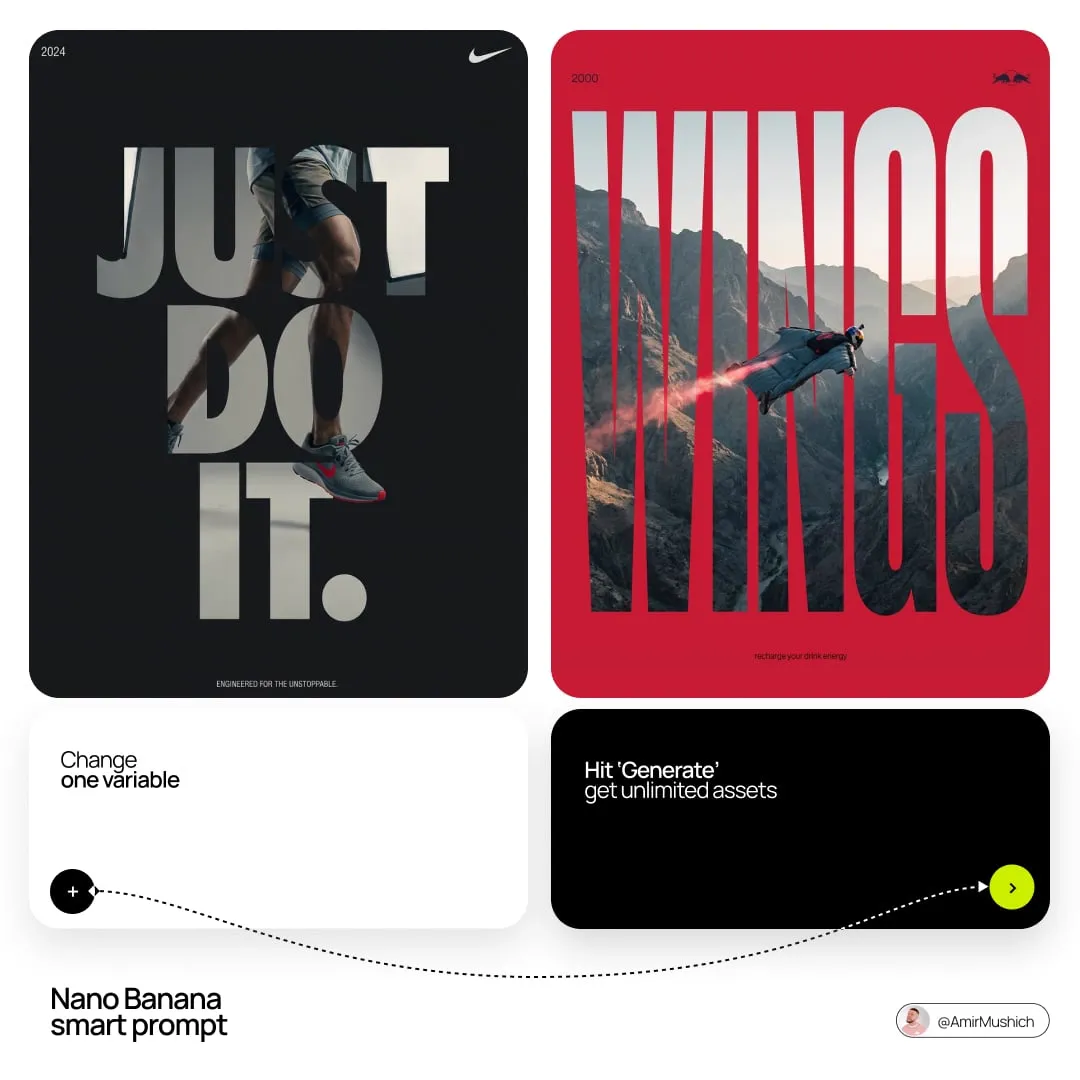
- Change one variable per variant. Shot type or light, not both.
- Keep camera language conservative. Slow push-ins, static frames, and gentle pans hold together far better than sweeping moves.
A shared prompt library matters once a series is running, because you can copy the exact subject block from episode to episode instead of reconstructing it from memory and quietly drifting.
Lighting as your narrative budget
Lighting does more adaptation work than any other setting. Sodium streetlight and neon reads as loneliness. Flat overcast daylight reads as documentary honesty. A single practical lamp in a dark room reads as secrecy. Decide on two lighting states per series and stay inside them. When a story beat needs a shift, shift within the grade rather than inventing a new world for one scene.
Handling moderation risk without gutting the story
You cannot control automated review. You can control how much surface area you hand it.
Common triggers in narrative video
- Weapons, including props, even in a frame that lasts four frames.
- Blood, injury, and medical imagery, including stylized red on white.
- Depictions of minors in tense or ambiguous situations.
- Self-harm adjacency, including metaphorical visuals such as a character underwater or standing on a ledge.
- Substance use, even in period settings.
- Captions containing slurs, threats, or phrases that read as harassment out of context.
- Music with recognizable melodic content you do not have the rights to use.
Reframe, re-edit, rewrite
Three responses, in order of preference:
- Reframe. Move violence off screen. A shadow, a reaction shot, or a closed door is often stronger than the thing itself, and it is the same technique novelists have used for a century.
- Re-edit. If a single frame trips review, cut the frame. Do not cut the scene.
- Rewrite. Only when the objectionable element is the point of the scene. Then ask whether the story needs that scene or merely that beat.
Keep two masters
Store two versions of every project: a full cut for your archive and a platform-safe cut for distribution. When a platform updates its rules, and they do regularly, you re-cut from the master instead of rebuilding from scratch. Read the published policy of any platform you depend on once, properly, rather than learning it one rejection at a time.
Write titles and thumbnails defensively
Headlines and thumbnails deserve the same scrutiny as frames. A title written for curiosity can read as a threat or a misleading claim when a reviewer sees it without context. Write the headline you would be comfortable defending in a conversation, then make the footage earn it. If the two do not match, the footage is usually the one to change.
Disclose synthetic media
Rules around realistic AI-generated footage increasingly require disclosure, and audiences are far less bothered by it than creators assume. A short label in the caption costs you almost nothing and removes a whole category of dispute. Concealing it risks a penalty that is much harder to appeal.
Formats that travel in vertical video
Not every adaptation should be a serialized drama. Four formats absorb vertical constraints well.
- The 45-second story. One character, one decision, one consequence. The strictest and the most reliable.
- The anthology series. Shared visual style, unrelated stories, one narrator voice. Easiest to sustain because casting resets each episode.
- The teaser. A 20-second piece that acts as a trailer for a longer cut published elsewhere.
- The narrated essay. Your own voice over generated imagery, closer to a video essay than fiction. Very forgiving on character consistency.
Pick one format and commit to ten episodes before evaluating performance. Switching formats weekly is the most common reason small channels never build an audience. It also resets your visual language, which resets viewer recognition, which means every episode starts from zero again.
Choosing tools for your story type
Match the tool to the story, not the other way around.
| Story need | Prioritize | Deprioritize |
|---|---|---|
| Character-driven dialogue | Reference-image consistency, face stability | Complex camera movement |
| Atmosphere and setting | Lighting control, color grade | Photoreal humans |
| Action beats | Motion coherence in short bursts | Long unbroken takes |
| Documentary tone | Voiceover sync, caption accuracy | Stylized rendering |
Two criteria matter more than any feature list. First, how quickly can you regenerate a single shot without losing the rest of the sequence? Second, does the output hold up after compression on a phone screen? If a tool wins on the first and fails the second, it will cost you more time than it saves. Comparing options side by side, including an Orelon vs Runway breakdown, is more useful than reading a feature table, because the differences that matter only appear when you are nine shots into a sequence.
Also weigh export and subtitle handling. A tool that gives you clean vertical exports with captions burned in and a separate subtitle file saves an hour per episode, and an hour per episode compounds into days across a series.
Start from a general AI video generator and add specialized tools later, once you know exactly which shot types fail for you. Buying breadth early is the most expensive mistake in this workflow.
Mistakes that cost weeks
- Generating before writing the shot list. You will produce footage you cannot assemble.
- Chasing photorealism in faces. Stylized, illustrated, or silhouette-driven looks are more consistent and often more distinctive.
- Ignoring audio. A weak first second of sound loses more viewers than any single visual flaw.
- Treating a rejection as a verdict on your writing. It is usually a classification problem with a fixable trigger.
- No naming convention. Untitled renders pile up and kill momentum within a week.
- Building the channel around one platform. Publish to two, always, even if one stays small.
- Rewriting the whole episode after one failed shot. Fix the shot, not the script.
- Chasing trends instead of finishing series. Ten finished episodes beat one hundred opening shots.
Most of these errors share a single cause: generating before deciding what the episode is about. They are cheap to prevent in advance and expensive to repair in the middle of a series, when momentum is the scarcest resource you have.
FAQ
Can I adapt a published short story into AI video? Only with permission while the work is protected by copyright. Public domain stories are free to adapt. For contemporary fiction, get written permission and agree on scope and edits before generating anything.
Will AI-generated video always be flagged? Not always, but disclosure rules for realistic synthetic media keep expanding. Labeling your output is safer than concealing it, and viewers tend to care far more about story quality than about production method.
How do I keep a character consistent across ten episodes? Lock the reference image, never re-describe the character from scratch, keep lighting and lens language identical, and avoid extreme angles. Consistency is a discipline rather than a switch you can flip on.
What if one scene keeps getting rejected? Rebuild it in the clearest possible terms first. If it still fails, the scene is the problem rather than the execution. Ask whether the same emotional beat can land through implication instead.
How long should a first episode be? Between 30 and 60 seconds. Long enough to establish tone, short enough to finish in one working session. A finished short episode teaches you more than an unfinished ambitious one.
Do I need a shot list for a 20-second piece? Yes, but it can be four lines. The discipline matters more than the length of the document.
Should I publish the same cut everywhere? Usually not. Some platforms tolerate more ambiguity than others. Keep the full cut for the most permissive channel and the safe cut for everything else.
How do I know whether the adaptation worked? Watch it muted with no context and ask whether you can follow the story from images alone. If you cannot, viewers who scroll without sound will not either.
Turning pages into motion
Writers who do well with AI video treat it as an editing problem, not a magic trick. They reduce stories to visual beats, lock characters early, generate in controlled passes, and keep a clean master so one flagged frame never takes down a whole project. The technology is fast now. Taste and process are still the bottleneck, which is good news for anyone who has spent years learning to tell a story.
If you have a short story sitting in a folder, pick the three strongest beats and build a 40-second cut this week. Start in the AI video generator, pull a reference still from the image tools, and iterate until the ending lands. More workflows, format breakdowns, and prompt patterns live on the Orelon blog when you are ready for episode two.