
Build a short film prompt generator workflow that turns one spark into a shootable story, a clean shot list, and cinematic AI video scenes.
Every short film begins as a problem of compression. You have a weekend, a small crew, and a feeling you cannot quite name, and you need to squeeze all three into three minutes that hold a stranger's attention. The blank page is not intimidating because you lack imagination. It is intimidating because you have too many options and no constraints.
A short film prompt generator solves exactly one narrow problem: it hands you a constraint sharp enough to argue with. It does not write your movie, plan your coverage, or direct your actors. It gives you a protagonist, a want, an obstacle, a place, and a visual rule — fast enough to start work in the same sitting.
That distinction matters. Idea machines produce novelty, and novelty is cheap. What you need is a premise specific enough to be wrong, because a premise that can be wrong can also be tested. This guide walks through how to build a generator, how to shape its output into a shot list, how to iterate without gambling, and how to tell the difference between a prompt that works and one that merely sounds good.
Why the Blank Page Is the Real Bottleneck
Blank pages reward the wrong instinct. With infinite possibility, most of us reach for the biggest idea available: the heist, the apocalypse, the sweeping period piece. Big ideas feel like progress and behave like debt. They demand locations you cannot access, casts you cannot schedule, and effects you cannot finish.
Compare two starting points. “A man discovers he can travel through time” is a feature film waiting to go unproduced. “A night-shift attendant at a 24-hour laundromat keeps finding a stranger's clothes in machine four, still warm” is a three-minute film you could shoot on Thursday. The second is not a lesser idea. It is a finished idea.
Constraints also make critique possible. Generate twenty prompts and notice which one makes you lean forward; that reaction teaches you something about your own taste. Ten prompts that feel identical usually means your inputs were too abstract, not that the method failed.
Scale matters too. The same sentence that seeds a live-action short can seed a storyboard, an animatic, or a fully synthetic scene made in an AI video generator. You are not only choosing a story. You are choosing something you can prototype tonight.
What a Short Film Prompt Actually Contains
Weak prompts are usually weak structurally rather than stylistically. They describe a mood and skip the machinery.
The five load-bearing elements
A specific protagonist with a job. “A woman” is not a character. “A night-shift laundromat attendant” is. Occupations imply routine, and routine is what disruption breaks.
A concrete want and a visible obstacle. Keep the want small enough to achieve on screen. The obstacle should be a person, a rule, or a physical fact — not a mood.
One place, richly specified. Weather, hour, ambient sound, and the texture of the light. “A laundromat at 3 a.m., flickering fluorescents, rain on the glass” gives you an art department and a lighting plan in one clause.
A visual rule. Style should be a rule you can break deliberately. “Every shot is locked off until the final scene” is a rule. So is “the camera never shows a full face.”
A shape. Where does it start, what turns, where does it end? One line is enough: she investigates, learns the clothes belong to a life she has not lived, and chooses to leave them folded.
A worked example
Raw seed: laundromat, warm clothes, loop.
Expanded prompt: A night-shift attendant at a 24-hour laundromat keeps finding a stranger's warm clothes in machine four. Every time she folds them, a small object falls out that belongs to a life she has not lived yet. Visual rule: static wide shots for the first two minutes, handheld only after she opens the dryer. Tone: quiet dread, no jump scares. Dialogue: none.
That paragraph can go into an image tool to concept the lead, into a video tool to test the opening shot, or into a spreadsheet to plan a shoot. It is specific enough to be wrong, which is what makes it useful.
A second example in a different register
Raw seed: bus stop, letter, rain.
Expanded prompt: A retired postal clerk waits at a rural bus stop every Tuesday with a letter he never mails. A teenager starts waiting with him. Visual rule: the two characters never share a frame until the last shot. Duration: each scene under 40 seconds. Sound: rain and engine noise only, no score.
Notice what changed. The first example is about objects and dread; the second is about distance and restraint. Both are shootable. Neither requires a visual effects budget, which is the quiet advantage of prompts built from physical detail rather than spectacle.
Four Ways to Generate Prompts Without Special Software
Constraint cards
Write four lists on index cards: 24 protagonist jobs, 24 locations, 24 objects, and 12 disruptions. Draw one from each. That is 165,888 combinations from 84 cards, and because every entry is concrete, nearly every draw produces something shootable. The method is old, reliable, and immune to outages.
A spreadsheet prompt engine
Put the same lists in columns and build a formula that concatenates a random draw into a full sentence. Add a second sheet for visual rules, tone words, and target durations. The value is not randomness — it is auditability. Scan which combinations you keep and which you delete, and your own clichés become visible within a week.
A language model as a quarry, not an author
Give a model a short brief and ask for twenty loglines with hard constraints: no more than two characters, one location, a physical object whose meaning changes, and an ending shootable in a single take. Treat the output as raw ore. The best prompt in a set of twenty is usually the one you immediately want to rewrite.
The hybrid loop
Use the model for volume, cards for texture, and the spreadsheet for tracking. Keep a running log of prompts that produced usable footage, including the ones that failed and why. After a few months that log becomes more valuable than any generator. Browsing a prompt library is a fast way to see how phrasing survives the trip into a model.
From Spark to Shot List in Four Passes
A three-minute short is roughly 12 to 20 shots. You can plan all of them in four passes.
Pass one — the spine. Reduce the prompt to a single sentence. Everything else serves it. If the sentence needs a comma splice to survive, the idea is not ready.
Pass two — beats. Break the sentence into five beats: setup, disturbance, escalation, decision, consequence. Five beats across three minutes gives roughly 30 seconds each — a comfortable rhythm and an honest production budget.
Pass three — geography. Decide where the camera can stand. For a laundromat: the doorway, the folding table, the row of machines, the window from outside. Four positions generate a dozen shots without moving a light.
Pass four — the shot list. Assign each beat a wide, a medium, and a detail. The detail is where the story lives: hands folding, a coin slot, a name tag, a dryer door swinging. If you shoot with a small crew, group shots by camera position so the schedule stays realistic.
A sample shot list for the laundromat short
- Wide, locked off, doorway. Rain on glass. 8 seconds.
- Medium, folding table. She works through a stack. 6 seconds.
- Detail, machine four through the porthole. Clothes tumbling. 4 seconds.
- Wide, same position as shot 1. She looks up. 5 seconds.
- Detail, her hand on the dryer handle. 3 seconds.
- Medium, handheld now, she pulls the door open. 6 seconds.
- Detail, a small object in the lint trap. 4 seconds.
- Wide, window from outside, rain. She is a silhouette. 8 seconds.
- Medium, she folds the clothes and sets them down. 7 seconds.
- Detail, the object left on the table. 4 seconds.
- Wide, doorway, empty. Lights off. 10 seconds.
Eleven shots, four camera positions, one location, no dialogue. That is a finished short film on paper, and every line of it came from one prompt.
Deciding live action or synthetic
Before you commit, ask three questions. Does the film depend on a performance that needs a human face? Does it depend on a location you can actually reach? Do you need the footage this week? If the answers are no, yes, and no, shoot it. If any answer flips, prototype the sequence synthetically using the AI video generator and decide with footage in hand rather than an opinion in your head.
The Variance Ladder: Iterating Like an Editor
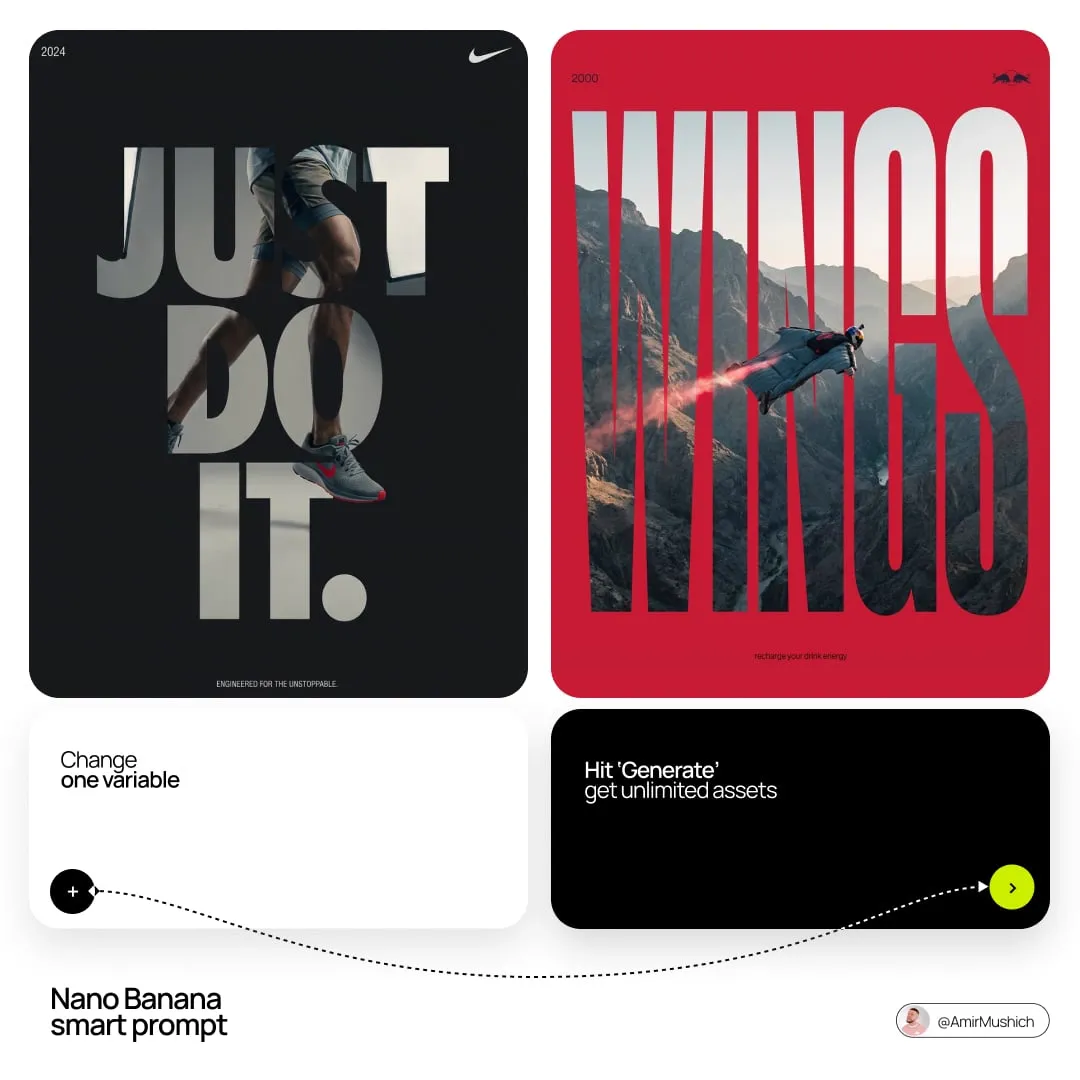
The most common failure in AI-assisted filmmaking is treating generation like a slot machine. Editors do not work that way, and neither should you. Change one variable at a time, in increasing order of cost.
- Wording. Swap a noun for something more specific. “Coat” becomes “oil-stained peacoat.”
- Camera. Change framing or movement, not both.
- Light. Shift the hour or the key source.
- Order. Reorder the same shots and see what the sequence now says.
If you change three variables and the result improves, you have learned nothing. Change one and you know exactly what worked. That knowledge transfers to the next shot, which is the entire point.
Stopping rules that protect your time
Set the rule before you start. Three variations per shot, then choose the best and move on. If all three are unusable, the prompt is broken, not the tool: rewrite the sentence instead of rerolling it. For a whole project, cap exploration at ten percent of your total time. Exploration feels productive and consumes schedules.
When to break the ladder
Break it when the scene fails at the concept level. If the shot is boring under all four variables, the problem is not phrasing; the beat is wrong. Go back to the spine sentence and reconsider what the scene is actually for.
Camera, Light, and Motion Vocabulary That Earns Its Place
Precision here pays off more than any other part of a prompt, because camera and light language is measurable.
Movement and lens intent
Use verbs a cinematographer would use: push in, pull back, track left, crane down, handheld follow, locked off. Pair each with a lens intent — wide, normal, long, macro, shallow focus. “Slow push in, long-lens compression, focus on the coin” is direction. “Cinematic camera movement” is a wish.
Lighting and colour
Name the source and its quality. “Practical fluorescents, cold green cast, hard shadow under the machine.” Or: “low winter sun through a dirty window, warm highlight, deep shadow.” Let colour follow from the source rather than from a filter name, because filters describe a look while sources describe a place.
Duration and pace
State how long the shot should feel. An eight-second static hold and a two-second whip are different films. Duration is the cheapest tool for controlling tone and it is almost always missing from first drafts. If you want a starting vocabulary, browsing templates shows how phrasing is organised by genre and shot type, which is faster than assembling terms alone.
Multimodal Prompting: Text Plus a Reference Frame
Text is one channel. The moment you can show a model what you mean, the prompt becomes a conversation between a sentence and a picture.
A practical loop: write the sentence, generate three stills with the AI image generator, pick the frame closest to your intent, then use that still as the visual anchor for motion. The still carries lighting, palette, and composition. The text carries action, duration, and camera. Together they communicate far more than either alone.
Keeping a synthetic short coherent
Generate a wide establishing frame and a close detail from the same scene so both shots share a world. Reuse the same reference frame across every shot in a location. Consistency of place is what makes a synthetic short feel authored rather than assembled from unrelated clips. Save the exact wording you used for the anchor in the project file, because future-you will not remember it.
Reference frames for performance beats
When a shot depends on a small gesture, generate a still of the gesture itself and describe only the timing. “She sets the folded shirt down, pauses two beats, turns away.” The still defines the hands. The sentence defines the rhythm. This split keeps you from writing paragraphs that describe what a picture can carry in an instant.
Six Mistakes That Quietly Ruin Good Prompts
Contradictions. “Handheld, locked off, natural light, neon glow” pulls in four directions and produces mush. Every clause should be compatible with every other clause.
Emotion instead of behaviour. “She feels betrayed” gives a model nothing. “She folds the shirt wrong side out and does not look up” gives it everything.
Overloading. A prompt with fifteen clauses usually delivers none of them. Cut to the five load-bearing elements and add only what you can see.
Quality adjectives. “Beautiful,” “epic,” and “cinematic” describe your hopes, not the frame. Replace them with facts about light, lens, and duration.
No duration. Without timing, every shot arrives at the same tempo and the film flattens into a slideshow.
Generating before writing the ending. The final image is the hardest to improvise and the easiest to plan. If you know it, the rest of the prompt assembles backwards.
A Ninety-Minute Short Film Sprint
If you want a deadline that actually produces something, try this.
0–10 minutes. Generate twenty prompts. Do not judge them yet.
10–25 minutes. Read them aloud. Keep the two that make you lean forward and delete the rest. Reading aloud matters, because a premise that sounds clever on the page often dies in the air.
25–40 minutes. Write five beats for your favourite. Write the spine sentence. Choose the visual rule.
40–60 minutes. Build a twelve-shot list across four camera positions and note a duration for each shot.
60–80 minutes. Generate or shoot the opening and closing shots first. If the first and last shots work, the middle will follow.
80–90 minutes. Watch the sequence with the sound off. Ask one question: does the story read without dialogue? If yes, you have a short film. If no, the obstacle is not concrete enough yet.
That last question is the whole test. Short films fail from ambiguity far more often than from ambition.
FAQ
Is a short film prompt generator just a random idea machine? No. Randomness gives novelty; constraints give you something shootable. The quality of the lists behind the generator matters far more than the shuffle.
How specific should a prompt be? Specific about nouns, people, places, and light. Flexible about themes. If a sentence cannot be turned into a picture, cut it.
Should I write the ending first? Usually yes. Endings are the hardest part to invent on the day and the easiest to plan in advance.
How many generations should I run per shot? Three is a sensible default, changing one variable at a time. Beyond that you are usually compensating for a vague prompt rather than exploring.
Can one prompt serve both live action and AI video? Yes, and it should. The prompt is a production document. It tells a crew or a model the same thing: what is in the frame and how it moves.
Do I need paid software to start? No. Cards, a spreadsheet, or a language model all work. What you need is a log of what produced good results, and that is a habit rather than a purchase.
How do I stop output looking generic? Remove quality adjectives and replace them with measurable facts: source of light, lens intent, shot duration, and one unusual physical detail.
What if twenty prompts produce nothing usable? Your input vocabulary is too narrow. Add ten jobs you have never written about, ten locations from your own neighbourhood, and ten objects from your kitchen drawer. Specificity is a supply problem before it is a talent problem.
How long should a generated short actually be? Three minutes is the sweet spot for a first project. It is long enough to have a turn and short enough to finish, and it keeps every prompt you write focused on a single place and a single rule.
Turn Your Best Prompt Into a Finished Scene
A prompt generator gets you to the starting line. The next step is finding out whether the idea actually moves, and testing beats planning. Orelon is an AI video generator for cinematic ideas in motion: write the sentence, anchor it with a frame, and watch the shot exist before you commit a weekend to it.
Start with the prompt you kept from today's session. Take it to Orelon and generate the first and last shot of your short. If those two hold together, the film is real and the middle is craft. Explore the Orelon blog for more workflows, and if you are still weighing pipelines, compare approaches in our AI video generator alternatives overview before you settle.