

Learn how to combine multiple AI video models into one reliable production workflow, from prompt design to shot continuity and final delivery.
You have a script, a moodboard, and a deadline. The model that carried your last project just returned a shot with three hands and a camera that drifts like a rowboat. So you switch models, and it fixes the hands but flattens the lighting. That is the daily reality of AI video production: no single model is best at everything. The creators who ship consistently are not loyal to one engine — they are loyal to a pipeline.
Think of that pipeline as a small crew. Nobody hires one person to write, light, shoot, and score a film. You hire specialists and give them a shared brief. AI video works the same way, except your specialists are models with very different strengths, and your shared brief is a prompt system plus a continuity document.
Why One Model Is Never Enough
Every generative video model is a set of compromises baked into a training run. Some are tuned for photoreal humans and fall apart on fast motion. Some render stylized animation beautifully but cannot hold a face. Some handle long, patient shots; others are built for short, punchy bursts. Some are fast enough for storyboarding but too soft for a final deliverable.
When you commit to one model, you inherit its blind spots across your entire project. A wide landscape sequence looks great, then the dialogue scene arrives and the faces melt. Or the reverse: portraits are gorgeous, but the chase sequence turns into a smear of pixels.
Multi-model workflows solve this by assignment. Each shot goes to the engine most likely to nail it, and the edit hides the seams. Audiences do not notice that shot four was rendered by a different system than shot five — they notice whether the film holds together emotionally.
There is a second, more strategic reason to stay model-agnostic: churn. New engines appear constantly, and older ones get updated in ways that change their output. A workflow that lives in your head as "I use one tool" means a bad update kills your productivity for a week. A workflow that lives in a document — shot list, prompt templates, reference frames — survives any model swap.
The Four Jobs in Every AI Video Pipeline
Before choosing anything, name the job. Almost every AI video project needs four distinct kinds of work, and they rarely want the same model.
Concept and look development
This is your cheapest, fastest stage. You are not making final footage; you are answering questions. Does the story read in eight shots? Does the color palette work? Is the character silhouette recognizable at thumbnail size?
Use fast, low-resolution generations here and produce a lot of them. Twenty rough variations teach you more than two polished ones. Keep the winners in a moodboard folder and delete the rest without guilt.
Hero shots
Most projects have a handful of shots that carry the emotional load: the opening image, the turn, the final frame. Everything else is connective tissue. Spend your best model, your longest prompts, and your strongest reference frames on those five to ten shots. For everything else, "good enough and consistent" beats "spectacular but off-model."
Continuity and coverage
This is the unglamorous middle layer. You need the same character walking through a doorway, then sitting down, then close-up. That requires image-to-video, reference frames, and often a still-image pass to lock the look before animating. If your pipeline has no answer for coverage, your film will feel like a trailer assembled from unrelated clips.
Finishing
Upscaling, frame interpolation, stabilization, color, sound, titles. AI clips arrive short, silent, and often slightly unstable. Finishing is where a collection of generations becomes a film, and it is the stage most beginners skip entirely.
A Decision Framework for Choosing Models
Model shopping goes wrong when people rank engines by reputation instead of by fit. Score candidates against your actual needs instead.
Motion realism versus style fidelity
If your project depends on believable human movement — dance, combat, subtle acting — prioritize models that handle temporal coherence and body physics. If your project depends on a specific visual identity — painterly, anime, retro film — prioritize stylistic control and consistency across shots, even when motion is simpler.
Clip length and camera control
Short clips are easier to control and easier to hide mistakes in. Long clips reduce your edit count but expose every wobble. Decide your target shot length before you pick an engine, and test that specifically rather than trusting a demo reel.
Iteration speed and predictability
A model that produces a usable shot in two attempts is worth more than one that occasionally produces a masterpiece on attempt eleven. Measure attempts-to-usable, not peak quality.
Rights and commercial use
Read the terms for the specific model and plan you use. Commercial projects, client work, and anything involving real people or brands need a clear answer before you invest a week of production time.
| Priority | What to test | Red flag |
|---|---|---|
| Character consistency | Same person, three angles, two lighting setups | Face morphs between shots |
| Motion coherence | Walking, hand gestures, camera push-in | Limbs smear or duplicate |
| Style control | Same scene in three visual styles | Style resets every generation |
| Iteration speed | Attempts needed for one usable shot | Needs ten-plus tries |
| Delivery fit | Export resolution and aspect ratio | Only outputs square or low-res |
Prompt Architecture: The Step Most People Skip
A vague prompt gives the model permission to improvise, and models improvise in the most average way possible. Structured prompts narrow the probability space.
Write in this order: subject, action, environment, camera, lens and framing, lighting, color and texture, atmosphere, and finally what to avoid.
Subject: woman in her thirties, short dark hair, olive raincoat
Action: steps off a tram and looks up at the rain
Environment: wet city street, neon reflections, evening
Camera: slow dolly in, eye level, then hold
Lens: 50mm, shallow depth of field
Lighting: soft overhead practicals, cool ambient
Palette: teal shadows, warm neon accents, slight film grain
Mood: quiet, slightly melancholic
Avoid: text overlays, distorted hands, fast cuts
Compare that to "woman in rain, cinematic." The second prompt is not wrong, but it hands control to the model. The first makes a decision on every axis that matters.
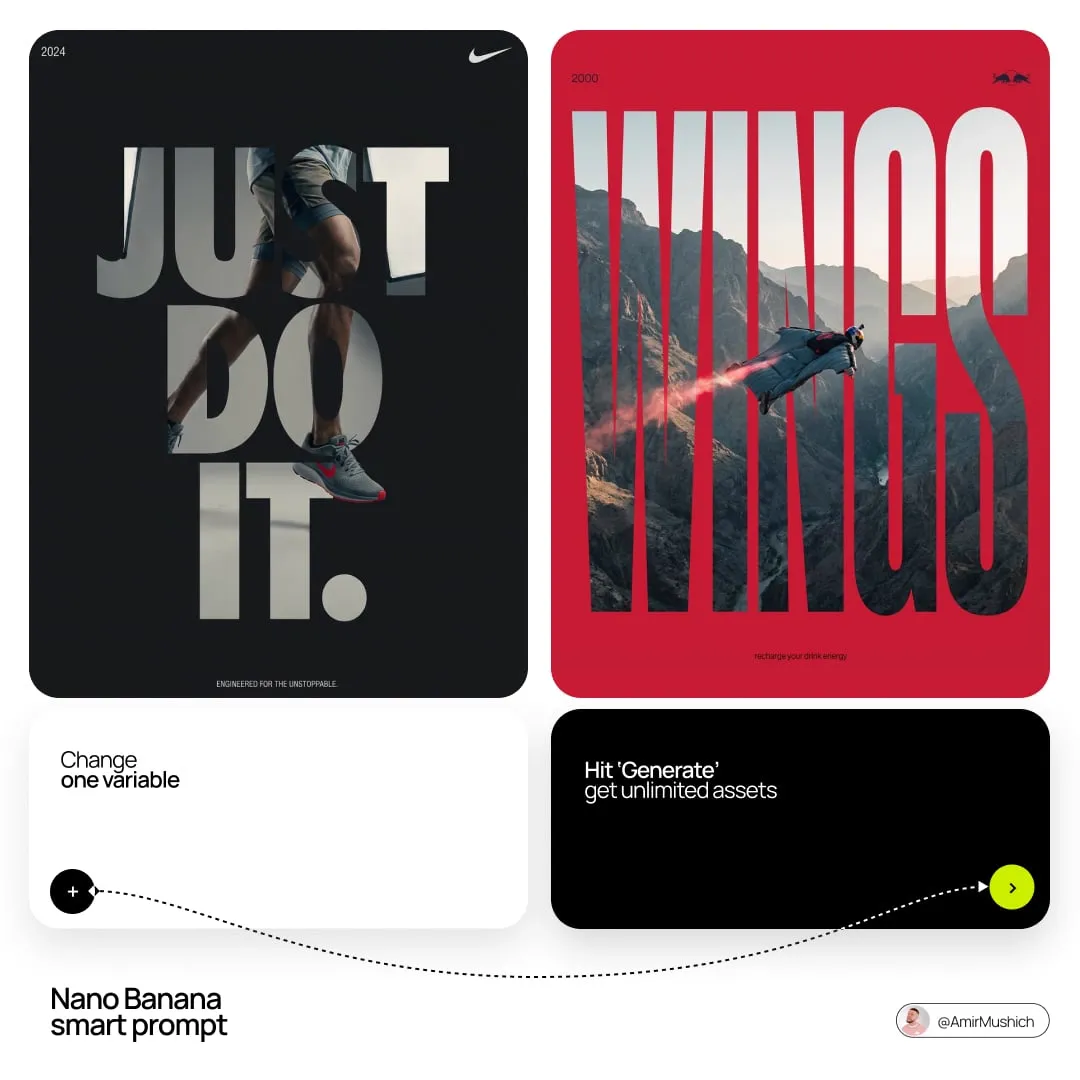
Two practical rules. First, keep a reusable prompt skeleton per project so every shot shares vocabulary — the same lens language, the same palette words. Second, change one variable at a time when testing. If you rewrite six things and the shot improves, you have learned nothing about why. You can browse ready-made structures in the prompt library if you want a starting vocabulary instead of building one from scratch.
Continuity: The Hardest Problem in AI Video
Generated clips are not footage. They have no memory of each other. Continuity is something you manufacture.
Build a continuity bible before you generate anything serious. It should contain character sheets (front, three-quarter, profile), wardrobe details, key props, location references, a color script, and the light direction for each scene. Then, for every shot, paste the relevant snippet into the prompt rather than retyping it from memory.
Generate your master shot first. If a scene is a kitchen conversation, produce one wide shot that establishes the space, the wardrobe, and the lighting. Once that shot exists, every coverage shot can be prompted to match it — same wardrobe, same window light from camera left, same countertop. You are reverse-engineering a shot list from a single anchor.
Seeds and reference images help, but they are not magic. Expect to regenerate. Budget three to five attempts per hero shot and treat the first two as calibration rather than results.
Reference Frames, Image-to-Video, and Character Locking
The single biggest quality upgrade available to most creators is generating stills first. A still-image model gives you precise control over composition, face, wardrobe, and lighting in seconds. Then you animate that still, which means the video model only has to solve motion rather than identity.
A workable sequence:
- Generate character sheets in your image workspace.
- Generate a style frame for each location.
- Generate the key storyboard frames using the character sheets as references.
- Animate each approved frame in the video workspace.
- Regenerate only the shots that break, keeping the reference frame fixed.
This pipeline is slower per shot but dramatically faster per finished film, because failures happen early and cheaply. It also gives you a visual paper trail, which matters when a client asks why the protagonist's jacket changed color between scenes.
If you are producing a recurring series — a weekly channel, a product line, a branded campaign — treat the character sheet and style frame as permanent assets. Reusing them is what makes episode seven look like episode one. Reusable starting points also exist in the template gallery if you would rather begin from a proven structure than a blank page.
Sound, Edit, and Delivery
AI clips are silent, and silence is where amateur work becomes obvious. Sound design is not decoration; it is perceived quality. A room tone bed, footsteps, cloth movement, and a music cue that enters on the right frame can rescue a visually mediocre sequence.
Cut in an editor, not in the generator. Assemble your clips, then trim on motion. Two seconds of a great shot beats eight seconds of a drifting one. Cut on action and let sound bridges carry transitions.
Then handle delivery properly. Know your target: vertical for short-form, 16:9 for web and presentation, 2.39:1 only if you genuinely want the letterbox. Check your safe areas for captions. Export at the highest resolution your source can honestly support — upscaling a soft clip does not add detail, it adds smoothness.
Finally, watch the whole piece once with sound off, then once with picture off. Both passes reveal problems your eyes-and-ears edit quietly hid.
Common Mistakes That Wreck a Multi-Model Workflow
- Chasing every new release. Test new models on a single shot, never on a live project with a deadline.
- Mixing aspect ratios across shots without deciding the master frame first.
- Starting without a shot list, then discovering the story does not cut together at all.
- Writing prompts as sentences instead of as specifications with named variables.
- Judging drafts. A rough generation with the right composition is a win; a beautiful one with the wrong composition is a loss.
- Abandoning the continuity bible after scene one.
- Forgetting delivery specs until export day, when it is too late to reframe anything.
FAQ
Do I need more than one model to make a good AI video? No, but you will work harder for it. A single model can carry a short piece if you design around its weaknesses — simple motion, consistent lighting, few characters. A multi-model workflow mainly buys you insurance and a better fit per shot.
How long should each generated clip be? Shorter than you think. Four to six seconds is a comfortable working length for most engines. Build scenes from several short clips rather than one long take, and cut on action.
Can I keep the same character across many shots? Yes, with reference frames and a written character sheet. Generate the face once, approve it, then use it as the visual anchor for every shot. Expect occasional drift and plan regeneration time into your schedule.
Should I generate images first or go straight to video? Images first for anything with characters, products, or specific composition. Straight to video works well for abstract, landscape, or texture-driven shots where identity is not at stake.
How do I decide a shot is finished? When it survives full-speed playback at final resolution, in context, inside the edit. A shot that looks impressive in isolation can feel wrong in sequence, and the edit is the only judge that matters.
What should I do when a model update changes my output? Keep your prompts, reference frames, and seed notes in a project document. If an update degrades results, you can reproduce the old look on a different engine instead of starting from zero.
Start With a Storyboard, Finish With Orelon
The point of a multi-model approach is not to collect tools. It is to stop letting any single engine's blind spots dictate your story. Write the shot list, build the continuity bible, generate stills before motion, and assign each shot to the model most likely to nail it.
Orelon is built for exactly this way of working: generate images and video in one place, develop a cinematic idea from a storyboard frame to a finished sequence, and keep your visual language consistent across every shot. Start with a concept, move into the creation workspace, and let the pipeline — not the model of the week — carry your film.