
How to choose and use a mobile AI app for TikTok: text-to-video, image-to-video, batch variants, sound, editing, and a practical workflow that ships clips.
TikTok is a timing machine. A viewer decides in under two seconds whether to keep watching, and the platform decides shortly after whether your clip deserves a wider audience. That pressure is exactly why mobile AI video tools spread so fast: they collapse the distance between an idea and a finished vertical clip into one sitting on a phone.
The trap is that most "best AI app" comparisons measure feature checkboxes instead of outcomes. What matters is whether the tool helps you ship a scroll-stopping clip today, not whether its settings panel is longer. This guide walks through how mobile generation actually changes your TikTok output: picking the right app for your intent, using text-to-video and image-to-video well, generating variants at volume, handling sound and cuts on a small screen, and avoiding the mistakes that make AI clips look like AI clips.
Why Mobile AI Video Changed the TikTok Workflow
Traditional editing assumes you already have footage. You shoot, import, arrange, color, and export — a chain that works fine when you have a camera, lighting, and an afternoon. TikTok punishes that chain. Trends move in days, not months, and the clips that win are usually the ones that responded fastest to a format the audience already recognized.
AI generation inverts the order. You start with an idea and produce the footage last. Instead of asking "what can I film today," you ask "what should the first frame look like, and what happens in the next three seconds." That reframing is why creators who never owned a gimbal or a light kit can now publish consistently.
The mobile part matters too. Most generation happens in short bursts — waiting for coffee, commuting, between meetings. A desktop-only pipeline forces you to batch work into long sessions, which is exactly the wrong rhythm for a platform that rewards daily posting. A phone-native app lets you iterate in five-minute windows: generate, judge, adjust, post.
What Matters Most in a TikTok AI Video App
Feature lists are easy to fake. These four criteria separate tools that ship clips from tools that ship demos.
Vertical framing and safe zones
A generator that produces beautiful 16:9 footage is not a TikTok tool. You want native 9:16 output with the subject positioned so captions and interface buttons do not cover faces or key details. Check where the app places the focal point: the top and bottom strips of a vertical frame are effectively dead space for text and UI.
Prompt control over prompt magic
"Type anything and get magic" demos well but fails in production. You need control over camera movement, shot length, subject action, lighting, and pacing. A prompt that specifies "slow push-in, hand-held, warm window light, subject turns to camera at the end" gives you something usable. A prompt that says "cool video" gives you a lottery ticket.
Speed versus fidelity, on purpose
Draft mode should be fast and cheap enough that you can throw away nine bad ideas before lunch. Final render should be sharp enough to survive compression. The best apps make this trade-off explicit rather than hiding it, so you can storyboard quickly and commit quality only to the clips that earn it.
Sound built into the loop
On TikTok, audio is not post-production — it is the hook. If voice, music, or ambience requires exporting to a second app and rebuilding sync, you will do it badly or not at all. Prioritize tools where the soundtrack is part of the same canvas as the video. A prompt library that includes audio direction is more useful than one that only describes visuals.
Text-to-Video: From Hook Line to First Frame
Text-to-video is the fastest path from a thought to footage. You describe a scene and get a clip. The skill is not in the typing — it is in understanding what the model can and cannot hold.
Start with a single action, not a narrative. "A cyclist turns a corner and glances back at the camera" is one shot. "A cyclist rides across a city, meets a friend, and shares a meal" is three shots crammed into one prompt, and you will get mush. Break your idea into beats and generate each beat separately. You will get more usable material and far more editing flexibility.
Then decide the hook before the visuals. Write the caption you want, then design the clip that makes that caption land. If your caption is "nobody expects the second ingredient," the video needs a clear first state and a visible reveal. Generation is cheap; thinking is the bottleneck.
A practical prompt skeleton that works across most models:
- Subject and action: who or what, doing exactly what, in one sentence.
- Camera: slow push-in, static tripod, handheld follow, orbit. Pick one.
- Light: window light, neon night, overcast soft, hard sun with long shadows.
- Texture and style: film grain, clean commercial, wet pavement reflections, matte painting.
- Ending beat: what changes in the final second so there is a reason to rewatch.
Keep each prompt under about forty words. Longer prompts dilute attention across too many ideas, and the model will drop details in unpredictable order.
Image-to-Video: Making Stills Move
Image-to-video is the most underrated feature for TikTok because it converts assets you already own into motion. Product photos, screenshots, posters, packaging, character art, even a well-lit selfie can become a two-to-four second moving shot.
This is where consistency lives. Text-to-video drifts: characters change faces, rooms change furniture. Image-to-video anchors the look. If you are building a series with a recurring character or product, generate a strong still first — with the AI image generator, for example — then animate that still instead of re-describing it from scratch every time.
Movement quality depends on the instruction. Subtle is almost always better than dramatic:
- Good: "slow dolly forward, gentle parallax, dust motes drift through light."
- Risky: "subject spins and the camera flips around."
Big motion gives the model more room to invent anatomy. Small motion preserves the original composition, which is usually the reason you chose that image in the first place. For e-commerce clips, a slow push with a soft highlight sweep often outperforms an elaborate animated transformation, because the viewer's job is to inspect the product, not admire the effect.
One more use case worth building into your routine: animate a static infographic or a text card. A three-second reveal of a statistic, with slight camera drift and a shadow movement, holds attention far better than a frozen slide.
Batch Generation and Variant Testing
TikTok is a testing environment. The same idea can succeed or fail based on a first frame, a word in the on-screen text, or a two-second trim. Treating each clip as a precious single output is how you burn a week on one post.
Batch generation changes the math. Instead of producing one clip and agonizing, produce six to ten variations of the same concept and let the audience decide. Variations worth testing:
- First frame: subject close-up versus wide establishing shot.
- Pacing: quick cut at 0.8 seconds versus reveal at 1.6 seconds.
- On-screen text: question versus statement versus number.
- Audio: trending-style upbeat bed versus quiet ambient tension.
- Ending: resolved visual versus a deliberate loop back to the opening frame.
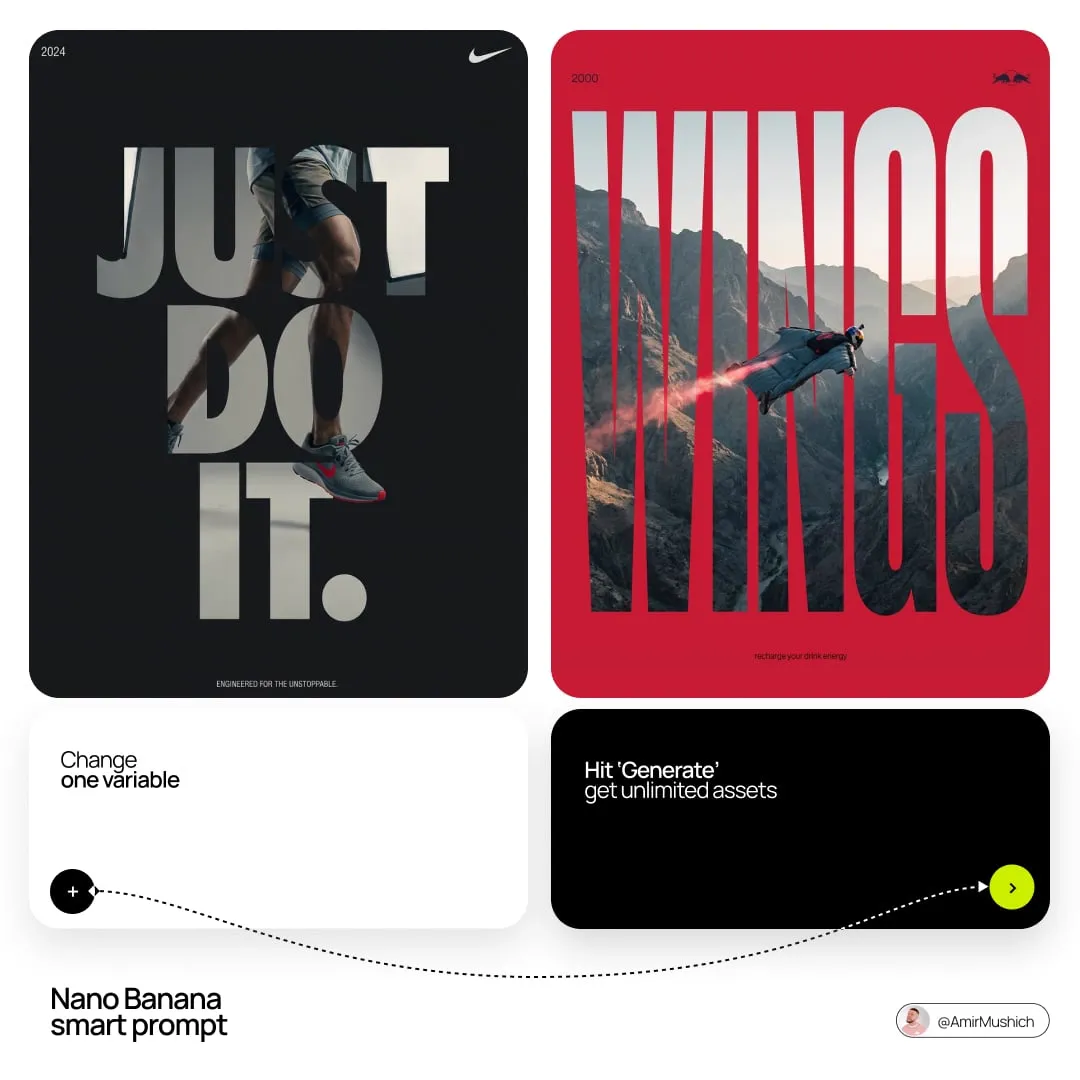
Do not test everything at once on one clip — you will not learn anything. Change one variable per variant, keep the rest fixed, and after a week of posts you will have a real preference map instead of a vibe. Save the templates that consistently work so your next batch starts from a proven structure rather than a blank page; a set of reusable video templates shortens that loop considerably.
Editing, Fusion, and Style Transfer on a Phone
Generation gives you raw material. Editing is what makes it look intentional. On mobile, the constraint is your thumb and your patience, so lean on a small number of high-impact moves.
Multi-image fusion. Combine two or three references — a subject, a background texture, a color palette — into one coherent shot. This is how you get a consistent look across a series without writing a novel-length prompt every time. Keep fusion inputs visually compatible: a soft daylight portrait fused with a harsh neon background will fight itself.
Style transfer. Applying a consistent aesthetic — grainy film, watercolor, retro print, glossy commercial — makes separate clips feel like one video. Apply the same style across every clip in a post, even when the scenes differ. Consistency reads as craft.
Stitching. Most TikTok videos are not one clip; they are three to six short shots. Cut on motion, not on stillness. If a hand is moving or a camera is drifting, that movement is the natural edit point. Cut mid-action and the brain accepts the jump as intentional.
Text and captions. Place text in the middle band of the frame, keep it under seven words per card, and let it appear one beat after the visual, not simultaneously. Simultaneous text and image compete for attention; a slight delay makes the text feel like a reaction.
Sound Design: Voice, Music, and Beat Timing
Audio explains why two videos with identical visuals perform differently. Three layers matter, and they should be built in this order.
Voice. Synthetic narration is now good enough for explainers, listicles, and story-driven clips, provided the script sounds spoken rather than written. Short sentences. Contractions. One idea per line. If a line is hard to say out loud, it is hard to listen to.
Music. Match energy to content, not to whatever is loud. Calm visuals with aggressive audio feels broken. If you are building a series, reuse a sonic signature — the same opening two seconds of audio trains returning viewers to recognize you before they recognize the visual.
Timing. Place your first visual change on a beat, and your text reveal on the next one. This single habit makes amateur edits feel deliberate. A 120 BPM track gives you a beat every half second, which maps neatly onto a hook that lands at 1.5 to 2 seconds.
Keep the mix boring. Narration forward, music low enough that you could talk over it, effects only where something physically happens on screen. Loud effects on quiet action is the fastest way to feel cheap.
A Practical Workflow From Idea to Export
Here is a repeatable loop that fits inside roughly thirty minutes on a phone.
- Pick one idea and one hook. Write the caption first. If you cannot write a caption that creates curiosity, the video will not save it.
- Storyboard three to five beats. Each beat is one shot with one action. Two to four seconds each.
- Draft everything fast. Generate rough versions of all beats in a quick mode. Judge composition and action, not detail.
- Regenerate the weak beats only. Usually two of five need a second pass with a sharper prompt.
- Render final and stitch. Cut on motion, keep total length between twelve and thirty seconds for most formats.
- Add voice, music, and text. Text one beat after the visual, first change on a musical beat.
- Export, post, and log the variable you tested. Note what you changed and what happened. That log becomes your style guide.
Mistakes that make AI clips look like AI clips
- Too many things moving. One action per shot. Crowded frames read as unstable.
- Perfectly centered, perfectly static composition. Slight asymmetry and a little handheld drift feel more human.
- Ignoring the first second. A slow fade-in wastes the only moment you are guaranteed attention.
- Long clips with no new information. Cut the moment the idea has landed.
- Inconsistent look across a series. Same style, same audio signature, same text placement.
- Unreadable captions over busy motion. Add a subtle dark gradient or place text over calmer areas.
Choosing between a mobile app and a desktop pipeline
Use mobile when you are testing formats, posting daily, or reacting to a trend within hours. Use a desktop timeline when a piece needs frame-accurate sound design, precise timing, or heavy compositing. Many creators run both: generate and assemble on the phone, then move the one clip that deserves extra polish to a larger screen. If you are comparing generation engines rather than editors, it helps to see how Orelon stacks up against other AI video tools before committing your workflow to one.
FAQ
Do I need a powerful phone to generate AI video? Not usually. Most generation happens on remote servers, so your phone mainly handles playback and light editing. Storage and battery matter more than raw processing power, especially if you keep many drafts.
How long should an AI-generated TikTok video be? For most formats, twelve to thirty seconds. Longer works when each beat introduces something new. If you can remove a shot without losing meaning, remove it.
Is text-to-video or image-to-video better for consistent characters? Image-to-video. Animating a fixed still preserves faces, wardrobe, and composition across a series, while text prompts tend to drift between generations.
How many variants should I generate per idea? Three to six is a useful range. Enough to compare first frames and pacing, few enough that you still review each one properly instead of posting blind.
Can AI clips work for product or service promotion? Yes, and image-to-video usually outperforms pure text generation here. Animate real product photos with slow camera movement, then layer on-screen text with a single clear benefit per card.
What makes a clip look obviously AI-generated? Warped hands and text, unnatural motion speed, over-saturated lighting, and scenes where everything moves at once. Slower motion, tighter framing, and consistent style hide most of these issues.
Should I post the same clip on other vertical platforms? Yes, but check the safe zones. Interface elements sit in different places across platforms, so keep critical text and faces in the central band of the frame.
Start Creating With Orelon
Mobile AI video works best when the tool disappears and only the idea remains. You describe a shot, get a usable take, cut it on a beat, add a voice and a hook, and publish before the trend cools. The workflow matters more than the feature list, and it is learnable in an afternoon.
Orelon is built for exactly that rhythm — an AI video generator for cinematic ideas in motion, with vertical-first output, prompt control that respects your intent, and a library of starting points for creators who post every day. Take one idea you have been circling, turn it into five beats, and generate the first draft now at orelon.ai. Your next post is one prompt away.