
Build a resilient AI video workflow for short-form content: models, prompt craft, editing, distribution, and quality checks that travel across platforms.
Short-form video did not lose its value the moment creators started treating one app as a single point of failure. What shifted is the arithmetic: when one feed owns most of your reach, an algorithm tweak, a regional restriction, or a policy change can erase months of momentum inside a week. The practical answer is not to guess which app is next. It is to build a production system that turns an idea into a finished, publishable video fast enough that where it goes becomes a logistics question instead of an existential one.
AI video generation earns its place in that system when it is treated as a pipeline rather than a novelty. A five-second curiosity clip is not a strategy. A repeatable chain — brief, shot list, generated footage, edit, sound, captions, export presets — is. Get that chain right and you can ship to a vertical feed, a landscape channel, a client deck, or your own site from the same afternoon of work.
What a platform alternative actually means for creators
Most people searching for an alternative are not really looking for a different app. They are looking for a different dependency structure. There are three genuinely different things you can change, and each solves a different problem.
Change the format, keep the platform. You stop competing in a saturated trend format and instead own something specific: a weekly cinematic explainer, a product-macro series, a documentary-style mini-profile of local businesses. The feed is still in charge of reach, but your format makes you harder to replace, because viewers come back for the structure, not just the topic.
Change the platform, keep the format. You take the same thirty-second edit and publish it natively on two or three feeds plus your own site. Reach becomes additive instead of concentrated. The work is not doubled; only the captions, thumbnails, and aspect-ratio crops change.
Change the production model. This is the AI-native option. Instead of needing a camera, a location, a crew, and a shoot day before you can test an idea, you generate the footage. Iteration cost drops from a day of logistics to a few minutes of prompting, which changes what you are willing to try. Ideas that would once have been too expensive to find out become cheap experiments.
The most resilient creators do all three at once. They own a recognisable format, they distribute natively in several places, and they generate enough of their own footage that a bad week on one platform does not stop production. That combination is what people are actually describing when they say they want an alternative.
The three-layer AI video stack
Treat AI video as three layers that fail independently. When output looks wrong, the problem is almost always in one specific layer, and knowing which one saves hours of blind re-prompting.
Layer one: ideation and structure
This layer produces a brief, a hook, a script, and a shot list. It is text work, and it is where most of your quality is decided. A shot list written as 'product close-up, hands entering frame, steam rising, slow push in' gives the generation layer something to hit. A shot list written as 'make it cool' does not.
Keep a reusable brief template with five fields: the promise (what the viewer gets in the first three seconds), the proof (what they see that makes it believable), the turn (the unexpected beat that keeps them watching), the payoff, and the call to action. Fifteen minutes in this layer regularly saves an hour in the next two. If you write only one thing before generating, write the shot list.
Layer two: generation and shot assembly
Here you produce clips. Four sub-techniques cover most short-form needs:
- Text to video for establishing shots, atmosphere, and abstract transitions where continuity does not matter much.
- Image to video for anything with a specific look, product, character, or layout, because you lock the composition first and animate second.
- First-frame and last-frame control for shots that must land on a precise composition — a logo reveal, a product on a shelf, a match cut into the next scene.
- Camera-move directives for energy: orbit, dolly in, crane up, handheld drift, whip pan.
A practical habit: generate three to six candidates per shot and treat selection as editing, not as failure. You are not looking for a perfect render. You are looking for the take that cuts well.
Layer three: edit, sound, and export
The generated clips are raw material, not a finished film. The edit layer is where a collection of shots becomes a video: cut on motion, keep shots shorter than feels comfortable, add a sound bed, layer two or three designed effects (whoosh, impact, room tone), and mix to a consistent loudness target. Then export a master plus platform variants rather than rebuilding the timeline for every destination.
Matching the model to the shot you need
No single model wins every shot type, and the fastest creators stop looking for one that does. Instead they build a small mental map of strengths and route each shot accordingly.
| Shot type | What matters most | Practical approach |
|---|---|---|
| Talking head or presenter | Lip sync, skin texture, micro-expression | Start from a still image, animate in short takes, keep motion minimal |
| Product macro | Geometry consistency, reflections, label legibility | Lock the still first, use slow moves, avoid fast rotation |
| Landscape or establishing | Depth, parallax, believable light | Longer clips, slow camera moves, atmospheric detail |
| Stylized or animated | Style lock across shots | Fix a style reference and reuse it in every prompt |
| Action or impact beat | Motion coherence, no limb warping | Very short clips, cut fast, hide the seams |
| Text or interface in frame | Readability, no garbled glyphs | Generate the plate, add text in the edit instead |
The last row is the most commonly ignored. Generated text inside video is still unreliable, so generate the background and place typography in your editor where you control kerning, timing, and legibility. Even a two-word title card is cleaner when it is added after generation.
If you are comparing tools, evaluate them against your actual shot list rather than a demo reel. Run the same three shots — one face, one product, one landscape — through each option and score consistency, not peak quality. Consistency is what makes a series possible; a tool that produces one stunning clip and nine unusable ones costs more time than it saves.
Prompt craft that produces usable scenes
A prompt is a shot description, not a wish. The structure that works most reliably has eight parts:
- Subject — who or what, with one distinguishing detail.
- Action — a single verb phrase, present tense.
- Camera — position and movement (waist height, tracking left).
- Lens and framing — 35mm, shallow depth of field, medium close-up.
- Light — time of day and source (sodium streetlights, overcast window light).
- Environment detail — weather, texture, atmosphere.
- Motion quality — slow and steady, handheld, whip pan.
- Constraints — what to avoid (no text overlays, no fast cuts, no distorted hands).
Here is a worked example you can adapt:
A cyclist in a red rain jacket pushes through a wet city street at dawn, camera tracks left at waist height, 35mm lens, shallow depth of field, sodium streetlights reflecting on asphalt, light rain, slow steady motion, no on-screen text.
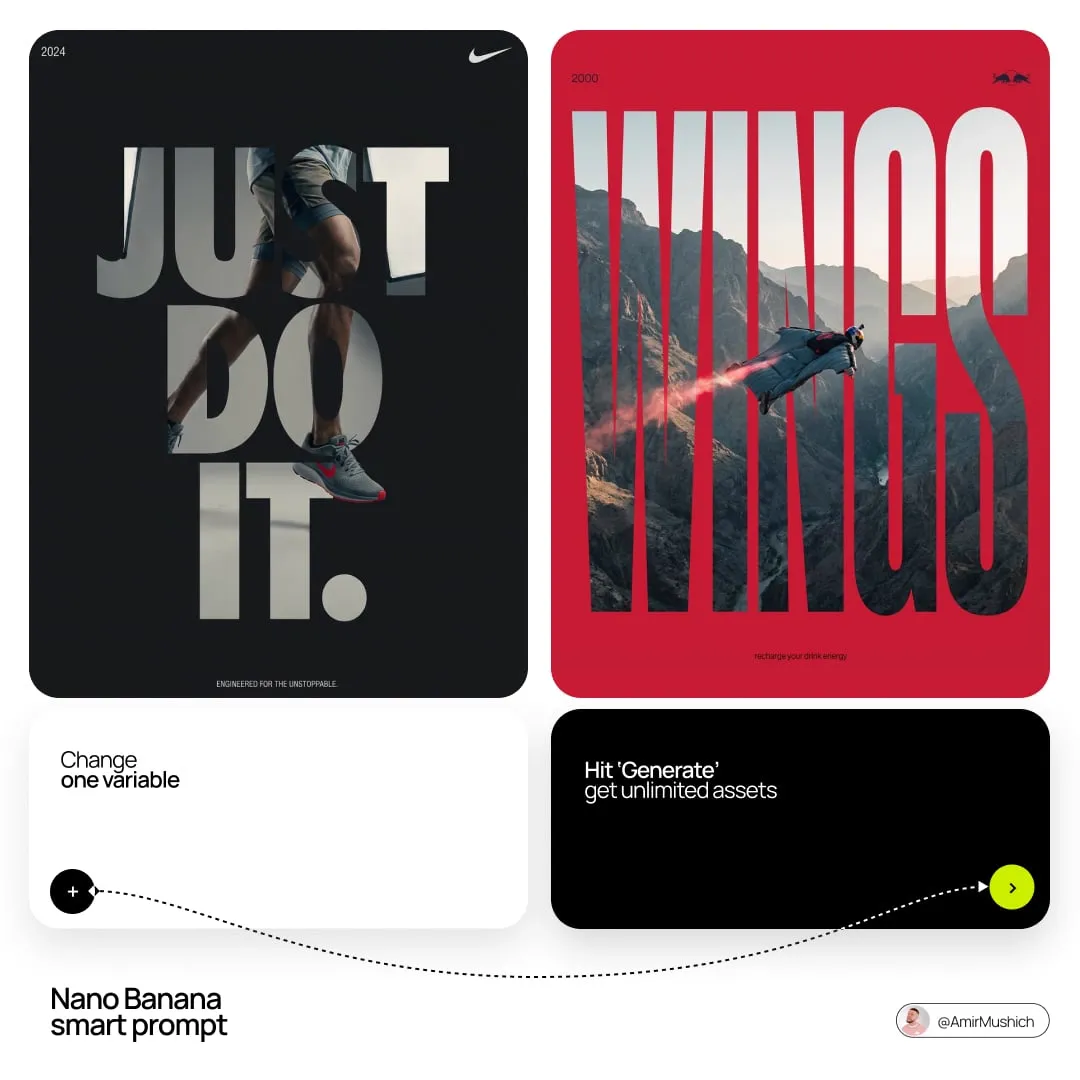
Now vary one element at a time. Swap the camera to a low static shot and you get a different scene from the same setup. Swap the light to harsh midday and the mood flips entirely. This single-variable approach is how you build a library of prompts you can actually reuse, and it pairs naturally with a prompt library so you are not rewriting from memory every session.
Two more habits matter. First, write prompts shot by shot rather than as one long scene description — the generation layer handles one clear action far better than three chained ones. Second, keep a log of what you changed and what it did. After twenty logged generations you will have personal heuristics that no generic guide can give you.
Two production rhythms: the sprint and the cinematic loop
Two tempos cover almost every creator need. Match the tempo to the idea, not to your mood.
The short-form sprint (about sixty minutes)
- 5 minutes — hook. Write three hook lines, pick one, say it out loud.
- 10 minutes — script and shot list. Six to eight shots maximum. Note the aspect ratio and the first frame of each.
- 10 minutes — generation. Run shots in parallel where your tool allows. Multiple candidates per shot.
- 15 minutes — edit. Cut for rhythm. First shot under 1.5 seconds. Keep total runtime under thirty-five seconds unless the idea justifies more.
- 10 minutes — sound and captions. Music bed, two or three effects, captions reviewed for accuracy.
- 10 minutes — export and buffer. Master plus vertical and square variants, thumbnails, and a written caption you can reuse.
The cinematic loop (two to three days)
For anything with a narrative — a brand film, a mini-documentary, a launch piece — slow down and split the work. Day one is treatment and storyboard: a paragraph per scene, then keyframes. Day two is generation plus assembly: build stills first for any shot where composition matters, animate from those stills, and cut a rough assembly with temporary audio. Day three is finish: sound design, a colour consistency pass, captions, and exports.
Building keyframes as images before animating them is the single biggest quality lever in that loop. It is also one reason a dedicated AI image generator belongs next to your video tool, rather than relying on text-to-video for everything and hoping composition falls into place.
Building a portable asset library
Speed compounds only if your work is stored in a form you can reuse. Three folders do most of the job: stills, clips, and prompts.
Keep every approved still at full resolution with a short description in the filename. Keep generated clips labelled by shot number rather than by export date, so a re-edit three months later still makes sense. Keep prompts in a plain text file or a spreadsheet with four columns: the prompt, the tool, the settings, and one line about what the result looked like. That last column is the one people skip and the one that turns a folder of experiments into a personal style guide.
Save your titles, lower-thirds, and transition packs as reusable project files rather than rebuilding them. If you produce a weekly series, a template set turns a two-hour edit into twenty minutes, because the structure is already decided and only the content changes.
Distribution without lock-in
Once production is fast, distribution becomes the bottleneck. A few practices keep you portable.
Design in one aspect ratio, deliver in three. A 9:16 master with generous headroom reframes to 1:1 and 16:9 more gracefully than the reverse. Keep critical elements inside a centre safe area and check how each crop lands before you export.
Export a clean master. No burned-in captions on the master; keep captions as a separate subtitle file plus a burned version for feeds that reward them. This one decision makes every future re-cut cheaper.
Normalise loudness. Mix to a consistent target across your catalogue so viewers do not reach for the volume slider between your videos. Consistency reads as professionalism more than peak loudness ever will.
Publish natively in two or three places, and own one. Your own site or newsletter is the only channel where the audience relationship is yours. Even a simple landing page with embedded videos converts a rented audience into a durable one.
Record rights at acquisition time. If a clip, track, or font is licensed, note the licence where you store the asset. Checking terms when you download something is far cheaper than checking them after a takedown notice, and it turns an afternoon of admin into a habit that never becomes a crisis.
Quality control before you publish
Run the same short checklist every time. It takes ninety seconds and catches most embarrassing errors.
- Hands and faces. Count fingers, check eyes for drift, check for flicker between frames.
- Text in frame. Any accidental signage, watermark, or garbled glyph should be cropped or masked.
- Physics. Liquid pour directions, shadows, reflections, and fabric movement should agree with the light source.
- Continuity. Compare the last frame of one shot with the first frame of the next. Match colour temperature and motion direction.
- Audio sync. Does each effect land exactly on the cut?
- Captions. Read them out loud. Names, numbers, and jargon are where automatic transcription fails.
- The first 1.5 seconds. Would a stranger stop scrolling? If not, re-cut the opening rather than adding more at the end.
- Aspect ratio crops. Watch the vertical, square, and landscape versions individually, not just the master.
Common mistakes when you leave a single platform
Chasing the trend instead of owning a format. Replicating whatever is peaking today puts you in a race you cannot win consistently. A specific format — same structure, different subject each week — compounds.
One mega-prompt per scene. Multi-action prompts produce mush. Split into shots.
Relying on a single generation model. Strengths shift by shot type and by update cycle. Keep two options available so a weak result is a routing decision, not a dead end. The alternatives hub is a reasonable place to compare before committing a workflow to one tool.
Skipping the still. If a shot needs a specific composition, generate the frame first. Animating from a locked image is far more predictable than describing the shot in words.
Publishing without a sound pass. Viewers forgive imperfect visuals far more easily than bad audio or an absent music bed.
Re-exporting every time. Keep a master and derive variants. Rebuilding from the timeline for each destination wastes the time your pipeline was supposed to save.
No prompt archive. If a clip worked, store the prompt, the tool, and the settings. Your archive becomes a competitive advantage faster than any single upgrade.
Treating generation as the whole job. Generation is one stage. Editing, sound, and the first second of the video decide whether anyone stays.
FAQ
How long should a generated short-form video be? Under thirty-five seconds for most feeds, with the first shot under 1.5 seconds. Longer runtimes work when the idea has a genuine narrative arc, but length should be a choice, not a default.
Can AI video replace a full production crew? No, and treating it that way leads to disappointment. It replaces specific, expensive parts of production: establishing shots, impossible locations, product plates, and B-roll you would otherwise shoot on a rushed day. Human judgement stays in the edit, the sound, and the story.
Do I need technical skills? You need three: writing a clear shot description, cutting to rhythm, and running a short quality checklist. None of them require a film degree, and all three improve with repetition.
How many clips should I generate per shot? Three to six. Selection is part of the craft, and the extra generation is usually faster than rewriting a prompt five times.
What about consistency across a series? Lock three things: a style reference, a colour treatment, and a shot grammar (how you open, how you close). Those three create a recognisable series even when individual clips vary.
Should I stop publishing on the platform I already use? No. Keep what works and add native publishing elsewhere plus a channel you own. The goal is redundancy, not abandonment.
How do I keep reviews and approvals moving? Send a rough cut with a timecoded shot list rather than a finished file. Feedback on structure arrives faster than feedback on polish, and structure is cheaper to change.
Where should a beginner start? Pick one narrow format, produce ten episodes on a weekly cadence, and only then expand formats or destinations. Volume on a single format teaches more than variety across five.
What if a generation fails completely? Change one variable, not five. Most failures come from an over-stuffed prompt, an impossible camera move, or a subject the model has not seen enough of. Simplify the action first, then the camera, then the light.
Does a longer clip cost more time to edit? Usually yes. Longer generations tend to contain more places where motion drifts, so you spend the saved shoot time in the trim. Two short confident shots usually beat one long uncertain take.
Start building with Orelon
The shift away from depending on one feed is really a shift toward owning your production. A workflow you can run in an afternoon — brief, stills, generated shots, edit, sound, export variants — makes every destination a choice you can revisit rather than a fate you have to accept.
Orelon is built for exactly this kind of iteration: a cinematic AI video generator for turning ideas into motion, with prompts and templates that shorten the distance between a concept and a cut you can publish. Start with the AI video generator, borrow a structure from the video templates, and compare approaches before you commit your workflow to any single tool. Then publish the same story in three places and keep the fourth — the one you own — moving at the same time. That is what a real platform alternative looks like: not a new app to depend on, but a pipeline you control.