
Plan, prompt, and edit an AI music video with a repeatable workflow: beat maps, shot lists, continuity rules, pacing, and a weekend edit plan.
A finished music video has two jobs: it has to move convincingly on its own, and it has to sit inside the song without fighting it. Everything else — locations, wardrobe, camera moves, color — is a means to that end.
AI video generation changes how you get there, not what “there” is. Instead of booking a location, you write a prompt. Instead of rescheduling a shoot, you regenerate a shot and keep the better take. The bottleneck moves from budget to judgment: your shot list, your eye for continuity, and your edit decisions now carry more weight than any single model's output. A video assembled from nine deliberate clips reads better than one assembled from forty random ones.
What follows is the full loop for a three-minute track: planning against the audio, prompting, continuity across dozens of generations, tool selection without feature-list noise, the edit, and the mistakes that make AI visuals look like tech demos instead of videos.
Start with the song, not the tool
Before you open any generator, listen to the track three times with a stopwatch and write down timecodes. You are looking for structure: where the intro ends, where the first chorus lands, where the bridge drops everything out. This map becomes both your shot allocation and your editing grid.
| Section | Typical time | What the visuals should do | | Intro | 0:00–0:12 | One establishing shot, slow move, no cuts | | Verse 1 | 0:12–0:45 | Introduce the character and the world | | Pre-chorus | 0:45–0:58 | Tighten shot length, raise contrast | | Chorus 1 | 0:58–1:25 | Performance plus wide spectacle | | Verse 2 | 1:25–1:55 | Narrative turn or new environment | | Chorus 2 | 1:55–2:25 | A larger version of chorus 1 | | Bridge | 2:25–2:45 | Abstract texture, slow motion, low light | | Final chorus | 2:45–3:10 | Fastest cutting, widest framing | | Outro | 3:10–3:20 | Return to the opening image |
Map energy, not just time
Timecodes tell you where to cut. Energy tells you what to generate. For each section, decide four variables in advance: how fast shots cut, how wide the lens feels, how much light is in frame, and how much the camera moves. A pre-chorus and a final chorus are the same music emotionally, so they can share a look while differing in scale. Keeping a written row for each section stops you from generating a beautiful clip that has nowhere to live in the edit.
Find the turn
Nearly every strong music video has one moment where the visual language changes: the color drains, the location opens up, the character stops running. Mark that moment in your beat map. It is usually the most important five seconds of your edit, and it deserves the most generation attempts and the closest attention.
Watch references with the sound off
Pick three videos you admire in your genre and watch them muted, counting seconds between cuts. You will notice that pacing is not constant — it accelerates into choruses and relaxes in bridges. Copying that rhythm structure is a faster education than another hour of generating randomly.
The four artifacts that prevent wasted generations
Most disappointing AI music videos fail in preparation, not in the model. Four things, written down before you generate, will save dozens of discarded attempts.
1. The concept sentence
One sentence, concrete and visual: “A boxer trains alone in an emptied city at night while a second version of her watches from rooftops.” If your sentence contains the words journey or emotions, rewrite it until it describes something a camera could photograph.
2. The visual rule
A single constraint that makes every shot related. Examples: one practical light source per frame. The camera never leaves the character's orbit. Every location is wet. All wardrobe is a single color. A rule turns a folder of clips into a body of work, and it doubles as a filter when you decide which generations to keep.
3. The shot list
Twelve to sixteen shots, each with a one-line purpose. Not thirty. A three-minute song is comfortably filled by fourteen strong clips plus performance coverage and deliberate reuse of your best angles.
4. The look frames
Before animating anything, generate one still per location or mood. Stills are the cheapest way to test palette, wardrobe, lighting, and composition. Approve six to eight look frames, then animate only those. This one habit removes the most common cause of inconsistency: discovering the look halfway through animation.
Prompts that behave like camera directions
A lyric is a mood; a prompt has to be a shot. “A lonely astronaut drifts through nebulae” gives a generator almost nothing to work with. “A lone astronaut in a weathered suit drifts slowly through a violet nebula field, soft rim light, 35mm anamorphic lens, slow dolly-in, melancholic, five seconds” gives it a camera, a light, and a duration.
The eight layers
Write prompts in a consistent order so you can debug them later:
| Layer | Example wording | | Subject | a lone astronaut in a weathered suit | | Action | drifting slowly, arms relaxed | | Environment | violet nebula field, distant debris | | Light | soft rim light, no fill light | | Lens | 35mm anamorphic, shallow depth of field | | Camera | slow dolly-in, slight handheld float | | Mood | melancholic, weightless | | Duration | five seconds, one continuous move |
Keep prompts under roughly sixty words. Past that, later layers stop registering and the model averages your instructions into mush.
One movement per shot
Camera language does more work than any adjective. Dolly in, dolly out, crane up, orbit left, whip pan, slow push, tilt down, locked-off static. Pick one per shot. Two movements in a single prompt usually produce a shot that does neither well, and shot-to-shot variety comes from alternating single movements, not from stacking them.
Use negative guidance explicitly
Name what breaks the illusion instead of hoping the model avoids it: extra fingers, warped faces, duplicated limbs, on-screen text, watermark, flicker, jitter, sudden exposure jumps. Keep the list short — five to eight items — and reuse it across every prompt in the project.
Do not illustrate the lyric word by word
Literal illustration reads as karaoke. Build a world that shares the song's emotional temperature, and cut away on the emotional word rather than translating every noun. If the line is “I never learned to stay,” an empty motel hallway with a closing door does the job without showing a single literal object from the sentence.
Change one variable at a time
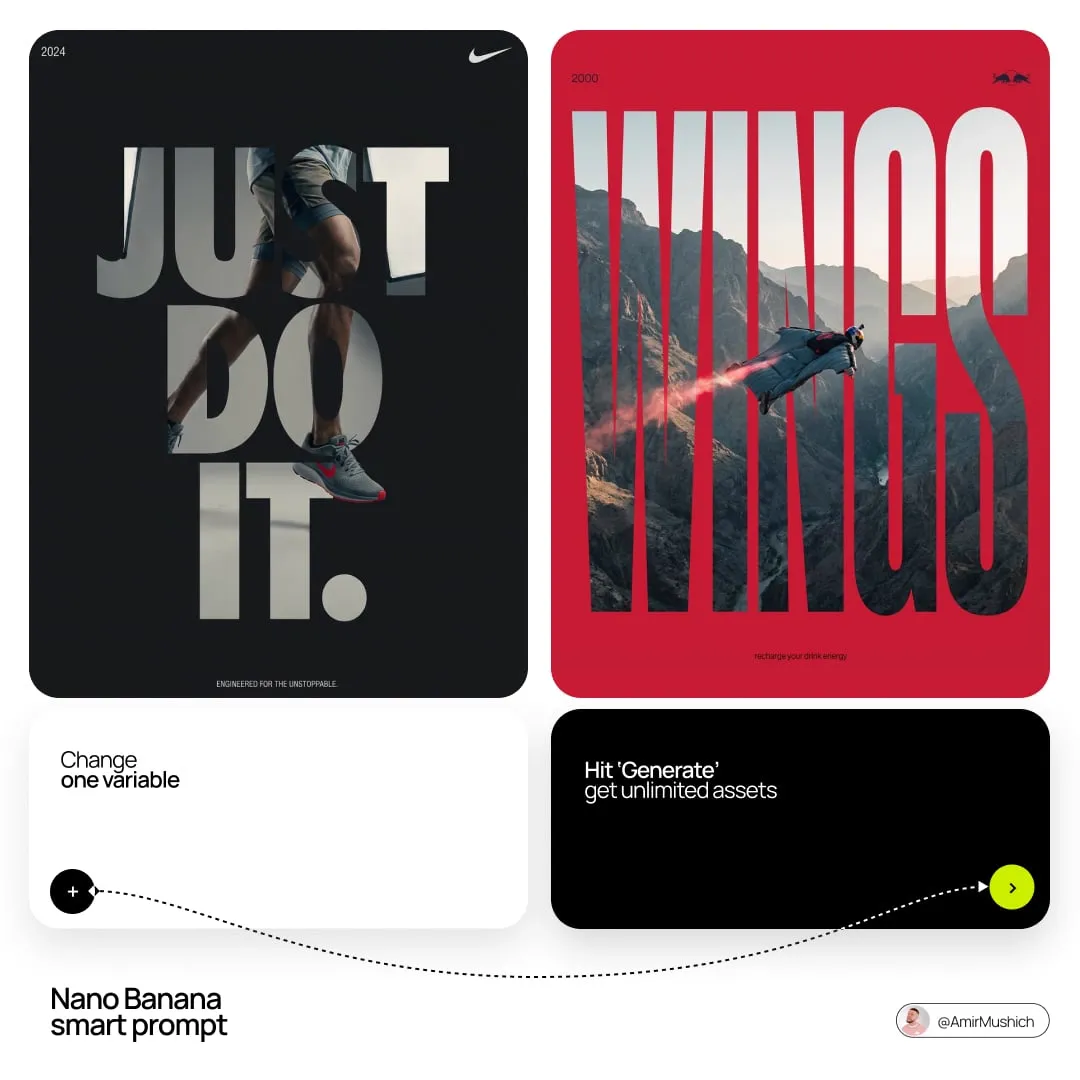
When a shot almost works, resist rewriting the whole prompt. Adjust the camera move, regenerate, then adjust the light. Systematic iteration tells you which instruction caused the improvement; wholesale rewriting leaves you guessing and burns attempts you will want later in the project.
Continuity: make thirty clips feel like one video
Audiences forgive almost anything except inconsistency. If the jacket changes color between cuts, the video reads as random, and no amount of good lighting repairs that.
Lock the look before you animate
Decide the grade once: contrast, color temperature, saturation, grain. Repeat the same style words in every prompt, then apply the same correction in your editor. A single grain overlay and a consistent letterbox will do more for cohesion than the quality of any individual shot.
The face problem and how to work around it
If a face has to carry a close-up and consistency is uncertain, shoot from behind, in silhouette, in profile, or in reflection. For a recurring character, write one subject description and paste it verbatim into every prompt. Never paraphrase it, and never improve it mid-project.
Start from images, not text
Animating an approved still gives you exact control over composition, which is the most reliable route to a coherent sequence, especially for stylized or animated looks. Stills first, motion second. Browsing video templates is a fast way to see how finished sequences handle coverage before you build your own.
Cover key moments from three angles
When a beat matters, generate a wide, a medium, and a close-up of the same moment. Three options for one beat is exactly what makes a chorus feel larger than a verse, and it costs three attempts instead of a second camera and a second setup.
Carry lighting across environments
If your rule is one practical light source per frame, keep that rule even when you change location. Continuity is not just the character; it is the logic of the light. A neon interior followed by a neon exterior reads as the same film. A neon interior followed by flat daylight reads as two unrelated clips.
Shot grammar and pacing for three minutes
Almost every music video, live action or generated, is assembled from five kinds of shot. Assign rough proportions before you start generating.
| Shot type | Share | Purpose | | Performance | 35–45% | The artist; the emotional anchor | | Narrative | 25–30% | Story beats for verses and bridges | | Environment | 10–15% | Place and scale | | Abstract texture | 10–15% | Transitions, bridges, slow motion | | Inserts | 5–10% | Hands, objects, details that cut on the beat |
Two rules keep the structure legible. First, the chorus should look like the verse but larger: wider framing, more light, more movement, more cutting. Second, every cut should land on a beat, a breath, or the peak of a camera move — never in the middle of nothing.
Making performance shots feel intentional
Performance footage without a camera on set needs a compensating idea. Give the character a physical task, a destination, or an obstacle: walking a corridor, tying a boot, stepping out of a doorway. Motion with a purpose reads as performance; motion without one reads as a slow-motion wallpaper loop. Vary the distance too — one wide performance shot, one medium, one that frames the character against something huge.
Choosing a tool: criteria that actually matter
Feature lists are noisy. These criteria predict whether you will finish a video or abandon it halfway.
- Start-frame control. Can you animate from an approved still, or are you limited to text prompts?
- Shot duration. Four to six seconds per generation is the practical sweet spot for music video; check whether longer clips stay coherent or drift.
- Aspect ratios. Decide vertical, square, or widescreen before generating. Reframing later crops faces and composition.
- Style consistency. How well does the tool hold a look across many prompts that share the same style wording?
- Prompt adherence. Does it respect lens and camera language, or quietly replace it with its own defaults?
- Iteration speed. A tool that returns a shot in a minute changes how freely you experiment.
- Generation limits. Understand how your plan handles volume, so you know whether five attempts per keeper is realistic.
- Export quality. Resolution and bitrate matter far more on a large screen than in a preview window.
When you are shortlisting platforms, read focused comparisons rather than generic rankings. Orelon vs Runway and Orelon vs Kling AI show how the same shot behaves across two workflows, and the broader alternatives overview is useful when you have three tabs open and no decision.
A weekend production plan
Friday evening. Beat map the track with timecodes. Write the concept sentence and the visual rule. Collect eight to twelve reference stills.
Saturday morning. Generate look frames for each location. Approve six to eight and stop — do not start animating yet, and do not chase a ninth.
Saturday afternoon. Animate approved frames into ten to fourteen clips of four to six seconds, keeping style and subject wording identical across every prompt.
Saturday evening. Watch everything against the track and take notes. Discard anything that does not earn its place. You will almost always find the chorus needs something wider.
Sunday morning. Generate replacements only for the gaps you identified, until you have eighteen to twenty-four usable clips.
Sunday afternoon. Assemble the cut: single-shot intro, cutting that tightens into the chorus, chorus built larger than verse, one clear turn at the bridge.
Sunday evening. Grade, add grain and letterbox, place any text, export, and watch the result on a phone before you publish. Most of your audience will see it there first.
Editing: where clips become a music video
Generation produces clips; editing produces the video.
- Cut on the beat. Place cuts on downbeats and snare hits. Roughly half a second per shot in the final chorus, three to five seconds in the bridge.
- Cut on motion. Find the frame where the camera move is fastest and cut there — it hides the seam between two unrelated generations.
- Use transitions sparingly. A hard cut is invisible; a morph is a statement. One or two stylized transitions per video, not twenty.
- Grade for unity. Match every shot to a single reference frame, then add grain, gentle halation, and a light vignette.
- Treat lyric text as design. One typeface, one position, one animation behavior for the whole video.
- Respect lip sync limits. Keep those shots short or partly obscured, and give the eye somewhere else to go on sustained lines.
Mistakes that make AI music videos look like demos
- Too many locations. Fix: two or three worlds, revisited at different energy levels.
- Fast song, slow camera. Fix: match movement to tempo — a 140 BPM track needs motion in every frame.
- Overwritten prompts. Fix: under sixty words, one camera move, one lighting idea.
- No approved look frame. Fix: stills first, animation second.
- Ignoring the chorus. Fix: reserve the widest shot and the brightest light for it.
- Using every clip. Fix: nothing is lost when stronger shots replace mediocre ones.
- Showing faces too early. Fix: hold silhouette and back-of-head until the second chorus.
- Forgetting the delivery format. Fix: choose aspect ratio and safe margins before you generate.
- Uniform pacing. Fix: write the cut rate per section into the beat map and follow it.
- No ending. Fix: return to your opening image in the outro so the video closes instead of stopping.
Delivery, versions, and reuse
Plan two deliverables: a widescreen master and a vertical cut assembled separately, not cropped from the master. Vertical versions need their own framing decisions, which usually means regenerating two or three key shots with a taller composition rather than reframing existing ones.
Then treat the footage as an asset library. The same clips can support a lyric video, a teaser, a three-part short-form series, or a live backdrop. Because each generation is a file rather than a shoot day, re-editing costs nothing except time — which is the real advantage of working this way.
FAQ
Can AI turn an audio file into a finished music video on its own? It generates visuals from your prompts and provided frames. Direction, shot selection, continuity, and the edit remain yours. The tool supplies imagery and motion; you supply meaning.
How do I sync visuals to lyrics? Mark each lyric line with a timecode in the beat map, then assign one shot or one cut per line. Cut on the word, not after it.
How many attempts does one keeper take? Plan on three to five, fewer when you animate approved stills instead of prompting motion from scratch.
Do I still need editing software? Yes. Anything with a multi-track timeline, speed ramps, and color correction. Cutting is where pacing, rhythm, and coherence are decided.
What about lip sync? Keep it to short bursts, tighten it in the edit, and cut away before imperfections become noticeable.
Can the same character appear across many shots? Yes, if you reuse an identical subject description plus a reference frame, and avoid extreme close-ups during fast motion.
What aspect ratio should I start with? Widescreen for the master, then a separately composed vertical version for short-form. Decide before generating, not after.
Is this usable for a commercial release? Check the terms of the tool you use alongside your distributor's content policy, and keep your prompts and source files documented. Requirements vary by platform and label.
Take the track from audio file to finished visual
You already know how the track should feel. The workflow above turns that feeling into a beat map, a look, a shot list, and a cut that lands on the beat instead of near it.
Start with one world, one character, and one rule. Use the AI image generator for look frames, then move approved stills into the AI video generator and generate four clips against the track. If you would rather begin from a proven structure than a blank prompt field, the prompt library has starting points you can adapt in a sentence or two.
Once the concept is right, everything else is iteration — and your next video is already in motion at Orelon.