

A practical guide to choosing the best app for short video clips, with prompt frameworks, vertical framing tips, and a repeatable AI video workflow.
Most creators searching for the best app to make short video clips are not short on options. They are short on time. App stores overflow with editors, browsers overflow with generators, and every landing page promises cinematic results from a single sentence. The useful question is narrower: which tool fits the clip you need to publish today, and how do you arrange that tool inside a workflow so the next twenty clips cost less effort than the first?
This guide is written for marketers, solo creators, and small teams publishing to Reels, Shorts, and TikTok on a schedule. It covers what text-to-video and image-to-video genuinely do well, how to compare apps in ten minutes instead of ten days, how to write prompts that survive vertical framing, and where clips quietly lose viewers in the opening seconds. No feature-list worship, no mythical all-in-one app — just a stack that reliably ships.
Why Short Video Is a Workflow Problem
Short-form feeds set the tempo for every other format. They are vertical, watched on mute first, and consumed in fragments between other tasks. A viewer decides whether to keep watching within the first second or two, long before your story has earned any attention. That changes what “best” means. A tool is not best because it has the most impressive demo reel; it is best when it removes friction from the part of the process you repeat forty times a month.
Consider the math. If one app saves you five minutes per clip across thirty clips, that is two and a half hours returned every month — enough to produce four or five additional clips, or to fix the parts only a human can fix, like pacing and taste. That is a bigger competitive advantage than a single spectacular render mode you use twice a year.
Most people solve this backwards. They install three apps, learn none of them deeply, and conclude that AI video is overhyped. Generation quality has improved enormously; the real bottleneck moved. It is no longer “can software make a moving image from a sentence” but “can you assemble a coherent thirty-second piece from those images, repeatedly, without losing your visual identity.”
The Four Jobs Every Short Clip Needs
Short-form video is not one task. It is four, and each favors different software.
Concept and script. You need an idea, a hook, and a shape — usually four to six beats across fifteen to forty-five seconds. A notes app and a timer beat most editing suites here, because the constraint you are fighting is clarity, not rendering power.
Generation. You need footage that does not exist yet: a scene you cannot afford to shoot, a product angle that would require a studio, a visual metaphor for something abstract like compounding interest or burnout. This is where an AI video generator earns its place in the stack.
Assembly. You need to trim, order, and match shots so a sequence reads as one continuous scene rather than disconnected fragments. Generators handle a first pass surprisingly well; you almost always finish by hand.
Packaging. Captions, sound, a cover frame, and a title that survives a muted autoplay feed. This step decides more reach than most creators admit.
Written in that order, the “best app” question resolves into a stack rather than a single download. Most creators need one strong generator, one lightweight editor, and one captioning tool. Forcing a single app to do all four jobs usually produces mediocre results in at least two of them — typically assembly and sound.
Where AI genuinely saves time
Not everywhere, and pretending otherwise wastes effort. AI is dramatically faster at three things: producing footage that would otherwise require a shoot, generating variations of a concept so you can choose instead of agonize, and completing the tedious first pass of a rough cut. It remains slower than a human at irony, timing, and the small specific detail that makes a clip feel authored.
How to Compare Short Video Apps in Ten Minutes
Skip the feature lists. Test two candidates against the same five criteria and the choice usually makes itself.
-
Prompt adherence. Write one detailed prompt and count how many of your elements survive. If the light, the lens, and the action all appear, the model is listening. If you get a generic scene with one element intact, it is guessing.
-
Aspect ratio and shot length. Vertical 9:16 is the default for short-form. Many tools generate wider frames that you then crop, which throws away resolution and often the subject's head.
-
Consistency. Generate three shots of the same character or product in separate attempts. Do they feel like frames from one film, or three unrelated films?
-
Motion realism. Watch hands, faces, and any on-screen text. Artifacts cluster there first, and they are the fastest way to make an otherwise beautiful clip feel synthetic.
-
Cost predictability. Estimate the cost of one finished thirty-second clip including discarded attempts, not the cost of one render. Revision rounds are where budgeting quietly breaks.
A shortlist helps more than a vague sense of quality. Comparison pages let you judge models side by side instead of guessing from marketing copy, and a narrow head-to-head such as Orelon vs Runway is often more informative than a broad roundup. If you are still deciding which family of tools to invest in, browse a wider set of AI video generator alternatives and note which ones generate natively vertical.
The output format trap
Generating in 16:9 and cropping to 9:16 removes roughly half your frame. You lose the top of a subject's head, the texture on a countertop, and the sense of space that made the shot work. Always test the aspect ratio before judging a tool's visual quality. A strong model cropped badly looks worse than an average model shot natively vertical.
Text-to-Video: From Sentence to Shot
Text-to-video is at its best when the idea is visual and specific. Give the model a subject, an action, a setting, and a camera behavior, and you get a shot that behaves like something from a real set — parallax, motion blur, light that changes as the camera moves. Vague prompts produce generic mush, because the model has nothing to decide with.
Six elements, in order, fix most weak prompts:
Subject. Who or what, with one distinguishing detail. “A baker in a flour-dusted apron,” not “a person.”
Action. One clear verb per shot. Two actions in one prompt usually produce neither convincingly.
Setting. Where and when, including weather, surfaces, and background activity.
Camera. Shot size and movement: close-up, wide, slow dolly in, handheld, drone rise, locked-off tripod shot.
Light and grade. Warm tungsten, overcast daylight, neon night, high-contrast noir, soft window light from the left.
Mood and audio cue. Tense, playful, serene — plus a sound note if the tool supports audio generation.
A finished example: “Close-up, slow dolly in on a ceramic coffee cup on a steel counter, steam curling upward, cool morning window light from the left, shallow depth of field, calm and quiet mood, soft ambient café noise.”
Notice the shape. Subject, action, setting, camera, light, mood. That order keeps the important nouns near the front, where many models weight them most heavily.
Three prompt patterns worth saving
The product hero. “Macro shot of a matte black watch rotating slowly on a dark reflective surface, single hard rim light, dust particles drifting in the air, premium and restrained.”
The concept metaphor. “A paper boat floating down a rain-filled gutter between city buildings, low angle, overcast light, melancholic.”
The character beat. “Medium shot of a cyclist pulling a helmet strap tight, early morning street, breath visible, warm sunlight behind, determined.”
Save the prompts that work. A personal library beats generic templates because it encodes your taste; a shared prompt library is a useful starting point, but the last twenty percent you write yourself is what makes clips recognizably yours.
Image-to-Video and Visual Consistency
Image-to-video turns a still into motion. A product photo gains a slow orbit, an illustration gains parallax, a portrait gains a blink and a turn of the head. This is the fastest route to a consistent look across a series, because the visual identity is locked before any motion exists. Generate key frames first with an AI image generator, choose the winners, then animate only those.
The workflow advantage is psychological as much as technical. Judging stills is fast and cheap; judging motion is slow and expensive. Filter your ideas at the still stage and you spend your rendering time on frames you already like.
A character kit that holds together
Continuity across clips comes from a small set of decisions you make once and reuse:
- Three reference stills of the same person or product from different angles, generated in one session.
- A wardrobe or material note — the same jacket, the same brushed metal, the same ceramic finish.
- A lens and framing habit. If your series lives at medium focal length with eye-level framing, keep it there.
- A grade. One palette per series. Warm amber for one show, cool slate for another.
When you animate, feed the reference still and describe only the motion and camera. Adding new wardrobe details at this stage is how characters drift and audiences lose the thread.
Multi-image fusion for narrative flow
For sequences that must read as one continuous scene, multi-image fusion — supplying several related frames and asking for motion between them — produces transitions that cut-together editing cannot. It is particularly effective for process content: hands opening a box, liquid being poured, a door swinging open. Keep individual motion beats short. Three or four seconds of purposeful movement holds attention better than twelve seconds of drift.
Sound, Captions, and the Muted-First Feed
Most short-form video is watched on mute at least once, and often only once. That single fact should reorganize your finishing steps.
Captions are not an accessibility afterthought; they are the primary reading surface. Burn in short lines of three to five words, break them at natural phrase boundaries, keep them clear of platform interface zones at the bottom and right edges, and never let a caption cover a speaker's mouth. If a viewer can follow the clip with sound off, the clip works.
Sound does two jobs: it carries emotion and it masks the small imperfections of generated footage. A clean ambient bed, one music layer, and a single emphasized effect per beat is usually enough. Too many layers make small artifacts more noticeable, not less.
If your tool includes voice synthesis, use it for scratch narration and for internal reviews. For anything branded, a human voice — even a slightly imperfect one — tends to hold attention longer, because audiences detect synthetic delivery faster than they can explain why it feels off.
Finally, mix for phone speakers. Check on the smallest device you own, at low volume, in a room with background noise. Mixes that sound rich on studio headphones often collapse into an indistinct blur in a real feed.
The First Three Seconds: Hooks That Hold
Retention is decided before your story begins. Five hook types work repeatedly across niches:
- Visual disruption. Something unexplained in frame — an object out of place, motion in an unexpected direction. The viewer stays to resolve the puzzle.
- Contradiction. A statement that conflicts with common belief, delivered as the first line of on-screen text.
- Immediate payoff. Show the finished result, then rewind to how it was made.
- Specific number. “Three edits that doubled retention” outperforms “some editing tips,” because specificity promises a bounded commitment.
- Mid-action open. Start in the middle of something already happening. No introductions, no logos, no throat-clearing.
Then cut ruthlessly. Most first drafts run about twenty percent too long, and the excess almost always sits in the middle. Short-form pacing tolerates half-second shots and punishes any moment without new information. If a shot adds no idea, no detail, and no feeling, remove it.
A 45-Minute Workflow From Idea to Export
A repeatable sequence for one clip, deliberately unglamorous:
- Write the beat sheet (5 minutes). Four to six lines: hook, three body beats, payoff. Plain text, no formatting.
- Draft one prompt per beat (8 minutes). Use the six-element framework and keep one action per shot.
- Generate two variations per beat (10 minutes). Variations are cheaper than revisions; two options prevent perfectionism.
- Select and order (5 minutes). Choose on motion quality and framing, not on whether a shot is flawless. Flawless rarely exists.
- Cut to a beat (7 minutes). Trim every shot to its strongest half-second, then lay music underneath rather than cutting to finished audio.
- Caption and cover (5 minutes). Short lines, safe zones, and a cover frame that reads at thumbnail size.
- Export vertical and test on a phone (5 minutes). What looks fine on a monitor frequently fails in a feed.
Start with video templates if you want the structure pre-built, and check Orelon pricing to estimate the true cost of one finished clip including discarded generations rather than one attempt.
Keeping a Series Coherent Without Repeating Yourself
Consistency turns separate clips into a channel. Four anchors do most of the work: a locked visual identity (same grade, same lens feel, same framing habits), a recurring structure (hook, context, turn, payoff, callback), a named element such as a character, prop, or catchphrase, and a consistent length. Twenty-two seconds every time trains an audience better than eighteen seconds one day and fifty-five the next.
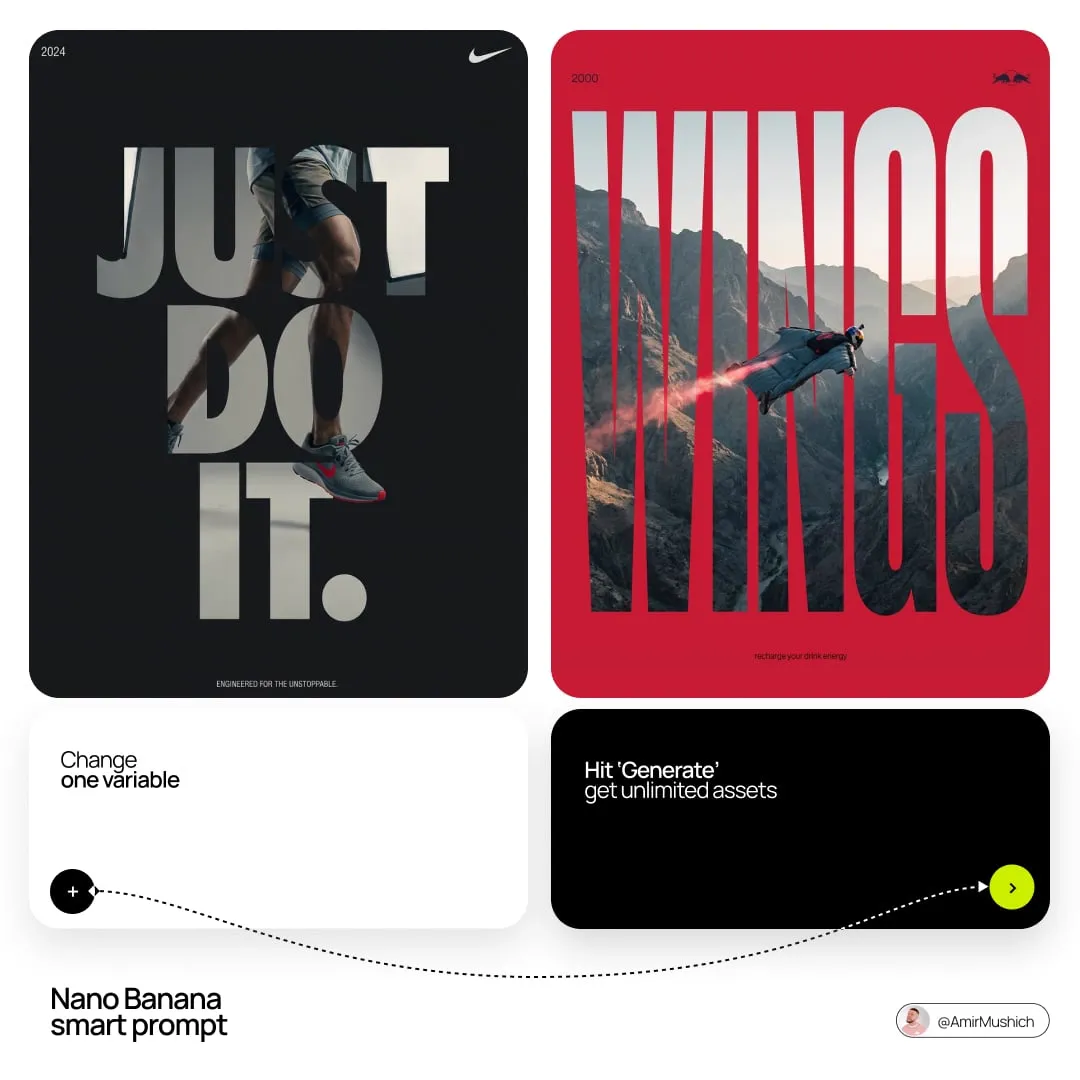
Repetition without variation gets boring, though. Change one variable per clip — lens, palette, or setting — while holding structure and grade steady. That gives viewers novelty inside familiarity, which is the actual recipe for a returning audience.
Mistakes That Quietly Cost You Views
- Opening with a logo. Nobody has agreed to care about your brand yet. Earn the second before you spend it.
- Explaining before showing. Front-load the visual, back-load the context.
- Generating wide and cropping vertical. You lose resolution and often the subject's face.
- One long take. Even beautiful generated footage goes stale after four seconds.
- Ignoring the final frame. A looping or unresolved last image earns rewatches; a hard cut to black does not.
- Letting captions cover the action. Placement is part of composition, not an overlay detail.
- Chasing every new model. Tool-hopping resets your learning curve. Pick two, learn their quirks, and revisit the market quarterly.
- Judging on a monitor. Desktop playback hides the reality of a phone feed.
FAQ
Do I need one app or several?
Usually several. A generator for footage, a lightweight editor for assembly, and a captioning tool. Forcing one app to handle all four jobs tends to produce mediocre results in at least two of them, most often sound and pacing.
Is text-to-video or image-to-video better for beginners?
Image-to-video is easier to control because your starting frame is already decided. Text-to-video has a higher ceiling and higher variance — better when you need something that does not exist yet and can tolerate a few attempts.
How long should a short clip be?
Long enough for one idea, short enough that nothing repeats. For most marketing and educational content, that lands between fifteen and forty seconds. If you can cut eight seconds without losing meaning, cut them.
Why does my generated footage look uncanny?
Usually faces, hands, or fast movement. Slow the camera, reduce on-screen motion, keep subjects at medium distance, and cut before artifacts become noticeable. Masking small imperfections with sound design and motion helps more than re-rendering repeatedly.
How many variations should I generate per shot?
Two is the practical sweet spot. One invites perfectionism; five invites indecision and burns rendering time you could spend on a different beat entirely.
How do I stop every clip from looking the same?
Change one variable at a time: lens, palette, or setting. Keep the structure and grade stable so the channel still reads as a single body of work.
Do captions hurt retention?
Badly placed ones do. Short, well-timed captions improve completion rates for muted viewers, which is most of a typical audience. The failure mode is dense lines that force reading instead of watching.
Make Your Next Clip in Orelon
The tools matter less than the loop you build around them. Choose a generator that handles vertical natively and holds a look across shots, write prompts with the six-element framework, cut to a beat, and package every clip with captions and a cover frame that survives a muted feed. Then repeat weekly until the process is boring. Boring processes are the ones that ship.
Orelon is built for exactly that loop: an AI video generator for cinematic ideas in motion, with image-to-video for consistent characters, templates that keep a series on brand, and a prompt library that shortens the first draft. Start with one beat sheet, generate two variations per shot, and see how quickly a repeatable short-form workflow takes shape.