
Build a repeatable AI workflow for vertical short-form video: hooks, shot lists, text-to-video vs image-to-video, audio-first editing, and retention passes.
A YouTube Short gives you roughly thirty seconds to prove you are worth watching, and most creators lose that argument in the first two. The hard part is rarely the idea. It is the number of decisions standing between the idea and the export. What does the opening frame look like? How many shots does the story need? Where does the camera move? What does the narration say, and how long does it take to say it? Where do captions sit so the interface does not swallow them?
AI video generation does not make those decisions for you. It makes them cheap to test. When a shot takes ninety seconds to produce instead of ninety minutes, you can build three versions of an opening, watch which one holds attention, and discard the other two without grieving. That is the actual shift for short-form creators: iteration speed, not automation.
What follows is a practical production system for vertical short-form video built around an AI video generator, from the hook line to the final export. It covers prompt structure for 9:16 frames, when to generate from text versus from a still image, how to treat narration and music, and how to batch the work so consistency stops depending on motivation.
Why Shorts Still Reward Speed Over Polish
Short-form platforms are unforgiving in a specific way. They do not punish imperfect craft as much as they punish hesitation. A slightly noisy shot with a strong opening will beat a beautifully lit clip that takes eight seconds to reach the point. That asymmetry changes what you should optimize for.
Three constraints drive everything else:
- The first two seconds carry the video. If the promise is not visible immediately, retention drops and distribution quietly stops.
- Vertical framing rewrites composition. A wide establishing shot that works on a landscape timeline feels empty at 9:16. Faces, hands, products, and movement toward the lens fill the frame better.
- The loop is part of the story. A Short that ends where it began invites a rewatch, and a rewatch is the cheapest engagement signal you can earn.
Traditional production fights these constraints because every revision costs a shoot day. Generative production makes revision cheap, which moves the bottleneck from budget to taste. The creators who do well are not the ones generating the most clips. They are the ones who generate quickly, cut ruthlessly, and keep a library of shots that already work in vertical.
There is a second-order benefit too. When generation is cheap, you stop defending your first idea. Most weak Shorts are weak because the creator committed to a mediocre hook early and then spent the whole edit trying to rescue it.
The Four-Stage Production Loop
A reliable Short comes out of four stages. Skip one and you will feel it in the edit.
Stage 1: Pin the promise in one sentence
Write the sentence a viewer would use to describe your Short to a friend. "A twelve-dollar microphone made this room sound expensive" is a promise. "Microphone tips" is a topic. Promises convert; topics do not.
Keep it under twelve words and make sure it contains a stake: money, time, risk, surprise, or a visible before-and-after. If you cannot find a stake, you do not have a Short yet — you have a fragment of a longer video.
Stage 2: Convert the promise into four to eight shots
Thirty seconds at a comfortable pace is roughly four to eight beats. A structure that holds up across almost any niche:
- Hook (0:00–0:02) — the most visually surprising moment, often pulled from the middle of the piece.
- Setup (0:02–0:06) — who or what, stated in six words or fewer on screen.
- Escalation (0:06–0:20) — two to four shots, each adding exactly one new piece of information.
- Payoff (0:20–0:27) — the result, the reveal, the thing the hook implied.
- Loop or next step (0:27–0:30) — return to the hook frame, or point to the follow-up.
Write the shot list as one line per shot. If a line needs a comma-spliced explanation, it is two shots pretending to be one.
Stage 3: Choose the generation mode per shot
Not every shot deserves the same treatment. Establishing shots and abstract transitions are usually fine from text. Anything with a specific face, product, label, or location benefits from starting with a still image and animating it. The decision table further down covers this in detail.
Stage 4: Assemble to the audio, not the picture
Drop your narration or music bed first, then cut picture to it. Cutting picture first and forcing audio to fit is the single most common reason AI-assisted Shorts feel sluggish. Picture-to-audio editing also gives you an objective length for every shot, which removes the guesswork from generation.
Prompting for 9:16 Frames That Survive Cropping
Prompt quality is the difference between a usable clip and six wasted attempts. Vertical adds its own rules.
The four-slot formula
Build every prompt from four slots, in this order:
- Subject — who or what, with one specific detail ("a ceramicist with chalk-dusted hands").
- Action — a single present-tense verb phrase ("lifts a half-finished bowl from the wheel").
- Environment — light, time of day, and one texture ("morning window light, wet clay, dust drifting in the air").
- Camera — distance, movement, and lens feel ("close-up, slow push in, shallow depth of field, 35mm").
A finished example: A ceramicist with chalk-dusted hands lifts a half-finished bowl from the wheel, morning window light, wet clay and floating dust, close-up slow push in, shallow depth of field, vertical 9:16.
Every extra adjective you add competes with the ones already there. If a generation disappoints, the fix is usually subtraction, not more description.
Prompt for motion, not stillness
Static descriptions produce static clips. Add a verb that implies change across the shot: pours, unfolds, snaps, spins, steps through, opens, turns toward camera. Motion gives the editor something to cut on, and vertical footage lives or dies on movement toward or away from the lens.
A practical test: read your prompt and ask what is different between the first frame and the last. If the answer is "nothing," the clip will feel like a still with a slight drift, and it will drag in the edit.
Keep consistency with a short style tag
Append a reusable phrase to every prompt in a project — the same color treatment, the same lens family, the same grain. Something like warm contrast, soft highlight roll-off, subtle 16mm grain repeated across eight shots will hold a video together better than any single shot's cleverness. Save these strings in a prompt library so you are not retyping them late at night.
Mind the headroom
Vertical frames crop aggressively. Avoid prompts that place important action at the extreme edges of a wide composition, because the 9:16 reframe will push it out or make it feel cramped. Center-weighted subjects with motion toward the camera survive cropping best. If you already have great landscape footage, do not crop it — regenerate it vertically instead.
Text-to-Video vs Image-to-Video: How to Decide
Most tools offer both modes, and choosing wrong wastes far more time than writing a better prompt would.
| Shot type | Better starting mode | Why |
|---|---|---|
| Establishing or location shot | Text-to-video | No specific object identity to protect |
| Product, packaging, or logo | Image-to-video | Brand accuracy matters more than novelty |
| Person with a consistent look | Image-to-video | Keeps facial structure stable between cuts |
| Abstract transition or texture | Text-to-video | Fast, forgiving, easy to regenerate |
| A shot you already storyboarded | Image-to-video | Your composition survives the generation |
| Overlay element or cutout shape | Image-to-video | You need a clean, controllable silhouette |
A practical hybrid: generate a still of your key subject with an AI image generator, then animate that still for every shot where the subject appears. Text-to-video handles the rest — the world around your subject.
Keeping a character or product consistent
The hard problem in multi-shot AI video is keeping a person, product, or room looking like itself between cuts. Three habits help more than any single setting:
- Reuse the same seed or reference image whenever the tool allows it.
- Describe the subject identically in every prompt, word for word.
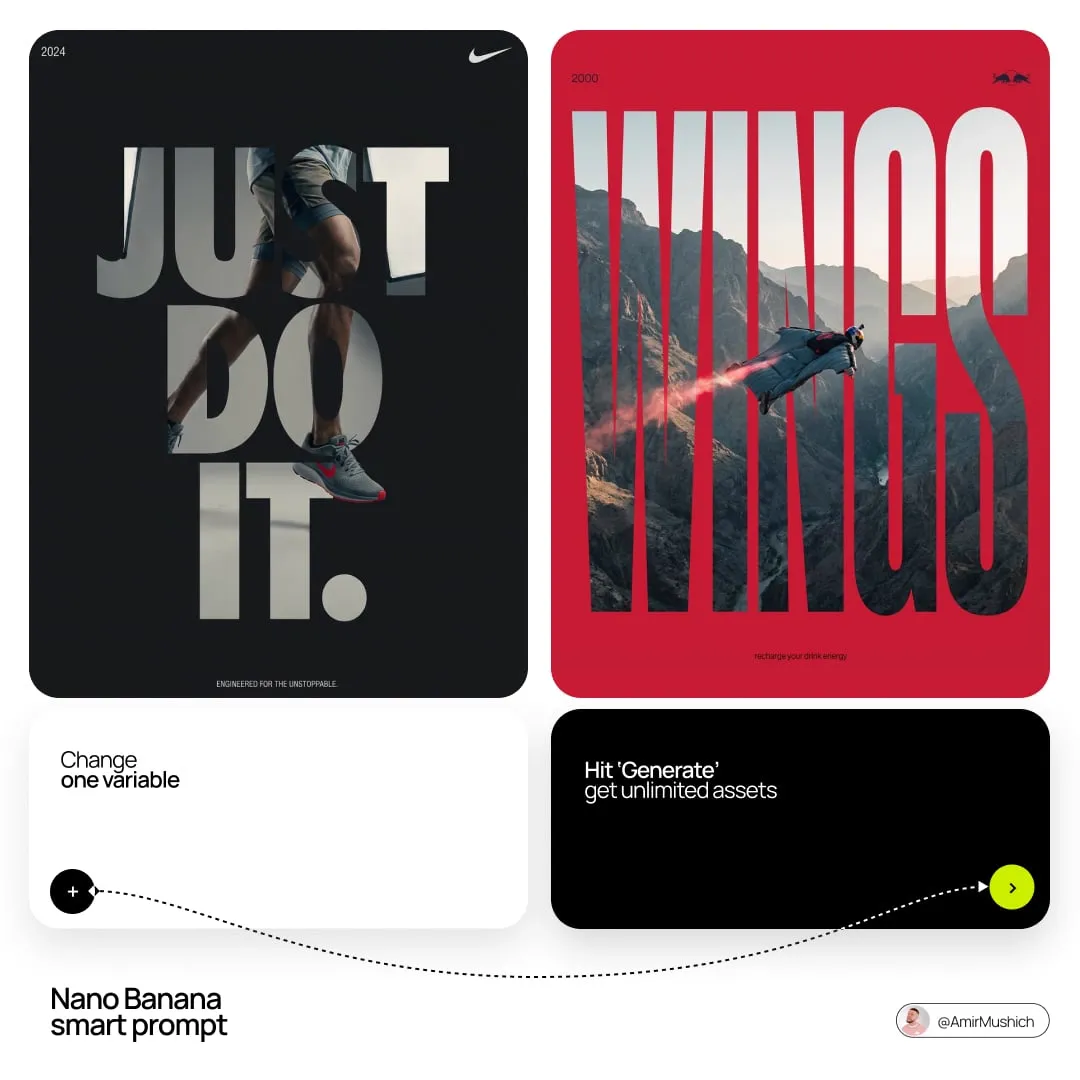
- Change only one variable per regeneration — camera, then light, then action — so you always know what caused the change.
If two shots still refuse to match, cheat. Cut away to a reaction, an insert, or an on-screen text card. Audiences accept a cutaway far more easily than a face that morphs mid-sentence.
Audio First: Narration, Music, and Silence
Visuals get all the attention in AI tooling, but audio decides whether people finish the video.
Record or synthesize the narration before generating picture
If your Short has narration, lock it first. The exact duration of each sentence tells you how long each shot needs to be, which converts an open-ended generation problem into a bounded one. A twenty-eight-second read at a natural pace is roughly 65 to 75 words.
If you are writing for a synthetic voice, shorten sentences and break long clauses. Prosody flattens across commas, and short sentences with hard stops sound more confident than long ones with soft endings.
Match the music to your cut rate, not your mood
Pick a track whose percussion lines up with how often you want to cut. If your Short cuts every 1.5 seconds, a track with a strong beat every half second will fight you. Anything with a clear drop around 0:06 to 0:08 is useful because that is where your escalation usually begins. Use licensed or platform-approved audio — the fastest way to kill a good Short is a muted soundtrack.
Treat silence as a tool
Half a second of dead air right before your payoff makes the payoff land harder than any sound effect. Most creators add sound to fix a weak edit; usually they should subtract it instead. Try muting the music for the two seconds before the reveal and listen to how much more attention the image commands.
Captions, Safe Zones, and Readability
Captions are not decoration. A large share of viewers watch with sound off, and burned-in text is often the only thing carrying your narration.
The platform interface overlays its own elements near the bottom and right edges of the frame. Keep burned-in captions inside the middle band of the vertical frame, roughly 12 to 20 percent up from the bottom, and leave right-edge space clear for buttons and profile elements. Two lines maximum, high contrast, and no more than six words per line.
Accessibility belongs in the same conversation. Caption timing should roughly match speech, contrast should stay strong against changing backgrounds, and reading speed should be slow enough that a viewer is never chasing the text. If you want the standards behind readable on-screen text, look for public accessibility guidance on captioning and apply the contrast and timing principles directly in your editor.
A simple quality check: watch your Short on a phone with the sound off, at arm's length, while walking. If you can follow the story, your captions work.
The Retention Edit Pass
Once your clips are assembled, this pass is where most of the improvement happens. Work through it in order.
Cut the first frame you generated
The first clip you made is almost never your best hook. Replace it with the most visually striking later moment of the video, then earn your way back to the setup. This is standard practice in documentary cold opens and it works just as well in thirty seconds.
Cut on motion
Trim so every cut lands during movement — a hand entering frame, a turn, a door closing. Cuts on stillness read as hesitation even when the timing is technically correct.
Delete every dead frame
Scrub at maximum zoom and remove frames before and after a shot where nothing changes. Ten dead frames per cut across six cuts is a full second of nothing, and a second is a third of your hook budget.
Add one pattern interrupt every eight seconds
Change something — angle, scale, text card, speed — roughly every eight seconds to reset attention. It does not need to be dramatic. A jump from wide to close-up is enough.
Fix the loop
If your final shot can visually rhyme with your first, do it. Cut the last frame to match the opening composition so the restart feels intentional rather than abrupt.
A Weekly Batch System That Survives Real Life
Consistency beats intensity. A system that produces four Shorts a week indefinitely will outperform a weekend burst of twelve.
Day one — research and hooks. Collect five ideas, write five promise sentences, pick the four strongest. Do not generate anything yet.
Day two — scripts and shot lists. Write the narration for all four, record or synthesize it, and time each read. Convert each script into a four-to-eight line shot list.
Day three — batch generation. Generate every shot for every Short in one session. Group by mode: all image-to-video shots first, then all text-to-video. Batching keeps your style tag consistent and reduces context switching. Starting from a video template and swapping the script is a legitimate strategy, not a shortcut.
Day four — assembly. Cut all four videos to their audio. Do not polish. Just get them structurally complete.
Day five — retention pass and captions. Apply the checklist above, add captions, export, and schedule.
Day six — review. Look at two numbers per Short: the two-second hold rate and the average view duration. Note which hook style and which opening frame performed best, and feed that into next week's idea list.
Build a reusable shot library
Every project generates footage you do not use. Keep it. Tag clips by subject, mood, and camera move, and you will find that a third of next month's Shorts can be assembled from existing material with fresh narration. Over a few months this library becomes your real competitive advantage, because it lets you publish on a bad week without lowering your standard.
Mistakes That Sink Otherwise Good Shorts
- Generating before scripting. You end up with beautiful clips and no narrative, then force a script on top of them. Write first, always.
- Over-prompting. Long prompts with five competing ideas produce muddy results. One subject, one action, one camera move.
- Ignoring vertical framing. Landscape footage cropped to 9:16 loses its subject. Generate vertical from the start.
- Letting the tool write the ending. Endings need a decision, not a generation. Write the last line yourself.
- Too many visual styles. Three looks in thirty seconds reads as chaos. One look, one grain, one color treatment.
- Captions in the danger zone. Text near the bottom edge gets covered by interface elements.
- No silence. Constant music plus constant narration fatigues the viewer. Leave gaps.
- Chasing novelty over clarity. A strange clip nobody understands is worse than a simple clip everybody does.
FAQ
How long should a Short actually be? As long as it needs to be and no longer. Under thirty seconds generally holds retention best, but a tight forty-five-second story beats a padded twenty-five-second one. Cut until removing anything else breaks comprehension, then stop.
Can AI video generation produce a character that looks the same in every shot? Not perfectly, but close enough if you anchor with a still image, reuse it, describe the character identically in every prompt, and change only one variable per regeneration. When it still drifts, hide the drift with a cutaway or an insert shot.
Do I need to disclose that AI was used? Follow the platform's current disclosure rules and your audience's expectations. In practice, disclosure costs you nothing when the content is genuinely useful, and it protects you when a viewer notices something synthetic.
What is the minimum viable toolkit? A generator that handles both text-to-video and image-to-video, an image tool for anchoring subjects, a caption tool, and an editor with frame-level trimming. Everything else is optimization.
How many generations should one shot take? Budget three to five for a hero shot and one to two for supporting shots. If you are on attempt twelve, the prompt is the problem. Rewrite the four slots from scratch instead of tweaking adjectives.
Does posting frequency still matter? Consistency matters more than volume, but volume teaches you faster. Four Shorts a week is a reasonable training pace; two a week is a reasonable sustainable pace.
What should I measure? Two-second hold rate, average view duration, and rewatch behavior. Views alone tell you the thumbnail and title worked, not the video.
Should I make the same Short in multiple aspect ratios? Only when a platform genuinely needs it. Duplicating effort across formats is usually a sign that the original idea was not specific enough. Pick the format, then commit.
Make Your Next Short in Orelon
The gap between creators is no longer access to tools. It is the speed of the loop between idea, test, and revision. Write the promise, build the shot list, generate in batches, cut to the audio, then run the retention pass before you export anything.
Orelon is an AI video generator built for cinematic ideas in motion — vertical-first framing, text-to-video and image-to-video in one place, and a workflow shaped around the batch-and-iterate rhythm that short-form rewards. Start with a single thirty-second test: one promise sentence, five shots, one style tag. Then compare the two-second hold rate against your last upload and let the number tell you what to change next.