
Learn how an AI shorts workflow turns one idea into a finished vertical video, with prompt structure, hook testing, pacing rules, and a repeatable production sprint.
Most short-form creators do not have an idea problem. They have a turnaround problem. A concept that felt urgent on Monday looks tired by Thursday, and the edit that was supposed to take ninety minutes has consumed an afternoon of cropping, re-timing, and fighting a caption tool. The vertical feed never sees your intent. It only sees the version you actually published.
That gap is what an AI shorts workflow closes. Not by removing craft, but by collapsing the distance between a concept and the first watchable cut. When a shot costs a minute of prompting instead of an hour of shooting, you can test three hooks instead of gambling everything on one — and testing is exactly what short-form rewards.
Why Vertical Short Video Punishes the Old Production Order
Horizontal video for a website tolerates a slow build. Someone who clicked a link has already committed a sliver of attention, so a two-second logo sting or a wide establishing shot costs almost nothing. Vertical short video has no such patience. The viewer is mid-scroll, thumb already loaded, and your first frame is competing with a hundred other first frames in the same minute.
That changes which production decisions matter most. In long-form, the priorities are usually story, then performance, then look. In a 40-second vertical clip, the order inverts:
- The first frame carries the most weight. Clarity beats beauty. A viewer must understand the situation before they can care about it.
- Pacing is a retention tool, not a style choice. Cuts roughly every 1.5 to 3 seconds keep attention moving even when individual shots are simple.
- Volume outperforms polish. Ten published tests teach you more about your audience than one expensive clip that nobody rewatched.
- Sound is a bonus, not a baseline. Assume a large share of viewers start muted, and design the video so it still works silently.
None of those judgments are made by software. Artificial intelligence does not decide what is interesting about your idea. What it does is make the cost of trying something smaller, and cheaper attempts mean faster learning.
Where Generation Helps and Where It Quietly Hurts
AI-assisted production is not uniformly faster. It is dramatically faster at some stages and mildly slower at others, and creators who miss that distinction end up spending an hour generating and four minutes editing a video nobody watches.
A realistic breakdown for a 40-second clip:
| Production stage | Manual approach | AI-assisted approach |
|---|---|---|
| Research and promise sentence | 20-30 minutes | 15-20 minutes, much of it thinking |
| Beat sheet and shot list | 30-40 minutes | 15-25 minutes, faster with a template |
| Visuals | Hours of shooting or licensing | Minutes of prompting per shot, batched |
| Revisions | Re-shoot, reschedule, re-light | Regenerate one clip, keep the other seven |
| Captions and audio | Manual timing pass | Auto-transcription plus a human proofread |
| Final quality pass | Same | Same — this is where the real work stays |
The bottom row is the honest one. Generation removes the setup, the scheduling, and the reshooting. It does not remove judgment. Every AI Short that feels amateur fails in the last 15% of the process: an unmuted music bed drowning the voice, captions sitting under the interface, a hook shot generated once and never tested.
There is also a specific failure mode worth naming. Creators new to generation often treat it as a vending machine: type a vague idea, wait, and accept whatever appears. Then they conclude that generated footage all looks the same. It does not. Vague prompts produce generic footage, and generic footage produces generic results. The fix is structure, not a different tool.
Five Decisions to Make Before You Generate Anything
Prompting is the visible part of the workflow. The invisible part is five decisions that determine whether the prompts even have a chance. Make them in order, and most of the downstream problems never appear.
Decision 1: The promise sentence
Write the single sentence a viewer would repeat to a friend. Not a topic — a promise. “Why your phone shuts down at 20% in cold weather” is a promise. “Battery tips” is a category. The promise sentence becomes your hook text, your title, and the filter you use to cut any beat that does not serve it. If you cannot compress the idea into one line, the Short does not have a spine yet, and no amount of good footage will install one.
Decision 2: Runtime and beat count
Pick a duration from the content, not from a trend. As a rough planning guide:
- 15 seconds holds 4 beats: hook, one idea, one example, payoff.
- 30 seconds holds 6 to 7 beats.
- 45 seconds holds 9 to 10 beats.
- 60 seconds holds 12 beats and starts to demand a real argument.
Each beat is one shot with one action, lasting 4 to 6 seconds. Writing the beat count before generating anything tells you your runtime before you have spent a single render.
Decision 3: A visual recipe
Choose one look and reuse it for the entire clip — palette, contrast, lens feel, grain, and light direction. A written recipe such as “soft window light, warm neutral palette, shallow depth of field, subtle film grain” is what makes nine separate generations read as one video instead of a stock-footage collage. The same recipe also becomes the seed of a series identity, which is far more valuable than any single upload.
Decision 4: An audio strategy
Decide up front whether the Short is voice-led, text-led, or music-led. Voice-led clips need tighter writing because a narrator reading comma-heavy sentences sounds tired. Text-led clips can carry more information per second but demand ruthless caption editing. Music-led clips live or die on beat sync. Whichever you choose, run a silent test before publishing: mute the video and check that the story still lands.
Decision 5: Cadence
Consistency beats intensity. Four or five Shorts a week for a month will teach you more than twelve uploaded in a weekend and then nothing for three weeks. Batch the work: script several promises in one sitting, generate in a second session, and edit in a third. Context switching between writing and rendering is the quietest time thief in this workflow.
How to Write Prompts That Produce Usable Shots
Generators respond to structure. A prompt that reads like a shot description works far better than a prompt that reads like a mood board. Four ingredients do most of the work.
Subject, single action, framing
Name the subject, the one action, and the frame. “Hand pressing a phone screen that goes dark, close-up, 9:16, fingers in frame” gives the model something concrete. “Technology fail” gives it a lottery ticket. One action per shot is not a stylistic preference; it is the single biggest determinant of whether generated motion stays clean.
Camera language
Camera terms are the cheapest way to make generated footage feel deliberate. Slow push in, subtle handheld drift, top-down, rack focus from foreground to subject. The rule that prevents the most mess is one camera idea per shot. Stacking a push in, a pan, and a roll into one prompt produces mush, because the model has to invent the transitions between them.
Light, palette, texture
Specify light direction, colour temperature, and texture once, then paste that same wording into every prompt for the clip. Small wording changes produce noticeably different results, which is exactly why the recipe should be written down rather than remembered.
Motion budget
Complex, fast motion is where generated video shows its seams: hands, crowds, spinning objects, overlapping bodies, reflective surfaces. Keep the motion budget low, keep clips short, and cut before the model has a chance to drift. A 3-second shot of a steady action beats an 8-second shot with three actions in it.
A reusable prompt skeleton
[shot length] | [subject + single action] | [framing + 9:16] | [camera move] | [light and palette] | [texture and lens]
Filled in for a cold-weather battery explainer:
4s | gloved hand holding a phone that powers off | medium close-up, 9:16 | slow push in | cool overcast daylight, muted blue palette | shallow depth of field, light grain
The skeleton is deliberately boring. Boring prompts generate predictably, and predictability is what lets eight separate shots feel like one film. Once you find phrasings that work, keep them in a prompt library so you are not rebuilding camera language from scratch every session.
Engineering the First Three Seconds
The hook is not your first line of narration. It is the combined effect of the opening frame, the first spoken words, and the on-screen text. All three should land inside three seconds, and the strongest patterns are easy to reuse:
- Start mid-action. Skip setup entirely. Open on the knife already cutting, the phone already dying, the pan already on the heat.
- State a contradiction. “Cold weather does not drain your battery — it confuses it” creates immediate tension that the rest of the clip resolves.
- Show the result first. Display the finished plate or the repaired object, then rewind to how it happened.
- Ask one specific question. Specific beats general every time: “Why does 20% disappear when it is cold?” outperforms “Battery problems?”
Generate three hook variants for every Short and post the one that holds. This is the highest-leverage habit in short-form production, and it only becomes affordable when generation is fast enough to make variants nearly free. If a hook requires explaining before it makes sense, it is not a hook — it is a setup, and setups belong at second four at the earliest.
Keeping a Series Recognizable Across Uploads
A series trains viewers to recognise you inside a feed. Three levers do most of that work, and all three should be written down rather than remembered.
- A style sheet. Keep the exact wording used to describe a recurring character, presenter, or setting, and paste it into every prompt. Paraphrasing produces visibly different faces and rooms.
- A locked visual recipe. Same palette, same lens feel, same grain, same aspect ratio, every upload. Recognisable does not mean identical, but it does mean consistent.
- An audio signature. A two-second intro sting or a consistent narrator voice does more for recall than any logo, because it registers before the viewer looks at the screen.
If a series needs an on-screen persona, generate the still frame first with an AI image generator and use that frame as the visual reference for the motion pass. Locking the look before animating saves a remarkable amount of regeneration, because character consistency is far easier to hold in a static frame than in a moving one.
A Worked Example: 40 Seconds From Prompt to Export
Topic: “Why your phone shuts down at 20% in the cold.” Target length: 40 seconds. Nine beats.
- 0-4s — Hook. A phone on a snowy bench shows 18%, then dies. On-screen text: “Your battery is not broken. It is cold.”
- 4-10s — Context. Voiceover: cold slows the battery chemistry, voltage sags, and the phone misreads the sag as an empty cell.
- 10-18s — First example. Macro of a capacity graph with a temperature overlay, comparing room temperature with sub-zero performance.
- 18-26s — Reversal. The same phone warms in a pocket, powers on, and still shows 20%. Text: “The charge was there the whole time.”
- 26-34s — Second example. Three quick shots: phone in an inside pocket, phone warmed against a body, power bank kept out of the cold.
- 34-40s — Payoff and loop. Back to the snowy bench, matching the opening frame to invite a rewatch.
Generation plan: nine prompts written in one sitting, the hook generated in three variants, the remaining shots in two each. The visual recipe stays identical across all of them. Assembly follows the beat sheet, captions come from the voiceover transcript with a human proofread, and the music bed is trimmed so the final cut lands on the last frame. Script to export fits inside an hour once the workflow is familiar, and most of that hour is judgment rather than rendering.
If you would rather start from a working structure than a blank project, pre-built video templates shorten setup for common shapes like listicles, before-and-after clips, and quick product demos.
Mistakes That Quietly Kill Retention
Most underperforming Shorts do not fail loudly. They leak attention in small, fixable places.
- A slow first frame. Fades, logos, and empty establishing shots cost you the viewers you worked hardest to attract. Start on motion.
- A title that overpromises. A gap between the promise and the payoff shows up as an immediate drop, and the platform reads drops as a quality signal.
- Generated motion that drifts. Melting faces, multiplying fingers, and morphing objects read as low quality even when the edit is tight. Prefer simple action and cut earlier than feels natural.
- Caption walls. Full sentences on screen force viewers to read instead of watch. Two to four words per line, timed to the beat rather than the sentence.
- No loop. Ending on a hard stop wastes the rewatch that short-form rewards. Mirroring the opening frame is the cheapest loop there is.
- Over-generating. Producing twelve variants of a shot you will use once is procrastination with a progress bar. Two or three per shot, three for the hook, then move on.
- Inconsistent posting. Three Shorts in a week followed by a month of silence resets the habit you were building.
How to Choose an AI Shorts Tool: Decision Criteria
Tool choice matters less than workflow, but the wrong tool still adds friction every single session. Judge candidates on a short list of practical questions.
- Vertical-native output. Does it produce clean 9:16 at usable resolution without forcing a crop from a horizontal master?
- Prompt control. Can you direct camera movement, lighting, and lens character, or only describe a scene and hope?
- Image-to-video path. Can you lock a character or product with a still frame and animate from it? This is the difference between a series and a pile of unrelated clips.
- Shot replacement. How quickly can you regenerate a single clip without disturbing the rest of the timeline?
- Audio and captions. Built-in narration and transcription save an entire export-and-import cycle.
- Batch behaviour. Generating six shots in one sitting is a different experience from generating one, waiting, and generating another.
- Cost predictability. Understand how usage is measured before committing to a volume-heavy plan, so a productive week does not become a surprise.
If you are weighing tools against each other, side-by-side write-ups such as this Runway alternative comparison let you evaluate trade-offs without test-driving every option yourself. And be sceptical of feature lists: the only test that matters is whether you can produce a Short you would genuinely publish within an hour of starting.
FAQ
What exactly is an AI shorts maker? A tool or workflow that generates or assembles vertical video from text prompts, still images, or scripts. The strongest setups combine generation, image editing, and audio in one place so you are not exporting between five applications to finish a 40-second clip.
Do AI-generated Shorts still need editing? Yes. Generation replaces the shooting and the reshooting, not the assembly. You still cut to the beat, time the captions, mix the audio, and decide which of three hook variants actually holds attention.
How long should a Short be? Between 20 and 45 seconds is the sweet spot for informational content. Shorter works for jokes and visual reveals. Longer works only when every single beat earns its time, which is rarer than most creators assume.
How many variants should I generate per shot? Two or three for standard shots and at least three for the hook. Delete aggressively. Keeping one strong clip and discarding four mediocre ones is faster than trying to rescue a weak generation in the edit.
Can I keep a consistent character across a whole series? You can, if you write the character description once, store it verbatim, and paste the same wording into every prompt. Generate the character as a still frame first, then animate from that frame. Consistency is much easier to hold in a still than in motion.
Do I need editing experience to start? Basic editing intuition helps, but the two skills that decide results are script compression and shot planning. Those are writing skills. They transfer from any background, and they improve faster than software habits.
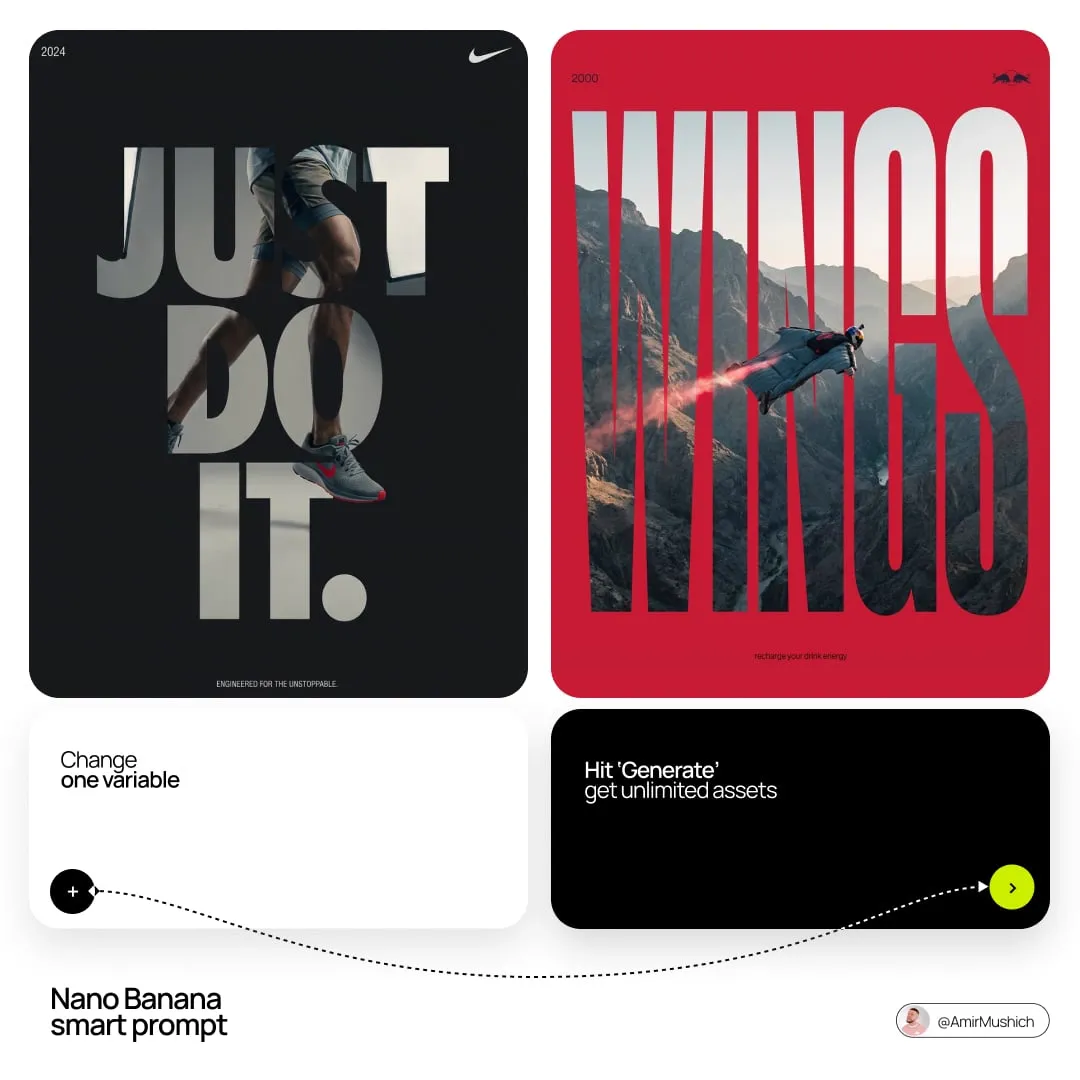
What if a generated shot looks wrong in a way I cannot describe? Change one variable at a time: the action, then the framing, then the light. Rewriting the whole prompt at once hides which ingredient caused the problem, and you end up relearning the same lesson next week.
Ship Your Next Short With Orelon
The system is not complicated: one promise, a beat sheet, one action per shot, three hook variants, burned-in captions, and a loop at the end. What makes it sustainable is speed — the ability to move from a written prompt to a clip you would actually publish without leaving the workflow.
Orelon is an AI video generator built for cinematic ideas in motion, with prompt-driven shots, image generation for locking characters and style, audio tools, and an assembly flow that keeps everything from beat sheet to export in one place. Start with the AI video generator, browse the Orelon blog for more workflow breakdowns, and publish the next one before the idea goes stale.