

Build a repeatable AI short-form video workflow for Reels and Shorts: hooks, prompting, editing, testing, and retention analytics that compound.
Short-form vertical video is where most new audiences now meet a creator for the first time. A viewer gives you about a second and a half, and the platform decides within a few hundred impressions whether a clip deserves a wider test. The real work is therefore not "making a video" — it is building a repeatable system that produces honest, testable variations fast enough that you learn something every week.
That is the defensible role for AI in this format. It is not a machine that makes clips for you; it is a way to collapse the cost of variation so your taste has something to compare. What follows is a workflow you can run without a production team: signal collection, hook writing, prompting, editing, cross-platform adaptation, analytics, and the small decisions that separate a clip that travels from one that dies quietly.
Why this format rewards systems over inspiration
Recommendation systems for vertical video optimize for predicted watch time, completion, replays, and shares. None of that can be injected with a clever caption. It comes from structure: a hook that lands, a middle that keeps the promise the hook made, and an ending that either loops or asks for one small action.
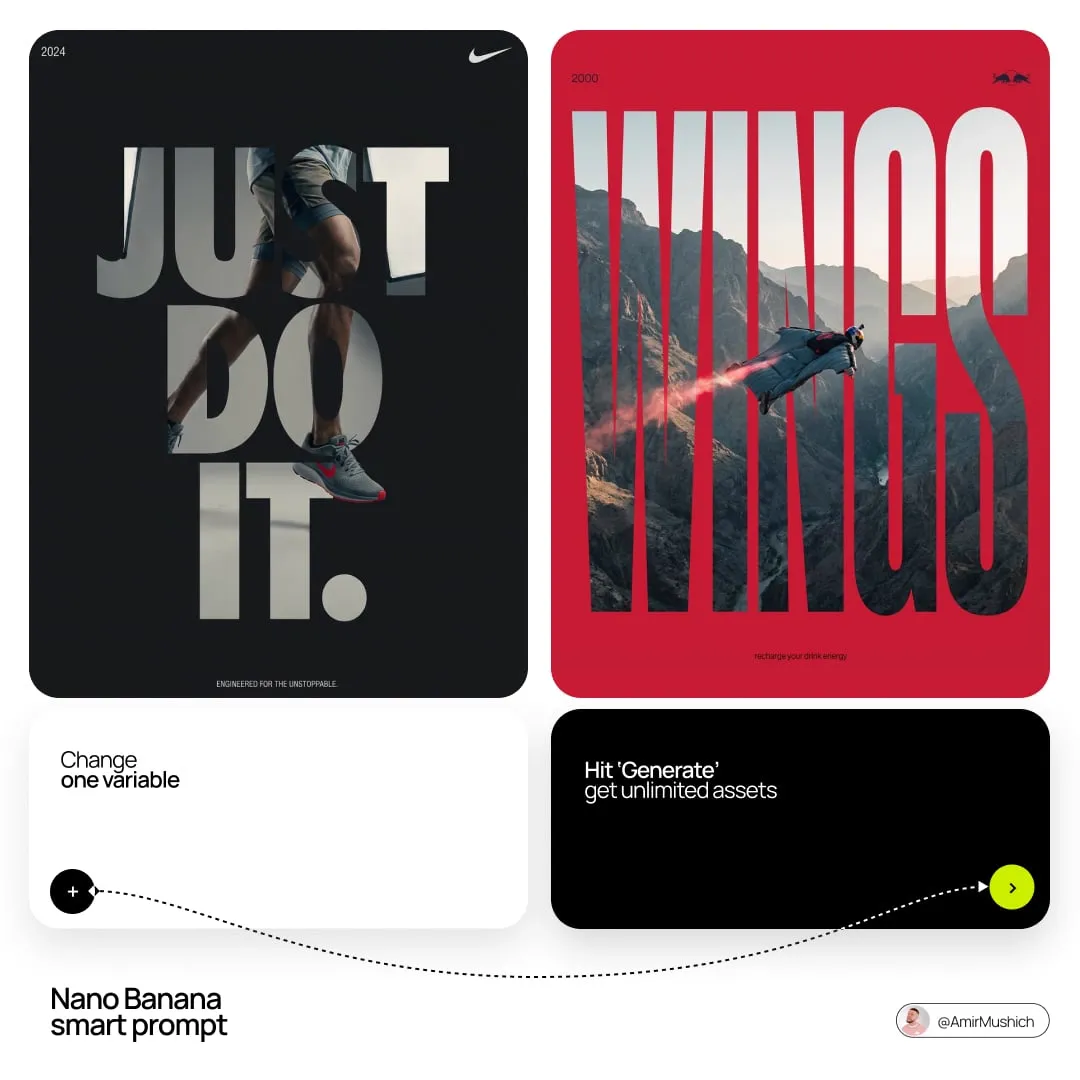
A single lucky post teaches you almost nothing, because you cannot tell which variable caused the result. Eight variations on one idea teach you a great deal, because you can isolate the opening frame, the pacing, the caption, or the payoff and compare them directly.
There is a second reason systems win: fatigue. Short-form punishes irregularity harder than long-form does, because each post starts from zero with no accumulated advantage. A process you can still run on a bad week is worth more than a brilliant idea you can only execute when inspiration shows up.
A third reason is quieter. Systems protect you from the loudest failure mode in this format — overcorrecting on noise. When a clip underperforms, the instinct is to change everything at once. A structured process tells you which single thing to change next.
Weekly signal collection: four inputs in twenty minutes
Before you write anything, gather inputs rather than ideas. Twenty minutes a week is enough if you collect the same four categories every time and keep them in one dated document.
Recurring questions from comments and messages
Write down the questions that appear more than once, in the audience's own words. These are the highest-converting topics you will ever have, because the demand already exists and the phrasing is authentic. A question asked three times is a script you can write in five minutes.
Search suggestions inside the platform
Type your topic into the platform's search bar and record what autocompletes. This is a live map of what people are actively looking for rather than what a trend page is pushing. Compare two or three phrasings and keep the ones that feel specific.
Two outlier posts from small accounts
Find posts that clearly outperformed their account's normal range. The useful signal is not the topic; it is the structure. Was it the first frame, the on-screen text, the length, the sound, or the promise in the caption that made it travel? Write the structural note, not the idea.
One format you have never attempted
Deliberately include something outside your habits: a screen recording, a two-shot dialogue, a stop-motion sequence, a single unbroken take. Novelty is a variable you can test, and most accounts never test it because they confuse consistency with repetition.
Keep the document shallow and dated. If a signal has not produced a post in three weeks, delete it. An idea pool that only grows becomes a museum, not a queue of work.
Hooks: making a two-second promise
A hook is not a slogan or a greeting. It is a promise paired with a visible reason to keep watching. Three patterns survive repeated testing across niches.
Contradiction aimed at a real belief
State something your audience believes, then undercut it. "Everyone says you need a big camera. Here is a sixty-second clip shot on a laptop." The tension is immediate and specific, which is exactly what holds attention. Vague contradiction — "everything you know is wrong" — gives the viewer nothing to hold onto.
A concrete number or a visible outcome
Numbers set expectations and imply structure. "Three edits that doubled my average watch time" tells the viewer what the payoff is and roughly when it arrives. Pair the claim with the visual of the outcome in the first frame so the promise is seen, not just heard.
A visual anomaly in frame one
Feed viewers scan before they read. An impossible camera move, an object at the wrong scale, a color that does not belong — anything unfamiliar buys you the half second needed for audio or captions to take over. Build the cover frame deliberately, then construct the clip around it.
Testing hooks without reshooting everything
Generate one visual sequence and three alternative openings of two seconds each. Keep everything after the opening identical, publish them days apart, and compare early retention. Because the rest of the clip is constant, the difference is attributable to the opening. That is the single most useful comparison available in short-form video, and it costs one extra editing session per idea.
A practical tip: write hooks first, before any visuals. If the hook cannot stand alone as a sentence someone would stop scrolling for, the clip will not survive the feed. Script five beats — hook, context, tension, payoff, action — and keep the whole thing under ninety words for a thirty-second piece.
Prompting for vertical, cinematic clips
Prompt quality decides whether generated footage reads as cinematic or generic. A stable prompt order lets you iterate instead of gambling.
A prompt order you can iterate on
Write in this sequence: subject, action, environment, camera, light, mood, aspect ratio. For example: "A lone cyclist riding hard through a rain-slicked alley at night, low tracking shot behind the rear wheel, sodium streetlights and wet reflections, tense and moody, vertical 9:16." Each element is separable, so if the result feels flat you change only the light or only the camera and learn something from the difference.
Camera and motion language that survives a phone screen
Small screens reward clarity. Slow push-ins, lateral tracking shots, and gentle handheld drift read well. Rapid pans and layered camera choreography usually turn to mush at that size. Name one dominant movement per shot, keep a single subject so the eye always knows where to land, and let the environment carry atmosphere instead of adding more action.
Prompt mistakes that produce soft footage
Stuffing five ideas into one prompt is the most common error; the model averages them into something vague. Ambiguous subject counts produce characters that change between takes. Mixing incompatible styles — documentary realism with heavy stylization — creates footage that feels accidental. And do not rely on generated on-screen text: add all text in the edit, where you control size, safe zones, and legibility.
Where generation pays off most
Use an AI video generator for shots that would otherwise be impossible, expensive, or slow: aerial movement, weather, period settings, abstract transitions. Consistent series identity comes from video templates and a stable visual vocabulary rather than from generating every clip from scratch. If you need a static cover frame or a title card in the same look, an AI image generator keeps the palette aligned. When a prompt finally produces the shot you wanted, save it — the prompt library becomes your real production asset over time.
One more decision criterion: generate only what you cannot film. Found footage of a real workspace often outperforms a synthetic version because it carries texture and specificity. Save generation for the impossible shots, and the audience will never feel the machinery.
Editing for retention: subtract, then punctuate
Most weak short-form video is not badly shot. It is over-explained.
Build a pacing map before touching the timeline
Sketch the beats: what happens at second three, second eight, second fifteen. Aim for cuts every 1.5 to 2.5 seconds in the first ten seconds, then allow slightly longer shots as the payoff develops. Remove greetings, throat-clearing, and any explanation of what you are about to explain.
Treat captions as design
A large share of viewers watch with sound off, so the text carries the story for them. Use one typeface, high contrast, and short phrases that appear in sync with speech. Keep captions inside the safe area so interface elements never cover the meaning. Watch the muted version of your own clip on a phone before publishing; if it does not make sense, the captions are not finished.
Endings that loop or ask
Avoid summarizing. A summary tells the viewer the clip is over, and endings are where you lose them. Instead, loop back to the opening line or ask one specific question a comment can answer in three words.
Adapting one idea across Reels, Shorts, and TikTok-style feeds
Re-exporting the same file everywhere is the fastest way to look careless. Adapt three things instead.
Safe zones first
Each platform reserves different areas for interface elements, captions, and controls. Check the current official guidance for the platform you are publishing to and keep text inside the safe area. A caption that reads perfectly in one feed can hide behind an action bar in another.
Swap the opening frame, not only the caption
Different feeds attract different starting audiences. Change the first frame and the first line of caption copy so the promise matches what that audience responds to. Everything after can stay identical.
Keep a per-platform export checklist
Length, aspect ratio, caption placement, opening frame, caption copy, and removal of any outro or watermark that belongs to a different platform. Audiences recognize recycled exports immediately and read them as low effort.
The learning loop: four numbers that change the next video
Four metrics drive decisions: average watch percentage, three-second retention, shares, and saves.
Read them in order
Three-second retention tells you whether the hook worked. Watch percentage tells you whether the promise matched the payoff. Shares tell you whether the idea traveled. Saves tell you whether the idea was useful enough to keep. If retention at three seconds is strong but watch percentage is low, the clip is probably too long or the middle loses momentum. If both are healthy and shares are flat, the content is pleasant but not distinctive.
Metrics that mislead
Raw views say more about distribution than about craft. Likes are a low-effort signal that barely correlates with growth. Follower growth lags performance and often reflects a single breakout rather than a pattern. Judge formats, not individual posts.
Your personal baseline beats any best-practice list
After ten posts you will know your own median. Compare new clips against that median, never against a viral outlier from an unrelated account. Two weeks of data on your own audience outperforms any generic list of rules, because it accounts for your niche and your delivery style.
Decide with a rule, not a mood
Write three rules in advance: if three-second retention drops below your median twice in a row, rewrite hooks; if watch percentage is low while retention holds, cut length; if shares are flat for five posts, change the format or the subject, not the editing. Pre-committed rules stop you from panicking on a single weak result.
Publishing rhythm, batching, and protecting quality
Consistency matters more than daily output. Three to five posts a week is enough to generate usable comparisons if the format stays stable. Batch in two sessions: one for signals and scripts, one for generation and editing. Batching reduces setup time and, more importantly, reduces the temptation to publish something you have not watched twice.
Keep a quality floor. Watch every clip once with sound on and once muted, on a phone. If the muted version does not make sense, fix the captions. If the sound-on version drags in the middle, cut three seconds and watch again. A clip that survives both passes is ready; a clip that has not been watched twice is a coin flip.
Mistakes that quietly flatten reach
- Reusing one export across every feed, with mismatched safe zones and a foreign outro.
- Opening with branding, a logo, or an introduction instead of the idea.
- Long preambles, mumbled audio, and captions too small to read on a phone.
- Generating footage with no visual consistency, so nothing is recognizable when it reappears.
- Judging a post after two hours rather than two days, which produces overcorrection on noise.
- Varying five things at once, so the result teaches you nothing you can reuse.
- Publishing at the same hour forever without testing whether a different slot reaches a fresher audience.
FAQ
How often should I publish short-form video?
Three to five posts a week with a consistent format generates enough data to compare. Daily posting without structure produces plenty of output and very little learning.
Does AI-generated footage suppress reach?
Distribution follows viewer response, not production method. What suppresses reach is footage that looks like everything else. Use generation for shots that would otherwise be impossible or expensive, and invest your effort in hooks, pacing, and payoff.
What length works best for Reels and Shorts?
Start at fifteen to thirty seconds for ideas that resolve quickly, and go longer only when the payoff genuinely needs setup. If you can cut ten seconds without losing meaning, cut them.
Can I use one clip on every platform?
You can, but adapt the export: caption placement, opening frame, caption copy, and removal of platform-specific watermarks or outros. Adaptation takes minutes and protects how the work is perceived.
How many variations should I test?
At least three openings per strong visual sequence. Keep the winner, then iterate on the middle. Change one variable at a time or the result tells you nothing you can reuse.
Do I need a script for a thirty-second clip?
Yes, and a short one: hook, context, tension, payoff, action. Writing it takes five minutes and saves far more time than it costs, especially across several clips a week.
Put the loop in motion
The accounts that perform consistently do something unglamorous: they collect signals, write real hooks, generate visuals in one clear visual language, edit for rhythm, publish on a schedule, and read the data honestly. AI replaces none of those steps. It makes each one cheap enough to repeat.
Start where most creators hesitate. Take one idea you already have, write three hooks for it, and generate a single vertical sequence to test them against. Orelon is built for exactly that loop — cinematic ideas in motion, generated fast enough that variation becomes a habit rather than a project. Browse the Orelon blog for more workflow breakdowns, then open the generator and ship your first test today.