

Plan, prompt, and batch short vertical clips with a practical toolkit built for continuity, rhythm, and repeatable weekly output.
Short-form video rewards a different kind of work than long-form does. You are not building one flagship asset; you are building a habit. A clip lives or dies in its first second, gets rewatched or skipped, and then disappears into a feed that asks for another one tomorrow. That changes what "best" means in a short video maker. The right toolkit is not the one with the longest feature list. It is the one that gets you from a half-formed idea to a published clip without breaking your week.
This guide walks through that toolkit layer by layer: what each part has to do, how to prompt for vertical motion, how to keep faces and rooms consistent across shots, how to batch a week of output in one sitting, and which decisions quietly cost reach. The short version of the advice: choose the job first, then let the tool fill in behind it.
What Short Video Actually Asks of Your Toolkit
Three constraints define the format, and every tool decision should answer to one of them.
The hook is the product. For most vertical platforms, the first one to two seconds determine whether anything else you made gets seen. That means hooks are not an afterthought you add in the edit; they are the first thing you generate and the thing you iterate on most.
Continuity is visible. Short clips are rarely single shots. Two or three shots with mismatched lighting, wardrobe, or a face that changes shape read as amateur instantly, and viewers cannot always explain why they scrolled, but they scroll.
Volume is continuous. One good clip is a lucky afternoon. Twenty clips a month is a system. Any toolkit that only works when you have four uninterrupted hours will fail you in week three.
AI generation removed the oldest bottleneck in short video, which was getting a decent-looking shot at all. It replaced it with a new one: judgment. You can now produce thirty acceptable clips in an afternoon and still ship nothing worth watching, because the scarce skill is knowing which six belong together and which two seconds open the set.
The Four Jobs a Short Video Maker Must Cover
A tool earns the label only if it supports the whole loop rather than the generation step alone.
Speed from idea to first watchable cut
You should be able to go from a written beat to a rough cut you would actually show someone inside one sitting. If the tool needs a tutorial series before your first clip exists, it is a project, not a workflow. Measure this honestly: time from opening the app to the moment you can judge whether the idea works.
Control over the frame
Aspect ratio, duration, framing, camera movement, motion intensity, and subject placement need to be adjustable per shot. A generator locked into one flavor of landscape framing will fight you on every vertical platform, and you will spend your edit cropping away the parts that mattered.
Continuity between shots
The single hardest problem in the format is carrying a character, a location, and a color story forward across multiple generations. Tools that accept reference imagery, hold a style, and let you reuse a subject identity across prompts solve more real problems than tools with exotic one-off effects.
Repeatable output
You need Tuesday-afternoon quality to match Saturday-morning quality. Saved prompt structures, reusable project setups, template starting points, and predictable generation behavior matter far more than a feature you use once and forget.
A tool that is strong on speed and weak on continuity is a toy for experiments. A tool that is strong on continuity and repeatability becomes infrastructure. Most creators spend their first year buying toys and their second year hunting for infrastructure.
Format Decisions That Must Come Before Tool Decisions
Most wasted effort happens when someone subscribes first and discovers second that their intended format is awkward inside the tool. Reverse the order and answer these questions on paper.
Aspect ratio, safe zones, and the crop tax
Vertical 9:16 is the default for social feeds, but it is not universal. Square 1:1 remains useful for placements that sit next to static posts, and horizontal 16:9 is still correct for landing pages, embeds, and anything watched on a laptop. Compose for one primary frame and treat every other ratio as a deliberate re-crop, not an afterthought. When you plan the crop in advance, you keep the subject centered enough to survive it and you leave caption space that does not sit under a platform's interface elements.
Duration and shot count
Duration is a design decision. A hook-led comedy beat can live in eight seconds. A product story often needs twenty to thirty. A cinematic teaser with three shots and a music build usually lands between thirty and forty-five. Decide length before you generate, because duration determines both pacing and how many shots you owe the timeline.
A useful rule of thumb: three to six shots for a thirty-second clip, with the opening shot under two seconds. Fewer shots feel slower and more cinematic. More shots feel energetic and busier. Match the count to the emotion you want, not to a trend.
Sound-off first, sound-on second
Assume the first watch happens muted and the second watch happens with audio. That means your story must read visually, with captions carrying dialogue or narration and a visual beat that makes sense without them. High-contrast captions with a generous margin from the bottom edge are the workhorse format. Treat them as a second channel of information rather than decoration.
Building the Toolkit in Layers
Think of your setup as five layers. Each can be one tool or several, and the boundaries matter more than the brands.
Layer 1: idea and hook capture
Keep a single running document for hooks. Every time something makes you stop scrolling, write down the mechanism rather than the topic: a visual contradiction, a mid-action start with no establishing shot, a direct address from a close-up face, or an extreme texture close-up of hands, water, fabric, machinery, or food. Six months of that document will outvalue any subscription you buy.
Layer 2: look development with stills
Generate stills before you generate motion. Two to four approved images establish palette, lighting direction, lens feel, and wardrobe. Stills are cheap to iterate and expensive to regret. Once an image looks right, it becomes the visual anchor for every clip in that sequence. Use an AI image generator for this pass, then keep the approved frames saved where you can attach them quickly.
Layer 3: motion generation
Generate each beat as its own clip rather than fighting for one continuous take. Separate clips are easier to fix, reorder, and cut against music, and they let you swap out a weak shot without rebuilding the sequence. The AI video generator is where your approved stills get attached as references so the model holds the look while it adds movement.
Layer 4: edit, sound, and captions
Cut to a click track or steady tempo. Short-form editing is rhythm-first: a cut that lands on the beat buys forgiveness for a lot. Trim the first and last three frames of every generated clip, because AI shots often breathe or drift at the edges. Then build three audio layers: a bed, a punch layer of whooshes and impacts, and a voice layer if you narrate.
Layer 5: variants and distribution
Export three versions every time: a clean master with no captions, a captioned vertical, and a square or horizontal crop. This takes minutes and saves entire afternoons when a clip performs and you want it in a second placement.
Prompting for Vertical Motion
A good short-video prompt reads like a camera brief, not a story synopsis. It answers five questions.
The five-part prompt
- Subject and wardrobe. Specific, physical, and consistent with your approved stills. "A cyclist in a scuffed navy shell jacket" beats "a person."
- Setting. One location per prompt, with two or three environmental details that give the model texture to render.
- Camera. Framing (close, medium, wide), movement (slow push in, handheld drift, locked-off), and lens feel. Name the movement explicitly.
- Light. Direction and quality. "Low sun from camera left with soft haze" produces far more usable results than "cinematic lighting."
- Motion and duration. What changes across the clip and how long that change needs to complete.
Save the structures that work in a prompt library. Copy-paste beats rewriting from scratch, and small variations on a proven prompt outperform brand-new experiments when you are on a deadline.
Prompt failures that burn your afternoon
Stacking contradictions. "Minimalist crowded street at golden hour in fog at midnight" gives the model nothing to prioritize, so it averages everything into mush.
Describing a story instead of a shot. A model cannot show a character realizing something over twenty years. It can show a face changing across four seconds. Write the second one.
Ignoring negative space. Vertical frames need room for captions and interface elements. Ask for headroom or a deliberately empty lower third instead of hoping.
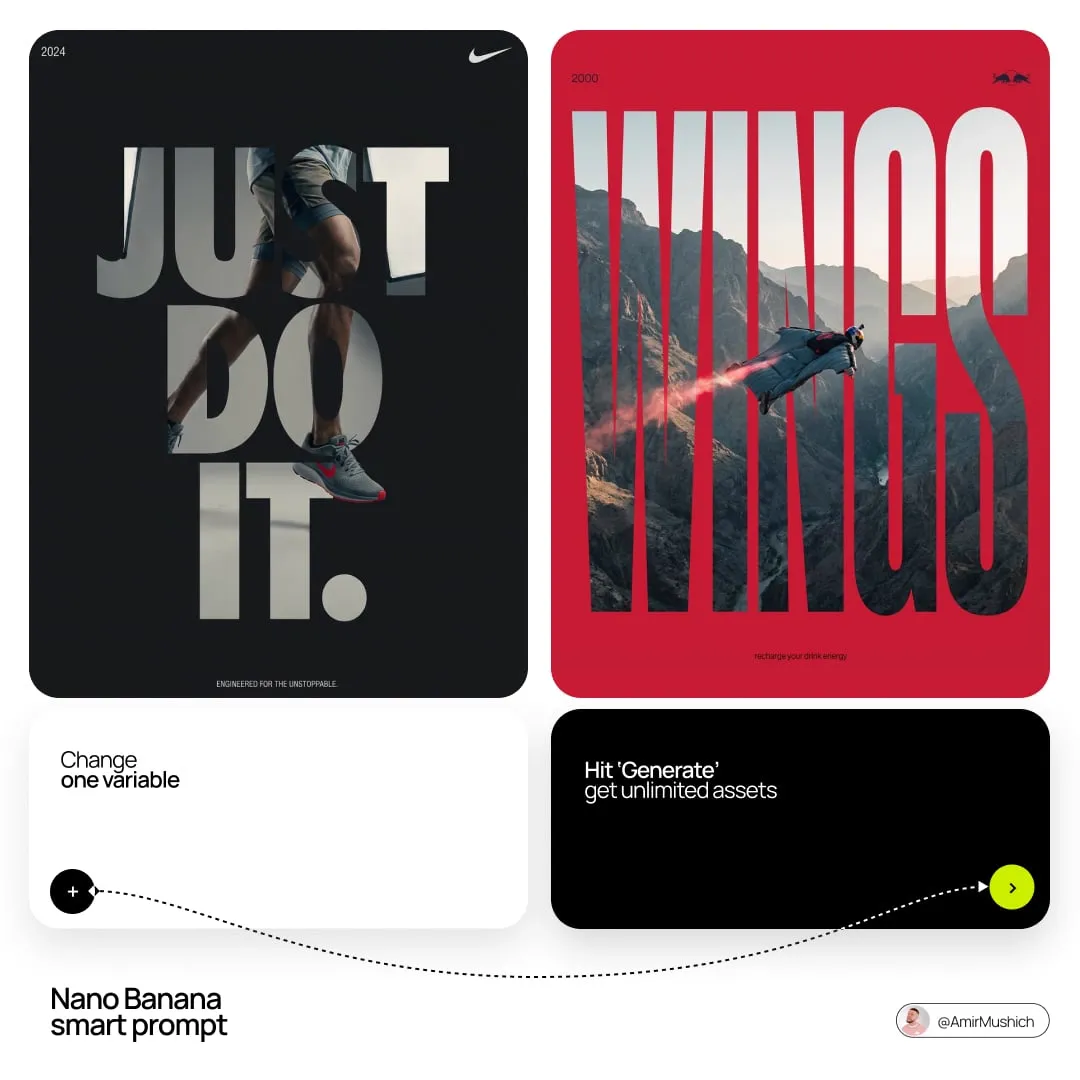
Changing everything at once. When a shot fails, change one variable per retry. Otherwise you learn nothing and burn an hour learning it.
Forgetting the loop. Endings that visually connect back to the opening invite a rewatch, which is one of the few signals that reliably helps distribution.
Consistency Is the Real Skill
Ask anyone who ships short video weekly what breaks first and the answer is continuity. Faces drift, jackets change color, a room gains a window between shots. Three habits fix most of it.
Anchor with stills. Create or approve a reference image for each character and each location, then reuse it every time that element appears. Multi-image referencing is the difference between a sequence and a collage.
Lock a small palette. Two dominant colors plus one accent. When every shot obeys the same palette, minor inconsistencies stop reading as errors and start reading as style.
Repeat camera grammar. If shot one is a slow push in, shot three can be a slow push in. Repeating a move makes an edit feel intentional rather than random.
When continuity still drifts, motivate it in the cut. A jacket that shifts shade reads as a costume change if the transition is deliberate. It reads as a mistake only when the edit is lazy.
Batch Production: One Session, a Week of Clips
Batching is how short-form stops being a daily emergency. The pattern that survives real schedules looks like this.
- One concept session. Collect five hooks. Do not generate anything during this session; generation crowds out thinking.
- One look session. Create reference stills for all five concepts at once. A shared palette across the batch reduces decision fatigue and makes the set look like a body of work.
- One generation block. Produce all shots for all five clips in a single sitting, then walk away before you start polishing.
- One edit day. Assemble, caption, and export everything together. Batching edits keeps your pacing instincts warm instead of forcing you to relearn your own rhythm each time.
- One scheduling block. Queue the week, then stop touching it. Editing a queued clip because you are nervous is the most common way creators destroy their own consistency.
Start from video templates when a format is new to you, and from your own saved structures once you know what your audience responds to. Templates are scaffolding, not a style. If every clip looks templated, you have borrowed someone else's identity.
A Worked Example: Three Clips From One Concept
Take a concept: "the last ten minutes before a storm hits a small coastal town." Instead of one long piece, split it into three clips, each with its own hook.
Clip one, the texture hook. Extreme close-up of laundry snapping on a line, hard wind, dark clouds rolling in behind. Two seconds of texture, then a slow pull back to reveal an empty street. Total runtime: eleven seconds.
Clip two, the character hook. A shopkeeper in the doorway, close framing, direct address to camera as the first fat raindrop lands on the awning. Ten seconds with a caption carrying the line.
Clip three, the payoff. Wide shot of the street going silver with rain, one slow push in, sound design punch on the first thunderclap. Fifteen seconds, ending on a frame that echoes the laundry line from clip one.
All three share one palette, one lens feel, and one location set, so they read as a series rather than three unrelated experiments. That is the practical payoff of stills-first look development and batched generation: the material is coherent because the decisions were made once.
A Selection Scorecard
When you compare tools, score them honestly on the criteria that match your work, not the ones that photograph well in a feature list.
| Criterion | What to check in practice |
|---|---|
| Speed to first usable clip | Minutes from prompt to something you would show a friend |
| Frame control | Aspect ratio, duration, framing, and motion settings per shot |
| Reference support | Whether approved stills actually hold the look on the next generation |
| Batch handling | Queueing, multiple outputs per prompt, project organization |
| Finishing path | Whether you can complete the edit inside or must export cleanly |
| Learning curve | Time to your tenth clip versus your first |
| Cost predictability | Whether your heaviest week stays inside a comfortable budget |
One criterion rarely appears on comparison lists: does the tool preserve your fingerprints? A generator that pushes every output toward the same glossy aesthetic will make your feed indistinguishable from everyone else's. If you are weighing platforms directly, an overview of AI video generator alternatives is a faster starting point than reading seven pricing pages, and head-to-head pages such as Orelon vs Runway help when you already know your shortlist.
Mistakes That Quietly Cost Reach
Over-generating. Producing thirty clips to use three trains you to accept mediocrity. Generate six, keep three, delete the rest without ceremony.
Front-loading the prettiest shot. The most cinematic frame is rarely the best hook. Hooks need tension, not beauty.
Ignoring the first frame as a still. On many placements the first frame is the thumbnail. Compose it deliberately rather than letting it fall where the clip happened to start.
Perfecting before testing. A polished clip nobody watches teaches you nothing. Publish rough, learn from the data, then invest in production value.
Chasing trends without a through-line. A consistent visual identity compounds over months. A feed of unrelated experiments resets you to zero every week.
Treating captions as an afterthought. If your story only works with sound on, you have halved your reach before publishing.
Never revisiting your hooks. Your hooks are the highest-leverage writing you do. Rewrite the first two seconds ten times for the same clip and you will learn more than from any new tool subscription.
FAQ
Do I need an AI video generator to make short videos?
No. Phone footage, screen recordings, animation, and stock all work, and for many topics they work better because they carry authenticity. AI generation is most valuable when the shot you need is expensive, impossible, or slow to capture: specific weather, a period setting, a stylized world, or a sequence that would otherwise need a crew and a permit.
How long should a short video be?
Long enough to complete one idea and short enough that nothing repeats. Many formats land between eight and forty seconds. If your clip has a second act that restates the first, cut the second act rather than shortening everything else.
How do I keep a character looking consistent across clips?
Approve a reference still, then attach it to every generation involving that character. Add a short written description of the two or three most identifying features and keep wardrobe simple. Complexity is the enemy of consistency, and small details are the first thing a model reinterprets.
How many shots does a thirty-second clip need?
Usually three to six, with the opening shot under two seconds. Fewer shots read as slower and more cinematic; more shots read as energetic and busier. Choose based on the emotion you want the viewer to feel, not on a fixed formula.
Can AI-generated short video look professional?
Yes, when the edit, sound, and captions are handled with care. Viewers judge polish through rhythm and audio as much as through resolution, and a cut that lands exactly on a beat hides more flaws than a higher-resolution render ever will.
What should I fix first if my clips are not performing?
Your first two seconds. Rewrite and regenerate the opening before you touch color, music, or length. Nothing else you change moves results as much as giving someone a reason to stay past the first beat.
Is it better to use one tool for everything or several?
One tool is faster when it covers generation, references, and a basic edit, because nothing gets lost in export. Several tools win once you need specialized sound design, motion graphics, or color work. Decide based on where your bottleneck actually is this month, not on an ideal setup you might grow into.
Where to Go From Here
Start with the smallest version of this pipeline you can finish today. Write one hook. Approve one reference still. Generate two clips. Cut them to a beat, caption them, and publish. Then repeat with a single variable changed, and let that one change teach you something specific.
When you are ready to move from stills into motion, build your next sequence in the Orelon AI video generator and keep your approved reference frames attached so the look holds from shot to shot. Between sessions, browse the Orelon blog to see how other creators structure their prompts and sequences. Cinematic ideas in motion start with one deliberate shot, not twenty accidental ones.