
Build an AI-assisted short-form video workflow that improves hook retention, cross-platform reach, and engagement loops without guesswork.
Most short-form videos that travel far are not accidents. They are the visible output of a repeatable system: a hook that survives the first 1.5 seconds, a structure that carries attention to a payoff, and a distribution plan that pushes one idea to several audiences in slightly different shapes. AI helps most with the parts of that system that are repetitive or impossible to do by hand — idea triage, variant generation, caption adaptation, retention analysis — and helps least with the part that actually decides whether anyone cares: the idea itself.
This guide is a practical, tool-agnostic workflow for using AI to raise reach without turning your feed into generic filler.
Where AI Genuinely Helps — and Where It Wastes Your Time
Before adopting any tool, be honest about which parts of the pipeline are actually bottlenecked.
Strong fits for AI
- Idea triage at volume. Feed 40 rough concepts in, get them clustered by angle, tension, and audience. Sorting is mechanical; you keep the decision.
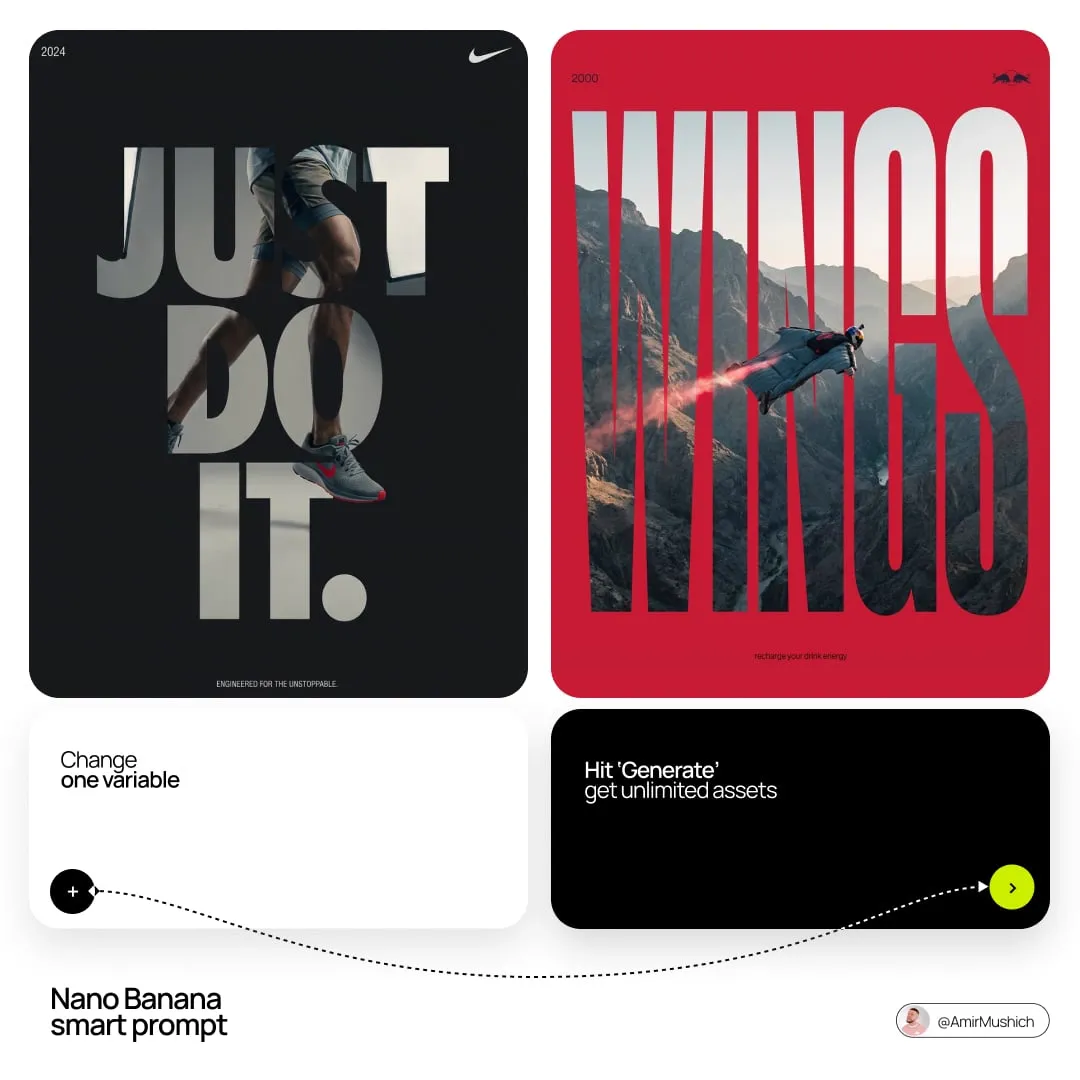
- Variant generation. One script becomes four hooks, three aspect ratios, six caption lengths. This is where most reach multiplication happens.
- Captions and on-screen text. Automatic transcription, line breaking, and emphasis timing save hours every week.
- Retention diagnostics. Frame-level retention curves are hard to read manually at scale; a model can flag the exact second where viewers leave and correlate it with a script beat.
- Visual production. Cinematic B-roll, stylized transitions, and scene generation for concepts that would otherwise require a shoot. See how the AI video generator handles impossible shots.
Weak fits for AI
- Deciding what your channel stands for. Positioning is a human judgment call.
- Replacing a weak premise with polish. A boring idea with perfect editing is still boring.
- Chasing trends you have no authority on. Audiences detect rented credibility instantly.
- Fully automated publishing without review. One tone-deaf upload costs more trust than a month of manual posting saves.
A useful rule: use AI to increase the number of tested ideas, not the number of published videos.
The Engagement Loop: Designing for the Second Watch
Engagement is not a single number. It is a loop with four stages, and each stage has a different job.
Hook, hold, payoff, loop
- Hook (0–2s). The viewer decides. Visual motion, a contradiction, or a specific promise. Not a greeting, not a logo.
- Hold (2–8s). Earn the next five seconds with a question the viewer wants answered, or a demonstration that is already delivering.
- Payoff (middle to final). Deliver something concrete: a result, a reveal, a punchline, a before-and-after.
- Loop (final frame). Make the last frame connect back to the first so a replay feels natural. Clean loops raise watch time without a single extra view source.
What the loop looks like in practice
A cooking clip: the hook is the pan catching a lick of flame for one frame; the hold is the technique; the payoff is the finished plate; the loop brings the flame frame back as the plate is set down. A design tutorial: the hook is the wrong version; the payoff is the corrected one; the loop returns to the wrong version so the contrast replays.
AI is useful here in a very specific way. Give a model your transcript and ask for three alternative loop closures that reference the opening image, then produce whichever is logistically cheapest. Designing loops deliberately is also the difference between a video that gets watched and a channel that gets followed. Watch time is rented; community is owned.
Audience Segmentation Without Over-Guessing
Segmentation fails when it becomes a spreadsheet exercise disconnected from content decisions. Keep it to three or four human-scale buckets.
A simple, workable model
- The cold scroller. Knows nothing about you. Needs the hook to be self-contained and jargon-free.
- The curious browser. Has seen you once or twice. Needs consistency of format so recognition is instant.
- The active fan. Watches most uploads. Needs depth, callbacks, and inside references.
- The potential convert. Wants proof, specifics, and a clear next step.
Tag every draft with its primary bucket. If 80% of your output targets the cold scroller, you will grow fast and retain badly. If 80% targets the fan, you will retain well and plateau. A healthy split for most accounts sits near 50% cold, 30% browser, 15% fan, 5% convert.
AI speeds this mapping in two ways: clustering your comments and messages into themes, and predicting which bucket a script fragment most resembles based on your historical performance. Treat the output as a hypothesis, then verify it with two weeks of real posting data.
Trend Analysis That Survives the Next Algorithm Shift
Trend lists go stale in days. What survives is a format — a repeatable visual or structural device — not a specific sound or meme.
Build a radar instead of chasing a list
Maintain three columns: ascending formats (rising fast, still low saturation), peak formats (everyone is doing it, so use only with a strong unique angle), and fatigued formats (audiences have started skipping on sight). Update the radar weekly with a fixed 20-minute review: your own last ten posts, ten posts from adjacent accounts, and ten from outside your niche. AI can summarize and cluster what you collect, but you decide what enters the radar.
Score a trend before you produce
Score each candidate from 1 to 5 on relevance to your channel promise, production cost in hours, freshness, reusability as a series, and distinctiveness. Anything below 18 out of 25 gets shelved. This single filter prevents most wasted production weeks.
The Production Workflow: Idea to Publishable Cut
This five-stage pipeline keeps human judgment at the front and back and puts AI in the middle.
Stage 1 — Idea bank generation
Write 30–50 one-line concepts weekly. Prompts that work far better than a vague request for ideas are specific: give me 20 short-form concepts about a topic where the viewer learns something counterintuitive in under 15 seconds. Then deduplicate and cluster. Keep a running bank so you never start from zero.
Stage 2 — Beat sheet before script
For a 30-second video, a beat sheet beats a full script. Four to six lines: hook line, first visual, the turn, the payoff, the loop frame. This is cheap to rewrite and expensive to get wrong.
Stage 3 — Visuals: generate, shoot, or mix
Decide per video, not per channel. If the concept depends on a real face, real product, or real environment, shoot it. If it depends on an impossible image — a city underwater, a product assembling itself, a period setting you cannot afford — generate it. Reusable video templates shorten the setup for recurring formats. Blending both is usually strongest: generated establishing shots wrapped around real footage.
Stage 4 — Edit and refine
The edit decides retention more than the footage does. Priorities, in order:
- Cut the first half second more aggressively than feels comfortable
- Add on-screen text that repeats, not replaces, the audio
- Use one audio track, not three
- Keep a visible change every 1.5–2.5 seconds (a cut, a zoom, a text pop, a new element)
- End on a frame that invites replay
Stage 5 — Variants before publishing
Produce three to five exports of the same core idea: different hook line, different aspect ratio, different length, different caption style. This is the highest-leverage AI use in the entire pipeline, and it is the step most creators skip.
Prompt work deserves its own discipline. A reusable structure — subject, action, environment, camera, lighting, mood, duration — consistently outperforms one-word prompts. Keeping a personal prompt library of formats that already performed well turns each new project into a variation instead of a fresh gamble.
Cross-Platform Adaptation Without Reposting the Same Clip
Posting one file everywhere is the most common reason creators see a single platform outperform the others by ten times.
What actually changes per platform
- Aspect ratio and safe zones. Vertical, square, and horizontal crops change what a viewer notices first. Keep the subject inside the center third when adapting.
- Caption density. Some audiences read fast and tolerate dense text; others need one idea per card.
- Pacing. Warmer, more conversational platforms tolerate slower openings; fast-feed platforms do not.
- First frame. Some feeds autoplay with sound, others do not. If muted, the hook must work visually.
Practically: keep one master edit with clean audio and no burned-in captions, then export platform-specific versions with captions and crops applied last. This preserves flexibility and takes minutes instead of hours.
Retention Analytics: Four Numbers Worth Tracking
Ignore vanity dashboards. Four numbers explain almost everything.
- Three-second retention. The hook score. If it sits far below your own median, fix the opening before anything else.
- Median watch time as a share of length. The hold score. Compare against your own history, not an industry average.
- Replay and rewatch rate. The loop score.
- Follower conversion per thousand views. The community score. High views with near-zero follows means the content entertains but does not signal what you offer next.
Turn numbers into a weekly decision
Each week, pick the worst-performing metric, find the video that contradicted it, and name the specific craft variable. Retention dropping at seven seconds is a diagnosis. The turn arrived too late is a fix. Only the second one changes next week's output.
Common Mistakes That Quietly Kill Reach
- Opening with context. Nobody needs backstory before the payoff.
- Explaining the format instead of doing it. Announcing three tips wastes the entire hook window.
- Publishing one version. Single-version publishing caps your ceiling arbitrarily.
- Ignoring the first frame. On many feeds it functions as the thumbnail.
- Automating everything. Fully generated, unreviewed content erodes trust faster than it grows reach.
- Never repurposing winners. Your best video from months ago is a format, not a finished item.
A Weekly Operating Rhythm That Holds Up
Consistency beats intensity. A schedule that survives a busy week looks like this:
- Monday: trend radar review, 20 minutes, then refill the idea bank
- Tuesday: pick five ideas, write beat sheets, choose shoot versus generate for each
- Wednesday: produce visuals and rough cuts for the strongest three
- Thursday: edit, then build three to five variants per video
- Friday: publish the best, schedule the rest, log the hook line and format
- Weekend: read retention numbers, note one craft fix, archive the winner as a reusable format
That is roughly 8–10 hours for a small team, or two focused evenings for a solo creator, and it produces far more tested ideas than unstructured daily posting.
FAQ
How much of a short-form video can realistically be AI-assisted?
Most of it, except the premise. You can generate visuals, captions, variants, and analysis. The idea, the taste, and the final publish decision should stay human.
Does generated footage hurt performance?
Not inherently. Audiences respond to clarity, motion, and payoff. What hurts is generic footage that does not serve the idea. A useful way to storyboard before generating is the AI image generator.
Should I post the same video on every platform?
Only if you adapt it. Same core idea, platform-specific crop, captions, and hook length.
How many variants per idea is worth producing?
Three to five is the sweet spot. Beyond that you are polishing rather than testing.
What if three-second retention is low but watch time is high?
You have a hook problem, not a content problem. Rewrite the opening line and first visual and keep everything else.
How do I know an idea is worth producing?
If you cannot describe the payoff in one sentence before producing it, the video probably does not have one.
Do loops really matter that much?
They raise watch time without requiring new viewers. For videos under 20 seconds, a well-built loop can meaningfully lift total watch time.
Build the System, Then Let Orelon Handle the Impossible Shots
Virality is not a button you press. It is a system where AI handles volume — idea variants, captions, format adaptation, retention analysis — while you handle the two decisions that actually determine whether something travels: what the idea is, and why anyone should care.
Start with one idea this week. Write the beat sheet by hand, generate the shots you could never afford to film, cut three variants, and publish the strongest one. Orelon is built for exactly that middle stage: turning a cinematic idea into motion you can test, iterate, and ship. Browse the Orelon blog for more workflows, or open the AI video generator and make the first version today.