

Learn how to write interior design prompts, build reusable art-style systems, and turn still images into cinematic AI short films with a repeatable workflow.
A photograph of a finished room and a single shot from a short film are solving the same problem. You choose where the light comes from, what the camera notices first, and what the frame deliberately hides. Most prompts describe objects — a sofa, a rug, a lamp — and the result looks like a furniture catalogue. Prompts that describe decisions instead, such as camera height, light direction, how a material behaves, and the emotional temperature of the space, produce images that feel authored rather than generated.
This guide connects three workflows that feed each other: interior design visualization, a reusable system for locking an art style, and the path from one still frame to a finished short film.
Why most interior prompts produce generic rooms
“Modern living room, wood floors, large windows, plants” is not a bad prompt. It is under-specified exactly where the model needs guidance. Image generation compresses everything the model has seen, so a description that matches a million existing photos returns the average of all of them. The average is clean, symmetrical, and forgettable.
Add constraints the average cannot satisfy: a specific hour of day, a specific camera position, a specific material pairing, and one human trace, such as a chair pulled away from the table or a book left face-down. Specificity is what reads as realism. Designers use these frames to test a concept before committing budget. Filmmakers use them to find the emotional register of a location before writing the scene that happens there.
The anatomy of a strong interior prompt
Treat the prompt as a shot note written for a cinematographer. Six layers, in this order, cover almost everything that matters.
Room, scale, and viewpoint
Name the room so the model can anchor it: “a narrow galley kitchen in a pre-war apartment” rather than “a kitchen”. Then place the camera — eye level, waist height, tilted up from a low corner, or a flat architectural elevation. Viewpoint is a decision about power. Low angles make ceilings monumental. Eye level makes a space feel livable and honest.
Materials and how they behave
Materials become interesting when they react to something. “Oak floor with worn traffic paths”, “lime plaster catching raking light”, “brushed steel mirroring a window” — each phrase implies a light source and a history. Two or three materials with behaviour beat a list of ten finishes, because the model can only prioritise so much.
Light: direction, quality, time
This is the highest-leverage line in any interior prompt. Say where light enters and what it does: “late afternoon sun raking in from the left, hard shadows across the floorboards” or “overcast north light, soft and even, no visible sun”. Time of day sets the palette more reliably than any colour word, because it also implies contrast and shadow length.
Lens, format, and film reference
“35mm with slight wide distortion”, “medium format, shallow depth of field”, “architectural photography, tilt-shift, verticals corrected”. Lens language changes how a space feels physically. Wide lenses exaggerate depth and make rooms feel larger. Long lenses compress distance and make the same room feel intimate and slightly claustrophobic.
Human trace and imperfection
Include one or two details that imply someone lives there. Not people — evidence of people. A creased cushion, a chipped tile, a phone charger on the floor. This is the difference between a render and a photograph, and it is usually the first thing audiences notice without knowing why.
Constraints and exclusions
Tell the model what to avoid: no text, no watermark, no fisheye distortion, no oversaturated HDR look, no floating furniture. Exclusions are cheap, and they remove most recurring annoyances in a single line.
Five interiors you can prompt today
Each of these is a starting point, not a template to copy verbatim.
Warm brutalist reading room. “Interior of a concrete reading room, low winter sun entering through one clerestory window, board-formed concrete walls, a single worn leather armchair, a stack of books on the floor, 35mm, natural light, muted warm grey palette.”
Japandi bedroom at dawn. “Minimal bedroom at 6am, cool blue dawn light through sheer linen curtains, pale oak platform bed, tatami texture, one ceramic vase, medium format, shallow depth of field, quiet and still.”
Retro office lobby. “Corporate lobby, amber and brown palette, smoked glass partitions, chrome trim, low-pile carpet with a geometric pattern, on-camera flash look, slight grain, empty reception desk.”
Overcast coastal kitchen. “Coastal kitchen on a grey day, diffuse north light, whitewashed brick, stainless steel counter, steam from a kettle catching the light, eye level, documentary photography, desaturated.”
Small apartment at night. “Tiny city apartment at 11pm, one warm lamp, television glow from off-frame, clutter on the table, night interior photography, high ISO grain, deep shadows.”
Notice the shared skeleton: one dominant light source with a direction, two or three materials, a lens note, and one imperfection. Change the room and the light, keep the skeleton.
Iteration: change one variable at a time
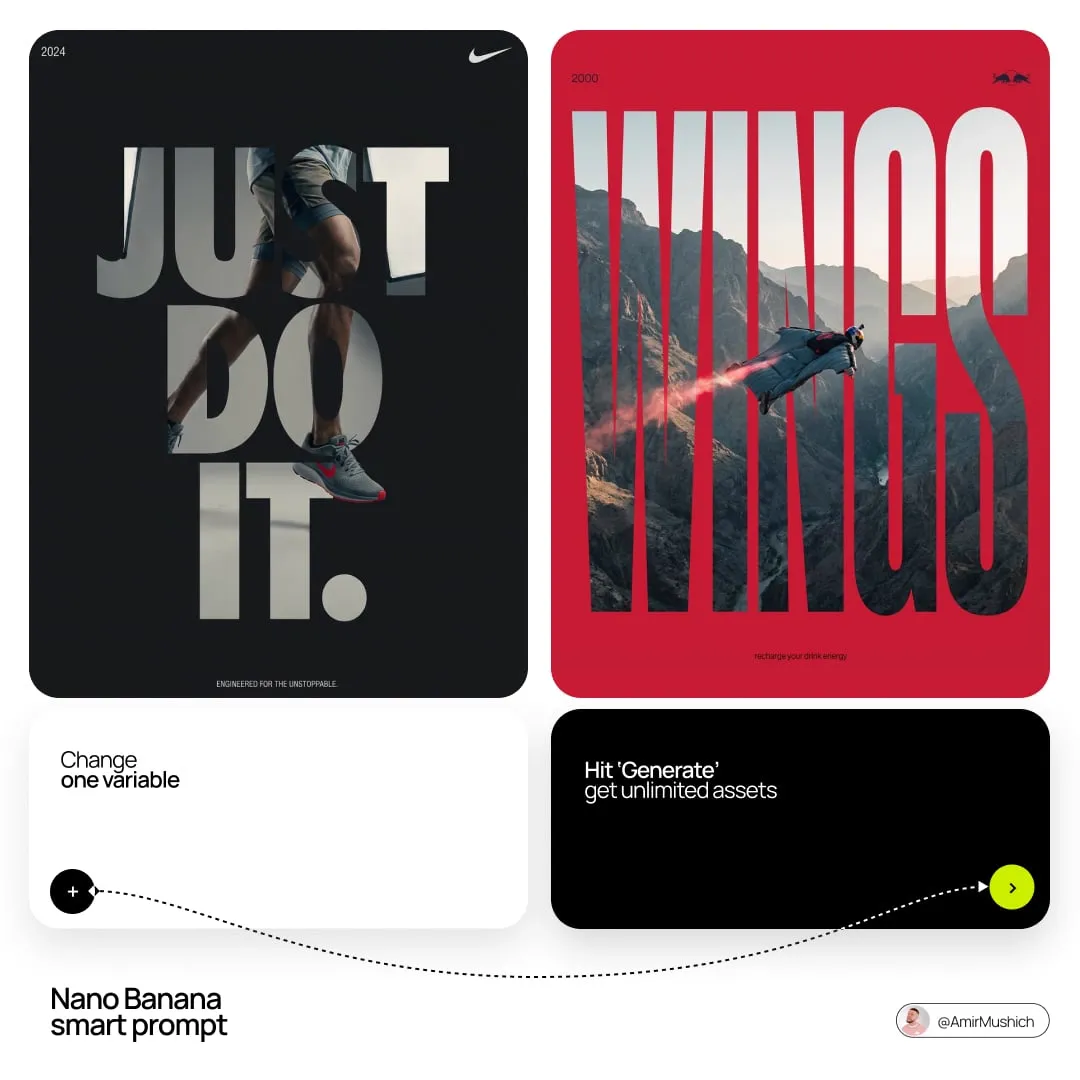
Random variation is how good concepts get lost. When a frame is eighty percent right, keep the prompt and change exactly one thing — the hour, the lens, the viewpoint, or the clutter. Change the light direction and you change the mood. Change the lens and you change the psychology of the space. Change everything at once and you lose the thread that made the first frame work.
Save winning prompts in a plain text file with a one-line note about what changed. Within a week you have a personal library more useful than any generic prompt list, because it encodes your taste rather than someone else's.
Build an art-style library you can reuse
Style consistency across many images comes from a short, repeatable string rather than a long poetic paragraph. Define five attributes: palette (three colours maximum), texture (grain, gloss, dust), light behaviour (hard, soft, mixed), lens and format, and one signature element such as a recurring reflection or framing habit.
A workable style string looks like this: “muted teal and rust palette, 16mm grain, soft directional window light, 40mm equivalent, one warm practical light in frame”. Paste it at the end of every prompt in the project.
Two rules keep a style library usable. First, mix at most two references; “Bauhaus meets Japanese minimalism” is legible, while six influences become style soup where nothing dominates. Second, when you want motion later, share the same string between your image prompts and your video prompts so stills and shots feel like they came from one camera. Orelon's AI image generator is useful here, because you can explore stills and then move the strongest frames straight into motion without rebuilding the description.
Turning stills into shots: camera language for video
A still is a noun. A shot is a verb. When you animate a frame, describe what changes between the first second and the last, not just “slow camera move”. Useful motion vocabulary: slow push in, pull back to reveal, lateral dolly past a doorway, gentle handheld drift, locked-off frame with light shifting, rack focus from foreground to background.
Two practical rules. Keep motion small — a five percent push reads as cinematic, a dramatic swoop reads as a slideshow transition. And name the subject of the motion: “camera pushes slowly toward the window while curtains move” is far more controllable than “cinematic movement”.
If you are generating shots from scratch, start with the AI video generator and write the motion into the prompt from the beginning rather than animating a still afterwards. Both approaches work; prompting motion directly gives more control over timing, while animating a still preserves a composition you already love.
The three-layer prompt stack for short films
Short films fail on consistency before they fail on story. A three-layer stack fixes that.
Shot layer. What this single clip shows: subject, action, camera. One sentence, no ambiguity.
Scene layer. Where it happens and how it looks: location, time, palette, light, style string. Identical across every shot in the scene.
Story layer. What changes emotionally: the beat. Keep a one-line beat sheet — setup, turn, consequence — and make each shot answer one beat. If a shot does not move a beat forward, cut it.
Consistency comes from repetition. Use the same character description string, the same palette, and the same lens note across every shot, and generate a reference frame per location that you feed back in as a visual anchor. For structure ideas, the video templates library is a fast way to see how pacing changes with shot count.
A practical workflow: from moodboard to a sixty-second short
- Collect references. Eight to twelve images: interiors, film stills, paintings. Not to copy, only to name a direction.
- Write the spine. Three beats, one sentence each. Anything longer than a paragraph is a feature, not a short.
- Lock the style string. Five attributes, written once, reused everywhere.
- Generate key frames. Two or three candidates per beat, then pick one per beat.
- Animate four to six shots. Generate more footage than you need and cut it down later.
- Assemble and grade. Cut on motion, not on beats of music. Add one grade pass for palette consistency.
- Sound. Room tone, one music bed, restrained effects. Sound sells an interior faster than any visual trick.
- Review at small size. Watch it on a phone. Problems invisible at full screen become obvious at 400 pixels wide.
Target roughly ten to fourteen shots for a minute. Fewer, longer shots usually feel more filmic than many short ones.
Mistakes that flatten AI visuals
Too many adjectives. Overloaded prompts average out; the model splits attention and produces mush.
Symmetry everywhere. Perfectly centred, perfectly balanced rooms feel like showrooms. Offset the camera slightly.
No light direction. “Bright” and “well-lit” tell the model nothing about where shadows fall.
Mixing references for everything. Each reference dilutes the others.
Ignoring aspect ratio. Vertical framing changes composition entirely; decide the delivery format before you generate.
Animating every frame. Movement is punctuation, not grammar. Locked-off shots give movement meaning.
Skipping the second draft. The first output is a sketch. Iterating three or four times is normal; accepting the first result is the most common mistake.
How to choose tools for each stage
Judge tools by the decision they help you make, not by the length of their feature list. For still exploration, favour whichever generator gives fast iteration and reliable prompt adherence on materials and light. For motion, favour control over duration, camera behaviour, and frame consistency. For assembly, favour a simple editor over a complex one.
If you are comparing options, AI video generator alternatives breaks down the trade-offs, and if you already work in another ecosystem, a focused comparison such as Orelon vs Runway is more useful than a generic tool list. Whatever you pick, keep your style string in a text file — it survives every tool change.
FAQ
Do I need a design or film background to get good results? No, but you need vocabulary. Learn forty words for light, lens, and material, and your output improves more than it would from any new tool.
How long should an AI-generated short film be? Sixty to ninety seconds is the sweet spot for a first project. Long enough to establish a mood, short enough to finish.
Can I use generated interiors in a real design presentation? As concept visuals, yes. Label them clearly as AI-generated and treat them as mood targets rather than construction documents.
Why do my rooms look empty even when they are full of furniture? Furniture is not storytelling. Add one trace of a person and one imperfection in the light, and the room starts to feel inhabited.
How many references should one art style use? Two. One for palette and texture, one for composition or era. More than two turns into average.
What is the fastest way to improve consistency across shots? Write a fixed style string and a fixed subject line, then reuse them verbatim. Consistency is a discipline, not a model feature.
Should I generate video directly or animate stills? Direct generation gives better motion control; animating stills protects a composition you already trust. Try both on one project and compare the time cost.
Bring your idea to motion
Interior prompts teach precision: light, material, viewpoint, restraint. Short films test whether you can hold that precision across a dozen shots and three emotional beats. Both improve with the same habit — decide what the frame should mean before you describe what it contains.
Start with one room you know well, write its shot note, and see whether the result matches the picture in your head. Then take your favourite frame to Orelon and give it five seconds of movement. One still, one shot, one beat at a time.